
A well-thought-out living room lighting layout is the single most powerful tool you have for transforming your space. It’s about so much more than a single fixture in the middle of the ceiling. By blending different light sources, you create a room that’s functional, comfortable, and full of character.
This layered approach is the secret sauce of professional interior design. It ensures your living room is ready for anything, from a quiet evening with a book to a lively get-together with friends.
Why Your Lighting Layout Is Everything
Think of your living room lighting as a team of specialists, not a jack-of-all-trades. A fantastic layout doesn't just make things bright; it sculpts the room. It directs the eye, sets the perfect mood, and supports every activity.
Here on the Monterey Peninsula, a strategic plan makes all the difference. It can bring cozy warmth on foggy coastal evenings and highlight the unique architectural details found in our local homes.
The goal is to create a dynamic space by layering three distinct types of light:
- Ambient Light: Your foundation. It’s the general glow that makes the room usable and comfortable.
- Task Light: Your focused, hard-working light. It provides bright, direct illumination for activities like reading.
- Accent Light: The drama. This layer draws attention to the things you love, like artwork or architectural features.
This breakdown shows how these layers work together to create a balanced and effective living room lighting plan.
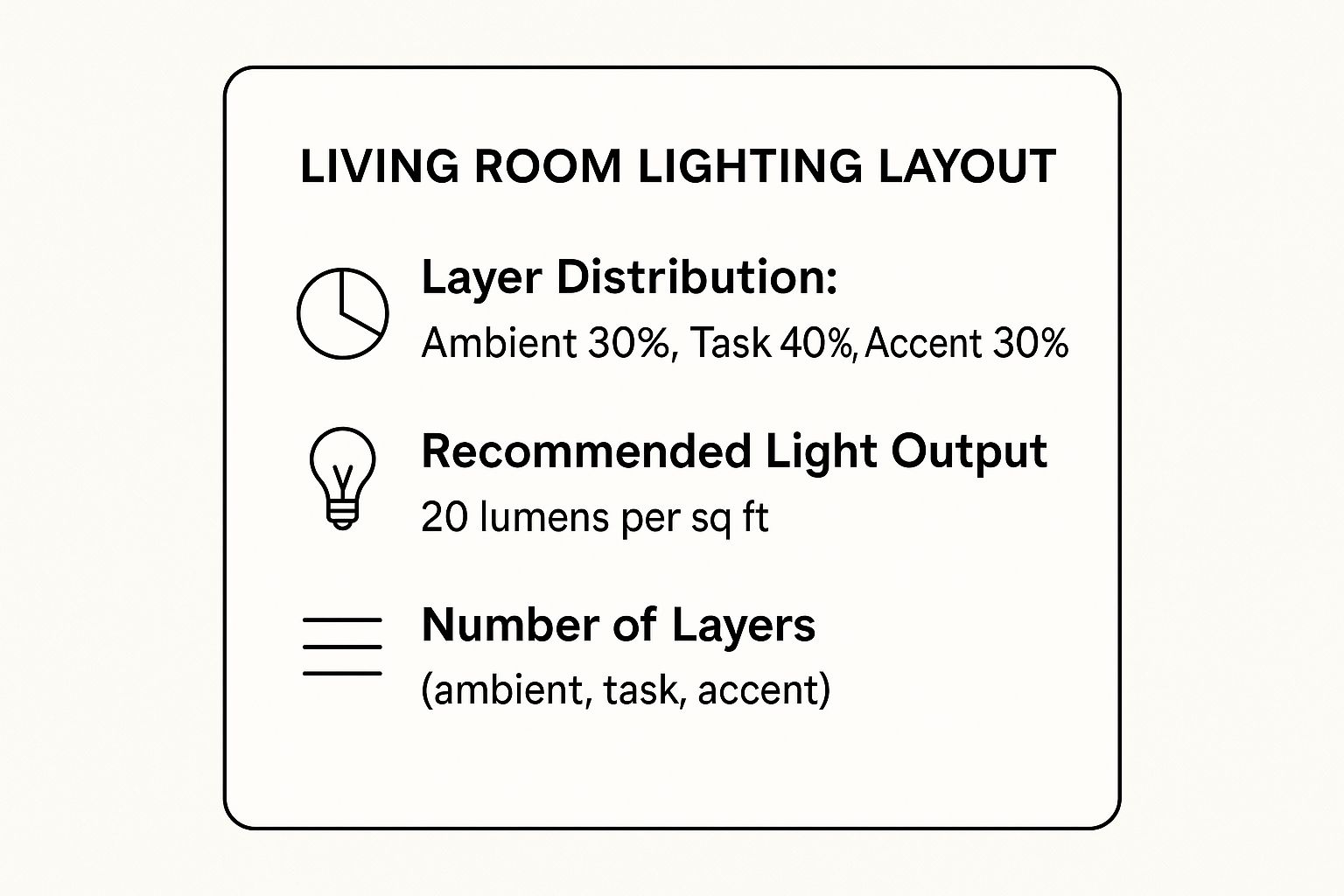
As you can see, a truly functional plan often puts a heavy emphasis on task lighting. This ensures your living room isn't just pretty to look at—it actually serves your lifestyle day in and day out.
The Power of a Layered Approach
Relying on a single, central light fixture is a common mistake. It often creates harsh shadows and a flat, uninviting atmosphere. In contrast, a layered living room lighting layout immediately adds depth, dimension, and interest.
This is exactly why designers insist on it. The global demand for better residential lighting is booming. The market was valued at USD 14.66 billion in 2023 and is only expected to grow.
A layered lighting plan is the difference between a room that simply exists and one that feels thoughtfully curated and welcoming. It's an absolute must for a successful living room design.
To give you a better idea of what this looks like in practice, we've put together a quick reference table. It breaks down the three essential layers of light, explaining their main job and the types of fixtures commonly used for each.
The Three Layers of a Complete Lighting Plan
| Lighting Layer | Primary Function | Common Fixture Examples |
|---|---|---|
| Ambient | Provides overall, foundational illumination for the entire room. | Chandeliers, flush-mount ceiling lights, recessed downlights, large pendants. |
| Task | Delivers focused light for specific activities like reading or hobbies. | Floor lamps, table lamps, swing-arm sconces, under-cabinet lights. |
| Accent | Highlights specific features, creating visual interest and drama. | Picture lights, track lighting aimed at art, uplights for plants, spotlights on architectural details. |
By combining different sources—say, a chandelier for general ambiance, a stylish floor lamp next to your favorite armchair for reading, and a subtle picture light over the fireplace—you weave a rich visual tapestry. This approach not only makes the room more beautiful but also vastly more functional. For more inspiration, check out our guide on essential living room lighting ideas to see this philosophy in action.
Building Your Foundation with Ambient Light
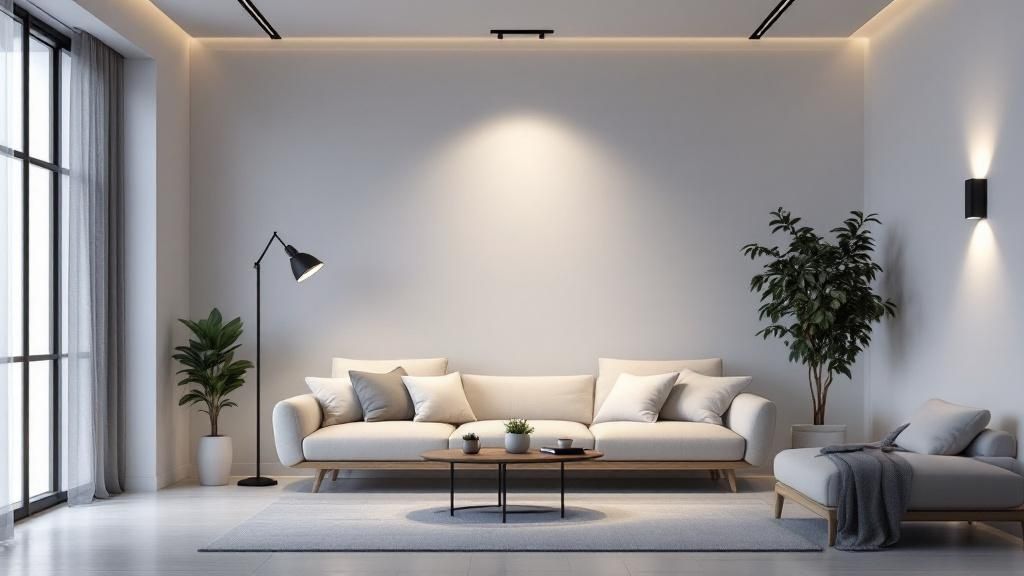
Let's start with the most important layer of your living room lighting layout: ambient light. Think of this as the bedrock of your entire design. It’s the general, all-over illumination that steps in when natural daylight fades, making the whole room feel usable and welcoming.
Here on the Central Coast, this foundational layer is crucial for cutting through the gloom on foggy days. It brings an inviting warmth inside that just makes a space feel like home. And don't forget the free stuff! Optimizing natural light with living room skylights can dramatically boost brightness before you even flip a switch.
Choosing Your Ambient Fixtures
The fixtures you pick for this base layer begin to define the room’s personality. You've got a few fantastic options, and each brings something different to the table.
- Recessed Downlights: These are the quiet workhorses. Sleek, modern 3-inch or 4-inch cans can disappear into the ceiling, giving you broad, even light.
- Chandeliers & Large Pendants: Want to make a statement? A beautiful chandelier or a large pendant can act as a stunning centerpiece while also casting a lovely, diffused glow.
- Flush or Semi-Flush Mounts: If you're working with standard 8-foot ceilings, these are your best friends. They provide plenty of light without hanging down too far.
Getting Placement and Brightness Right
Where you put fixtures is what truly makes or breaks the design. One of the most common mistakes with recessed lighting is a rigid grid pattern. It can make a room feel cold and create unflattering shadows on people.
Pro Tip: Instead of a grid, try using recessed lights to "wash" the walls with light or brighten key walkways. This approach feels softer and more sophisticated, and it makes the room feel larger.
So, how much light do you need? For general ambient lighting, aim for about 20 lumens per square foot. For a typical 20×15 foot living room (300 sq ft), you’d want around 6,000 lumens for your ambient layer.
For a deeper dive into spacing and positioning, check out our complete recessed lighting layout guide. And one final, non-negotiable tip: put every single ambient light source on a dimmer. It gives you the flexibility to go from bright and energetic to soft and intimate.
Focusing on Function with Task Lighting
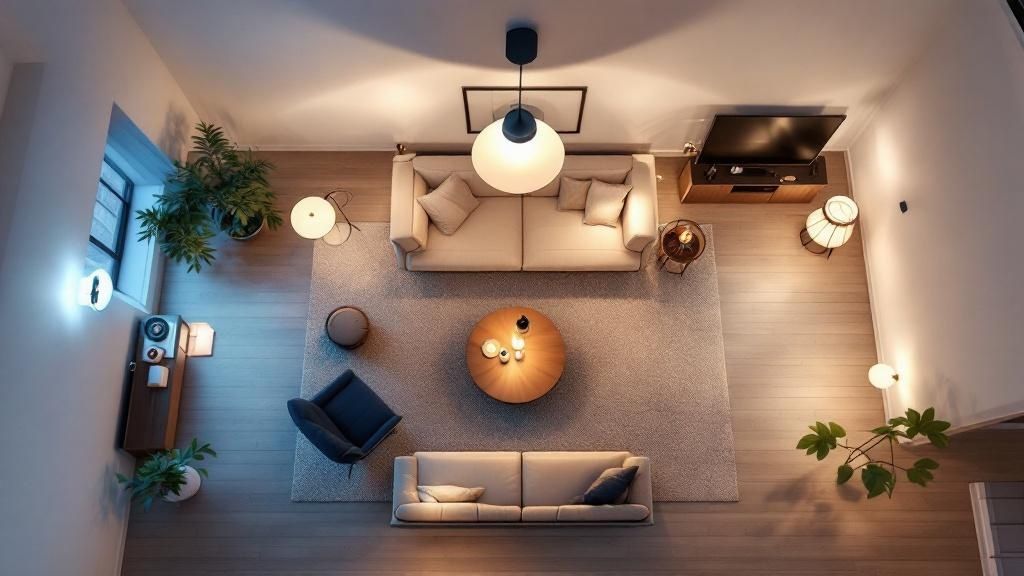
With your ambient foundation set, it’s time to get practical. This next step in your living room lighting layout is adding targeted, functional light—the task lighting layer. This is the focused light that makes your living room truly livable.
Task lighting answers the question, "What do I actually do right here?" When you identify those specific activity hubs, you can layer in fixtures that deliver direct light exactly where it’s needed. This prevents eye strain and adds a new dimension to your design.
Identifying and Illuminating Activity Zones
Walk through your living room and map out its different functions. These are the spots begging for their own dedicated light source.
Common zones that benefit from task lighting include:
- Reading Nooks: An armchair paired with a great floor lamp is a classic for a reason. It carves out a cozy corner perfect for getting lost in a book.
- Side Tables: A table lamp next to your sofa gives you convenient light for scrolling, enjoying tea, or chatting.
- Work or Hobby Areas: If a corner of your living room doubles as an office or craft space, you’ll need more direct light.
For a piece that delivers on both style and function, consider adding something like the beautiful Hearst Marble Table Lamp to a side table.
Practical Tips for Perfect Placement
With task lighting, positioning is everything. Get the angle wrong, and you’ll be battling frustrating glare or casting shadows over your workspace.
A key rule for reading lamps is to position the fixture so the bottom of the shade is at or slightly below eye level when seated. This ensures light shines down onto your book, not directly into your eyes.
This same idea applies to other tasks. A central pendant over a game table creates an intimate and functional focal point, especially when entertaining. For more ideas, check out our guide on custom home lighting ideas for entertaining.
Creating Depth and Drama with Accent Lighting
Now that you have ambient and task lighting mapped out, it’s time for the fun part: accent lighting. This is the final, artistic touch in your living room lighting layout. It injects personality, creates focal points, and turns a functional room into a captivating space.
Think of it as the spotlight in a theater production. Its job is to make specific elements stand out, whether it's a beautiful piece of art, a unique architectural detail, or the rich texture of a stone fireplace. Using accent lights when displaying abstract blue paintings can make their colors pop.
Mastering Accent Lighting Techniques
To nail accent lighting, it helps to know a few key techniques. Each method creates a different effect, so you can tailor the light to the object you’re highlighting.
- Wall Grazing: Fantastic for textured surfaces like stone or brick. Place a light very close to the wall and aim it almost parallel to the surface for a dramatic play of light and shadow.
- Wall Washing: To make a room feel bigger and brighter, use recessed lights or track heads to cast a wide, even swath of light over a smooth wall.
- Uplighting: For a touch of drama, place a small fixture on the floor behind a large plant. It creates intriguing silhouettes on the ceiling and walls.
The key to effective accent lighting is contrast. To make a feature stand out, the accent light should be about three times brighter than the surrounding ambient light. This commands attention and creates a clear visual hierarchy.
Selecting the Right Accent Fixtures
The fixtures you choose will depend on what you want to highlight. For homeowners on the Monterey Peninsula, accent lighting is perfect for showcasing a Spanish-style archway or the driftwood textures common in coastal decor.
Adjustable track lighting is a versatile solution that adapts as your art or furniture arrangement changes. For a static piece like a prized painting, a dedicated picture light offers focused, intimate illumination. See more options in our guide on the latest lighting trends for every room in your home.
Choosing the Right Fixture for Each Lighting Layer
Deciding between a sconce, a track light, or a recessed can gets easier when you think about the specific job you need each light to do. Here’s a quick breakdown to help you match the right fixture to the right lighting layer.
| Fixture Type | Best For (Layer) | Placement Tip | Style Notes |
|---|---|---|---|
| Recessed Lights | Ambient, Task, Accent | Install near walls for wall washing or grazing. Use gimbal (adjustable) trims to direct light. | Minimalist and modern. Creates a clean, uncluttered ceiling line. |
| Track Lighting | Accent, Task | Position on the ceiling to highlight artwork, bookshelves, or architectural features. | Highly flexible and industrial-chic. Perfect for evolving spaces. |
| Picture Lights | Accent | Mount directly above a piece of artwork or a photograph for focused, even light. | Traditional and sophisticated. Offers a gallery-like feel. |
| Wall Sconces | Ambient, Accent | Flank a fireplace, a piece of art, or a mirror to create symmetry and add decorative flair. | Can be modern, classic, or rustic. Adds a layer of visual interest to walls. |
| Uplights (Canisters) | Accent | Place on the floor behind plants, sculptures, or in corners to create dramatic shadows. | Creates height and drama. Excellent for adding an unexpected theatrical touch. |
Ultimately, the best fixtures are the ones that not only look great but also serve their purpose flawlessly within your overall lighting scheme.
Integrating Smart Tech for Seamless Control
A truly great living room lighting plan isn't just about fixtures—it's about how you use them. Today, you can completely reshape your room's atmosphere with a quick tap on your phone or a simple voice command. This is where smart lighting comes into its own.
By connecting lights to your home network, you unlock incredible flexibility. You can dim lights, tweak their color, or schedule them to turn on and off automatically. This level of control makes your layered lighting feel alive and responsive.
The Power of Smart Scenes and Dimmers
One of the best things about a smart system is creating "scenes." A scene is a preset lighting combination you can call up instantly. For example, you could create a "Movie Night" scene that dims your recessed lights, shuts off the reading lamp, and brings your accent lights to a soft glow—all with a single command.
Smart dimmers give you incredibly precise control over brightness, letting you fine-tune the mood perfectly. They are the true foundation of a modern, responsive living room.
Key Takeaway: Smart lighting is the bridge between having great fixtures and having a great experience. It turns a static layout into a dynamic, living part of your home.
Tunable White and Human-Centric Lighting
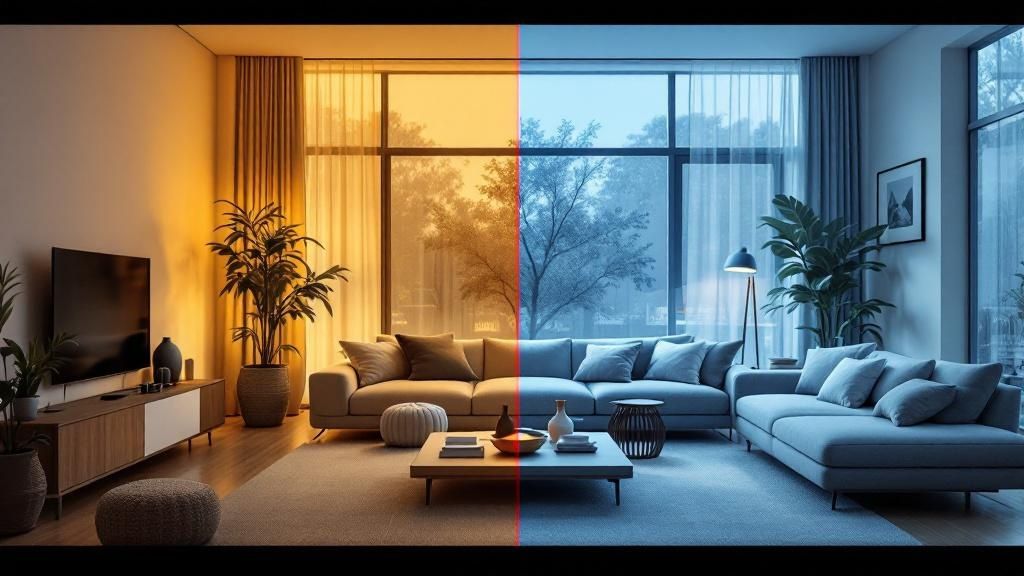
Tunable white lighting lets you adjust the color temperature of your lights, mimicking how natural sunlight changes throughout the day. You can have a cool, energizing white light (around 4000K) during the day, then shift to a warm, cozy glow (around 2700K) in the evening to relax.
This idea, often called human-centric lighting, supports your body's natural circadian rhythm. It's a fantastic feature for homes here on the Monterey Peninsula, where you can use warmer tones to create a cozy escape from the cool evening fog.
Sustainability and Efficiency
Smart controls are a big win for sustainability. According to the U.S. Department of Energy, LED bulbs use up to 90% less energy than incandescent bulbs. Pairing them with smart controls multiplies these savings.
This push for efficiency is fueling massive growth. The global indoor LED lighting market is on track to hit USD 36.35 billion by 2030. You can read more about these market trends and what's behind them.
FAQs About Living Room Lighting Layout
1. How many lights do I need in my living room?
It’s not about counting fixtures, but achieving the right brightness (lumens). For general ambient light, aim for 10-20 lumens per square foot. A 250 sq. ft. room needs 2,500-5,000 lumens. Then, add task lighting (like a reading lamp) where needed.
2. What is the best light bulb color for a cozy vibe?
For a warm, inviting glow, choose a "Soft White" bulb in the 2700K to 3000K range. This color temperature mimics candlelight and is perfect for relaxation. Avoid "Daylight" bulbs (5000K+), which can feel sterile in a living room.
3. Can I mix different metal finishes on my fixtures?
Yes! Mixing metals adds a curated, designer feel. Pick one dominant metal (like brushed nickel) and choose one or two accent finishes (like soft brass or matte black). Repeat each accent finish at least once to tie the room together.
4. Are recessed lights still a good choice for a living room?
Recessed lights are a timeless choice, but how we use them has changed. Avoid a rigid grid. Instead, use smaller (3-4 inch) fixtures to wash walls with light, highlight pathways, or spotlight art. This creates a modern and sophisticated look.
5. What are the three layers of lighting I should have?
Every great living room lighting layout has three layers. Ambient for overall illumination, Task for specific activities like reading, and Accent to highlight architectural features or artwork. Combining all three creates a functional and beautiful space.
Feeling confident about your lighting plan is the goal, but you don't have to figure it all out alone. The team at The Home Lighter, Inc. is here to provide the expert guidance and high-quality fixtures you need to bring your vision to life. Visit our showroom or schedule a consultation today!