
When you're deciding between track lighting vs. recessed lighting, the choice really boils down to one key difference: visibility versus integration. Track lighting offers visible, incredibly flexible fixtures perfect for aiming light exactly where you need it. Recessed lighting, on the other hand, provides a clean, built-in look for smooth, widespread ambient light.
This guide will walk you through the pros, cons, and best uses for each, helping you make the right choice for your Monterey Peninsula home.
Choosing Your Ideal Lighting Solution
Picking the right lighting is a foundational decision that shapes how your home works and feels. For homeowners here on the Monterey Peninsula, the debate between track and recessed lighting often involves balancing the home’s architectural style with your day-to-day practical needs.
Understanding their core purposes is the first step toward a well-lit space that feels both intentional and inviting.
Recessed Lighting: Clean and Unobtrusive
Recessed lighting is all about disappearing. Installed flush with the ceiling, its main job is to provide broad, even light without calling attention to itself.
This makes it the perfect choice for creating a clean, minimalist aesthetic or making a room feel more spacious, especially in rooms with standard ceiling heights.
Key Takeaway: Recessed lighting is the master of providing a base layer of ambient light, making rooms feel open and uncluttered. Think of it as the quiet, sophisticated foundation of a great lighting plan.
Track Lighting: Flexible and Focused
Track lighting, by contrast, is designed for flexibility and is meant to be seen. The fixtures are mounted on a visible track, allowing you to aim, reposition, or even swap out the light heads as your needs change.
This makes it a winner for:
- Task Lighting: Pinpointing light directly onto kitchen countertops or a home office desk.
- Accent Lighting: Drawing attention to beautiful artwork, architectural features, or a favorite reading chair.
- Adaptable Spaces: Easily adjusting the light when you get new furniture or decide to use a room differently.
Of course, lighting can go beyond the traditional. In some wellness-focused designs, homeowners might even explore unique applications like LED shower heads for light therapy to create a spa-like experience.
Quick Comparison: Track vs Recessed Lighting
Sometimes you just need an at-a-glance summary. Use this side-by-side table for a fast read on the fundamental differences between the two.
| Feature | Track Lighting | Recessed Lighting |
|---|---|---|
| Primary Function | Directional Task & Accent | General Ambient Light |
| Visual Impact | Visible, part of the decor | Minimal, integrated into ceiling |
| Flexibility | Highly adjustable and adaptable | Fixed in place once installed |
| Best For Ceilings | High, sloped, or beamed | Standard or low flat ceilings |
| Installation | Less invasive, often a single power source | More invasive, requires ceiling cutouts |
Ultimately, this quick comparison should help point you in the right direction. Track lighting brings attention-grabbing style and adaptability, while recessed lighting offers a subtle, seamless glow that enhances the space without demanding the spotlight.
Defining Track Lighting and Its Core Strengths
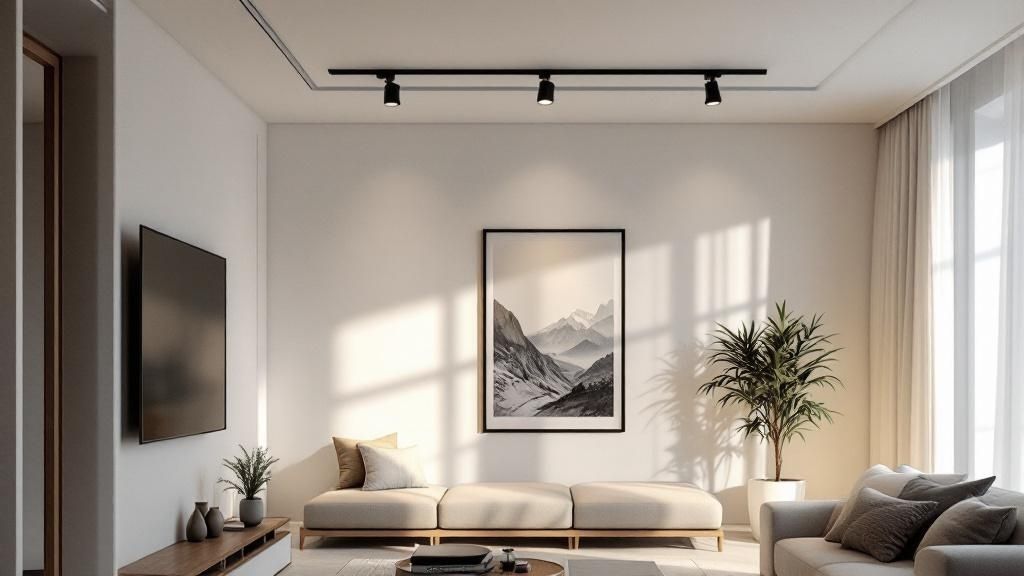
To properly weigh track lighting vs. recessed lighting, it’s important to understand what makes each unique. Let’s start with track lighting. At its core, it’s a surface-mounted system made up of a linear track that powers individual light fixtures, or "heads."
This simple design is precisely where its power lies, offering a versatility you can't get from fixed lighting.
Unmatched Flexibility for Evolving Spaces
The defining strength of track lighting is its dynamic flexibility. You can slide, swivel, and aim each individual head anywhere along the track. This means the lighting can change right along with your space—whether you're rearranging furniture or highlighting new art.
This adaptability makes track lighting a fantastic choice for multi-purpose rooms. A modern great room can be a living area, a homework spot, and an entertainment space, and a track system lets you create distinct lighting zones for each activity.
It’s especially useful in homes with architectural quirks. For many homes on the Monterey Peninsula with vaulted or beamed ceilings, track lighting is a practical and stylish way to get light where it’s needed without complex structural work.
Expert Insight: Think of track lighting as a tool for creating layers and telling a story with light. It actively directs the eye, making it the perfect choice for accentuating the things you love most, from a textured stone fireplace to a vibrant gallery wall.
A Powerful Design Statement
Beyond its practical function, track lighting is a design element in its own right. The fixtures become part of the room's aesthetic, with styles running from raw and industrial to sleek and contemporary.
The global track lighting market forecast projects continued growth, valued at over USD 3.89 billion, as more people use it to showcase architectural details. Its ability to create dramatic, focused effects makes it an essential piece of any sophisticated, layered lighting plan.
Understanding Recessed Lighting and Its Advantages
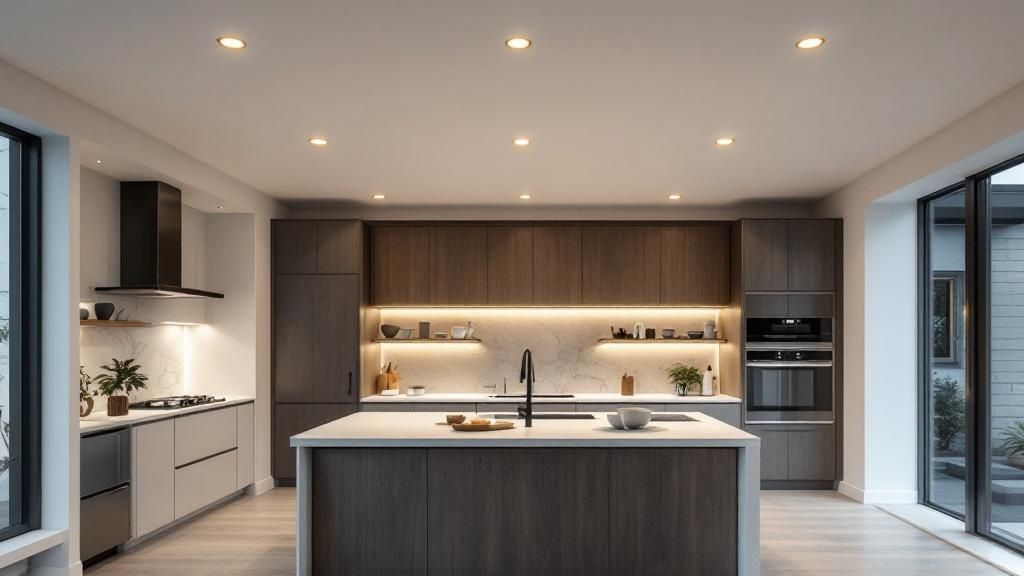
While track lighting makes a visible statement, recessed lighting masters the art of subtlety. You might know them as can lights or downlights, but the concept is the same: these fixtures are installed directly inside your ceiling.
All you see is the minimal trim, leaving you with a clean, uncluttered ceiling plane.
The Power of Unseen Illumination
This minimalist approach is why recessed lighting is a cornerstone of modern design. It makes rooms feel more open and spacious, a huge plus in homes with standard or lower ceiling heights where a hanging fixture would feel overbearing.
At its core, recessed lighting provides widespread ambient light that brightens a room evenly. Think of it as the starting point—the canvas—before you add more decorative or task-specific lights. Getting that base layer right is everything, and our recessed lighting layout guide is a great resource to see how placement shapes a space.
Key Takeaway: Recessed lighting is the ultimate support player. Its goal isn't to be the star of the show but to make the entire room look and feel better with clean, unobtrusive, and widespread illumination.
The global shift toward energy efficiency has cemented its place in home design. With advancements in LED technology, modern recessed fixtures are exceptionally durable and cost-effective.
Comparing Key Differences in Installation and Cost
Deciding between track and recessed lighting goes beyond aesthetics. You have to get practical about the installation, total cost, and how the lights will function in your home long-term.
Installation Process
The most glaring difference is how they’re installed. Track lighting is a surface-mounted system, making it far less invasive, particularly when retrofitting an existing room. The track gets power from a single junction box, so installation can be surprisingly simple.
Recessed lighting installation is a bigger production. Each "can" light needs a hole cut into the ceiling and its own wiring, which almost always means repairing and repainting drywall afterward. This adds complexity and labor, especially in a finished home versus new construction.
Breaking Down the Total Project Cost
When weighing the cost of track lighting vs. recessed lighting, you have to look past the sticker price.
-
Track Lighting Costs: The upfront cost covers the track, power feed, and individual light heads. While high-end heads can be pricey, the overall labor cost is usually lower due to less wiring and zero drywall patching.
-
Recessed Lighting Costs: The fixtures themselves might seem affordable, but the total project cost is often higher. You're paying an electrician to wire multiple spots plus a painter or drywall contractor to make everything seamless again.
Expert Insight: Think of recessed lighting as a front-loaded investment. You pay more upfront for labor and construction to get that clean, built-in architectural look. Track lighting shifts the cost more toward the visible hardware itself, offering a less disruptive path to great lighting.
Design Aesthetics and Functional Light
Your choice also comes down to the visual statement you want to make. Recessed lighting is designed to disappear, providing a "quiet" illumination that melts into the ceiling.
Track lighting, however, is a visible and intentional part of your room's design. The track and heads become decorative elements, turning lighting into a tool for adding character. The focused "pools" of light it creates are a staple in commercial design, and you can see how strategic lighting affects customer experience in restaurants.
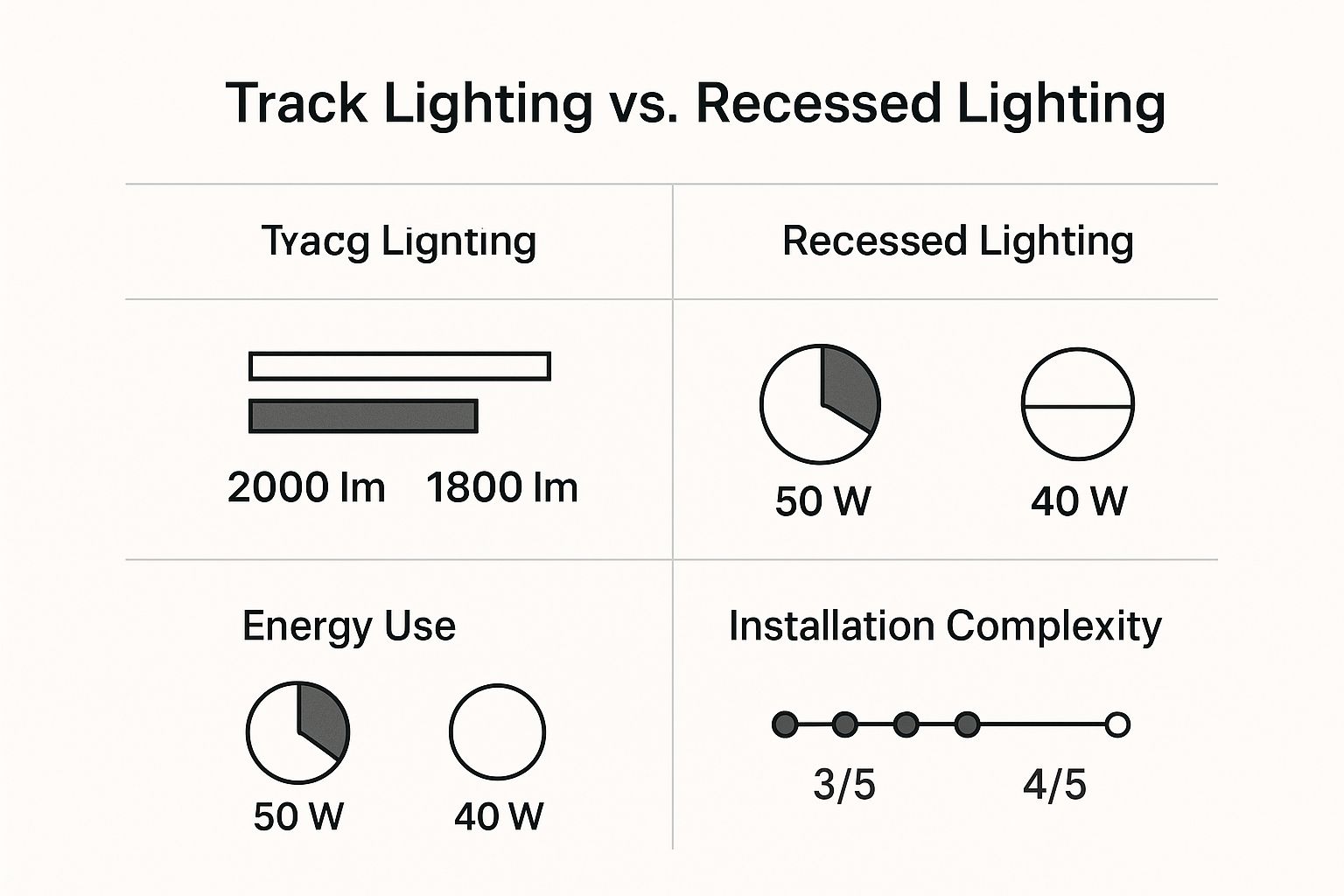
Both are powerful solutions. Recessed lighting is often more energy-efficient per fixture, but its installation is significantly more involved.
Matching the Right Light to the Right Room
Getting your home's lighting right is all about context. The perfect choice between track and recessed lighting boils down to a room's use and its architecture. This is especially true for homes here on the Central Coast, where our local architecture demands a thoughtful eye.
When to Choose Track Lighting
Track lighting is the ultimate problem-solver. Its adaptability makes it the hero in rooms with specific or changing needs.
Track lighting is a perfect fit in these situations:
- Kitchen Task Lighting: Position track heads over a kitchen island or countertops for focused, shadow-free light right where you need it for chopping and prep.
- Living Room Accent Walls: Have a gallery wall or beautiful fireplace? You can aim each track head to highlight these features and turn them into dramatic focal points. Our guide on living room lighting layout dives deep into how this adds personality.
- Challenging Ceilings: Many homes on the Monterey Peninsula have gorgeous vaulted or beamed ceilings. Track lighting offers a practical and stylish way to bring light down to a functional level without major construction.
When to Choose Recessed Lighting
Recessed lighting is the champion of creating a clean, seamless foundation of light. It’s ideal when you want broad, even illumination without cluttering your ceiling.
Recessed lighting excels in these spaces:
- Hallways and Basements: In these areas, recessed cans provide unobtrusive light that makes spaces feel brighter and more open, which is a lifesaver with lower ceilings.
- Bathrooms and Showers: Recessed fixtures rated for damp or wet locations are a must-have for bathrooms. They are the safest, most effective way to light up a shower stall.
- Creating Spaciousness: A technique called "wall washing," where recessed lights cast a smooth wash of light down a wall, can make a room feel significantly larger. This is a brilliant strategy for smaller living areas.
Expert Recommendation: Don't get caught in an "either/or" mindset. The best lighting plans often use both. For example, use recessed lighting for overall ambient light, then bring in a track system to spotlight your favorite piece of art. This layered approach creates truly dynamic and functional spaces.
Making Your Final Lighting Decision
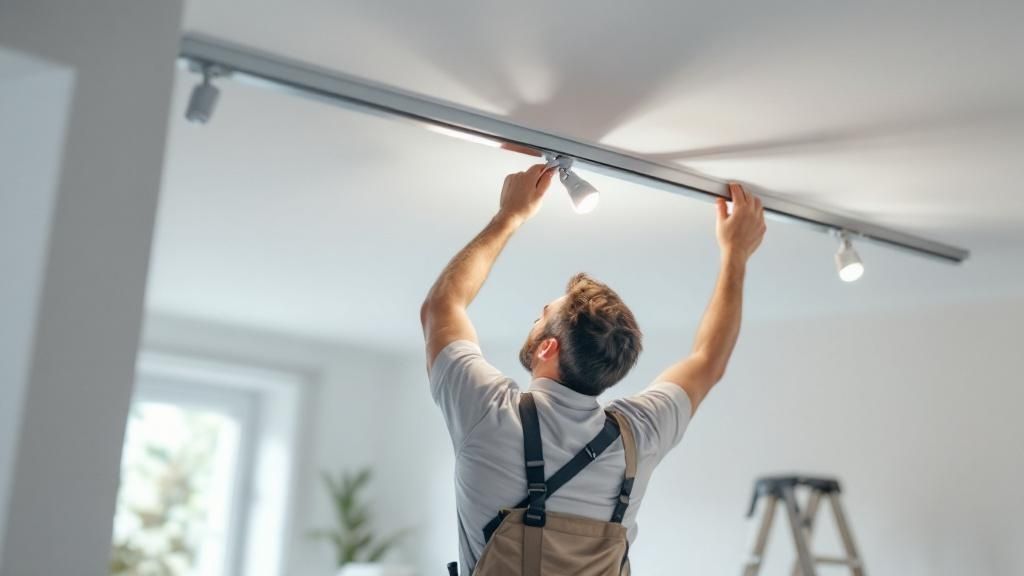
When the time comes to choose between track lighting vs. recessed lighting, the best choice boils down to your home's character, your lighting goals, and your budget.
Start by looking at your home's architecture. If you live in a historic Monterey Peninsula home, the less invasive nature of track lighting is a huge plus. If your home is modern, the clean look of recessed fixtures is a perfect fit.
Defining Your Primary Goal
Next, get clear on what you need your lighting to do. Is the goal to highlight an evolving art collection? Track lighting is your champion with its movable, targeted beams.
But if your main objective is to wash a room in broad, even light, recessed lighting is the clear winner. It delivers foundational brightness without visual clutter, much like choosing the right vanity lighting, which you can read about in our guide on how to choose vanity lighting.
Expert Insight: The most stunning lighting designs almost never use just one type of fixture. Truly effective spaces are about layering light. Use recessed cans for general brightness, then bring in track heads to put a spotlight on the things you love. This creates depth, drama, and a sense of purpose.
Finally, consider the total project cost. Recessed lighting usually comes with higher labor costs due to wiring, cutting, and drywall repair. Track lighting can be a much more budget-friendly retrofit.
Frequently Asked Questions
When deciding between track lighting vs. recessed lighting, the same questions tend to pop up. Here are the most common ones we hear in our showroom.
Which is better for sloped ceilings?
Track lighting is often the best solution for sloped, angled, and vaulted ceilings. It can be tricky, if not impossible, to get a recessed fixture to sit right on a slope. With track lighting, you can use pendants or rigid stems to let the individual heads hang perfectly level, ensuring the light is aimed down where you need it.
Which is more energy-efficient?
Energy efficiency isn't about the fixture type—it’s about the bulb. Both track and recessed systems have a huge variety of high-efficiency LED options available. Choosing LED bulbs for either setup will dramatically lower your energy use and give you a much longer bulb lifespan compared to older halogen or incandescent options.
Is recessed or track lighting better for kitchens?
The best kitchen lighting plans often use both. Use recessed lighting for general ambient light across the entire room. Then, add a track lighting system over the island or main prep counters for powerful, focused task lighting that eliminates shadows.
Do I need an electrician for installation?
For recessed lighting, the answer is a firm yes. We always recommend hiring a licensed electrician as it involves cutting into your ceiling, running new wiring, and ensuring everything is up to code. While a confident DIYer might replace an old fixture with a new track system, getting a professional is non-negotiable for any new wiring.
Can you mix track and recessed lighting in the same room?
Absolutely! This layered approach is what lighting designers recommend. Use recessed lights for a broad, foundational layer of ambient light, then add track lighting to create accent and task layers. This avoids many of the issues we cover in our guide on common home lighting mistakes.
Ready to map out a lighting plan that feels just right for your home's style and your family's daily life? The experts at The Home Lighter Inc. are here to walk you through every decision, from initial layout ideas to picking the perfect fixtures.
Visit our Pacific Grove showroom or schedule a consultation today!