
Imagine flipping a switch and not only filling your room with beautiful light but also knowing you're saving money and shrinking your carbon footprint. That's the real promise behind modern energy efficient lighting solutions, easily one of the smartest investments you can make in your home. This guide will go beyond the technical jargon to show you how technologies like LED and smart controls can elevate the comfort and style of any home, transforming your daily life while seriously cutting down your electricity bills.
Your Guide to a Brighter and Smarter Home
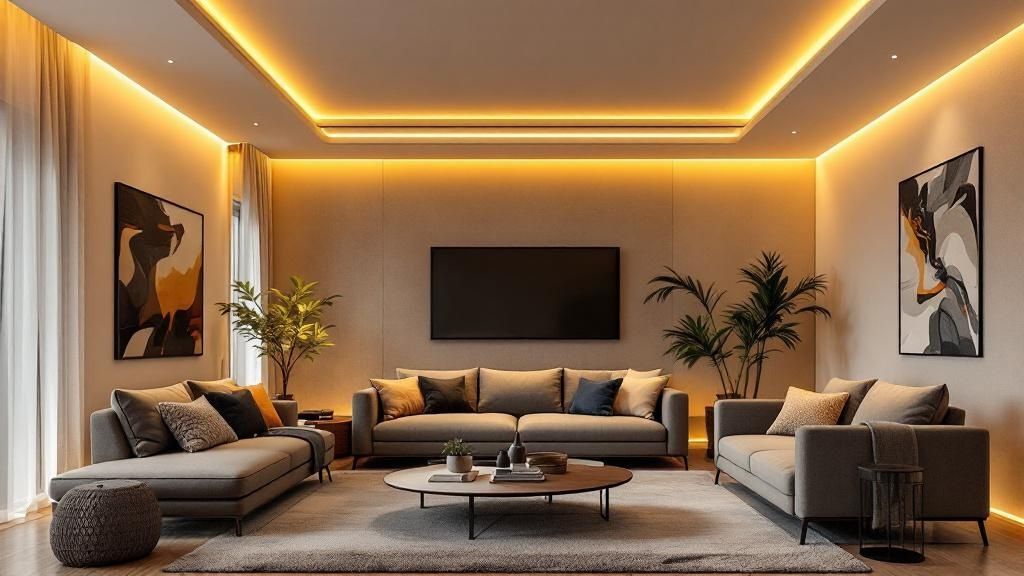
Making the move to energy-efficient lighting is about so much more than just swapping out a few bulbs. It's a chance to completely rethink how light works in your space, creating atmospheres that feel both welcoming and intelligent. Whether you're in a classic Carmel cottage or a modern Santa Cruz build, the right lighting brings out architectural details and just makes daily life better.
When you choose smarter lighting, you're taking a huge step toward a more sustainable and wallet-friendly home. The U.S. Department of Energy points out that residential LEDs use at least 75% less energy and last up to 25 times longer than old-school incandescent bulbs. The financial and environmental perks are obvious from day one.
Beyond the Bulb: What Efficiency Really Means
Real lighting efficiency isn't just about the bulb itself; it’s a smart blend of technology and thoughtful design. It’s not just about using less power, but about getting the absolute most out of every watt you do use. This means picking the right products and putting them together in a way that makes sense.
So, what does a truly efficient system look like? It comes down to a few key parts:
- High-Efficacy Fixtures: Modern fixtures, especially those with integrated LEDs, are engineered to push out the maximum amount of light while wasting minimal energy.
- Smart Controls and Automation: This is where it gets really clever. Dimmers, motion sensors, and timers make sure your lights are only on when you actually need them—and at the right brightness—slashing unnecessary power use.
- Strategic Lighting Design: A well-thought-out plan directs light exactly where it’s needed, so you avoid those overly-bright, energy-guzzling spaces.
Putting this all together creates a home that isn't just brighter, but one that works in total harmony with your lifestyle and your budget. To see how this fits into the bigger picture of home energy savings, it’s worth checking out a comprehensive guide to energy efficiency for buildings.
By focusing on both the technology inside the bulb and the strategy behind its placement, homeowners can unlock a new level of efficiency that saves money and enhances the living experience.
For those of us here on the Central Coast, adopting these solutions is a perfect way to align our homes with the region's forward-thinking, eco-conscious spirit. It doesn't matter if you're doing a full renovation in Monterey or just upgrading a few fixtures in Salinas; the principles of efficient lighting are universal, promising a brighter future for your home and our community.
Decoding Energy-Efficient Lighting Technology
So, what does “energy-efficient lighting” actually mean for your home? It’s simpler than it sounds. Think of those old incandescent bulbs as leaky garden hoses, wasting most of their energy as heat instead of light. Modern lighting, on the other hand, is like a precision sprinkler—delivering bright, clear light exactly where you need it with almost no waste.
To really get a handle on this, you just need to know two key terms: lumens and watts. For decades, we shopped for watts, thinking it meant brightness. But watts only measure how much energy a bulb uses. Lumens measure the actual brightness you see. With today's technology, the goal is to get the most lumens for the fewest watts.
Key Technologies Driving Efficiency
The world of efficient lighting has a few major players, but one stands head and shoulders above the rest as the new gold standard.
- Light-Emitting Diodes (LEDs): This is the undisputed champion. LEDs are tiny, solid-state devices that produce light with very little heat, making them incredibly durable and long-lasting. They offer fantastic light quality and give you unmatched control over color and brightness.
- Compact Fluorescent Lamps (CFLs): CFLs were a decent stepping stone away from incandescents. They saved a good amount of energy, but they also have drawbacks, like containing a small amount of mercury, having a shorter lifespan than LEDs, and often taking a while to warm up to full brightness.
- Smart Lighting Controls: These are the brains of the operation. Things like dimmers, motion sensors, and automated schedules make sure your efficient bulbs are only on when you actually need them. This is where you can really maximize your savings.
This image really drives the point home, showing the massive difference in annual costs and emissions when you compare old-school incandescents to modern LEDs.
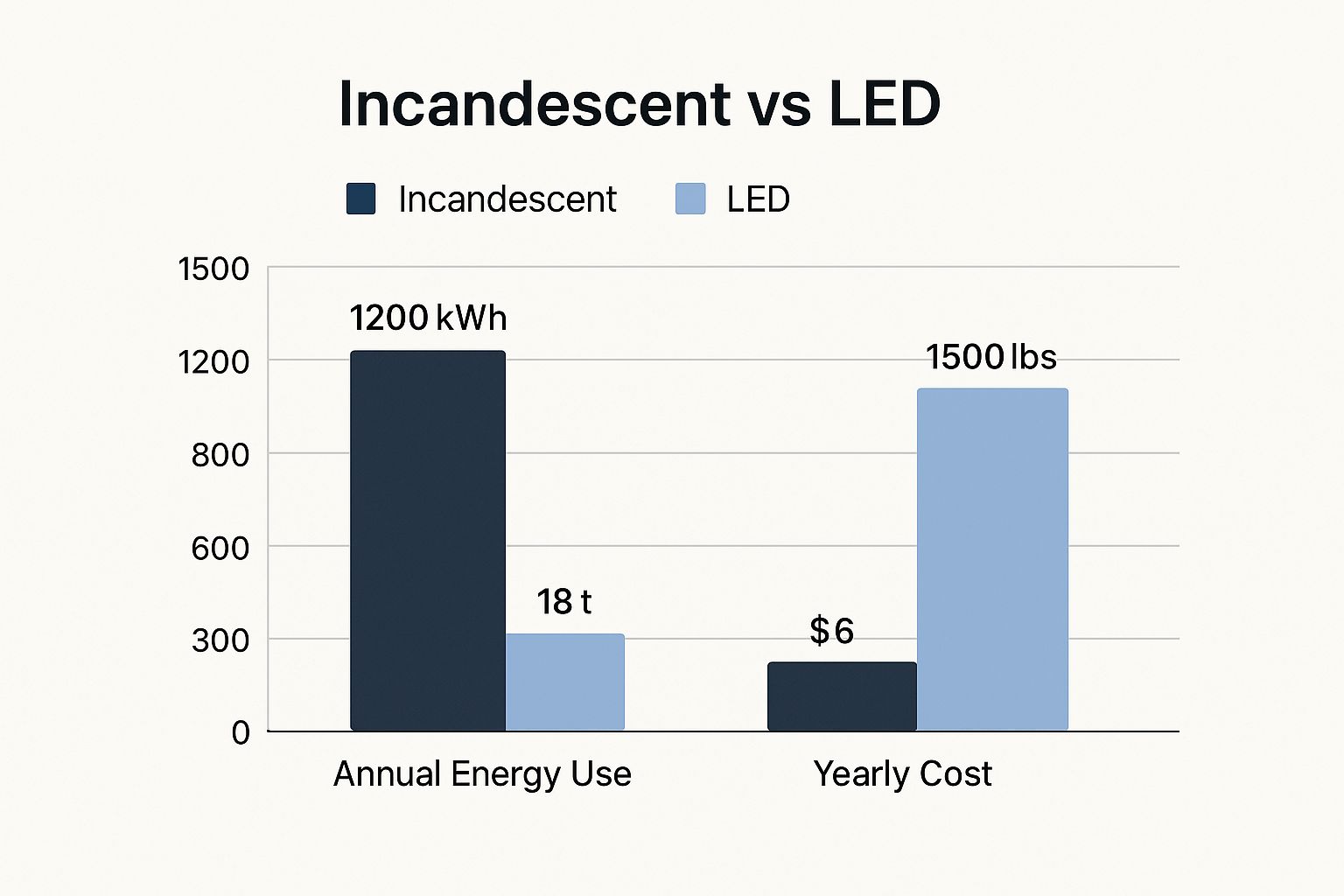
The numbers don't lie. Making the switch to LED technology slashes your energy use, lowers your yearly costs, and shrinks your home’s carbon footprint.
To help you see the differences more clearly, here's a quick comparison of the most common lighting types.
Lighting Technology at a Glance
| Lighting Type | Average Lifespan (Hours) | Energy Efficiency (Lumens per Watt) | Key Feature |
|---|---|---|---|
| Incandescent | 1,200 | 16 | Low initial cost but highly inefficient |
| Halogen | 2,500 | 20 | Slightly more efficient than incandescent |
| CFL | 8,000 | 60 | Good efficiency but contains mercury |
| LED | 25,000+ | 75 – 100+ | Highest efficiency and longest lifespan |
As you can see, LEDs outperform the others by a huge margin, offering a much longer life and converting far more energy into light.
This move away from older technologies is all about simple physics. An old-fashioned incandescent bulb is shockingly inefficient, turning over 90% of its energy into wasted heat. That’s why they get so hot! Modern lights flip that ratio, turning almost all their energy into light.
By choosing modern lighting, you're not just buying a better bulb; you are investing in a smarter, more sustainable technology that delivers superior performance while actively lowering your monthly expenses.
This technological leap is most obvious when you look at integrated LED lighting fixtures. Instead of just a screw-in bulb, these are complete systems where the light source and the fixture are designed as one unit. This holistic approach optimizes everything from heat management to light distribution, leading to even better efficiency and a much longer operational life. For anyone on the Monterey Peninsula, making this switch is one of the smartest upgrades you can make—blending sophisticated style with real, practical savings.
Unlocking the Full Potential of LED Lighting
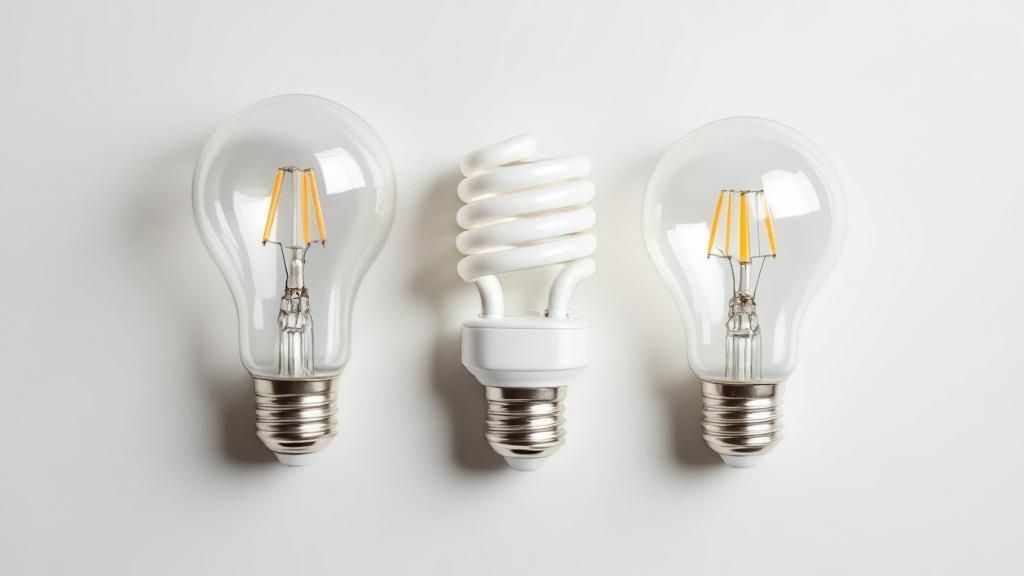
LED technology is the undisputed star of modern, energy-efficient lighting, and it’s easy to see why. Most people know them for their incredibly long lifespans and impressive energy savings. But their true power lies in the subtle features that can completely elevate a home’s atmosphere.
When you move beyond simple brightness, you can use LEDs to paint with light, creating moods and highlighting details in ways that just weren’t possible before. It only takes understanding a couple of key ideas to see the possibilities. When we talk about the quality of light, we're really talking about two things: the Color Rendering Index (CRI) and color temperature, measured in Kelvins (K).
Mastering these two elements is the secret to creating truly exceptional spaces.
The Importance of True Colors with High CRI
Have you ever noticed how the rich tones of a wood floor or a vibrant painting can look dull and a little "off" under bad lighting? This is where the Color Rendering Index (CRI) comes in. CRI is a scale from 0 to 100 that tells you how accurately a light source shows the true colors of objects compared to natural sunlight.
Think of it like the difference between an old standard-definition TV and a brand-new 4K screen. A low-CRI light is like that older TV—sure, you see an image, but the colors look washed out and flat. A high-CRI light, on the other hand, is the 4K screen, revealing every subtle shade and texture with stunning clarity.
For home lighting, a CRI of 90 or higher is the gold standard. This level of color accuracy makes everything from the food in your kitchen to the artwork on your walls look its absolute best, creating a more vivid and natural-feeling environment.
Using high-CRI LEDs is a simple way to make a huge impact. In the kitchen, it makes fresh ingredients look more appetizing. In a walk-in closet, it ensures your clothes look the same color as they do outside, so you can stop guessing when you coordinate outfits.
Crafting a Mood with Color Temperature
While CRI is all about color accuracy, color temperature is about the mood of the light itself. It dictates whether the light feels warm and cozy or crisp and cool. Measured in Kelvins (K), this scale determines the visual warmth of a white light source. Lower Kelvin values give off a warm, amber glow, while higher values create a cool, bluish-white light.
Here’s a quick guide to how the Kelvin scale works in a home:
- 2700K (Warm White): This is that classic, cozy glow we all know from traditional incandescent bulbs. It’s perfect for living rooms, bedrooms, and dens—anywhere you want to create a relaxing, inviting feel.
- 3000K (Soft White): A slightly crisper, cleaner white that still feels warm and welcoming. This is a super versatile choice that works beautifully in kitchens and bathrooms, giving you clear light without feeling harsh.
- 4000K (Cool White): This bright, neutral white is great at mimicking the clarity of daylight. It’s an excellent choice for home offices, garages, and laundry rooms where you need to be focused and alert for tasks.
- 5000K+ (Daylight): A very cool, almost blue-toned light. While it's less common for general lighting inside, it can be perfect for specific task lighting or in workshops where you need maximum brightness and contrast.
For those of us on the Central Coast, choosing the right color temperature can connect your indoor spaces with the natural beauty right outside your door. A warm 2700K light can mimic the soft glow of a Carmel sunset. Better yet, tunable white lighting lets you sync your interior light with the changing daylight cycles.
Seeing these differences in person is always the best way to choose. Exploring a curated selection of energy efficient LED lights in a showroom can make all the difference. By picking the right combination of CRI and color temperature, you can craft the perfect ambiance for every single room in your house.
Reaching Peak Efficiency with Smart Lighting
You know, the most efficient light bulb is actually the one that's turned off. And while LED technology is a huge leap forward in saving energy, the real game-changer is making sure your lights are only on when—and as bright as—you truly need them. This is where smart lighting controls come in, transforming your home from a bunch of simple switches into a truly intelligent, responsive space.
Smart lighting is one of the most practical and impactful ways to bring modern tech into your home. It’s about moving beyond flipping a switch manually and instead, automating your lighting to perfectly match your lifestyle and environment. This adds a layer of intelligence that takes all the benefits of your energy efficient lighting solutions to the next level.
Just imagine your lights automatically dimming to match the natural daylight pouring into your Pacific Grove home. Picture them shutting off all by themselves when a room is empty. That kind of hands-free convenience is what a genuinely smart home is all about, and it's more accessible than you might think.
The Core Components of Smart Lighting
At their heart, smart lighting systems are built from a few key devices that work in harmony to automate your home’s illumination. Each one has a specific job to do, all aimed at maximizing both your convenience and your energy savings.
- Dimmers: This is the simplest form of lighting control, letting you adjust brightness levels. Turning down the brightness not only creates a softer, more inviting atmosphere but also directly cuts down on energy use and even extends the life of your LED bulbs.
- Sensors: Think of these as the eyes and ears of your lighting system. Occupancy sensors detect movement, turning lights on when you walk into a room and off after you've left. Then there are daylight sensors (or photosensors), which measure the ambient light and adjust your indoor lighting so you're not wasting electricity when the sun is already doing the work.
- Timers and Schedulers: These straightforward tools let you put your lights on a schedule. You can set your exterior lights to turn on at dusk and off at dawn, or even program interior lights to create a "lived-in" look when you're on vacation.
When you bring these elements together, you're creating a system that actively hunts down and eliminates wasted electricity. You no longer have to remember to turn off the lights—the system handles it for you, ensuring you're running at peak efficiency all day, every day.
The Power of Automation and AI
The real magic starts when these components are tied into a single, cohesive system, often supercharged by artificial intelligence (AI). Modern smart lighting isn't just about simple on-off schedules; it actually learns your family's habits and crunches real-time data to make smarter, more intuitive decisions.
This kind of advanced automation has some serious perks. For instance, AI-driven lighting systems can optimize energy usage by adjusting brightness and color temperature based on real-time environmental and occupancy data. This technology also helps your bulbs last longer and slashes electricity costs by automatically shutting off lights in empty rooms. (Discover more insights about these findings on maximizemarketresearch.com).
When you integrate lighting into a complete smart home system, you unlock even more potential. You can create "scenes" that adjust lights, window shades, and the thermostat with just one command. This is part of a larger trend in energy management, which includes exciting innovations like the Solar Technology of AI and IoT.
For homeowners here on the Monterey Peninsula, a smart system can be perfectly tailored to our unique coastal lifestyle. It can brighten up your home on a foggy morning in Carmel or dim the lights for a relaxing Salinas evening, all without you lifting a finger. This seamless blend of technology and daily life is what makes smart lighting one of the most powerful energy efficient lighting solutions available today.
Calculating Your Savings and Finding Rebates
It’s one thing to appreciate the look and feel of modern lighting, but seeing the numbers in black and white is what really drives the point home. Upgrading to energy-efficient lighting solutions is one of the smartest financial decisions you can make for your home, and the proof is in the savings. The initial investment pays for itself surprisingly fast, thanks to lower electricity bills and virtually no maintenance.
Sure, an LED bulb costs more upfront than an old-fashioned incandescent. But its incredibly low energy use and ridiculously long lifespan mean the savings start piling up from the very first month. It’s a quick win that makes a real difference in your budget.
Estimating Your Potential Savings
You don’t need to be an accountant to figure out your potential savings. It’s a simple comparison between the energy your old bulbs gobble up and what the new LEDs will sip instead. The difference is often staggering.
Let's break it down with a straightforward, real-world example to see how it all adds up over a year.
Sample Annual Cost Savings LED vs Incandescent
| Bulb Type | Number of Bulbs | Watts per Bulb | Hours of Use per Day | Annual Energy Cost |
|---|---|---|---|---|
| Incandescent | 20 | 60W | 5 | $492.75 |
| LED Equivalent | 20 | 9W | 5 | $73.91 |
| Annual Savings | $418.84 | |||
| Calculation based on an average electricity rate of $0.225/kWh. |
As you can see, just swapping out twenty 60-watt incandescent bulbs for their 9-watt LED counterparts can put over $400 back in your pocket each year. Imagine multiplying that across every single light fixture in your home—the total savings become significant, easily covering the cost of the new bulbs.
Finding Local Rebates and Incentives
On top of the direct energy savings, you can often cut your initial costs even more by tapping into local utility rebates. These programs are specifically designed to encourage homeowners like you to make the switch to more efficient technology.
Incentive and rebate programs are a huge reason why energy-efficient lighting is becoming so popular. Government policies are making it more affordable for everyone to upgrade. You can read the full research on the energy efficient lighting market to see just how big this trend is.
For those of us here on the Central Coast, there are several great programs that can make your project even more budget-friendly. Here’s where to start looking:
- Pacific Gas and Electric (PG&E): PG&E regularly offers rebates and special pricing on certified energy-efficient products, including LED bulbs and fixtures. Their marketplace is the best place to find current deals for residents in Monterey, Salinas, and Santa Cruz.
- Central Coast Community Energy (3CE): As our local community-choice energy provider, 3CE is always promoting energy conservation. Keep an eye on their programs, as they often include lighting upgrades.
- Database of State Incentives for Renewables & Efficiency (DSIRE): This is a fantastic national database. Just plug in your zip code, and it will show you all the state and local incentives you might qualify for.
These programs are always evolving, so it’s smart to check their websites or talk to a lighting pro. When you work with us at The Home Lighter, we’ll help you navigate the current incentives for your project and walk you through all your residential lighting solutions.
And don't stop at lighting! Homeowners can often explore incentives for other home energy upgrades, helping you maximize savings across your entire property.
How The Home Lighter Can Help
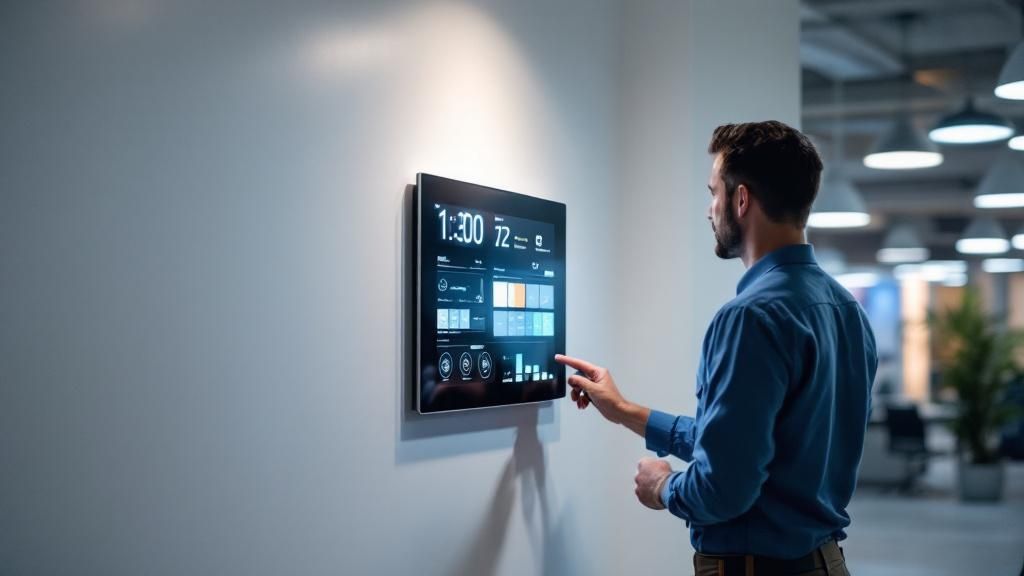
This is where the magic really happens—where all the pieces of efficiency, technology, and style snap together. Creating a great lighting plan is about so much more than grabbing a few bulbs off a shelf at a big-box store. It’s about thoughtfully designing a layered, cohesive system that fits your life and reflects your personal taste.
A successful lighting plan is always a partnership. We take a consultative approach, sitting down with homeowners, designers, and builders to cut through the jargon. Our job is to translate the technical details into practical choices you can feel confident about.
A well-designed lighting system doesn't just illuminate a room; it transforms it. By balancing aesthetics with efficiency, you create a space that is both beautiful and intelligent, delivering long-term value and daily enjoyment.
This collaborative process makes sure every element works in harmony, from the cozy warmth of the right color temperature to the visual clarity you get from a high-CRI bulb.
Tailoring Solutions to Local Styles
Here on the Central Coast, we're surrounded by a rich tapestry of architectural styles, and each one has its own character and lighting needs. A historic Monterey adobe, for instance, calls for a completely different touch than a sleek, modern coastal home in Santa Cruz. Our deep local roots mean we know how to create lighting that honors and elevates these unique designs.
We know exactly how to use light to:
- Highlight Historic Details: Carefully placed fixtures can draw the eye to the gorgeous rustic wood beams of a Carmel cottage or the unique plasterwork of a Spanish colonial home.
- Embrace Coastal Modernism: For contemporary beach houses, we use clean lines and minimalist fixtures to complement that open, airy feeling and blur the lines between indoor and outdoor living.
- Maximize Natural Light: We design systems that play nicely with our changing coastal light—from the bright, clear sun in Salinas to the soft, gentle fog in Pacific Grove. Your home will feel just right, no matter the time of day.
Your Vision Realized
Ultimately, our goal is simple: to bring your vision to life. We guide you through the process of layering light—ambient for overall mood, task for function, and accent for drama—to build an environment that's as beautiful as it is practical. Our team is here to help you explore the options and truly see how different fixtures and controls will feel in your own space.
When you understand the principles of a great living room lighting layout, for example, you can start applying those same ideas throughout your home. We partner with you to craft a personalized plan that not only hits all your aesthetic goals but also delivers maximum energy savings and quality that will last for years.
FAQs About Energy Efficient Lighting Solutions
Diving into modern lighting can feel like learning a new language. To cut through the noise and help you feel confident about the choices you're making for your home, we've put together answers to the questions we hear most often from homeowners here on the Monterey Peninsula.
Can I Use New LED Bulbs in My Old Light Fixtures?
Absolutely. The good news is that most LED bulbs are made to be direct replacements for your old incandescents. They almost always use the same standard bases (like the common E26 screw-in base), so upgrading your existing lamps and fixtures is usually as simple as screwing in a new bulb.
That said, it’s always a good idea to glance at the packaging for any compatibility notes. You’ll want to pay special attention if you're putting them in a fully enclosed fixture—some LEDs need a bit of airflow to keep cool and live up to their impressive lifespan.
Are All LED Bulbs Dimmable?
No, and this is a big one. Not every LED bulb is designed to be dimmed. While many are, you can't just assume it's a standard feature. We often see issues like flickering or buzzing when a non-dimmable LED is paired with a dimmer switch, which can even shorten the bulb's life.
To get it right, always check the packaging or product specs for the word "dimmable." It's also smart to make sure your dimmer switch is a newer model built for LEDs. Old-school dimmers were designed for the much higher energy pull of incandescent bulbs and just don't play well with modern, low-wattage LEDs.
Getting these little details right makes all the difference. You can learn more about this and other common issues in our guide to common home lighting mistakes.
What Is the Real Difference Between Lumens and Watts?
This is a fantastic question, and it really gets to the heart of how we should think about light now. For years, we've been trained to shop for watts, but it's time to retrain our brains.
Think of it like this:
- Watts (W) measure the energy a bulb uses.
- Lumens (lm) measure the light a bulb puts out—its actual brightness.
With old, inefficient incandescent bulbs, more watts meant more light. Simple. But with super-efficient LEDs, that connection is broken. A modern LED can produce the same amount of light (lumens) for a fraction of the energy (watts). So, from now on, shop for lumens first to get the brightness you need.
Is a Smart Lighting System Expensive to Install?
It really doesn't have to be. One of the best things about smart lighting is how scalable it is. You can start small and build your system over time.
A basic setup might just be a few smart bulbs and a smartphone app, which is a very affordable way to get instant control over key lights in your home. Of course, a fully integrated system with motion sensors, automated schedules, and whole-home control is a bigger investment. But those advanced systems are where you see the biggest payoff in both convenience and long-term energy savings. There's a solution for nearly every budget.
Does an LED Bulb’s Lifespan Decrease if I Turn It On and Off a Lot?
Not at all! This is a myth left over from the days of fluorescent lights, which really did wear out faster with frequent switching. LEDs are a completely different technology.
They are solid-state devices, more like the chips in your phone than a fragile filament in a glass bubble. They are completely unfazed by being turned on and off, no matter how many times you do it. This durability makes them the perfect choice for high-traffic areas like hallways or for pairing with motion sensors that cycle the lights throughout the day.
Ready to create a lighting plan that is both beautiful and efficient? The experts at The Home Lighter, Inc. are here to help you navigate every step, from selecting the right fixtures to designing a system that fits your lifestyle. Contact us today to schedule a consultation!