
Have you ever noticed how some light bulbs make a room feel cozy, while others feel cool and bright? The reason for this is a concept called Kelvin.
Think of the Kelvin scale as a way to measure the color of light, not its heat. Understanding this simple idea is the first step to making your home's atmosphere feel just right.
What Is Kelvin in Lighting?
Simply put, Kelvin (K) is the unit we use to describe the color temperature of a light source. It's the technical term for whether a light looks warm and yellow or cool and blue. Choosing the right Kelvin helps you create the exact mood you want in any space.
While the scale started in science in the 1800s, today it’s all about how light looks and feels. In home lighting, we usually work with a range from a very warm 2000K, like candlelight, up to a cool 6500K, which feels like bright daylight.
This range gives you a lot of control over your home's feel. You can learn more about lighting with these insights on current lighting trends.
Why Kelvin Matters for Your Home
Picking the right Kelvin temperature is more than just a personal choice. It truly affects how you feel and function in your home. The right light can make a living room feel welcoming, help you focus in your office, or tell your brain it’s time to relax.
Here’s a quick breakdown of why it’s so important:
- It Sets the Mood: Lower Kelvin values (around 2700K–3000K) give off a warm, inviting glow. This is perfect for living rooms and bedrooms where you want to relax.
- It Boosts Your Focus: Higher Kelvin values (4000K–5000K) produce a crisp, neutral-to-cool light. This is great for kitchens, home offices, and garages where you need to see clearly.
- It Affects Your Decor: The color of your light changes how your paint, furniture, and art look. A warm light brings out reds and yellows, while a cool light makes blues and grays stand out.
Once you understand this, you can make smarter lighting choices. Whether you’re changing a few bulbs or planning a full redesign with energy-efficient lighting solutions, getting the Kelvin right is key to great lighting.
Exploring the Full Spectrum of Light Color
Now that you know what Kelvin is, let's look at the different parts of the scale. Most light bulb packages group color temperatures into three main categories. This makes it easier to find the perfect mood for any room in your Monterey Peninsula home.
Each range creates a different feel, from a cozy fireside glow to the crisp energy of a bright coastal morning. Think of the Kelvin scale as a way to control the mood. Lower numbers create warmth, while higher numbers bring clarity.
Warm White: The Light of Comfort
The first category you'll see is Warm White, which is usually from 2000K to 3000K. This is the color of pure comfort. It has a gentle, amber glow like a sunset or a classic light bulb, making a space feel cozy and inviting.
This warm light is perfect for spaces where you want to relax.
- Living Rooms: A 2700K light makes your living room a welcoming retreat, perfect for conversation and relaxing.
- Bedrooms: Warm light in the bedroom helps signal your brain that it's time to wind down, creating a restful environment for sleep.
- Dining Areas: It casts a soft, flattering light that makes meals feel more intimate and food look more appealing.
Neutral White: The Light of Clarity
Moving up the scale, we find Neutral or Bright White, which is in the 3100K to 4500K range. This light is clean and clear without being too yellow or too blue. It helps you see well without the sterile feel of cooler tones.
Because it’s so balanced, neutral white is very versatile. It’s a great choice for areas that need to handle both tasks and general living. You can learn more about how different bulb colors change your space by understanding different light bulb colors.
For many homeowners, the 3000K to 3500K range is a great sweet spot. It provides enough clarity for tasks while still feeling comfortable, making it a fantastic all-around choice.
This infographic breaks down the Kelvin spectrum into these three categories to help you see how they affect a room's feel.
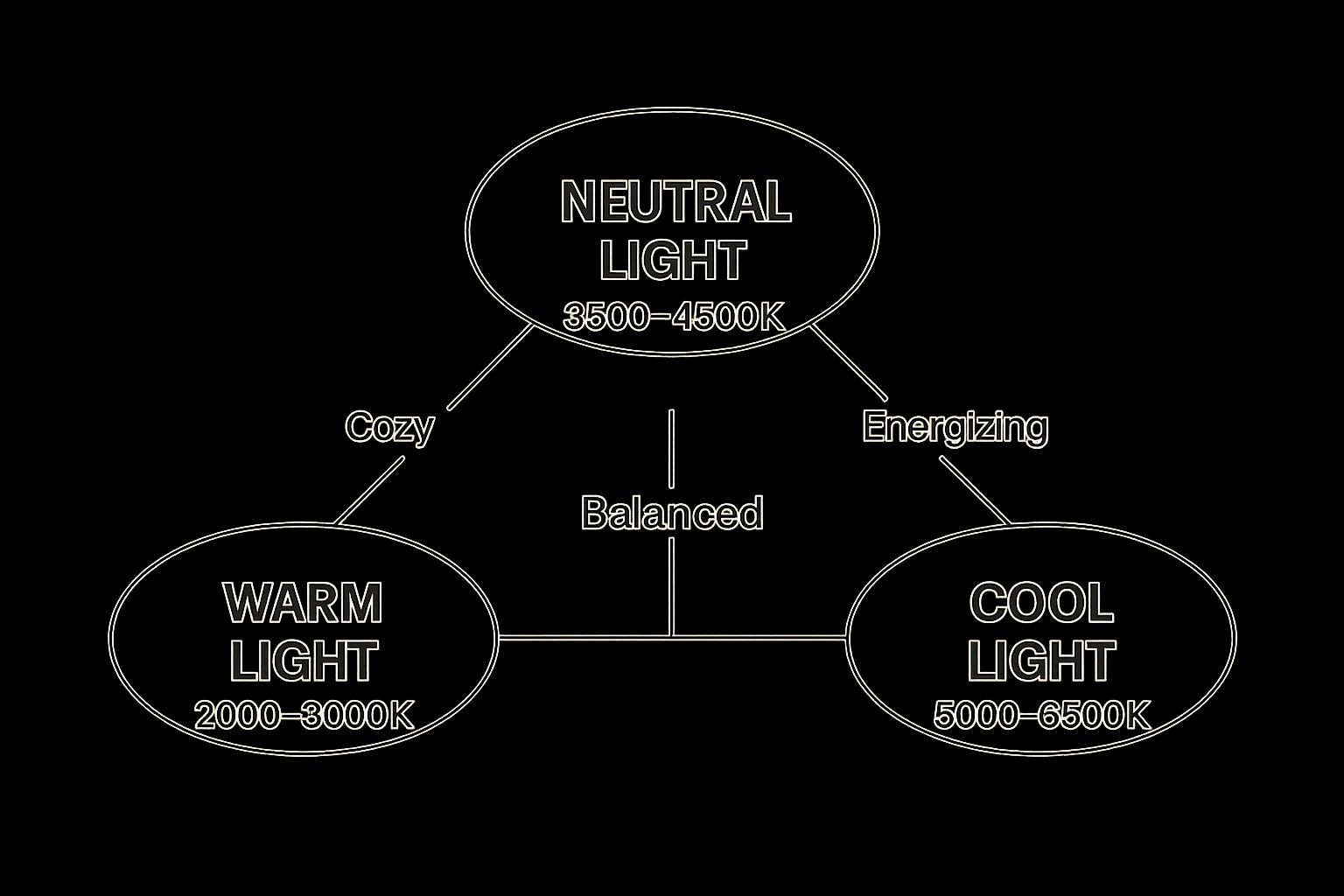
As you can see, moving up the scale shifts the feeling from cozy to balanced and then to energizing. This gives you precise control over your home's atmosphere.
Cool Daylight: The Light of Focus
Finally, we arrive at Cool White or Daylight, which covers the 4600K to 6500K range. This light is crisp, bright, and has a slight blueish tint, much like natural daylight on a clear day. This high-Kelvin light is known to boost alertness and sharpen focus.
This energizing quality makes it perfect for task-oriented spaces. You'll find it works best in rooms where visibility and concentration are the main goals.
- Home Offices: A 5000K light can help you stay productive and focused on your work.
- Garages & Workshops: It provides the clear, bright light you need for detailed projects and safety.
- Laundry Rooms: Cool light is great for spotting stains and seeing true colors when sorting clothes.
Using different lighting types, like knowing when to use track lighting vs. recessed lighting, combined with the right Kelvin, is what makes a space truly great.
How Light Color Transforms Your Interior Design
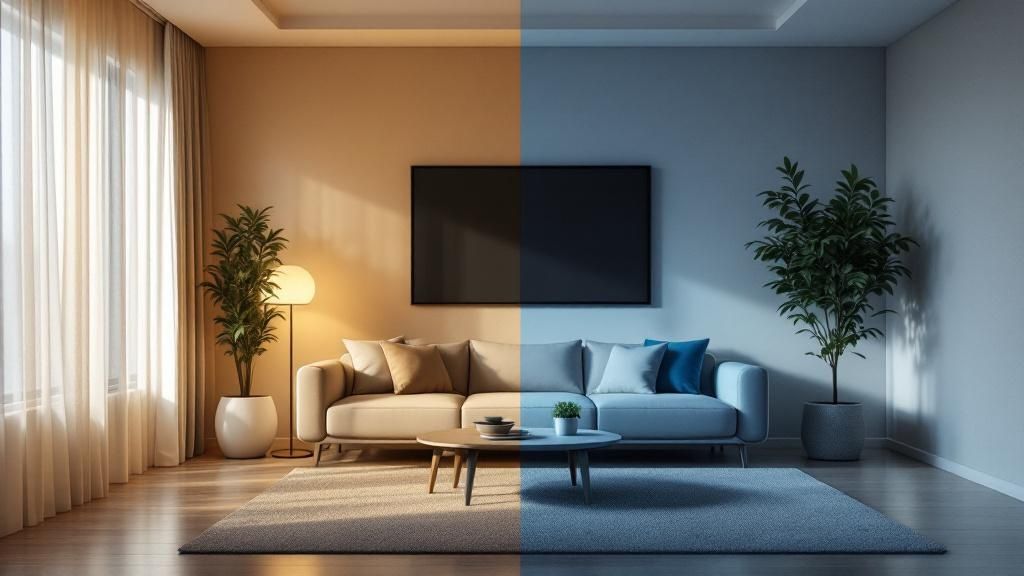
The Kelvin temperature you choose does more than just light up a room. It changes how you see every color, texture, and finish in your home. Think of your light fixtures as a filter for your entire design. The right color temperature can make your decor look great, but the wrong one can make your paint colors look flat or just plain wrong.
Understanding how light and color work together is the secret to a beautiful home. For example, warm light and warm colors are a natural match.
-
Warm Light (2700K–3000K): This cozy, amber glow makes reds, oranges, and natural wood tones feel richer. It’s perfect for creating an intimate feel and brings out the warmth in coastal-inspired designs popular along the Monterey Peninsula.
-
Cool Light (4000K+): On the other hand, crisp, blue-toned light boosts the vibrancy of blues, greens, and grays. It creates a clean, modern look and can make cool-toned paint colors feel even fresher.
Beyond Kelvin: The Importance of CRI
While Kelvin sets the mood, another factor determines how true your colors will look: the Color Rendering Index (CRI). CRI is a scale from 0 to 100 that measures how accurately a light source shows the true colors of objects compared to sunlight. A higher CRI means your paint and furniture will look exactly as you intended.
For most homes, we suggest a CRI of 90 or higher to make sure your design looks its best. A bulb with a low CRI can make even vibrant colors look dull, no matter what the Kelvin temperature is.
Think of it this way: Kelvin creates the feeling, while CRI ensures the accuracy of your colors. If you ignore one, you risk hurting the other, and the whole design can fall flat.
Choosing the Right Light for Your Design
So, how does this all work in your home? Imagine a living room with warm oak floors and a rust-colored sofa. A 2700K bulb will make those elements glow. But that same warm light could make a cool gray kitchen look dingy.
For a space with crisp white cabinets and blue tiles, a cleaner 3500K light would be a much better match. It keeps the colors true and the room feeling bright and fresh.
Getting this balance right is what great design is all about. By carefully selecting your Kelvin temperature, you ensure your lighting helps your design vision instead of fighting it. Planning your living room lighting layout with both Kelvin and CRI in mind can completely transform your most important spaces.
A Practical Guide to Room-by-Room Lighting

Now that we know the basics, let’s talk about putting it into practice. Choosing the right Kelvin temperature for each room is about matching the light to what you do in that space.
Think of this as your room-by-room guide for creating a perfectly lit home. It’s how you design an atmosphere where every space feels just right.
For Rooms of Relaxation: Living Rooms and Bedrooms
In spaces where you relax, like your living room and bedroom, the goal is to create a calm atmosphere. Warm light is your best friend here because it creates a sense of comfort that helps you unwind.
We recommend a Kelvin temperature between 2700K and 3000K for these areas. This range gives off a soft, amber glow that sends a clear signal to your brain that it's time to relax. It's the perfect light for reading a book or watching a movie.
A warmer light instantly makes a space feel more intimate. For homeowners on the Monterey Peninsula looking to create a cozy retreat from the cool coastal fog, a 2700K light is a perfect choice.
For Task-Oriented Spaces: Kitchens and Bathrooms
Kitchens and bathrooms are the work areas of the home. In these rooms, you need bright, clear light for everything from chopping vegetables to applying makeup. A warmer, dimmer light can make these jobs difficult and even unsafe.
For these functional spaces, a more neutral light in the 3000K to 4000K range is a great choice. This brighter, whiter light gives you excellent visibility and shows colors more accurately without feeling cold. It’s the perfect balance between inviting and functional.
For Areas of High Focus: Offices, Garages, and Laundry Rooms
When you enter a home office, garage, or laundry room, the goal is usually focus and visibility. In these places, your lighting should support concentration. According to Grand View Research, fixtures in the 2,700K to 4,500K range make up about 45.6% of the indoor lighting market.
A cooler light, from 4000K to 5000K, is the best choice here. This crisp, blue-toned light is similar to natural daylight, which can help boost productivity and reduce eye strain. It’s perfect for spotting a stain in the laundry room or staying sharp through a long workday.
Of course, modern solutions like a professional smart home lighting installation can give you the best of all worlds. It allows you to adjust Kelvin temperatures throughout the day to match your needs.
Get Personalized Guidance from Local Experts
Knowing the basics of Kelvin is a great start, but applying that knowledge can be tricky. It's one thing to read about color temperature, but it’s another to get it perfect in your own home. This is where professional guidance makes all the difference.
Here at The Home Lighter, our consultants have been helping people across Monterey, Salinas, and Santa Cruz make lighting choices they love for years. We’re here to help you understand what Kelvin feels right for your home.
Experience Lighting Firsthand
Reading about 2700K versus 4000K is one thing, but seeing the difference in person is another. Our Pacific Grove showroom is set up like a design lab, letting you experience different color temperatures for yourself. This crucial step helps you see how light will look with your paint colors and furniture.
We can help you see how different lighting choices work with the unique character of homes here on the Central Coast. Seeing the options side-by-side takes the guesswork out of your decision.
A Plan Tailored to Your Home
We are more than just a lighting store; we are your local partners in creating a perfectly lit home. Our team takes the time to understand your lifestyle, how natural light moves through your home, and your design goals.
We create a custom lighting plan that considers every detail. This ensures your lighting doesn’t just look great, but also supports the way you live—from cooking family dinners to relaxing with a book.
This personalized guidance ensures every light works together to create a comfortable atmosphere you'll enjoy for years to come. We’re here to help you get it right the first time.
Frequently Asked Questions About Kelvin
Even after you learn the basics, a few questions often come up when choosing a light bulb. Getting these answers can give you confidence when you're at the store. Let's clear up some of the most common questions about Kelvin temperature.
These quick answers will help you feel ready to make the best lighting choices for your home.
Does a higher Kelvin number mean brighter light?
No, this is a common mix-up. The Kelvin (K) number is only about the color of the light—whether it looks warm yellow or cool blue. It has nothing to do with how bright the light is.
A bulb's brightness is measured in lumens. You can have a 2700K warm bulb and a 5000K cool bulb that both produce the same amount of lumens. They will be equally bright, but the feeling they create will be very different.
Can I mix different Kelvin temperatures in the same room?
It's usually best to keep your main lights consistent for a clean look. However, you can mix Kelvin temperatures strategically. The key is to use different light colors for different layers of light.
For example, you could use a soft 3000K for your main ceiling lights and a crisp 4000K bulb in a reading lamp by your chair. This works because each light has a specific job. Just try to avoid mixing temperatures in the same light fixture, as that can look messy.
What is tunable white lighting?
Tunable white lighting is a technology that lets you control the color temperature of your light. These fixtures allow you to adjust the Kelvin value of a single light using a remote, an app, or a wall switch.
This technology is a game-changer for rooms that serve multiple purposes. You can set a cool, energizing light for work in your home office, then change it to a warm, relaxing glow in the evening—all from the same light. Our guide to the best lighting for a home office explains how this flexibility helps.
Why do my paint colors look different at night?
If your wall colors seem to change after the sun goes down, you're not imagining it. This happens because the Kelvin temperature of your light bulbs is very different from natural daylight.
Natural daylight is often very cool (around 5000K or higher) and has a nearly perfect Color Rendering Index (CRI). If your indoor lights are a warm 2700K, they will bring out the warmer tones in your paint and reduce the cooler blues and grays. This is why designers always test paint swatches on the wall to see how the color looks in both natural and artificial light.
Is there a single best Kelvin temperature?
No, there isn't one "best" Kelvin temperature that works for everyone. Finding the right one is a personal choice and depends on a few things: the room's purpose, your design style, and your own preference. Some people feel more comfortable in warmer light, while others prefer the crispness of cooler light. The goal is to find a temperature that makes you feel great in your home.