
When you look up at a beautiful vaulted ceiling, whether in a cozy Carmel cottage or a modern Santa Cruz home, you want to see its grand design. The last thing you want is a dark, empty space. The secret to making these ceilings look amazing is a smart lighting strategy.
The best lighting for vaulted ceilings uses a layered lighting approach. Think of it like painting with light. You combine different types of lights—ambient, task, and accent—to create a space that looks great and works for your daily life. A single chandelier might be pretty, but it often leaves corners in the dark and doesn't provide focused light where you need it.
Your Guide to Lighting High Vaulted Ceilings
High ceilings are dramatic and make a room feel open. But they can also be a challenge to light correctly. Their height and angles can make light disappear if you're not careful.
Instead of just one big light in the middle, a layered plan is much better. It uses light from different heights and directions. This gets rid of dark spots and shows off the beautiful architecture you love, like beams and angles.
Understanding the Three Layers of Light
To light a room with high ceilings well, you need to use three different types of lighting. Each one has a specific job. When they work together, the result is fantastic.
Let's look at the three key layers you need to use.
The Three Essential Layers of Light for Vaulted Ceilings
| Lighting Layer | Purpose | Common Fixtures |
|---|---|---|
| Ambient | Provides the main, overall light for the room. It's like a substitute for daylight. | Chandeliers, large pendants, recessed can lights, track lighting |
| Task | Gives focused light for activities like reading, cooking, or working. | Pendants over an island, floor lamps, desk lamps, under-cabinet lights |
| Accent | Adds style by highlighting features like artwork, beams, or textured walls. | Spotlights, track lights aimed at features, wall sconces |
As you can see, each layer is important. When you combine them, your room will feel balanced, useful, and full of character.
Of course, you should also think about the best light source of all: the sun. It's important to think about maximizing natural light with aluminium glazing to work with your indoor lights.
By mixing these layers of light, you can turn a tricky space into one that feels warm, welcoming, and perfectly lit for any occasion.
Why Layering Light Is Crucial for Vaulted Ceilings
Using only one light for a vaulted ceiling is like trying to paint a masterpiece with just one brush. You'll get some light, but you'll miss the depth and richness that make a room special. A layered lighting plan is the key to turning these big spaces into warm, inviting rooms.
The best lighting for vaulted ceilings uses multiple sources to create balance. Instead of one harsh light that makes dark shadows, a layered plan uses different fixtures at different heights. This washes the room in soft, even light. This is how you fix common issues like dark corners or the "cave effect," where the high ceiling disappears into darkness.
The Three Building Blocks of Light
Think of your lighting plan in three parts. Each part has a specific job to do. When they work together, they create a complete feeling that lights every part of your room on purpose.
- Ambient Light: This is your foundation. It's the soft, overall light that fills the room and makes it feel comfortable, like daylight.
- Task Light: This is your focused, get-it-done light. Think of a bright light over a kitchen island for cooking or a floor lamp next to a chair for reading.
- Accent Light: This is the artistic touch that adds drama. Accent lighting highlights things like wood beams, a stone fireplace, or a piece of art.
Creating Depth and Avoiding Shadows
A single light overhead shines straight down. This can create shadows on people's faces and leaves the top of your vaulted ceiling in the dark. By adding light from different places, you can fix this problem completely.
Wall sconces can wash the walls with a soft glow, making the room feel cozier. A chandelier provides a beautiful ambient light. Track lighting can highlight the ceiling's unique angles. If you are thinking about this type of lighting, our guide on track lighting versus recessed lighting can help you decide what's best.
The goal is to use light from many directions to fill in shadows and create warmth. This approach makes a large room feel balanced and complete.
This smart approach to lighting is why the home fixture market is growing. The global lighting fixtures market is expected to reach $653.09 billion by 2032. This shows that people understand how good lighting can transform a home. You can see more data on lighting fixture market trends.
Choosing the Right Fixture Types
Now that we've talked about the plan, let's get to the fun part: picking the fixtures. Selecting the best fixtures for your vaulted ceiling is about balancing looks and function. Each light should play a role in your ambient, task, or accent lighting plan.
It's clear that homeowners are paying more attention to lighting. The world market for ceiling lights and chandeliers is expected to hit $52.10 billion by 2030. This shows that people are investing in fixtures that make their homes better.
Statement Pendants and Chandeliers
When you think of a vaulted ceiling, big, dramatic lights often come to mind. A statement chandelier or a large pendant can be a beautiful focal point. It fills the vertical space and provides a wide, welcoming ambient light.
Think of these fixtures as art that also works. They draw your eyes up, showing off the room's height. When you hang one over a dining table or in a living room, it defines that area and makes it feel cozy. If you're lighting a kitchen, our guide on choosing the best lighting for a kitchen island has some great ideas.
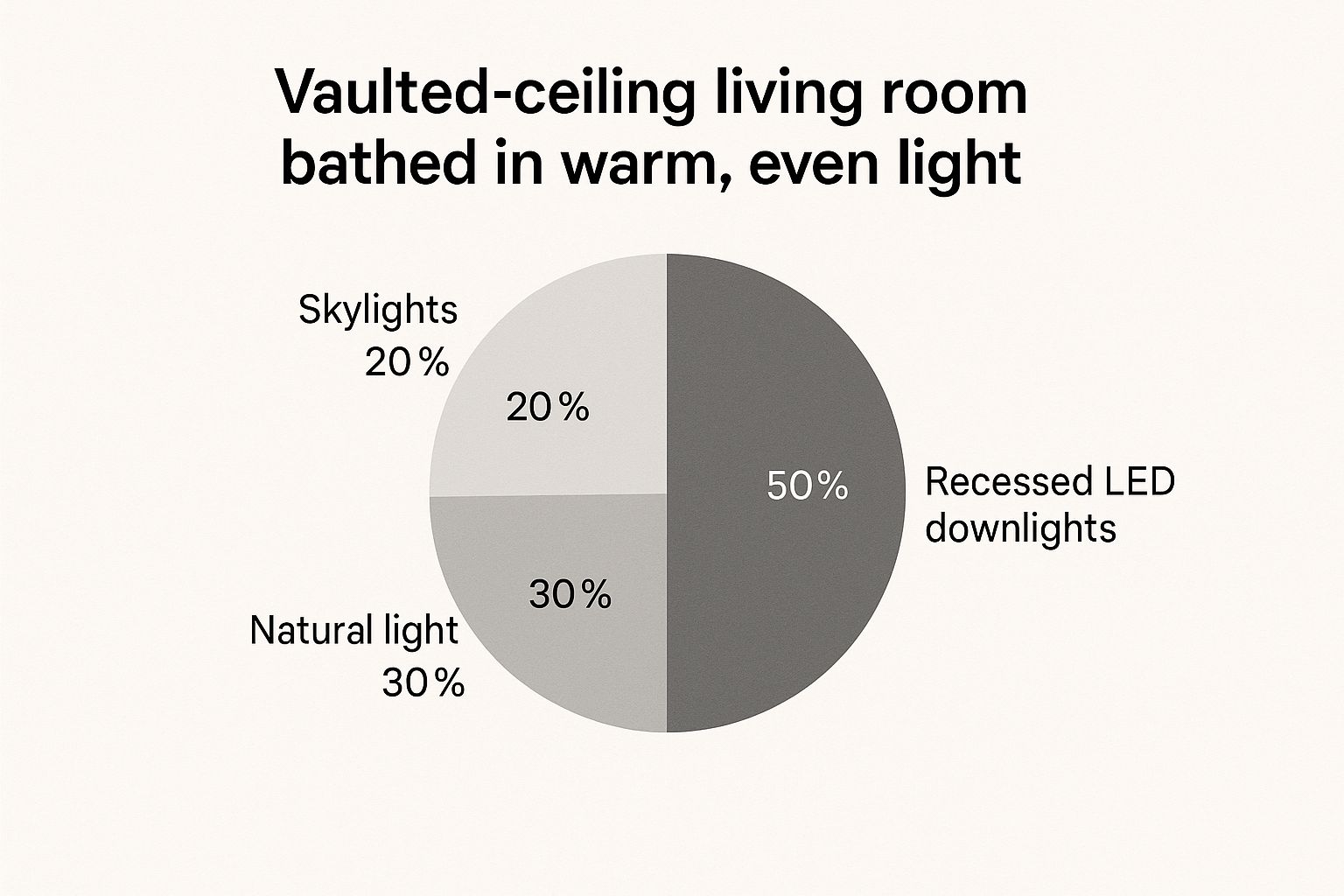
As you can see, even simple fixtures like recessed LEDs can create a warm and balanced feel. With high ceilings, the right lighting gives even light without taking away from the room's design.
Recessed and Track Lighting
For a cleaner, more modern look, recessed and track lighting are great choices. Recessed lights, also known as can lights, are perfect for general ambient light. They light up the room without adding clutter to the ceiling.
Pro Tip: If you put recessed lights on a sloped ceiling, use adjustable gimbal or "eyeball" fixtures. This lets you point the light straight down, which prevents strange shadows and lights the floor evenly.
Track lighting is another great option for both ambient and accent light. You can aim the individual heads to wash a wall with a soft glow, highlight beams, or spotlight a piece of art. This makes it a great solution for vaulted ceilings with tricky angles.
Wall Sconces and Uplighting
Finally, don't forget your walls! Bringing lights down to a lower level is the secret to making a tall room feel cozy. Wall sconces are perfect for this.
They do three jobs in a room with high ceilings:
- Make the Room Feel Cozier: By putting light at eye level, sconces make the room feel more comfortable and less like a huge, empty space.
- Add Accent Light: They can light up a textured wall, like stone or brick, creating beautiful shadows that add depth.
- Provide Indirect Light: Some sconces shine light upward. This uplighting bounces off the high ceiling to create a soft, ambient glow that smooths out any harsh shadows from above.
With so many choices, picking the right fixtures can seem hard. This table breaks down the most popular options to help you decide.
Fixture Comparison for Vaulted Ceilings
| Fixture Type | Primary Use | Best For | Pro Tip |
|---|---|---|---|
| Chandeliers/Pendants | Ambient Lighting | Making a dramatic statement and defining spaces like dining areas or living room centers. | The bottom of the fixture should hang at least 7 feet above the floor to allow for clear walking space. |
| Recessed Lights | Ambient/Task Lighting | Providing clean, general illumination across the entire room. | Use adjustable (gimbal) fixtures on sloped ceilings to aim light straight down for even coverage. |
| Track Lighting | Accent/Task Lighting | Highlighting architectural features, artwork, or specific work areas with focused beams. | Select heads with different beam angles—narrow for spotlights, wider for wall washing. |
| Wall Sconces | Ambient/Accent Lighting | Creating a cozy, human-scale feel and adding layers of light at eye level. | Install them roughly 60-66 inches from the floor to avoid glare while casting a warm glow. |
Each of these fixtures is great for different reasons. The real magic happens when you combine them to create a layered, beautiful lighting design that fits your vaulted ceiling perfectly.
Lighting Tips for Your Home's Architectural Style

The best lighting for vaulted ceilings should do more than just light a room—it should match your home's style. Here on the Central Coast, we have a great mix of architecture, from Carmel cottages to Santa Cruz beach houses. Your lighting choices should feel natural in your home.
One style does not fit all. A big, rustic chandelier that looks great in a Spanish home in Monterey would look wrong in a modern one. When you match fixtures to your home’s style, you create a design that feels right.
Rustic Charm for Carmel Cottages
The cozy feel of a Carmel-style home needs lighting that is warm and inviting. These homes often have dark wood beams on their vaulted ceilings. These beams should be highlighted, not lost in shadows.
To get this look, use fixtures with texture and warmth:
- Wrought Iron Chandeliers: A wrought iron chandelier can be a strong centerpiece. It gives off beautiful ambient light without looking too modern.
- Warm, Dimmable LEDs: Use LEDs with a color temperature between 2700K and 3000K. This creates a soft, golden glow like candlelight, which makes the cottage feel extra cozy.
- Wall Sconces with Character: Add a layer of light with sconces made from materials like antique brass or hammered bronze. This simple touch makes the room feel more intimate.
Sleek and Modern for Santa Cruz Beach Houses
Modern homes, like those on the coast in Santa Cruz, have clean lines and open spaces. The lighting should be simple and functional. It should enhance the architecture without adding clutter.
Here are key ideas for a modern look:
- Minimalist Track Lighting: Black or white track lights are very flexible. You can aim them to wash walls with light or spotlight details, all while keeping a clean look.
- Geometric Pendants: A simple, sculptural pendant light in brushed nickel or matte black can be a beautiful and simple centerpiece.
- Recessed Lighting: Use sleek, trimless recessed lights for smooth ambient light. This keeps the focus on the room’s height and views.
Balancing Tradition in Monterey Colonial Homes
Monterey Colonial architecture blends Spanish and New England styles. The lighting in these homes needs to balance traditional looks with modern function. You want to honor the classic style while making sure the space is bright and easy to live in.
Think about a balanced plan like this:
- Tiered Chandeliers: A classic tiered chandelier in aged brass or oil-rubbed bronze adds a perfect touch of traditional style.
- Hidden Accent Lights: Use small spotlights to uplight beams or textured plaster walls. This adds depth and drama without hurting the home's historic feel.
- Energy-Efficient Upgrades: You can use modern technology without losing style. Adding energy-efficient lighting solutions gives you better performance while keeping that classic look.
Common Mistakes to Avoid With Vaulted Ceiling Lighting
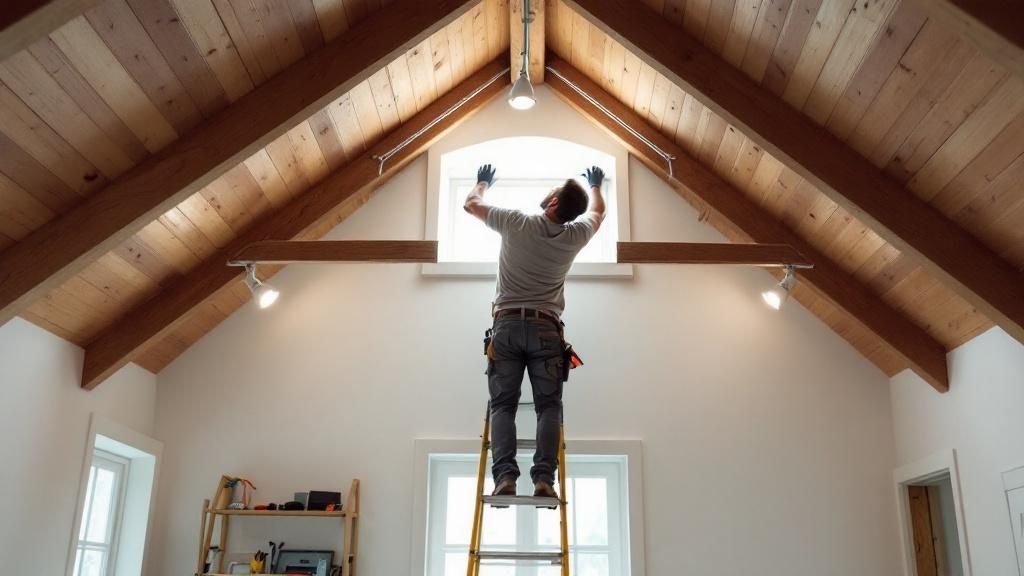
Vaulted ceilings add so much beauty to a home. But I’ve seen a few common mistakes that keep them from looking their best. Getting the lighting right means avoiding these simple errors.
When you know what to avoid, you can make sure your big space feels balanced and inviting.
Relying Only on Downlights
One of the most common problems I see is using too many recessed downlights. While they are great for general light, using only downlights can create the "cave effect." This is when the ceiling itself disappears into darkness.
This happens because all the light is pointing straight down. It leaves the beautiful architecture of your high ceiling unlit. The solution is to add lights that shine upward or outward. Wall sconces or track lights aimed at the ceiling can make a huge difference.
Choosing Undersized Fixtures
A room with vaulted ceilings is very large. Your lighting fixtures need to match that scale. A small pendant or a tiny chandelier will look lost in such a big space.
Key Takeaway: Don’t be afraid to go big. A fixture that seems huge in the box will often look just right once it's hung in a room with a high ceiling.
Sometimes, a large ceiling fan can work well. For more ideas on fixtures that balance size with function, check out our guide to the best ceiling fans with lights.
Forgetting About Dimmers
This might be the biggest mistake of all: not using dimmers. Being able to control the brightness of your lights is not a luxury. It is essential for any room that you use for different activities.
Dimmers let you change the mood of the room instantly:
- Bright Light: Perfect for cleaning, tasks, or parties.
- Medium Light: Good for everyday family activities.
- Low Light: Creates a soft, cozy feel for relaxing in the evening.
Putting dimmers on every light gives you full control over your layered lighting plan. It’s a small change that makes a big difference.
Why a Professional Lighting Plan Matters
It can be tempting to do it yourself, but the tricky shape of a vaulted ceiling really needs an expert's help. A professional lighting consultant can turn your ideas into a detailed, working plan. They make sure the final result is perfect.
A lighting specialist does more than just pick out nice fixtures. They figure out the exact spacing, beam angles, and brightness needed to light your room correctly. They look at details like the slope of your ceiling and how you use the space.
This is how you avoid problems like strange shadows, harsh glare, or uneven light. A good plan is also important for creating a productive space, a topic we cover in our guide on the best lighting for a home office.
Investing in a professional plan means you're investing in a better result. It's the difference between a room that's just lit and one that's perfectly lit.
This type of expertise is why many people still visit lighting showrooms. Research shows ceiling fixtures are a huge part of the market, and buyers like getting expert advice from local stores. You can read the full research on the lighting fixtures market to see the data for yourself.
Here on the Monterey Peninsula, a local expert understands our area's architecture. They will make sure your lighting not only looks good but also feels right at home.
FAQs: Your Vaulted Ceiling Lighting Questions Answered
We’ve covered a lot about the best ways to light vaulted ceilings. But from our time in the Pacific Grove showroom, we know some questions come up often. Let's answer the most common ones we hear from our clients.
How do you light a vaulted ceiling without recessed lights?
You can definitely create a beautiful, well-lit room without any recessed lights. The key is to use a strong, layered approach with other types of fixtures. Start with a central chandelier for your main ambient light. Then, add something flexible like track lighting, which you can aim at walls or artwork. Finally, bring light down to eye level with wall sconces to make the space feel cozier.
How far down should a chandelier hang from a vaulted ceiling?
This depends on what's below the chandelier. In areas where people walk, like a living room or entryway, the bottom of the fixture must be at least 7 feet from the floor. This is for safety and to give enough headroom. Over a dining table or kitchen island, you can hang it lower, about 30 to 36 inches above the surface. This defines the space without blocking the view.
Should you put can lights on a sloped ceiling?
Yes, can lights are a great option for sloped ceilings, but you must use the right kind. Standard recessed lights will shine at a weird angle. You need adjustable recessed lights, also known as gimbal or eyeball fixtures. These let you pivot the light and aim it straight down, giving you even light where you need it.
What is the best color temperature for vaulted ceilings?
For most living spaces like bedrooms and family rooms, you want a warm and inviting feel. We recommend an LED color temperature between 2700K and 3000K. This range gives a soft, warm white light that is perfect for relaxing. It provides a cozy glow without feeling harsh like cooler lights.
How do I avoid creating harsh shadows in a tall room?
Harsh shadows are usually caused by a single, strong light from above. To prevent them, use multiple light sources from different heights and directions. A layered plan is the solution. Combine your main light with wall sconces, accent spotlights, and floor lamps. This multi-directional approach fills in the dark spots and creates soft, even light throughout the room.
Creating the perfect lighting plan for a vaulted ceiling can feel like a big project. But you don't have to do it alone. The experts at The Home Lighter, Inc. are here to help you create a space that's both beautiful and functional. Visit our showroom in Pacific Grove or contact us today to schedule a consultation.