
When you think about lighting your home, what comes to mind first? For many, it's the general light sources—the ceiling fixtures and lamps that fill a room with a basic glow. This is ambient lighting, and getting it right is the most important step in creating a space that feels truly inviting.
Ambient lighting is the foundational layer, the heart of your home’s atmosphere. It’s the even, comfortable glow that makes a room feel welcoming and functional from the moment you walk in. Think of it as the canvas on which all other lighting is painted.
Why Foundational Light Matters in Home Design
A well-thought-out ambient lighting plan does more than just light up a room; it’s a strategy. Done right, it can make spaces feel larger, ceilings higher, and highlight your home's best architectural features.
This isn't about installing the brightest overhead light you can find. It's about creating a cohesive system that feels intentional and professionally designed.
For homeowners on the Central Coast, from the beautiful shores of Monterey to the relaxed vibe of Santa Cruz, this concept is second nature. We blend our indoor comfort with the stunning natural light outside, and our home's lighting should reflect that seamless connection.
The Role of Ambient Light
The right ambient light gives a room its character. Get it wrong, and a space can feel cramped, shadowy, or unwelcoming. But when you nail the foundational lighting, the entire room comes to life.
Here’s what great ambient lighting does:
- Sets the emotional tone. A soft, warm glow is instantly relaxing, which is ideal for a living room or bedroom.
- Makes the room usable. This is the base light you need for everyday activities, from cleaning to chatting with family.
- Enhances the feeling of space. Even illumination can visually push walls back and lift ceilings, making any room feel more open.
It's no surprise that homeowners are paying more attention to this layer. The global ambient lighting market is projected to grow significantly, reaching nearly USD 61.21 billion by 2029, according to one report. You can dig into the numbers in this market research on ambient lighting.
This isn't just a trend; it's a fundamental shift in how we approach home design.
Key Concepts at a Glance
| Concept | What It Means | Why It Matters |
|---|---|---|
| Layering | Using multiple light sources (ambient, task, accent) together. | Creates depth, flexibility, and avoids a flat, one-dimensional look. |
| Diffusion | Spreading light out to soften it and reduce harshness. | Prevents glare and hard shadows, making a space more comfortable. |
| Color Temperature | The "warmth" or "coolness" of the light, measured in Kelvin (K). | A warmer light (2700K-3000K) feels cozy; a cooler light feels more alert. |
| Uniformity | Ensuring an even level of brightness across the entire room. | Eliminates dark corners and makes the space feel larger and safer. |
Mastering this foundational layer is key to a home that is both beautiful and a joy to live in. For more inspiration, take a look at our guide on using indoor lighting fixtures to create a cozy home.
Selecting Your Primary Ambient Light Fixtures
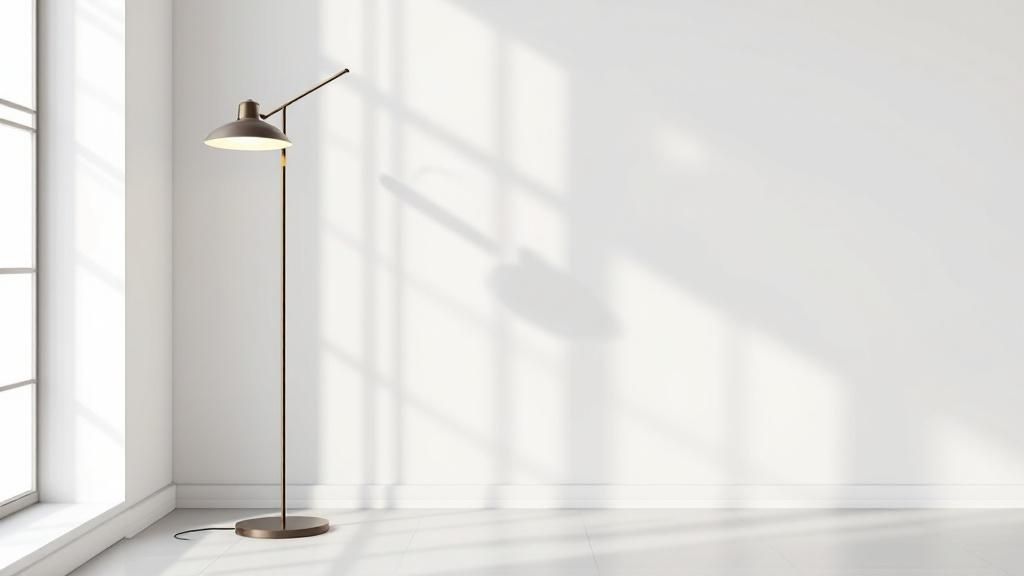
The fixtures you choose are the workhorses of your ambient lighting plan. This isn't just about picking one light for the center of the room; it's about selecting a combination that washes your space in a soft, even glow. Getting this part right is crucial for a balanced and inviting atmosphere.
Your home’s architecture is a huge clue. A classic Monterey Colonial home might feel right with a traditional chandelier or elegant wall sconces. In contrast, a contemporary build in Santa Cruz probably calls for discreet recessed lighting or a minimalist linear fixture.
Finding the Right Fixture for Your Space
The goal is to get broad, general illumination without creating harsh glare or awkward shadows. The best choice often comes down to the room's function and, importantly, its ceiling height.
These are the most common and effective choices we recommend:
- Recessed Lighting: Fantastic for a clean, modern aesthetic. They provide even light without visual clutter, making them ideal for kitchens and living areas.
- Chandeliers and Pendants: Perfect for making a statement. These fixtures act as a beautiful focal point in dining rooms and entryways, casting a widespread, welcoming light.
- Flush and Semi-Flush Mounts: When ceiling height is a constraint, like in hallways or bedrooms, these low-profile fixtures are the ideal solution. They provide ample ambient light without getting in the way.
The Critical Role of Scale and Placement
Getting the scale right is just as important as the style. A fixture needs to feel proportional to the room's dimensions and furniture. For instance, a chandelier over a dining table should be about one-half to two-thirds the width of the table.
Placement is just as vital. Recessed lights must be spaced correctly to avoid a "Swiss cheese" ceiling or dark corners. A thoughtfully planned layout ensures every part of the room feels equally bright.
For a deeper dive into creating a balanced scheme, explore our detailed guide on planning your living room lighting layout.
Layering Light: Ambient, Task, and Accent
Relying on a single light source is a common design mistake. It almost always leaves a room feeling flat and one-dimensional. The secret designers use to build depth, versatility, and a truly inviting atmosphere is layered lighting.
This approach means you treat your room's illumination as a complete system. It’s a system with three essential layers that all work together.
Think of it like this: ambient light is your foundation, task light is for getting things done, and accent light adds the final, personal touch. When these three cooperate, they create a space that’s not just functional but also rich with visual interest.
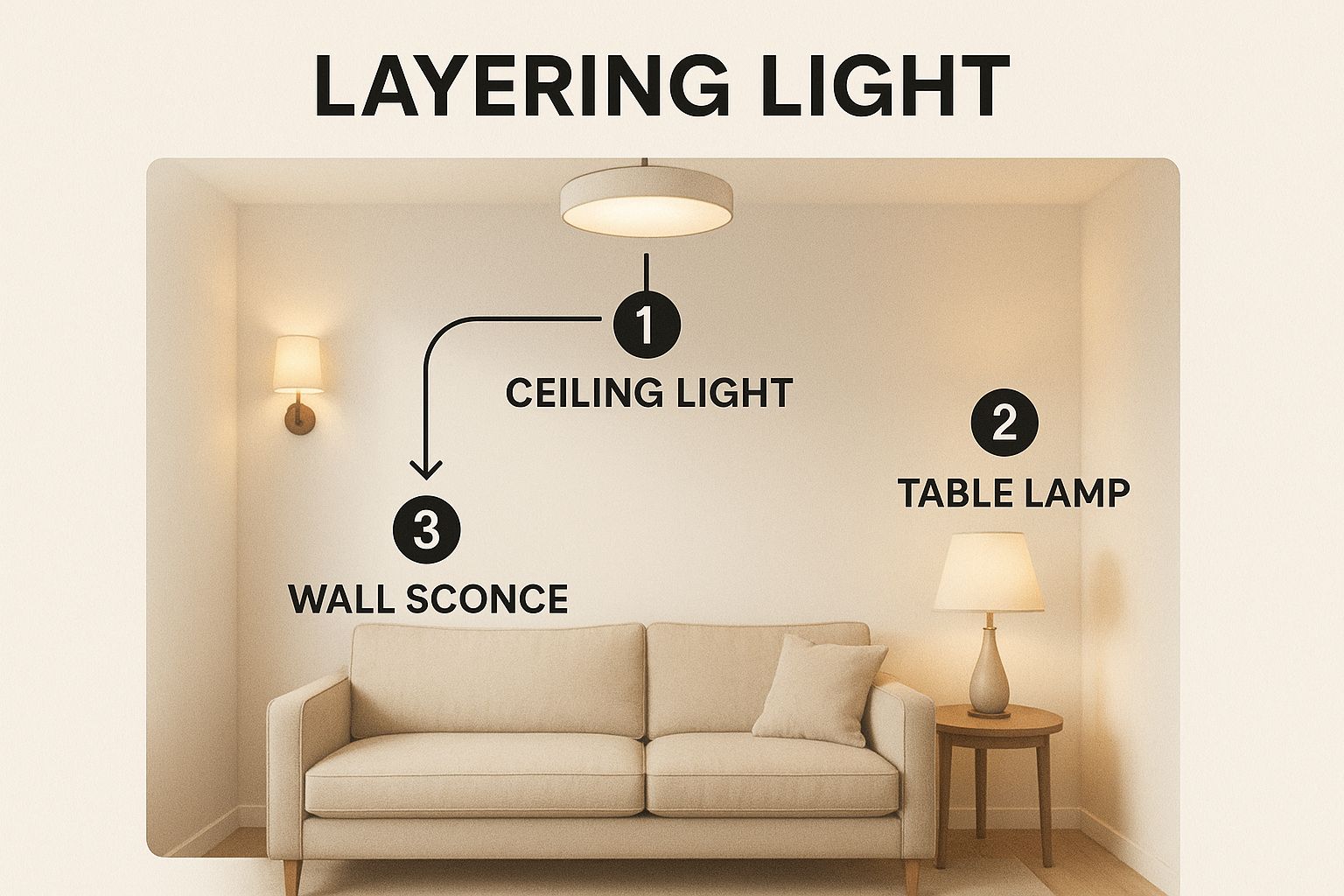
As you can see, each light source has a distinct job, but they all contribute to the room's overall welcoming feel.
The Three Essential Layers of Light
Getting a handle on each layer is the first step toward creating a lighting scheme that truly works. Mastering the balance between them is what separates an average room from a professionally designed space.
Let's break down what each layer does:
- Ambient Lighting: This is the general, overall illumination we've been talking about. It’s that soft, even glow from sources like recessed lights, chandeliers, or flush mounts. Its main job is to fill the room so you can move around safely.
- Task Lighting: This is focused, brighter light aimed at a specific area for a particular activity. Think of under-cabinet LEDs in your kitchen, a reading lamp by an armchair, or a desk lamp in your home office.
- Accent Lighting: This is the decorative layer used to highlight specific features like art or unique architecture. A recent Houzz & Home study found that 45% of renovating homeowners install or upgrade accent lighting, showing how much people value this touch.
Bringing the Layers Together in Your Home
Let’s put this into a real-world scenario. Imagine a kitchen here on the Monterey Peninsula, designed for both daily cooking and weekend entertaining.
Your ambient light might come from a grid of recessed fixtures. For task lighting, you'd add LED strips under the cabinets and pendants over the island. To finish, you could place accent lighting inside glass-front cabinets to showcase dinnerware.
Dimmers are the single most important tool for mastering layered lighting. They give you complete control, allowing you to instantly shift the mood by adjusting the intensity of each layer. This ability to fine-tune your lighting is what makes a space so versatile.
Of course, knowing how to plan for these fixtures is key. Our recessed lighting layout guide provides expert tips for getting the placement just right.
Using Smart Technology for Dynamic Ambiance
Modern tech has completely shifted how we use light in our homes. It’s no longer just about flipping a switch. Smart lighting systems put the power to create dynamic, responsive ambiances right in your pocket.
With a tap on your phone or a simple voice command, you can become the conductor of your home's atmosphere. Think about creating custom "scenes" that match your daily rhythms.
A "Movie Night" scene could dim your recessed lights to 20% brightness while switching off distracting lamps. A "Morning" scene could ease you into the day by slowly brightening your bedroom lights, mimicking a natural sunrise.
The Creative Freedom of Smart Lighting
The real magic of smart lighting is adjusting the quality of the light itself. Many systems now feature tunable white light, which gives you the ability to change the color temperature as needed.
You can set your lights to a crisp, cool white (around 4000K) during the workday to boost focus. Then, as evening approaches, you can shift to a warm, inviting glow (2700K) to help you relax.
This kind of responsive technology is a growing trend. The global market for automotive ambient lighting is projected to hit USD 5.44 billion by 2034, driven by systems that adapt to a driver's mood. You can dive deeper into this trend by reading the full research on adaptive lighting systems.
Practical Ways to Get Started
You don't need a massive overhaul to bring smart lighting into your home. The best approach is often to start small.
- Smart Bulbs: The simplest entry point. Just screw a smart bulb into any standard fixture to control its brightness and color.
- Smart Switches and Dimmers: Our go-to recommendation for controlling entire circuits, like all the recessed lights in a living room. Swapping a standard switch for a smart one makes every fixture on that circuit smart.
- Fully Integrated Systems: The ultimate solution for a new build or major remodel on the Monterey Peninsula. It ties all your lighting into a central hub for sophisticated automation.
Smart lighting empowers you to be the designer of your home’s atmosphere. At The Home Lighter, Inc., we can help you navigate these choices for a plan that perfectly suits your lifestyle.
Elevate Your Space with Architectural Lighting
If you're after that seamless, high-end glow, architectural lighting is the way to go. This advanced approach integrates light sources right into your home’s structure. This creates an incredible indirect wash of illumination that makes rooms feel bigger and ceilings seem higher.
This is the secret behind the "glowing room" effect you see in design magazines. Instead of a visible fixture, the light itself becomes part of the home's architecture. Thanks to modern LED strips, these once-exclusive designs are more accessible and energy-efficient than ever.
Distinguishing Architectural Methods
Getting to know the different architectural lighting techniques is the first step. Each method directs light in a unique way to achieve a specific effect.
Here are the three primary methods we work with:
- Cove Lighting: We place a light source, usually an LED strip, inside a ledge near the ceiling. This directs light upward, highlighting details like a tray ceiling and filling the room with a soft, diffuse glow.
- Valance Lighting: The light source is mounted behind a horizontal board, typically above a window. It washes light both up and down, creating a balanced effect that can make a room feel taller.
- Soffit Lighting: Also called cornice lighting, this involves concealing a light source where the wall and ceiling meet, directing light downward. This is fantastic for grazing a textured surface like a stone or brick wall.
Planning Your Architectural Installation
Architectural lighting is not a weekend DIY project. It requires careful planning and is best done during a remodel or new construction. The installation is more involved, but the stunning, uniform result is worth the effort.
For homeowners here on the Central Coast with unique architectural details, these methods can truly make a home one-of-a-kind. These built-in effects are fantastic for setting a specific mood, which is why they are often used in spaces meant for relaxation and entertaining.
For more ideas, explore our guide on lighting ideas for holiday entertaining. A consultation at The Home Lighter, Inc. is the best way to ensure your design is installed flawlessly.
How The Home Lighter, Inc. Can Help
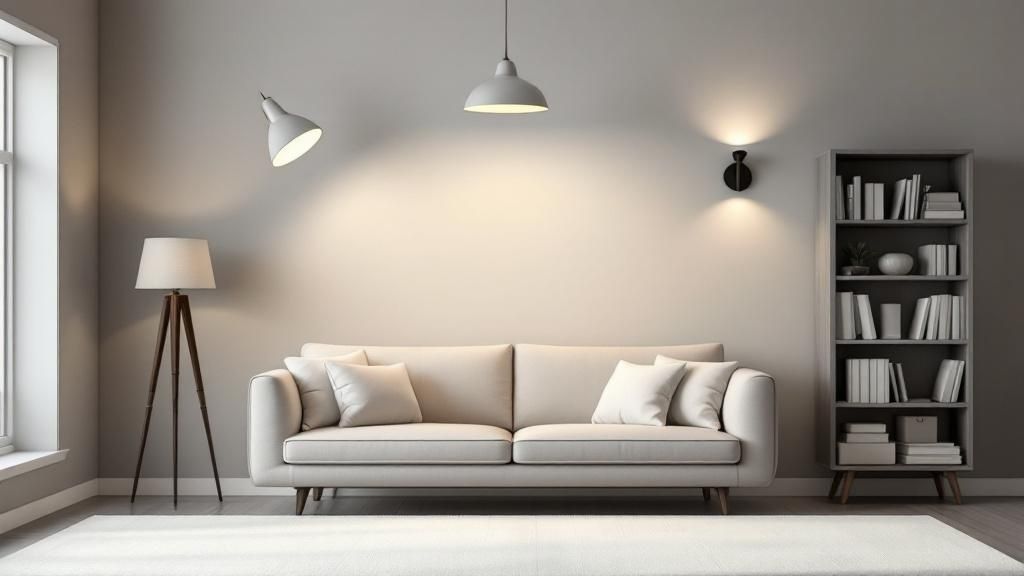
Creating perfect ambient lighting can feel complex, but you don't have to do it alone. Since 1969, The Home Lighter, Inc. has served the Monterey Peninsula as the premier lighting showroom and consultancy. Our local experts understand the unique styles and needs of homes in Monterey, Santa Cruz, and Salinas.
We believe a hands-on approach is best. Visiting our showroom allows you to see how different fixtures and layers of light work together in person. Our team can help you design a plan that reflects your vision, whether you're starting a new build, planning a remodel, or simply looking for the perfect fixture.
Frequently Asked Questions (FAQs)
1. What is the best color temperature for ambient lighting?
For spaces where you want to relax, like living rooms and bedrooms, a warm color temperature between 2700K and 3000K is ideal. This range mimics the cozy glow of incandescent bulbs. For functional areas like kitchens or home offices, a cooler, neutral white around 3500K can help you feel more alert.
2. How many recessed lights do I need for my room?
A simple rule of thumb is to space 4-inch recessed lights about four feet apart and 6-inch lights about six feet apart. The goal is to create overlapping pools of light that prevent dark spots. However, factors like ceiling height and wall color matter, so a professional consultation ensures a precise layout.
3. Can I use only lamps for ambient lighting?
While lamps are essential for a layered lighting plan, relying on them alone for ambient light is a classic mistake. This approach often leaves corners dark, making a room feel smaller. Use overhead sources like recessed lights for general illumination, then add lamps for warmth and task lighting.
4. What is the difference between ambient and mood lighting?
Ambient lighting is the practical, foundational layer of light that makes a space usable. Mood lighting is the effect you create by controlling all your lighting layers together. For example, dimming your ambient lights and turning on accent lights creates a romantic mood. Ambient light is an ingredient; mood lighting is the recipe.
5. What are the most common mistakes in creating ambient light?
The biggest mistakes are using a single, harsh overhead light, choosing fixtures that are the wrong scale for the room, and failing to use dimmers. These errors can make a space feel flat, uncomfortable, or poorly lit. You can learn more about avoiding these pitfalls in our guide to common home lighting mistakes.