
Is your kitchen just a workspace? Many homeowners think a small kitchen can't have a big personality. But the right small kitchen chandeliers can transform your room. This simple change can make your kitchen feel brighter, more open, and full of character.
Why a Small Chandelier is a Big Idea for Your Kitchen
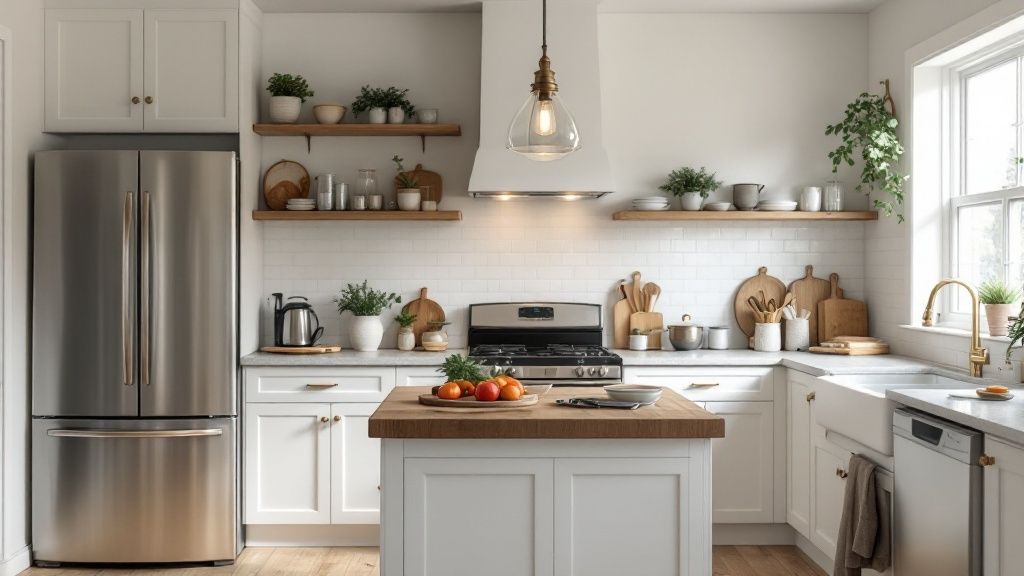
Forget the old rule that chandeliers are only for large dining rooms. Today’s lighting designs are made for smaller spaces. They can turn your kitchen from a place to cook into the heart of your home. A good fixture adds elegance without feeling crowded.
This isn't just a passing trend. The global chandeliers market was valued at about USD 8.20 billion in 2024. Much of this growth comes from homeowners wanting beautiful, personal décor. The transitional style, which mixes traditional and modern looks, is very popular and made up 65.7% of market revenue. You can explore more data on lighting trends for homeowners to see how popular this is.
The Impact of a Chandelier in a Small Space
Adding a chandelier does more than just light up the room. It adds a layer of style and thoughtful design. It’s a great chance to show your personal style in a room full of appliances.
Think of it like adding the perfect jewelry to an outfit. A small kitchen chandelier can:
- Create a Focal Point: It draws your eyes up. This makes the ceiling feel higher and the room seem bigger.
- Define a Zone: It can separate a breakfast nook or a small island from the main kitchen area.
- Enhance Ambiance: With a dimmer switch, it can change from bright light for cooking to a soft glow for a relaxing evening.
Here on the Monterey Peninsula, our homes have unique styles, from cozy Carmel cottages to modern builds. A well-chosen chandelier adds amazing character. It complements the natural light and coastal vibe of our Central Coast lifestyle, making your kitchen special. This guide will help you find the perfect fixture easily.
Finding the Perfect Chandelier Size for Your Space
Choosing the right size for a small kitchen chandelier might seem hard, but it's simple. A chandelier is like jewelry for your kitchen—it needs to be the right size to look good. A fixture that's too big will overpower a small kitchen. One that's too small will get lost.
The goal is to find a balance that adds style without getting in the way. It should complement the room and provide good light. Luckily, there are easy rules that designers use to find the perfect fit.
A Simple Rule for Room Sizing
A good place to start is the "Room Rule." It's a simple calculation that gives you an ideal diameter for your chandelier. This ensures the fixture is the right scale for your kitchen.
Here's how it works:
- Measure the length and width of your kitchen in feet.
- Add those two numbers together.
- That total is the perfect diameter for your chandelier, in inches.
So, if your kitchen is 10 feet long and 8 feet wide, you add 10 + 8 to get 18. This means a chandelier with an 18-inch diameter is perfect for the room's general lighting. Simple, right?
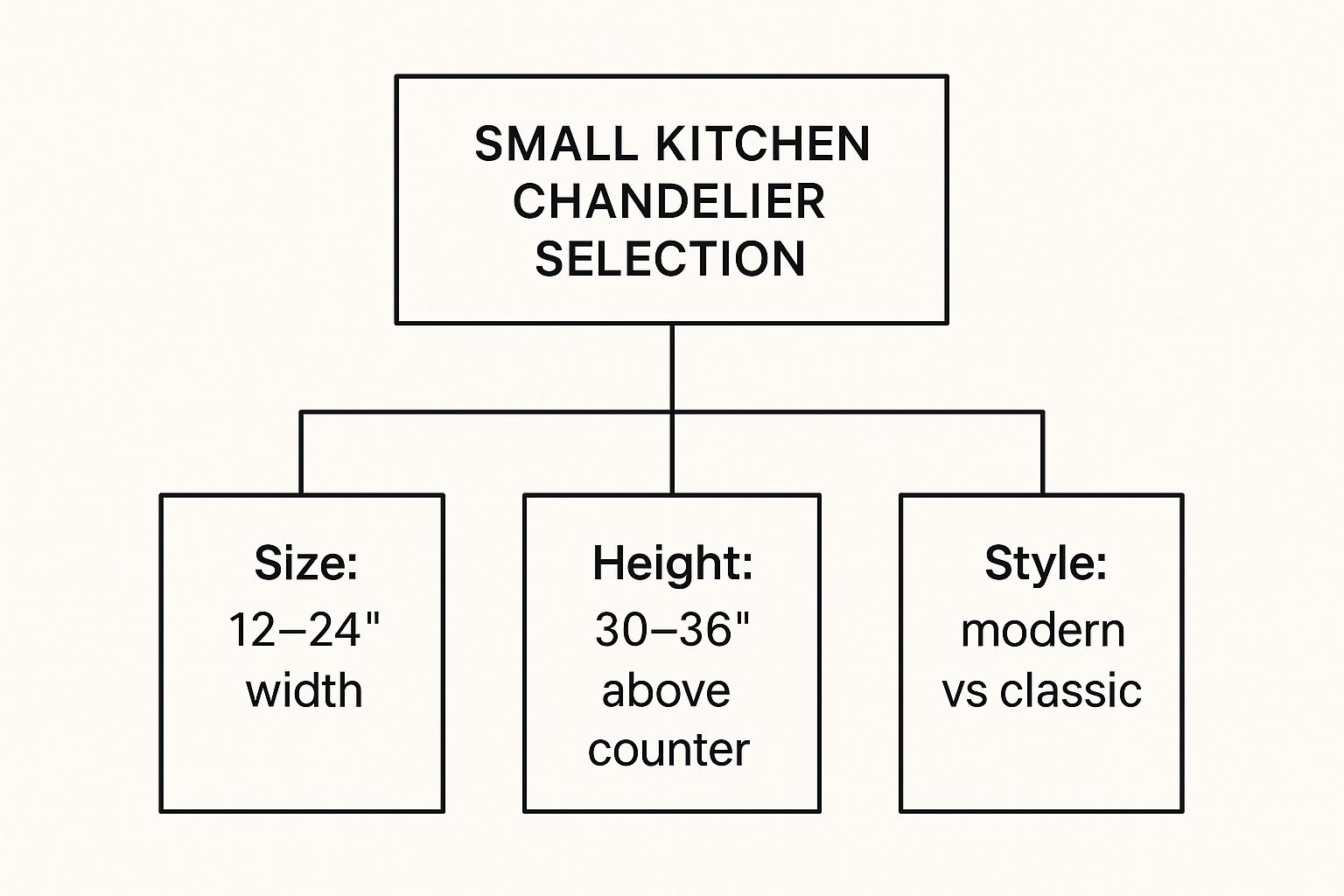
This visual guide breaks it down. For most small kitchens, a chandelier between 12 and 24 inches wide is a good fit. It should hang 30 to 36 inches above a surface for the best balance.
Sizing for Islands and Breakfast Nooks
When you hang a chandelier over an island or a breakfast table, the rules change a little. The fixture's size should relate to the surface below it, not the whole room. This creates a connected, planned look.
For a kitchen island, choose a chandelier that is about two-thirds the width of the island. This keeps the fixture from looking wider than the surface it highlights. If you need more help, our article on the best lighting for your kitchen island has more tips.
Crucial Clearance Tip: Always hang your chandelier so the bottom is 30 to 36 inches above your island or tabletop. This gives enough light for tasks without blocking the view across the kitchen. This is important in the smaller homes common around the Monterey Peninsula.
Sizing rules are not the only thing to consider. The materials and design of a chandelier also matter. This is explored in this detailed bronze and crystal chandelier buyer's guide. An airy, open-frame design feels lighter, so you might be able to use a slightly larger size. A dense, heavy-looking fixture may need to be smaller to avoid looking bulky.
Matching Your Chandelier to Your Kitchen's Style
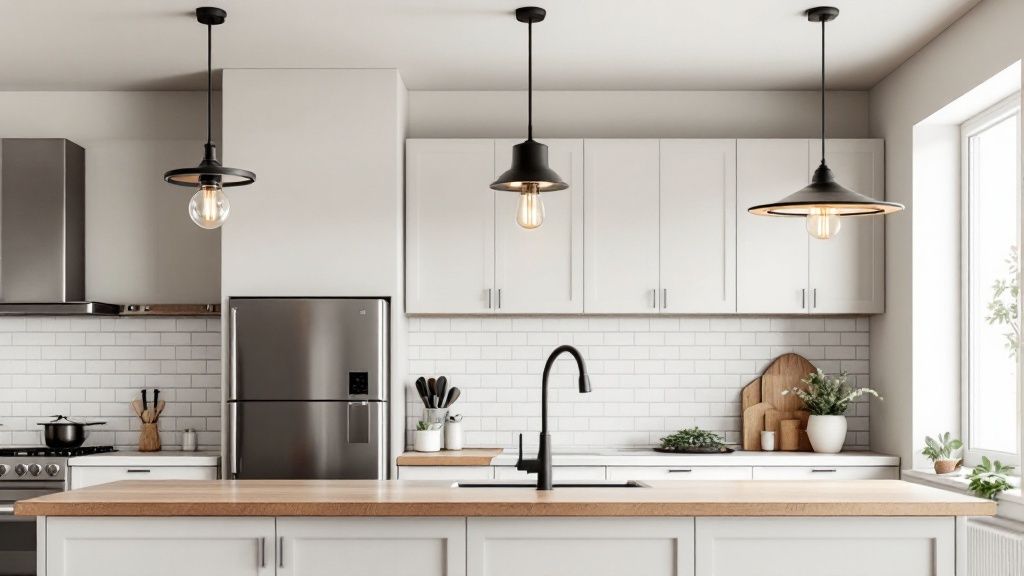
Choosing a small chandelier is about more than just size. You need a fixture that matches your kitchen's design language. A great chandelier ties all the other elements together and makes your design memorable.
This focus on looks is why kitchens have become social hubs. The kitchen lighting market was valued at about USD 14.19 billion in 2023 and is expected to reach USD 23.54 billion by 2030. This shows how much homeowners are investing in stylish fixtures. You can read the full research about kitchen lighting trends to learn more.
Popular Styles for Monterey Peninsula Homes
Here on the Central Coast, we see a mix of home styles. Your chandelier can blend with your existing style or create an interesting contrast. The important thing is that the choice feels right for you.
Here are a few kitchen styles and the small chandeliers that match them:
- Modern and Contemporary: These kitchens have clean lines and simple shapes. Choose a chandelier with geometric shapes and metallic finishes like chrome or matte black. A sputnik-style fixture or a simple drum pendant can add a sophisticated touch.
- Farmhouse and Rustic: For a warm, inviting farmhouse feel, look for a chandelier made from distressed wood or wrought iron. These fixtures often have classic candelabra arms or lantern shapes. They add a cozy and timeless charm.
- Coastal and Transitional: To reflect our Monterey Bay lifestyle, coastal kitchens use light and natural elements. Chandeliers made from rattan, beaded wood, or capiz shells are a perfect fit. Fixtures with an open-frame design in brushed nickel also work well.
Combining Ambient and Task Lighting
Your new chandelier will provide beautiful ambient lighting, which is the overall glow in the room. But it works best as part of a team. The chandelier sets the mood, but it shouldn't be your only light source for cooking.
Good kitchen lighting is layered. Your chandelier provides style and general light, while other fixtures do the heavy lifting. This makes your kitchen both beautiful and functional.
This is where focused lighting helps. You need direct, shadow-free light on your countertops for tasks like chopping. To get this, you'll need dedicated task lighting. Our guide on what is task lighting explains how options like under-cabinet strips can light up your work areas. Pairing these practical lights with your chandelier creates a well-designed kitchen for any occasion.
Choosing the Right Brightness and Bulb
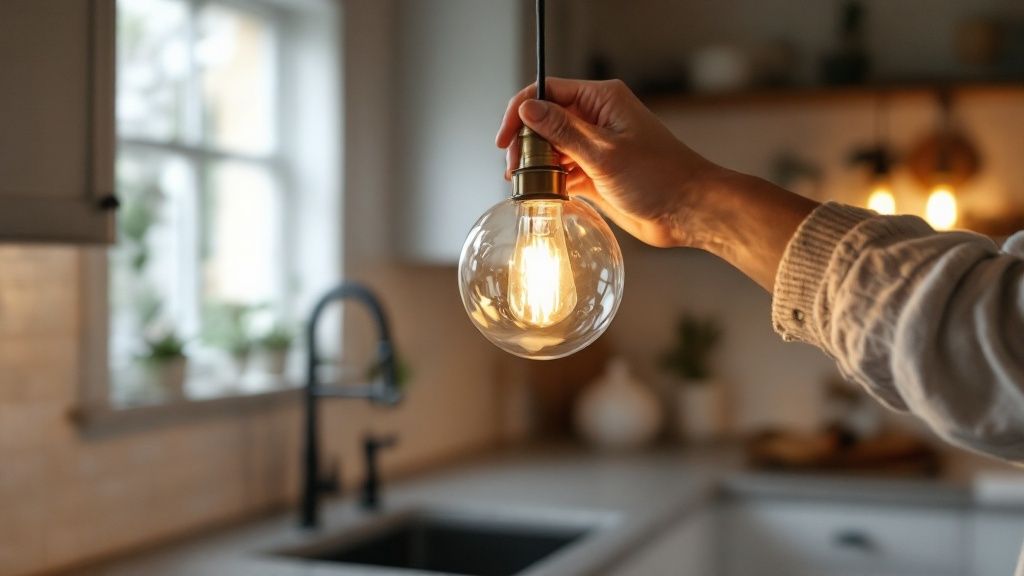
A beautiful chandelier is a great start, but its light is what makes a kitchen feel warm and useful. Your small kitchen chandelier will be the main source of ambient lighting. This is the overall glow that fills the room and sets the mood.
First, consider lumens, which measure how bright a light bulb is. Forget about watts; lumens are what matter. For a smaller kitchen, you want enough light to see without it being too bright.
Then there's color temperature, measured in Kelvin (K). This affects the feel of the light. A lower Kelvin number, like 2700K to 3000K, gives a warm, yellowish glow that is perfect for a relaxing dinner. A higher number over 4000K feels cooler and is better for workspaces. For most kitchens, a warm-white light around 3000K is ideal.
The Smart Choice of LED Bulbs
Today, LED bulbs are the best choice for most chandeliers. They mix classic style with great efficiency. The ceiling lights market is projected to reach USD 52.10 billion by 2030, largely because of energy-saving tech.
Residential lighting uses about 10% of household electricity. Choosing ENERGY STAR-certified LEDs is a smart move for your bills and the planet.
Your chandelier is part of a bigger lighting plan. It needs to work with your kitchen's other lights. Explore different general lighting options to create a bright, unified space.
The Magic of Dimmers
A dimmer switch is a must-have for kitchen lighting. This simple device gives you full control over the atmosphere. It makes your chandelier very versatile.
With a dimmer, you can go from bright, functional light for cooking to a soft, warm glow for a quiet meal. This flexibility makes a kitchen feel like the heart of the home.
Think of it this way:
- Full Brightness: Perfect for chopping, reading a recipe, or cleaning.
- Medium Brightness: Good for casual get-togethers or everyday tasks.
- Low Brightness: Creates a relaxing vibe for a late-night snack or a quiet chat.
Installing a dimmer is a small change that makes a big difference. It ensures your small kitchen chandeliers are always right for the moment.
Installing and Caring for Your New Chandelier
You've found the perfect small chandelier. Now it’s time to install it safely so you can enjoy its light. We always suggest hiring a professional for electrical work. But you can do a few things to prepare for a smooth installation.
Preparation starts before your electrician arrives. First, confirm your ceiling's electrical box can support the chandelier's weight. This is a critical safety step. Then, turn off the power at the circuit breaker and check the placement one last time.
Pre-Installation Safety Checklist
Being prepared makes the whole process easier and safer.
- Check the Weight Rating: Make sure the junction box can handle the weight. If not, it needs to be replaced with a heavy-duty one.
- Measure Again: Double-check the hanging height. Aim for 30-36 inches above your island or table.
- Inspect the Fixture: Unbox the chandelier and check for any damage or missing parts before your appointment.
- Prepare for Dimming: If you’re adding a dimmer, make sure you have the right type for your fixture. Learn more in our guide on how to install dimmer switches.
Keeping Your Chandelier Sparkling
Once your chandelier is installed, a little care will keep it looking new. Kitchen fixtures can collect dust and grime. But keeping them clean is simple.
For most chandeliers, a light dusting every few weeks is enough. This prevents dirt from building up and makes deep cleaning easier.
For a deeper clean, always turn off the power first. Use a soft, lint-free cloth with water or a gentle cleaner. Make sure the cleaner is safe for the material, whether it's glass, metal, or wood.
For crystal or glass pieces, spray the cleaner on the cloth, not on the fixture. This prevents liquid from getting into the electrical parts.
FAQs About Small Kitchen Chandeliers
Let's answer some common questions we hear from homeowners. Getting these details right helps create a great kitchen design, especially in our unique Central Coast homes.
Can I use a chandelier with low ceilings?
Yes, you can. This is a common concern in Monterey or Carmel homes with standard 8-foot ceilings. People worry a chandelier will hang too low.
The solution is a flush-mount or semi-flush-mount chandelier. These styles are close to the ceiling, so they don't get in the way. Always keep at least 7 feet of clearance in walkways.
How many chandeliers should I use over an island?
This depends on the length of your island.
- For smaller islands (4-5 feet long): One well-sized chandelier is usually enough to create a focal point.
- For longer islands (6 feet or more): Two smaller, identical fixtures often look more balanced. Space them evenly to distribute the light and visual weight.
Choosing the right height is also important. Our guide on chandelier height above a dining table has tips that also apply to islands.
What chandelier materials work best in a kitchen?
Kitchens are busy places, so you need durable materials. Metal finishes like brushed nickel, bronze, or chrome are great choices. They are easy to clean.
Glass is another good option for adding sparkle, but it may need polishing now and then. We suggest avoiding fabric shades because they can absorb cooking smells and stains.
Do chandeliers provide enough light for cooking?
A chandelier provides great ambient (or overall) light, but it should not be your only light source. It sets the foundation for your kitchen's lighting plan.
For tasks like chopping, you will still need dedicated task lighting. This can be under-cabinet LED strips or recessed lights aimed at your countertops. This layered approach makes a kitchen both beautiful and functional.
What is the best color temperature for a kitchen chandelier?
For most kitchens, a warm-white light is best. Look for bulbs with a color temperature between 2700K and 3000K. This range creates a welcoming and comfortable atmosphere that works for both cooking and dining.
Ready to find the perfect chandelier for your small kitchen? The experts at The Home Lighter Inc. are here to guide you. Visit our Pacific Grove showroom or explore our services online to start your lighting journey today.