
Mood lighting isn't about one specific lamp or bulb. It’s a design style that uses light to create a feeling in a room on purpose. We're not just flipping a switch to see better—we're creating an atmosphere that feels cozy, lively, or calm. This is how you start shaping the experience of your home.
What Is Mood Lighting and How Does It Work?
Think of mood lighting as the soundtrack for your home. The right song can make you feel energized or relaxed, and the right light can do the same for a room. It’s about telling a story with light so each space supports how you live in it.
This isn't done with a single, harsh overhead light. Instead, it’s about layering different kinds of light to create depth and warmth. A well-lit home doesn't just feel bright; it feels comfortable and inviting.
The Building Blocks of Mood Lighting
Every great lighting design is built on three basic layers. If you get these right, you can master the mood in any room.
-
Ambient Light: This is your foundation—the general, overall light that fills a room. It sets a comfortable brightness without harsh glare. Learning how to create ambient lighting with recessed fixtures or a chandelier is the best place to start.
-
Task Light: This is focused light for specific activities, like chopping vegetables, reading, or working. Think of under-cabinet lights in the kitchen or a desk lamp.
-
Accent Light: This is the dramatic layer. Accent lighting highlights things you love, like artwork, a stone fireplace, or unique architectural details.
When you combine these three layers, you create a lighting plan that is flexible enough for any occasion.
This infographic shows how these three layers—ambient, task, and accent—work together to create a balanced and welcoming living room.
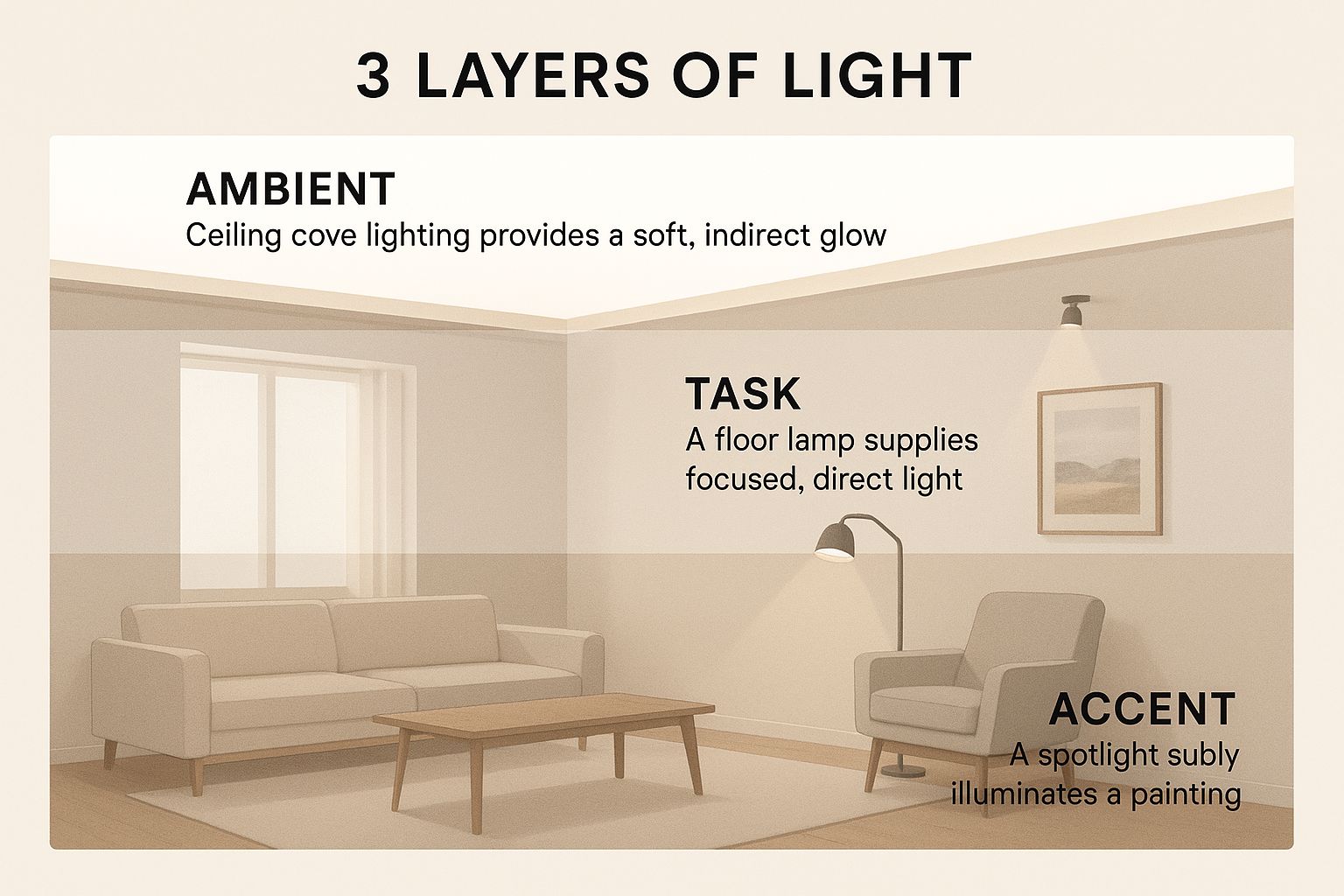
You can see how soft ambient light provides the base. A focused task lamp makes the sofa a good spot for reading, and a subtle accent light adds interest to the wall. It’s a simple but powerful mix.
Here’s a quick summary of the three lighting layers and what they do.
The Three Layers of Light Explained
| Lighting Layer | Primary Purpose | Common Fixtures |
|---|---|---|
| Ambient | Provides overall, general illumination for a room. | Chandeliers, Recessed Lights, Ceiling Fans, Flush Mounts |
| Task | Offers focused light for specific activities. | Desk Lamps, Under-Cabinet Lights, Vanity Lights, Pendants |
| Accent | Highlights architectural features, art, or decor. | Track Lighting, Wall Sconces, Spotlights, Picture Lights |
Mastering these three layers is the secret to a lighting plan that is both useful and beautiful.
Moving Beyond Basic Illumination
The real magic starts when you have total control over these layers. The most important tool for mood lighting is the dimmer switch. Dimmers let you adjust the brightness, turning a bright room into a soft, cozy one in seconds.
A room without dimmers is like a radio that only has one volume: loud. The ability to adjust brightness is key for creating an atmosphere that changes with your needs.
For those of us here on the Monterey Peninsula, mastering mood lighting is essential. It lets you make your home feel bright on a sunny afternoon or warm during a foggy coastal evening. It’s about making your home feel just right, no matter the weather.
Understanding the Psychology of Light
Have you noticed how a bright, sunny day can lift your spirits? Or how a dimly lit restaurant feels more romantic? That’s the psychology of light at work. The kind of light in a space affects our emotions, energy, and even our internal body clock.
Light is a language our brains understand. For thousands of years, our bodies have linked bright, cool light with daytime—a time for activity and focus. In contrast, the warm, soft glow of a sunset signals that it's time to relax.
Once you understand this, you can use light to shape the atmosphere in your home. It's about making simple choices that support how you want to feel.
The Power of Color Temperature
One of the most important parts of setting the mood is color temperature, measured in Kelvins (K). This describes how warm or cool the light looks.
-
Warm Light (2700K – 3000K): Think of the soft, yellowish glow of an old-fashioned bulb or a sunset. This light helps you relax, making it perfect for living rooms, bedrooms, and dining areas.
-
Cool Light (4000K – 6500K): This is a crisp, bluish-white light that looks like natural daylight. It helps improve focus, so it's a great choice for home offices, workshops, and laundry rooms.
Using color temperature the right way is a key part of good lighting design. Think about the clean, bright light in a Monterey art gallery versus the warm glow of a Carmel restaurant. Each is chosen to create a specific feeling.
Brightness and Its Emotional Impact
Besides color, the brightness of light plays a big role in setting the mood. Being able to control brightness unlocks a room's full potential.
At The Home Lighter, our consultants often say the best upgrade you can make is putting a dimmer on every switch. It gives you the flexibility to use one space for many different purposes.
Bright light energizes a room, making it feel open and clean. It’s perfect for tasks or having friends over, especially on foggy Central Coast days. In contrast, dim light creates a feeling of calm and intimacy.
This is why a layered lighting plan is so important. You need bright task lighting for cooking, but you also want to dim the lights for a relaxed dinner party.
How Light Affects Your Body and Mind
Light's influence goes deeper than just your mood; it affects your body's natural rhythms. The right lighting can support your sleep-wake cycle, called your circadian rhythm. Bright, cool light in the morning helps you feel awake, while dim, warm light in the evening signals it’s time to wind down.
If you're curious about this, you can explore what circadian lighting is and how it works in our detailed guide.
This idea is also used in workplaces. Studies show that the right ambient lighting can boost productivity by up to 6%. By using these same ideas at home, you can create a space that not only looks great but also supports your health.
Creating the Perfect Mood in Every Room
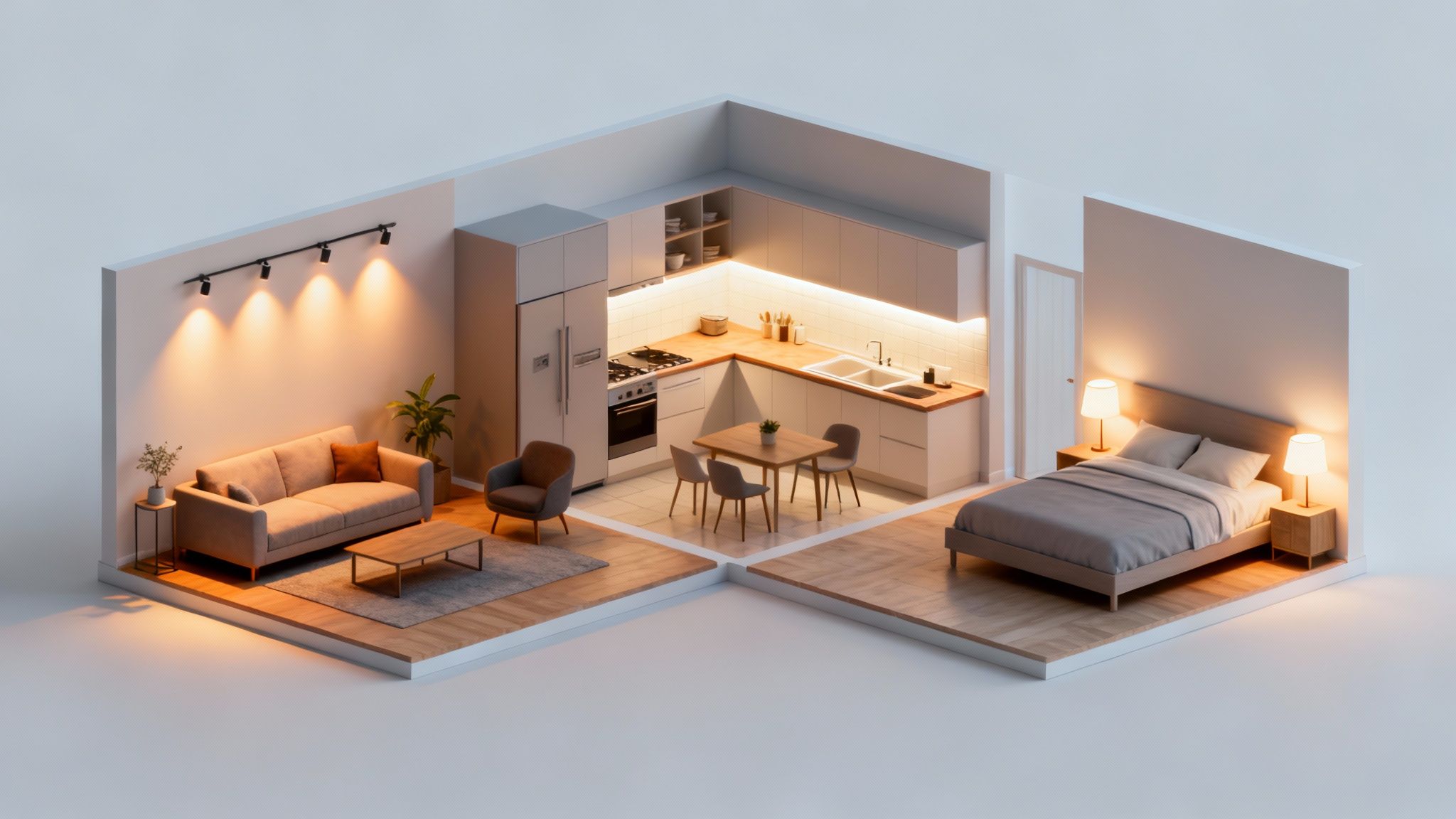
Knowing the theory is one thing, but applying it at home is where the magic happens. Every room has a purpose, and your lighting should be flexible enough to match.
This guide will show you how to use mood lighting in each space. With the right approach, your living room can change from a bright social hub to a cozy retreat. The secret is to have options.
The Living Room: A Versatile Hub
The living room is the heart of the home. It’s where you watch movies, gather with friends, and relax. To handle all that, your lighting needs to be able to do it all.
Start with a good base of ambient light, like recessed lights or a chandelier on a dimmer. Then, add accent and task lighting to create different zones.
Pro Tip from The Home Lighter: Use multiple light sources on separate dimmers. This lets you highlight artwork while keeping the rest of the room soft for a relaxed evening.
If you need help picturing how these layers work, our guide to designing a living room lighting layout has practical ideas.
The Kitchen: Where Function Meets Ambiance
The kitchen is a workspace first. You need bright, clear light for cooking and prep. Under-cabinet lighting is a must-have because it lights up your counters without shadows.
But today's kitchens, especially in the open-concept homes common on the Central Coast, are also social spots. When you're done cooking, you want to be able to dim the lights for dinner. This is where dimmers on your pendants and overhead lights are essential.
The Bedroom: A Sanctuary for Rest
Your bedroom should be a personal retreat, and the right lighting is key to a restful space. Avoid harsh overhead lighting. The focus should be on soft, warm light.
Here are a few tips for a calm bedroom:
- Bedside Lamps: Choose lamps with warm-toned bulbs (around 2700K) to help your brain wind down.
- Dimmable Sconces: Wall sconces save nightstand space and provide a soft glow.
- Hidden Light Sources: For a modern look, place LED strips behind your headboard or under the bed frame.
The goal is to create gentle pools of light. For more ideas, check out these expert tips on how to make your home cozy, where you’ll find soft lighting is a key theme.
The Bathroom: Creating a Spa-Like Escape
Even a practical room like the bathroom can feel like a spa with the right lighting. You need bright light at the vanity for tasks, but you also want a softer option for a relaxing bath.
Layer your vanity lighting with dimmable sconces on both sides of the mirror for flattering light. An overhead fixture can provide general light, but put it on its own dimmer. To create a true spa feel, add a small spotlight over the tub or shower on a dimmer.
How to Layer Light Like a Professional Designer
Now you know the different layers of light. Let's talk about putting them together like a pro. Layering light creates depth and gets rid of harsh shadows, making a space feel rich and inviting.
The main idea is to use multiple light sources that you can control separately. This lets a room adapt to whatever you're doing. Each layer adds a new dimension and pulls the whole look together.
The Most Important Upgrade You Can Make
Before we get to advanced tricks, let's cover the single best change you can make. At The Home Lighter, our consultants all agree: put a dimmer on every single light. This simple upgrade is the key to true mood lighting.
Dimmers give you full control over brightness. Without them, you're stuck with one setting—like a speaker that only plays at full volume.
Creating Intimate Zones with Light Pooling
A pro technique we love is light pooling. This means using lamps to create cozy zones within a larger room. Instead of lighting the whole space evenly, you create warm, inviting pools of light.
Imagine a floor lamp next to your favorite armchair, creating a perfect reading nook. This trick is great for open-concept homes, common on the Central Coast, because it helps define areas without walls.
Pro Tip from The Home Lighter: Creating smaller, lit areas draws people in. A single pool of light over a dining table, for example, naturally brings everyone closer together.
This is where the layers work together. You might have your overhead lights dimmed to 30%, while a floor lamp provides focused light where you need it.
Using Accent Lighting to Tell a Story
The final pro touch is using accent lighting to show off your home’s character. This is your chance to highlight what makes your space unique.
What do you want to feature?
- Artwork: A picture light can make a print feel like it belongs in a gallery.
- Architectural Details: Use spotlights to highlight a stone fireplace or vaulted ceiling.
- Decorative Objects: A small spotlight in a bookshelf can turn a collection into a beautiful display.
These focused lights add contrast and keep the room from feeling flat. For a high-end look, learn more from our guide to what cove lighting is and how it can wash a ceiling in soft light. By mastering these ideas, you can use light as a true design tool.
Adapting Mood Lighting for Coastal Homes
Life on the Monterey Peninsula means our homes are connected to the coast. The best way to approach mood lighting is to embrace this connection. We want to bring that natural beauty inside.
Coastal design is about creating bright, airy, and relaxing spaces. Your lighting should follow this idea by copying the natural rhythm of daylight. The light should shift from crisp morning light to the warm glow of sunset.
Embracing Natural Materials and Light
To get the coastal look, start with fixtures made from natural materials. Think rattan, weathered wood, and soft linen. These textures add warmth and match the relaxed vibe we love in our Monterey and Carmel homes.
You can pair these materials with smart lighting. A tunable white LED system can automatically change the light's color temperature during the day. This supports your body's rhythm and keeps your home in sync with the time of day.
A key goal for coastal homes is to blur the line between inside and out. Use lighting to frame your ocean views, turning windows into living art. A soft wash of light on a window frame at night creates a beautiful effect.
For homeowners trying to capture this style, our showroom has a special collection. You can explore a wide variety of coastal-style lighting fixtures chosen for our local climate.
Combatting the Coastal Fog
We all know the "June Gloom," when the marine layer makes everything feel dark. A layered lighting plan is your secret weapon to keep your home feeling warm and welcoming.
On foggy days, a single overhead light isn't enough. You need to use your layers to create a cheerful interior:
- Boost Your Ambient Light: Turn up your dimmable recessed lights to a brighter but still warm setting (around 3000K).
- Activate Task and Accent Lights: Turn on table lamps, floor lamps, and picture lights to create pockets of warmth.
- Use Upward Lighting: Lamps that shine light up can bounce it off the ceiling, making the space feel brighter without glare.
Using these simple tricks ensures your home stays a bright, comfortable haven, no matter how gray it is outside.
The Smart Technology Behind Modern Mood Lighting
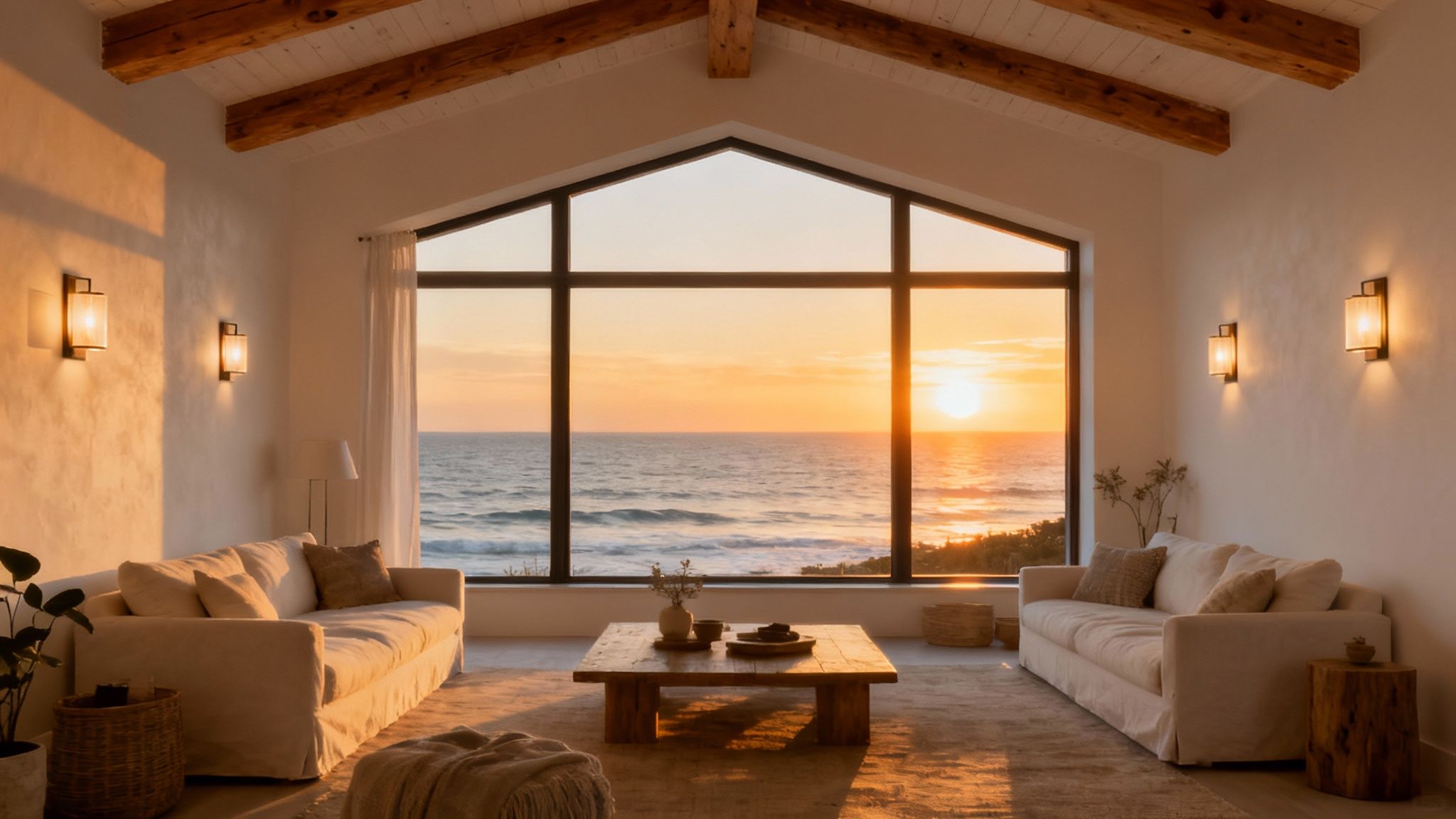
The amazing control of today’s mood lighting comes from smart technology. What used to be complex is now easy, letting you change your home's atmosphere with a tap on your phone.
This isn't an intimidating puzzle. The basic parts are simple: smart bulbs, smart switches, and apps that put you in control. You can dim the lights, change colors, and set schedules that match your life.
The Power of Smart and LED Lighting
Modern mood lighting is built on LED technology. LEDs are very energy efficient, using up to 80% less energy than old incandescent bulbs. This means creating a beautiful vibe at home also lowers your power bill.
But the real magic of LEDs is their flexibility. They work perfectly with smart systems that can adjust color and brightness with great accuracy.
"The biggest change in lighting design has been the move to smart LEDs. It gives homeowners the kind of control that used to be possible only in high-end projects. Now, anyone can create dynamic, personal lighting."
The market for smart lighting is growing fast. It's projected to grow from $34.4 billion in 2025 to $127.5 billion by 2032. This technology is here to stay.
Tunable White vs. RGB: What's the Difference?
When you look into smart lighting, you'll hear two terms: tunable white and RGB. Knowing the difference helps you get the right effect.
-
Tunable White Light: This lets you control the feeling of white light. You can change it from a warm candlelight glow (2700K) to a crisp daylight (6500K). It’s great for wellness and syncing your home’s light with your body's rhythm.
-
RGB Light: This stands for Red, Green, and Blue. RGB lights can create millions of colors. They're perfect for adding drama to a media room or creating a fun theme for a party.
For most Central Coast homeowners, tunable white light offers the most day-to-day value. To learn more about advanced systems, it's worth exploring the different smart technology solutions for your home.
FAQs: Your Mood Lighting Questions Answered
We get many great questions from homeowners at our Pacific Grove showroom. Here are simple answers to some of the most common ones.
What is the purpose of mood lighting?
The main purpose of mood lighting is to create a specific feeling or atmosphere in a room. It goes beyond just making a space bright enough to see. It uses layers of light, color, and brightness to make a room feel cozy, relaxing, energetic, or romantic.
How do I start with mood lighting on a budget?
The best and most affordable way to start is by installing dimmer switches on your existing lights. This one change gives you instant control over brightness. You can also use smart LED bulbs, which let you change color and brightness from a phone app without needing a full smart home system.
What's the difference between ambient and mood lighting?
Ambient lighting is one of the three layers used to create mood lighting. It is the general, overall light in a room. Mood lighting is the complete strategy that combines ambient, task, and accent lighting to achieve a desired emotional effect.
Does mood lighting use a lot of electricity?
Not anymore, thanks to LED technology. Most fixtures used for mood lighting have LED bulbs, which use up to 80% less energy than old incandescent bulbs. Using dimmers also saves energy, so creating a cozy atmosphere can actually lower your electricity bill.
Can one room have lighting for different moods?
Absolutely. That’s the goal of layering light. By putting different lights on separate controls and dimmers, you can easily create different atmospheres in the same room. You can have bright light for tasks, balanced light for socializing, and a warm glow for relaxing.
Ready to bring the power of mood lighting to your home? The expert consultants at The Home Lighter Inc. are here to help you design a plan that perfectly fits your style and lifestyle. Visit our showroom or schedule a consultation today!