
Choosing a lamp shade can seem hard, but it's one of the easiest ways to change a room's feel. Think of it as the perfect accessory that connects the lamp and the room. A good shade shapes light, turning a harsh glare into a warm, inviting glow.
This guide will help you feel confident picking a lamp shade. It's an easy way to make your home feel more complete.
Why Your Lamp Shade Matters
A lamp shade is more than a simple cover for a lightbulb. It is a key part of your home's decor. Its main job is to guide and soften light, which directly affects a room's mood.
A great shade makes your lighting both useful and beautiful. It prevents eye strain while adding style.
This guide will cover the four key things to know when choosing from the different types of lamp shades:
- Shape: The outline that sets the lamp's style.
- Material: The fabric or surface that filters the light.
- Size: The right proportions for a balanced look.
- Fitter: The hardware that attaches the shade to the lamp.
A Growing Part of Home Design
In recent years, more people have focused on interior lighting. Functional items like lamp shades are now important design pieces. In fact, the global lamp shades market is expected to grow to USD 56.80 billion by 2032.
This trend shows how much homeowners use lighting to personalize their homes. Understanding the basics of shades is your first step. Before you start, it helps to know about the different types of lamps they go with.
By learning these four key parts, you can confidently choose a lamp shade. You can find one that fits your lamp base and improves your home's look. Let’s find the perfect shade for your style.
Finding the Right Lamp Shade Shape
The shape of your lamp shade is its most noticeable feature. The shape affects how the lamp looks and how it spreads light in a room. Getting the shape right is the first step to creating a balanced lamp.
A wide shade casts a broad pool of light, perfect for a whole seating area. A narrow shade directs light up and down. This creates a focused glow that's ideal for reading or accent lighting.
The Most Popular Lamp Shade Shapes
Let's look at the most common shapes you will find. Each one brings its own style and can change the feel of your lamp and room.
-
Drum Shades: These have straight, vertical sides, giving them a clean, modern look. They cast light evenly from the top and bottom. This makes them great for both general and task lighting.
-
Empire Shades: This is a classic, tapered lamp shade. The top is smaller than the bottom, creating a timeless look. Empire shades point most of their light down, making them great for reading chairs.
-
Bell Shades: As the name suggests, these shades have a gentle curve that flares out like a bell. This soft shape adds a touch of elegance. Bell shades are a popular choice for traditional or formal decor.
To help you see how these styles relate, the diagram below shows the most common lamp shade types.
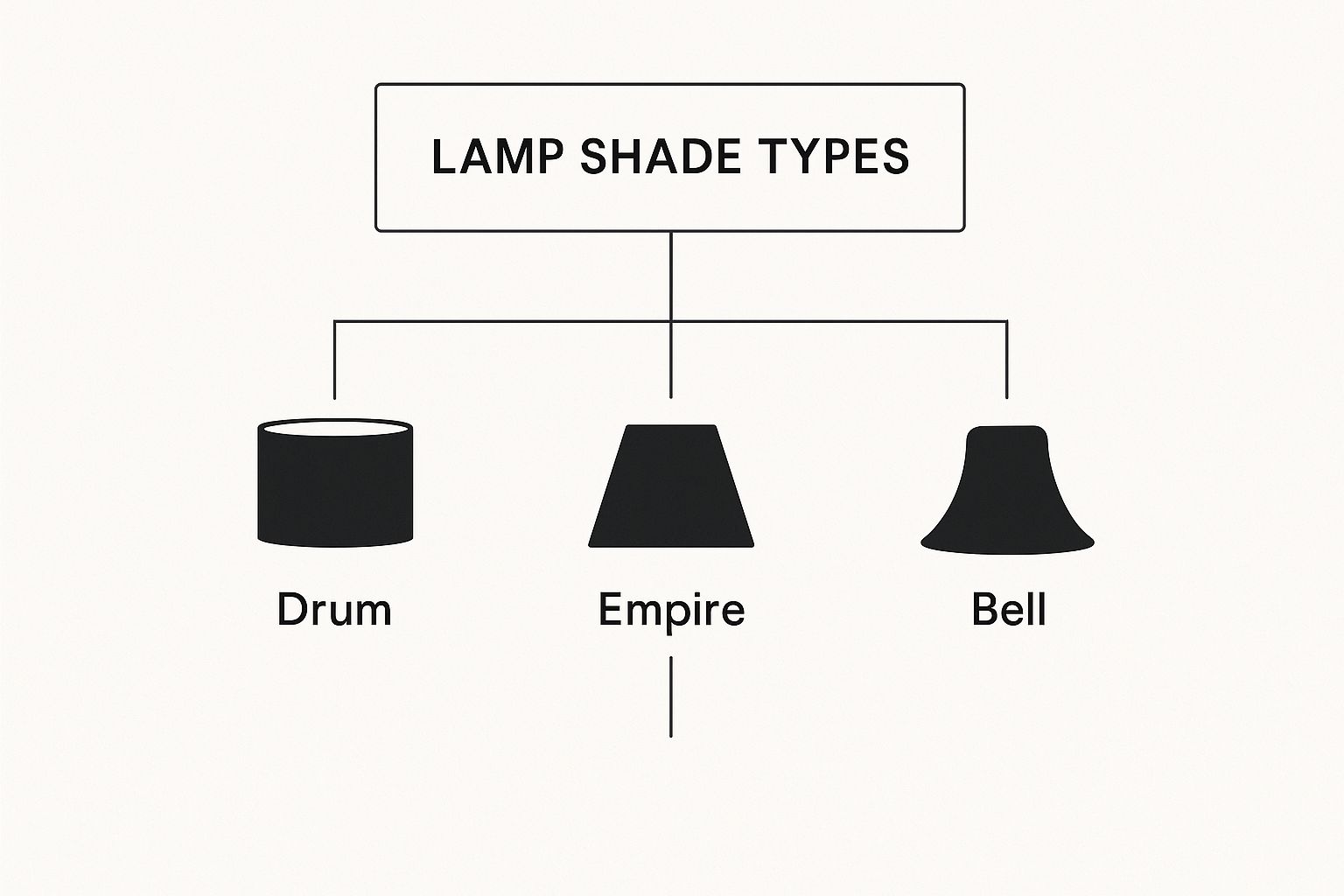
These three core shapes are the building blocks for many other lamp shade designs.
To make it even clearer, let's compare how these shapes work.
Common Lamp Shade Shapes and Their Uses
| Shade Shape | Best Paired With | Lighting Effect | Common Interior Style |
|---|---|---|---|
| Drum | Simple, modern bases | Even, ambient light from top and bottom | Modern, Minimalist, Mid-Century |
| Empire | Traditional, classic bases | Downward-focused light, great for tasks | Traditional, Transitional, Farmhouse |
| Bell | Ornate or curved bases | Soft, diffused, warm glow | Traditional, French Country, Romantic |
| Square | Geometric or blocky bases | Sharp, defined pools of light | Contemporary, Art Deco, Transitional |
This table is a great start for matching a shade to your lamp and your home's style.
Unique Shapes for a Bolder Look
Of course, you don't have to stick to the classics. Many other shapes can add a unique touch to your home. These are great options when you want your lamp to be a conversation piece.
A lamp shade shouldn't just match the base; it should complement it. Think of it like pairing wine with food—the right combination makes the whole experience better.
For example, Square or Rectangular shades give a tailored, modern feel. Coolie shades have a very wide bottom and short height, creating a retro look. Each of these different types of lamp shades is a chance to show your personality.
How Materials Affect Your Room's Light
While shape gives a lamp shade style, the material sets the mood. You can think of the material as a filter. It defines the light's quality, color, and brightness.
Understanding how materials work is the secret to getting the right effect. Some materials create a soft glow, while others make focused pools of light. This choice is just as important as the lamp base itself.
Soft Shades for a Warm Glow
Soft shades, usually made from fabric, let light pass through them. This creates a gentle, diffused glow that softens the whole space. They are perfect for creating a cozy and inviting feel.
Common fabric choices include:
- Linen and Cotton: These materials have a relaxed, casual feel and produce a warm, even light. They’re perfect for living rooms and bedrooms where comfort is key.
- Silk: For a more formal look, silk gives a crisp, bright light. Its soft shine adds a touch of elegance.
The fabric's color and thickness also matter. A thin, white linen shade will be very bright. A thick, colored silk shade will produce a softer, more intimate light.
The material of a lamp shade also affects how warm the light feels. A natural linen shade can make a bulb's light seem warmer. This shows how material and light temperature are connected.
Hardback Shades for Directed Light
Unlike soft fabrics, hardback lamp shades are made from materials like parchment or paper. These materials are opaque, which means they block light from passing through the sides. Instead, the light is pointed up and down.
This directional lighting makes hardback shades perfect for specific tasks. A lamp with a hardback shade on a desk or in a reading nook gives you focused light where you need it.
Unique Materials for a Distinctive Look
Beyond traditional fabrics, you can find lamp shades made from unique materials. These options add texture and personality, which is perfect for our homes on the Central Coast.
- Natural Fibers: Materials like rattan, wicker, and jute bring a relaxed, coastal feel to your home. The woven patterns create beautiful, dappled light effects perfect for homes from Monterey to Santa Cruz.
- Glass: Often used in Art Deco or industrial styles, glass shades can be clear, frosted, or colored. They can provide bright light or a soft, moody glow.
The material you choose also works with the light bulb. To control your room's mood, it helps to understand a bulb’s color temperature. You can learn more by exploring what Kelvin is in lighting.
Measuring for a Perfectly Sized Lamp Shade
Getting the lamp shade size right is a very important part of the process. A shade that doesn't fit can make even a beautiful lamp look awkward. This section will give you a few simple rules that designers use every day.
Think of it like tailoring a suit—proportion is everything. A shade that’s too large will overwhelm the lamp base. One that’s too small will look silly. The goal is a balanced look where the shade and base seem made for each other.
The Two-Thirds Height Rule
A great place to start is the two-thirds rule. This design guideline suggests that your lamp shade's height should be about two-thirds the height of the lamp base. To figure this out, measure your lamp base from the bottom to where the lightbulb socket starts.
For example, if you have an 18-inch lamp base, you should look for a shade that’s around 12 inches high. This simple ratio creates a visual balance that looks good to the eye.
The Twice-as-Wide Rule
Next, let's talk about width. As a general rule, the width of the lamp shade at its widest point should be about twice the width of the lamp base. This keeps the lamp from looking top-heavy.
A well-sized lamp shade should also be wide enough to hide the hardware—like the socket and harp—when you look at it from eye level. This small detail is a key difference between a generic look and a professional one.
Putting It All Together: A Simple Guide
With these two rules, you can shop with confidence. The right proportions will make your lamp look polished and intentional.
Here are the exact steps to follow:
- Measure the Base Height: Use a tape measure to get the height of your lamp base, from the bottom to the start of the socket.
- Calculate Shade Height: Multiply that base height by two-thirds (or 0.66) to find your ideal shade height.
- Measure the Base Width: Find the widest part of your lamp base and measure its diameter.
- Calculate Shade Width: Double the base width to figure out the target diameter for your new shade.
Following these steps will help you quickly find a shade with perfect proportions for your lamp.
Understanding How Shades Attach to a Lamp
You’ve found the perfect shape, material, and size. Great! But there’s one last detail that matters: the fitter. This is the small metal part that connects the shade to the lamp base.
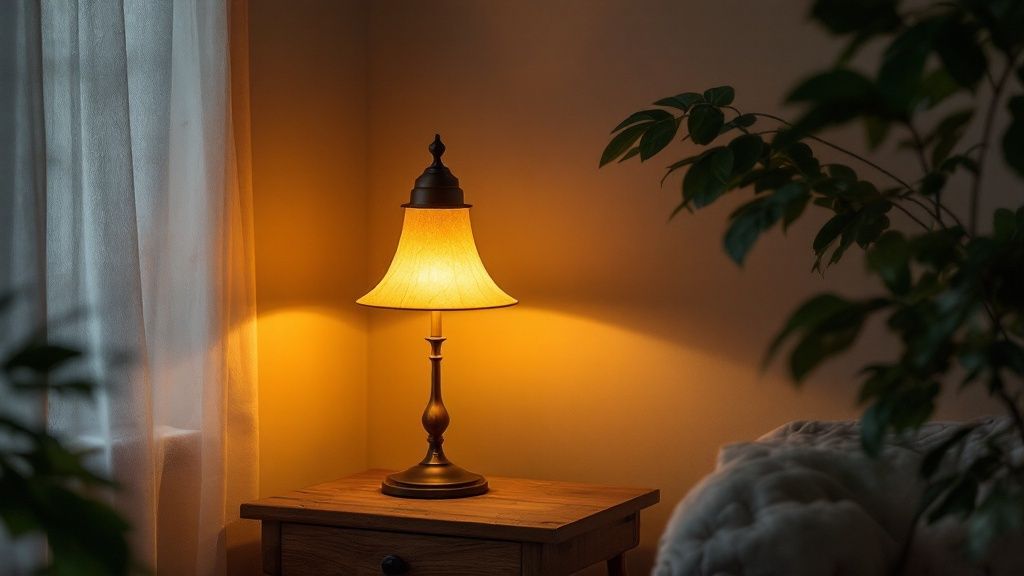
Knowing how your shade attaches is key to a secure, level fit. It’s a simple thing that separates a wobbly shade from a stable one. Let's look at the three most common types.
The Three Main Types of Fitters
Each fitter is made for a specific kind of lamp. Figuring out which one you need before you buy will save you trouble.
-
Spider Fitter: You’ve probably seen this one on table and floor lamps. It’s a wire frame with a small circle at the top. This circle sits on a metal frame called a harp, and a decorative knob called a finial screws on top to hold it in place.
-
Uno Fitter: You'll often see these on smaller lamps. The Uno fitter has a large ring in the center that screws directly onto the lamp socket. You screw the lightbulb in through the middle to lock it.
-
Clip-On Fitter: This is the simplest type. A clip-on fitter has small wire loops that clip right onto the lightbulb. This style is used for very small lamps or chandeliers.
Getting the fitter right is as important as the shade’s size. A secure fitter not only keeps your shade level but also ensures safety by keeping it away from the hot bulb.
Trust me, understanding these simple parts will save you the headache of buying a shade that doesn't work. When you pair this with other controls, like learning how to install dimmer switches, you gain full control over your room’s atmosphere.
Lamp Shade Styles for Central Coast Living
Life on the Central Coast is all about our connection to nature. Current design trends lean into that, with a focus on natural materials that feel right at home here.
This eco-friendly feel is a perfect match for communities from Santa Cruz to Monterey. Our homes often blend the indoors and outdoors. We’re seeing more shades made from linen, rattan, and jute. These materials bring a warm, organic texture into a room.
They also create a relaxed, airy feel that fits the coastal architecture in our area. Imagine a woven rattan shade in a Pacific Grove living room. It casts a soft, dappled glow that feels both modern and timeless.
Choosing Handcrafted and Sustainable Designs
It's not just about the materials. There's a shift toward handcrafted shades that give a home a personal touch. People are tired of mass-produced items and want pieces that tell a story.
Sustainability is also a big part of this trend. We're seeing more natural materials used in lamp shade production. It's clear that these design-focused choices are key to creating a welcoming space.
For the modern homes popping up along the coast, smart lighting is becoming a bigger deal. You can find beautiful shades designed to work with systems that adjust brightness and color from your phone.
Ultimately, this focus on unique, quality pieces creates a home that feels special. Even a simple update, like swapping a shade on a bronze and crystal chandelier, can change a room's character. It’s about choosing lighting that feels both smart and inspiring.
FAQs: Your Lamp Shade Questions Answered

Even after you've narrowed down the options, a few last-minute questions can come up. Here are answers to some of the most common ones we hear from homeowners in the Monterey area.
What is the most popular type of lamp shade?
The Empire and Drum shapes are the most popular. Empire shades have a classic, tapered look that works well in traditional homes. Drum shades are straight and modern, making them a great fit for contemporary spaces.
Can I put a straight drum shade on a curvy lamp base?
Yes, you can! Mixing styles like this is a great trick designers use to create an interesting look. Putting a modern drum shade on a traditional, curvy base can instantly update an older lamp. The key is getting the proportions right.
How do I know if I need a new harp for my lamp?
You may need a new harp if your new shade is much taller or shorter than your old one. The bottom of the shade should be low enough to hide the lamp's hardware, like the socket. If the shade sits too high or too low, a different-sized harp is an easy fix.
What color lamp shade should I choose?
For the most versatile light, you can't go wrong with a classic white or off-white shade. These neutral colors let the most light through, brightening the whole room. If you want a cozier feel, a darker shade in navy or gray will direct light up and down. To learn more about focused lighting, our guide on what is task lighting is a great resource.
How do I clean different types of lamp shades?
For fabric shades, use a lint roller or a soft brush to remove dust. For hardback shades made of paper or plastic, simply wipe them down with a dry microfiber cloth. Always make sure the lamp is unplugged before you start cleaning.
It's also worth noting that lamp shades are getting smarter. A growing trend is the integration of shades with smart home tech, allowing for features like color-changing and brightness adjustments from your phone. You can find more insights on this market at coherentmarketinsights.com.
Ready to find the perfect finishing touch for your lamp? The experts at The Home Lighter, Inc. can walk you through our collection to find a style that fits your lamp, your home, and your vision. Visit our Pacific Grove showroom or get in touch today to bring your ideas to life. https://homelighterinc.com/