
Big rooms are a dream. High ceilings and open floor plans create a wonderful sense of freedom. But lighting them can be a challenge. Standard fixtures get lost, leaving you with dark corners or a space that feels cold.
The secret isn't just one big fixture. It’s about using a strategy called light layering. This approach uses multiple types of light together to create a space that’s warm and works for you.
Solving the Challenge of Large and Unique Spaces
From historic homes in Pacific Grove to modern open-concept houses in Santa Cruz, large rooms need a plan. Homeowners often use a single fixture to light a huge area. This can make the room feel empty and unevenly lit.
This is where layered lighting makes a difference. Instead of one chandelier, a layered plan combines three types of light. Each one has a specific job. When they work together, the result is a comfortable and inviting room.
Think of it like painting. You need a base coat for overall color, detailed work for important areas, and finishing touches to make it pop.
The Power of Three Layers
A well-lit room supports everything you do there. The three layers of light work together to get rid of dark spots and add visual interest.
Here is a breakdown of the three main layers you will need:
- Ambient Light: This is your foundation. It's the general light that fills the room and sets the mood.
- Task Light: This is your focused, hard-working light. It shines on specific areas for activities like cooking, reading, or working.
- Accent Light: This is where the magic happens. Accent lighting draws the eye to things you love, like artwork or a stone fireplace.
This simple concept map shows how ambient, task, and accent lighting bring a room to life.
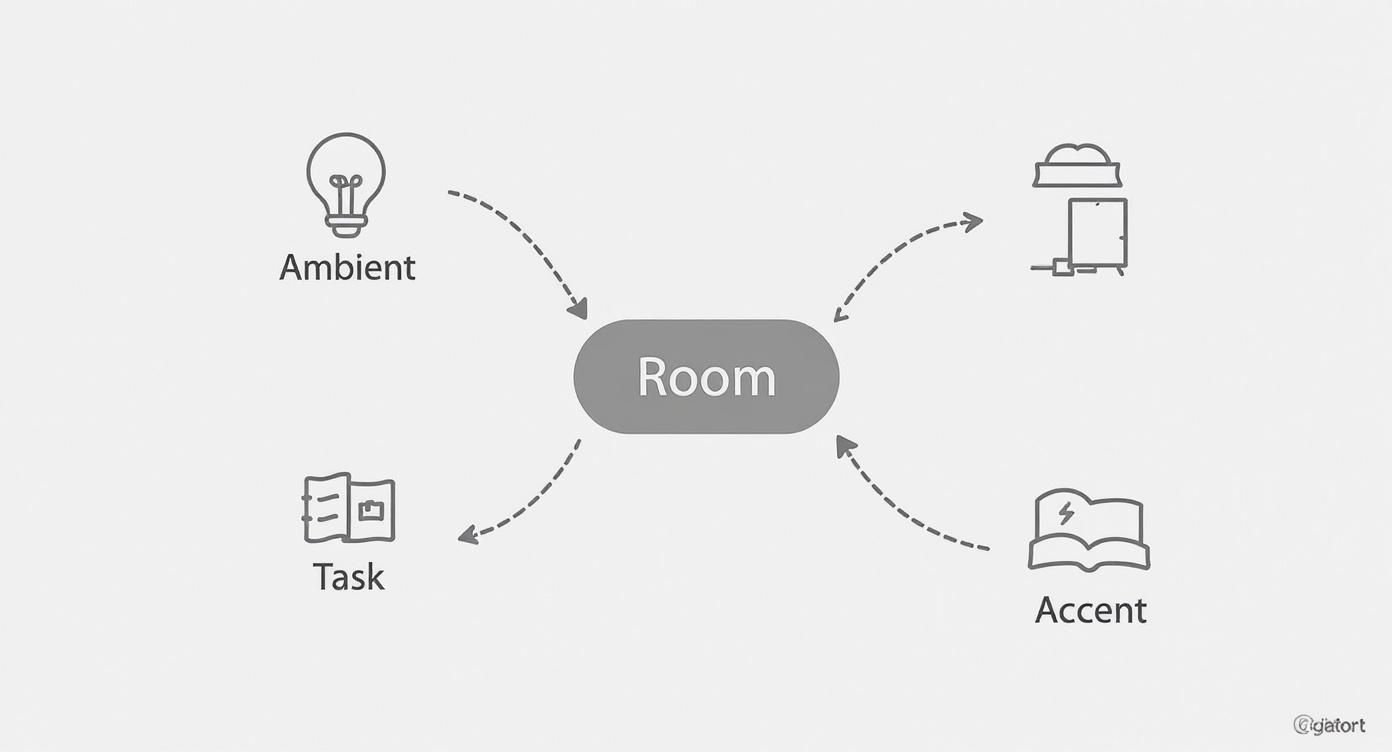
To help you see how these pieces fit, here is a quick table.
The Three Layers of Light Explained
| Lighting Layer | Primary Function | Common Fixtures |
|---|---|---|
| Ambient | Provides general, overall illumination for the entire room. | Chandeliers, Recessed Lights, Ceiling-Mounted Fixtures |
| Task | Delivers focused light for specific activities. | Under-cabinet Lights, Desk Lamps, Reading Sconces |
| Accent | Highlights architectural details, artwork, or decorative objects. | Track Lighting, Picture Lights, Uplights |
By combining these layers, you can turn a large area into smaller, cozy zones.
Of course, fixtures are only part of the story. It's also important to understand how paint colors influence room lighting. Your walls and ceilings are the biggest light reflectors in the space. Lighter paints help spread light more evenly.
Building a Foundation with Ambient Light
Think of ambient light as the base coat of paint for your room. It’s the soft glow that fills the space and makes it feel welcoming. In a large room, getting this foundation right is the most important step.
Without good ambient light, other lights will feel like lonely islands in a dark room. This leaves the space feeling unbalanced.
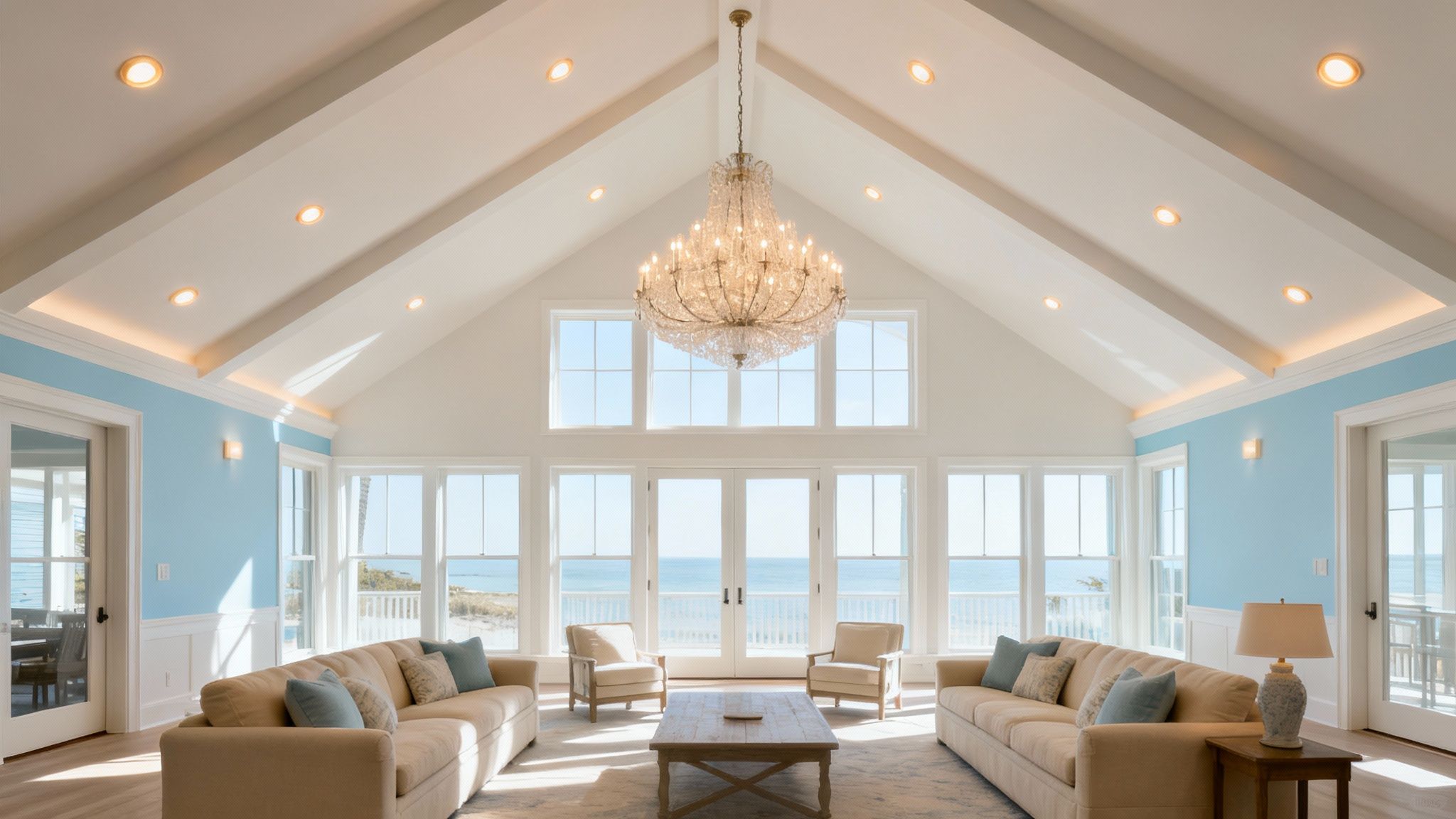
The goal is to create an even, comfortable layer of light. For homes on the Monterey Peninsula, this also means blending artificial lighting with the beautiful natural light from our coastal skies.
Choosing the Right Fixtures for General Illumination
When lighting a large area, you need fixtures that provide broad, soft light. It's key to pick something that matches the scale of your room. A tiny light in a huge space looks lost.
Here are a few popular options for a strong ambient light foundation:
- Chandeliers and Large Pendants: In a room with high ceilings, a statement chandelier does two jobs. It becomes a beautiful focal point and brings the light down to a more comfortable level.
- Recessed Lighting: Often called can lights, these are the workhorses of ambient lighting. When spaced correctly, they wash the room in even light. They're perfect for modern, open spaces.
- Ceiling Fans with Light Kits: In Salinas and warmer spots, a ceiling fan is a practical choice. A model with a powerful light kit can handle both air circulation and general light.
Calculating Brightness for Your Big Room
So, how bright is bright enough? The answer is measured in lumens. Lumens measure the total amount of light a bulb puts out. You can use a simple formula to find the right lumen level for your room.
A good rule for living areas is to have 10 to 20 lumens per square foot. For a large 20×25 foot room (500 square feet), you'd need between 5,000 and 10,000 total lumens for ambient light.
This range gives you flexibility. You might want less light for a cozy family room but more for a busy great room. Modern LED technology makes it easy and energy-efficient to get these numbers right.
Balancing Artificial and Natural Light
Many homes here on the Central Coast have huge windows to embrace the outdoors. During the day, natural light is your main source of ambient light. Your lighting plan should complement it, not fight it.
A simple strategy is to put dimmers on all your ambient fixtures. This lets you slowly increase artificial light as the sun goes down. This keeps the brightness consistent and comfortable from day to night.
Creating Functional Zones with Task Lighting
Once your ambient foundation is set, it's time to bring your room to life. Task and accent lighting turn a single space into a set of useful, inviting zones. This gives different areas a purpose without building walls.
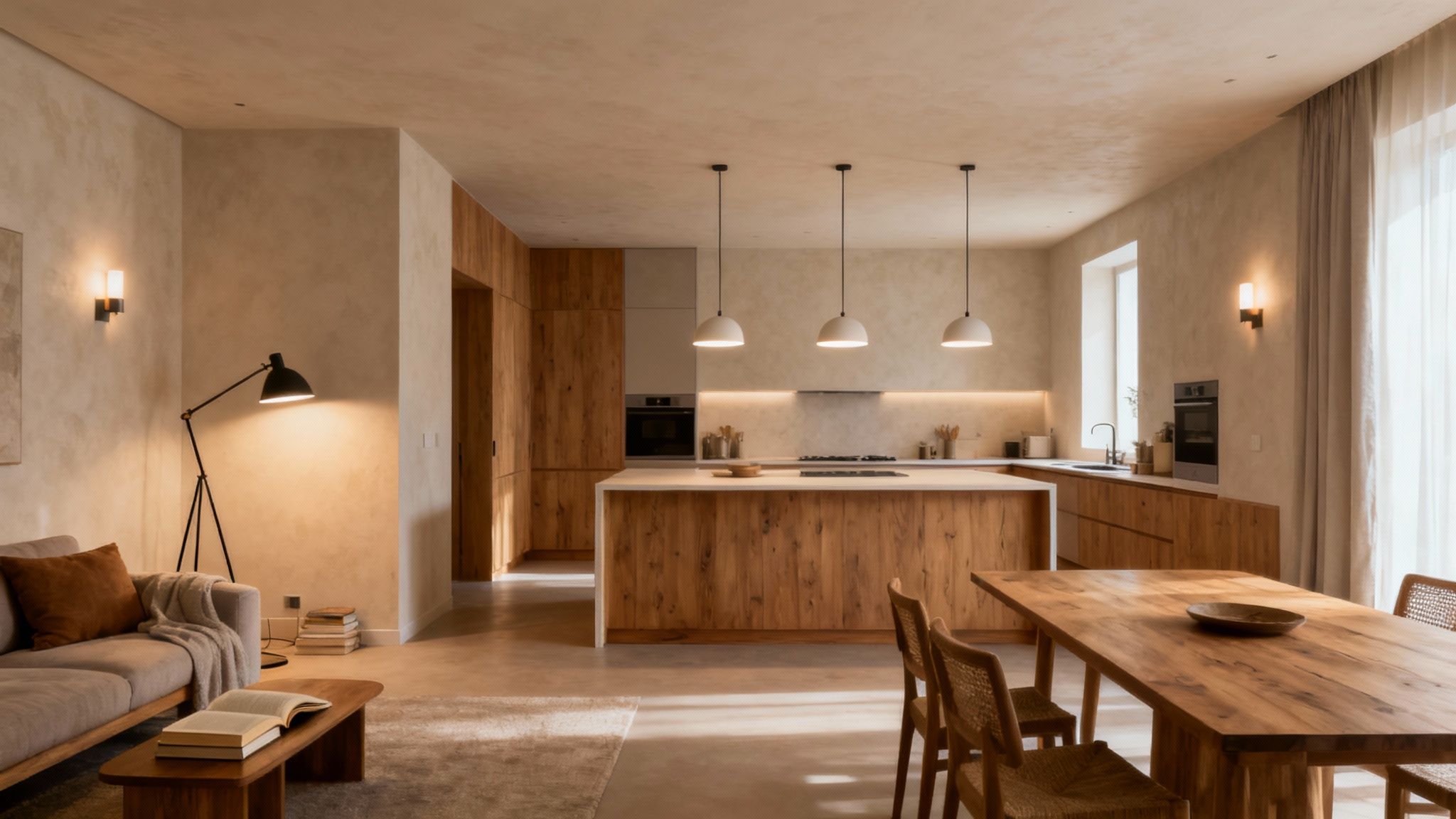
These focused beams of light make activities easier and more pleasant. In the open-concept homes from Monterey to Santa Cruz, this zoning technique is essential for making a great room truly functional.
Illuminating Your Daily Activities
Task lighting puts bright, direct light right where you need it most. It cuts through the ambient glow, gets rid of shadows, and reduces eye strain. Think of it as a personal spotlight for your daily routines.
A well-lit workspace is a necessity for comfort. Proper task lighting can prevent the headaches that come from squinting in dim light.
The key is to place the light source close to the action. This ensures the beam is strong and focused without creating harsh glare.
Popular Fixtures for Effective Task Lighting
The right fixture depends on the job it needs to do. A light that is perfect for a kitchen island won't be the best for a reading nook. Here are some of the most popular options:
- Pendant Lights: These are the top choice for kitchen islands and dining tables. Hanging them 30-36 inches above the surface gives focused light for food prep and meals.
- Under-Cabinet Lighting: This is a game-changer in any kitchen. Slim LED strips under the upper cabinets light up your countertops. This makes cooking safer and easier.
- Floor and Table Lamps: These are classic solutions for reading nooks and home offices. An adjustable floor lamp or a stylish table lamp provides targeted light where you need it.
- Track Lighting: This versatile option can be used for both task and accent lighting. The adjustable heads let you aim light at a work surface or a piece of art.
If you want to learn more, our guide on what is task lighting gives more examples and tips.
Highlighting What You Love with Accent Lighting
Accent lighting adds personality and drama to your room. Its job is to draw the eye to the features that make your home special. This could be a stone fireplace, a painting, or a bookshelf.
As a general rule, accent lights are typically three times brighter than the surrounding ambient light. This contrast makes the highlighted object stand out.
This technique adds depth to a large room. In many coastal homes on the Monterey Peninsula, accent lights are perfect for highlighting details like exposed wood beams.
Common choices for accent lighting include:
- Wall Sconces: Placed on either side of a fireplace or artwork, sconces add elegance and a beautiful wash of light.
- Picture Lights: These small fixtures mount directly above artwork to light it perfectly without glare.
- Uplights: Placed on the floor behind a large plant, these lights cast dramatic shadows upward.
By skillfully combining these lighting layers, you give every part of your large room a purpose. This layered approach is the core of smart lighting strategies for large and unique home layouts.
Getting Scale and Placement Just Right
Picking a beautiful fixture is only half the job. Where you put it and how big it is can make or break a room. This is especially true in large spaces with high ceilings.
When fixtures are scaled correctly, they bring a sense of harmony to a room. Let’s walk through some simple rules we use to get these details right.
Simple Formulas for Sizing Key Fixtures
You don’t have to guess when choosing the right size for a chandelier. Designers use simple math to find the ideal dimensions.
- For Chandeliers: Find the right diameter by adding the room's length and width together in feet. That number, in inches, is the ideal diameter. For a 16' x 20' room (16 + 20 = 36), a 36-inch diameter chandelier would look best.
- For Long Dining Tables or Kitchen Islands: The fixture should be about one-third the length of the surface it’s lighting. This proportion ensures the light feels substantial enough for the space.
One of the most common lighting mistakes is choosing fixtures that are too small. People often pick lights that look lost in their large rooms. If you are in doubt, it’s almost always better to go a little bigger.
Mastering Placement and Height
Once you know the size, where you hang the fixture is the next key decision. The wrong height can block sightlines or cast harsh glare.
Hanging Heights for Common Areas:
- Over a Dining Table: The bottom of the fixture should hang 30 to 36 inches above the tabletop. This lights the surface without blocking your view of others.
- In a Grand Foyer or Entryway: The bottom of the chandelier needs to be at least 7 feet off the floor. For a two-story entryway, hang the fixture at the height of the second story.
- Pendants Over a Kitchen Island: Just like a dining table, aim to hang pendants 30 to 36 inches above the countertop. This provides great task lighting.
This table is a handy reference for sizing and placing fixtures in homes from Carmel to Monterey.
Fixture Sizing and Placement Guide
| Fixture Type | Sizing Rule of Thumb | Placement Guideline |
|---|---|---|
| Chandelier (General) | Room Length (ft) + Width (ft) = Diameter (in) | Bottom of fixture at least 7 feet from the floor. |
| Dining Room Chandelier | Diameter should be 1/2 to 2/3 the width of the table. | Bottom hangs 30-36 inches above the tabletop. |
| Kitchen Island Pendants | Fixture width should be about 1/3 the length of the island. | Bottom hangs 30-36 inches above the countertop. |
| Foyer Chandelier | Depends on ceiling height; see general rule. | In two-story foyers, hang at second-story level. |
These rules are a great starting point, but every room is different. Don't be afraid to adjust to fit your specific space.
Spacing is also important, especially for recessed lighting. Our recessed lighting layout guide has expert tips to help you get beautiful, even coverage.
Using Smart Controls for Total Flexibility
In a big, multi-use room, control is key. A great lighting design won't mean much if you can't manage it easily. This is where smart controls come in, letting you transform your space instantly.
Smart lighting systems and dimmers unlock your design's true potential. They let you adjust brightness and manage multiple fixtures at once. For open-concept homes on the Monterey Peninsula, this control is a game-changer.
Creating Preset Scenes for Effortless Ambiance
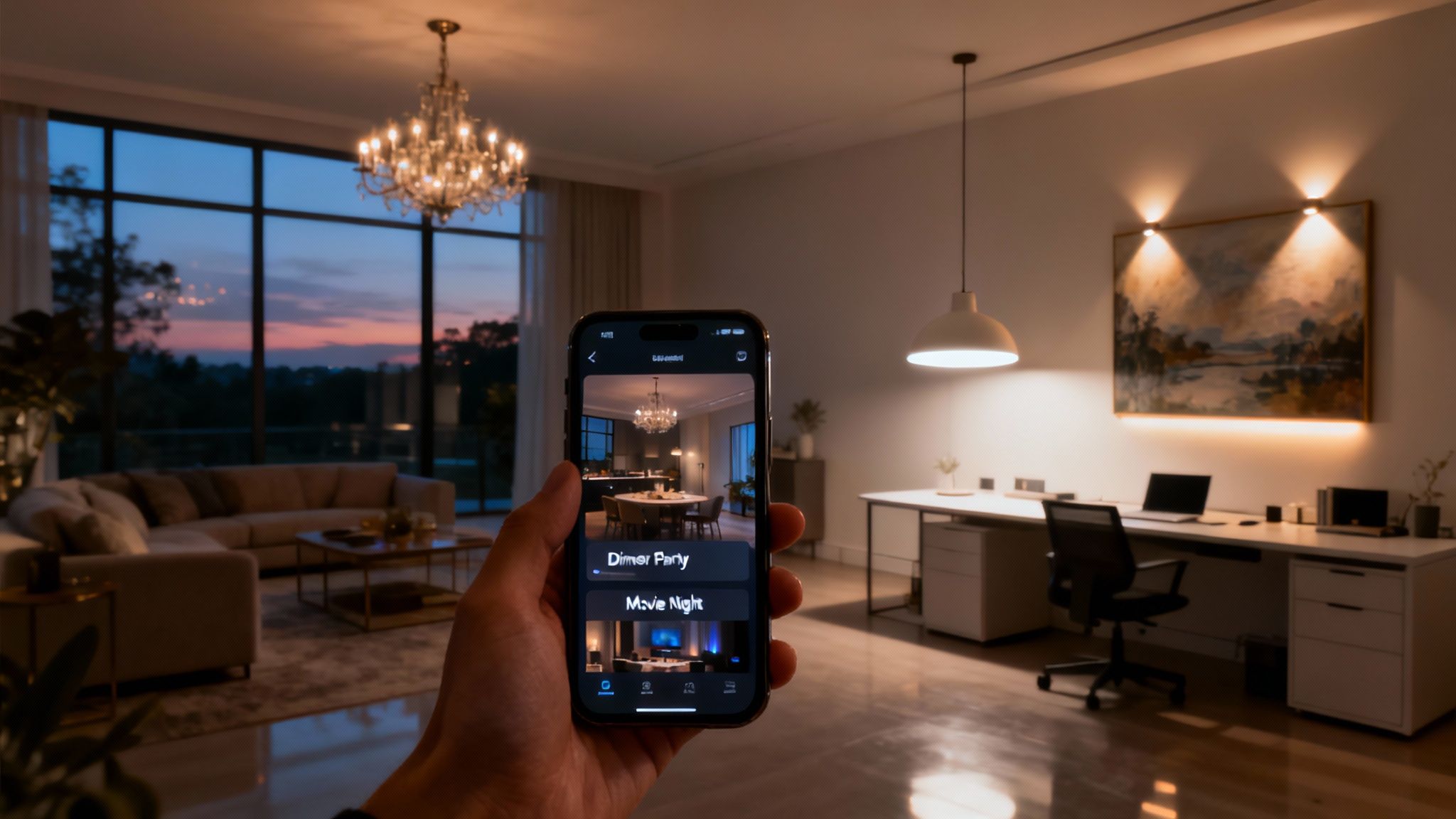
Imagine tapping your phone and every light adjusts to the perfect level. That is the magic of preset "scenes." A lighting scene is a custom mix of light settings you can save and use anytime.
This means you can design the ideal lighting for any situation ahead of time. No more fumbling with different dimmers every time you want to watch a movie.
Here are a few popular scenes we set up for clients:
- "Movie Night" Scene: Dims ambient lights to 10% and turns up a soft accent glow behind the TV.
- "Dinner Party" Scene: Raises the dining chandelier to 80% and dims living room lights to a comfortable 40%.
- "Work Focus" Scene: Pushes task lighting to full brightness while keeping other lights low to reduce distractions.
Custom scenes make your lighting plan dynamic. It truly adapts to how you live. For large and unique layouts, it’s a powerful way to make one space feel like many.
Advanced Features for Smarter Living
Modern controls do more than just dimming. Smart home technology has changed lighting. The global market for smart lighting is expected to grow from $25.3 billion in 2023 to $86.7 billion by 2030, according to Statista.
This technology allows for features that add convenience and save energy. For instance, daylight sensors can automatically dim your lights when the bright Monterey sun is pouring in. This gives you consistent light levels all day without touching a switch.
Why a Professional Lighting Plan Matters
DIY shows are great for ideas, but the challenges of a large room often need more than a few new fixtures. Lighting a great room is about creating an experience. This is where a professional lighting consultation is truly valuable.
An expert can spot things most homeowners miss. They'll notice how a vaulted ceiling in a Carmel home might cast shadows. A professional plan accounts for these details.
The Big Box Store Dilemma
Walking into a big-box store can be overwhelming. You see endless options but get little guidance. The staff can't help you map out lighting for your 18-foot ceiling. You're left guessing on important details like scale and placement.
A professional lighting plan is like a blueprint for your home's atmosphere. It considers architecture and lifestyle to create a beautiful space—something an off-the-shelf solution can't do.
A Consultative Approach for Central Coast Homes
At The Home Lighter, our appointment-based service is built for you. Your home is unique, and your lighting should be too. We are your partners in problem-solving. We will help you select fixtures that are perfectly scaled for maximum impact.
This kind of tailored advice is more important than ever. We help you make sense of new technology and build a strategy that feels custom-made.
Understanding the differences between interior architecture and interior design can also help. Our team focuses on the science and art of lighting. We are here to build trust and make sure you feel confident in your decisions.
We believe that the best choice for custom lighting is a local one. Our expertise and personal service can transform challenging layouts into beautifully lit homes our clients love.
Frequently Asked Questions About Lighting Large Rooms
Figuring out the best way to light a big, open space can be hard. Here are some of the most common questions we hear from homeowners on the Monterey Peninsula.
How do I choose the right color temperature for a large open-concept room?
For big, open areas, consistency is key. We usually recommend staying within the 2700K (warm white) to 3000K (soft white) range. This creates a comfortable glow that works well for a kitchen, dining, and living area all at once. Using the same color temperature creates a seamless look.
Are chandeliers outdated for high ceilings?
Not at all. For rooms with high ceilings, a chandelier is often the most important fixture. It brings the light down to a more human scale, making a large space feel more cozy. A great chandelier also acts as a beautiful focal point. Modern designs range from minimalist to artistic statements.
Can I mix different metal finishes on my light fixtures?
Yes! Mixing metals can give your space a curated, thoughtful feel. The key is to do it with a plan. Choose one main metal—like matte black—for your primary fixtures. Then, bring in one or two other metals, like brushed brass, as accents on smaller pieces.
How many recessed lights do I need for my living room?
There isn't a single magic number. It depends on your ceiling height and how bright you want the room. A good rule is to space 6-inch recessed lights about half the distance of your ceiling height. So, for a 10-foot ceiling, you would place the lights about 5 feet apart. A professional lighting plan is the best way to ensure even coverage.
What is the biggest mistake people make when lighting open floor plans?
The most common mistake is relying on only one type of light. Usually, this means just a grid of recessed lights. This creates a flat, sterile feeling that lacks warmth. A ceiling full of can lights alone feels more like an office than a home. The solution is always layering ambient, task, and accent lighting to create warmth and depth.
Ready to create a lighting plan that perfectly fits your home's unique layout? The experts at The Home Lighter, Inc. are here to help. Schedule your consultation today by visiting https://homelighterinc.com/.