
Homes along the Monterey Peninsula, from Pacific Grove's bungalows to modern Carmel retreats, have a unique character. Generic lighting advice often misses what makes these homes special. Coastal living is about natural light, durable materials, and a relaxed, airy feel.
This guide provides real lighting tips for coastal-style homes for our Central Coast community. We offer practical strategies that honor local architecture. You'll learn how to select weather-resistant materials and layer light sources for the perfect mood.
Whether you're updating a seaside cottage or building a new home, these tips will help. Let's explore how to make your space glow with true coastal charm.
1. Embrace Natural Light with Smart Window Choices
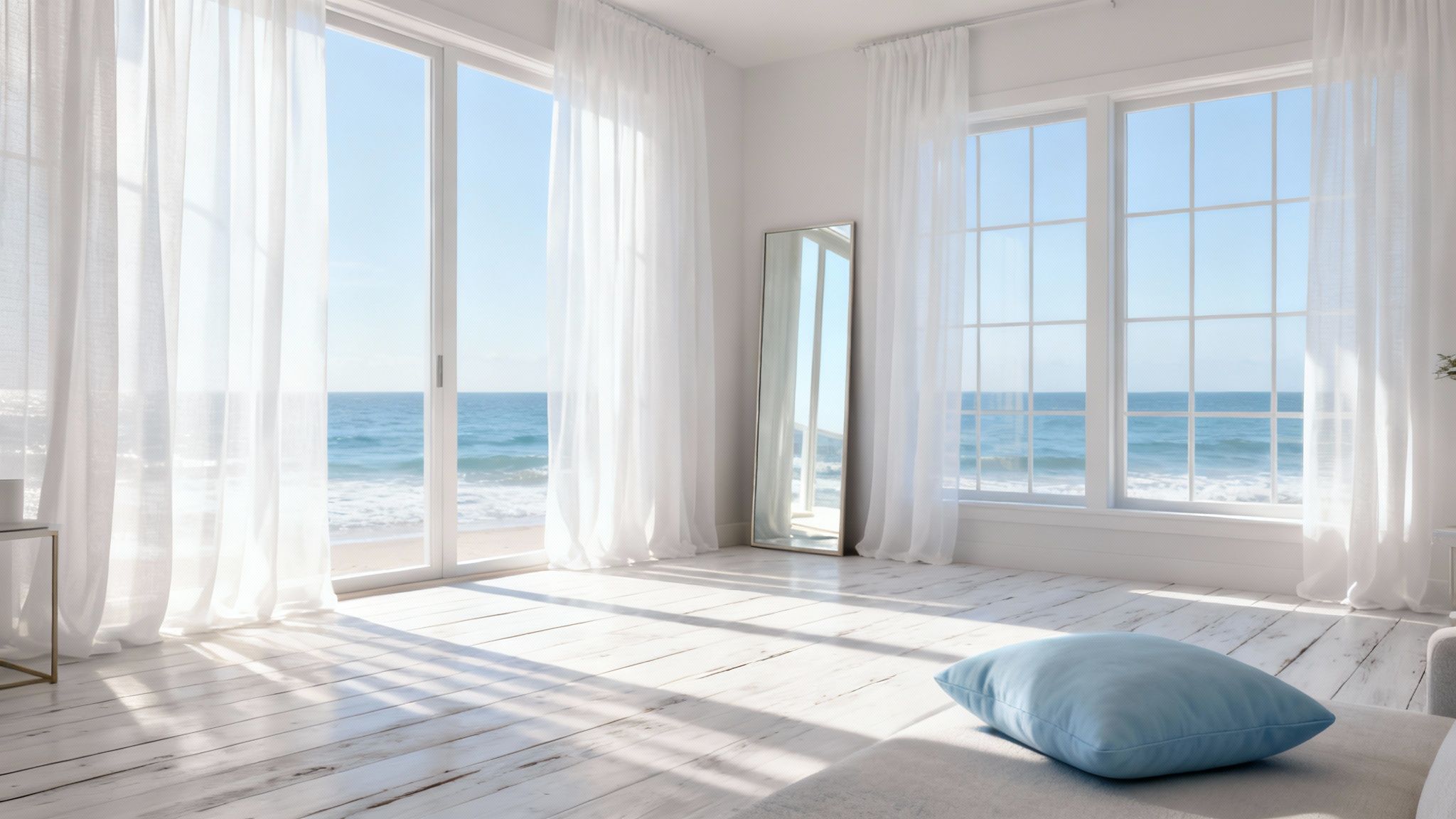
The soul of coastal design is the sun. A key feature of this style is creating bright, airy rooms that connect to the outdoors. The best lighting tip for a coastal home is to use natural light first.
Why It Works for Coastal Homes
Coastal living is about blurring the lines between indoors and out. Homes in places like Monterey and Carmel get lots of sun. The right window treatments help you filter it beautifully.
Sheer linen curtains can soften bright afternoon sun without losing brightness. This approach keeps the open, sun-washed look that is central to coastal style.
How to Implement It
Managing natural light well requires a smart approach. Consider these simple strategies:
- Layer for Flexibility: Combine sheer curtains with blackout roller shades. This gives you soft light during the day and privacy at night.
- Choose Light-Reflecting Materials: Pick light-colored window frames and sills. Whites and soft blues reflect daylight deeper into a room.
- Amplify with Mirrors: Place a large mirror on the wall opposite your main window. This bounces light across the space, making it feel bigger and brighter.
For more ideas, a designer's guide on how to choose window treatments can be very helpful. Using your windows wisely sets the stage for your entire lighting plan.
2. Install Warm, Dimmable Lighting for a Flexible Mood
After maximizing daylight, the next step is controlling your artificial light. Installing warm lights with dimmers lets you change your home's mood easily. This helps you go from bright, functional light to a soft, relaxing glow.
Why It Works for Coastal Homes
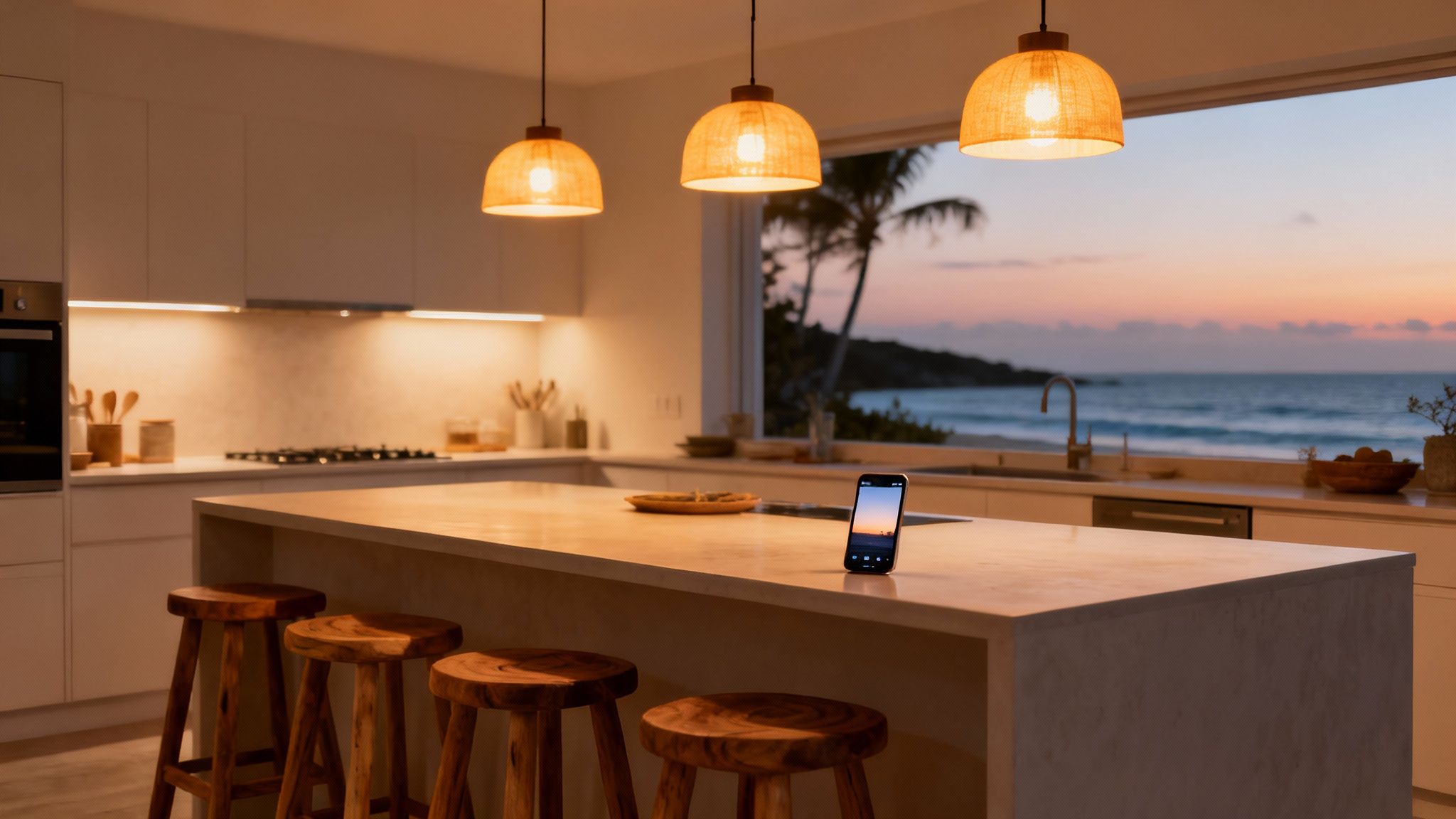
Coastal life follows the rhythm of the day, from bright sun to golden sunsets. Warm, dimmable lights let you copy this natural light indoors. A color temperature between 2700K and 3000K offers a soft, welcoming light.
This flexibility is key for homes on the Monterey Peninsula. A kitchen island might be a prep space by day and a social spot by night. Dimmers make that transition easy.
How to Implement It
Creating a flexible lighting plan is simple with the right parts. Follow these practical steps:
- Prioritize Dimmers: When you pick fixtures, make sure both the fixture and the bulb are "dimmable." This ensures they work smoothly together without flickering.
- Choose the Right Color Temperature: Use 2700K-3000K lights in living rooms, bedrooms, and dining areas. This warm white light looks great with natural materials like wood.
- Embrace Smart Technology: Modern smart dimmers can be programmed to adjust on their own. Your lights can slowly dim as the sun sets over Santa Cruz, creating the perfect mood automatically.
With dimmers, you gain full control over your home's feel. To learn more about creating the right mood, check out this ultimate guide to mood lighting.
3. Use Nautical and Beach-Inspired Fixtures as Decor
In a coastal home, light fixtures are more than just lights—they are part of the decor. Choosing fixtures with nautical or beachy details makes them a focal point. They become functional art that sets the home's style.
Why It Works for Coastal Homes
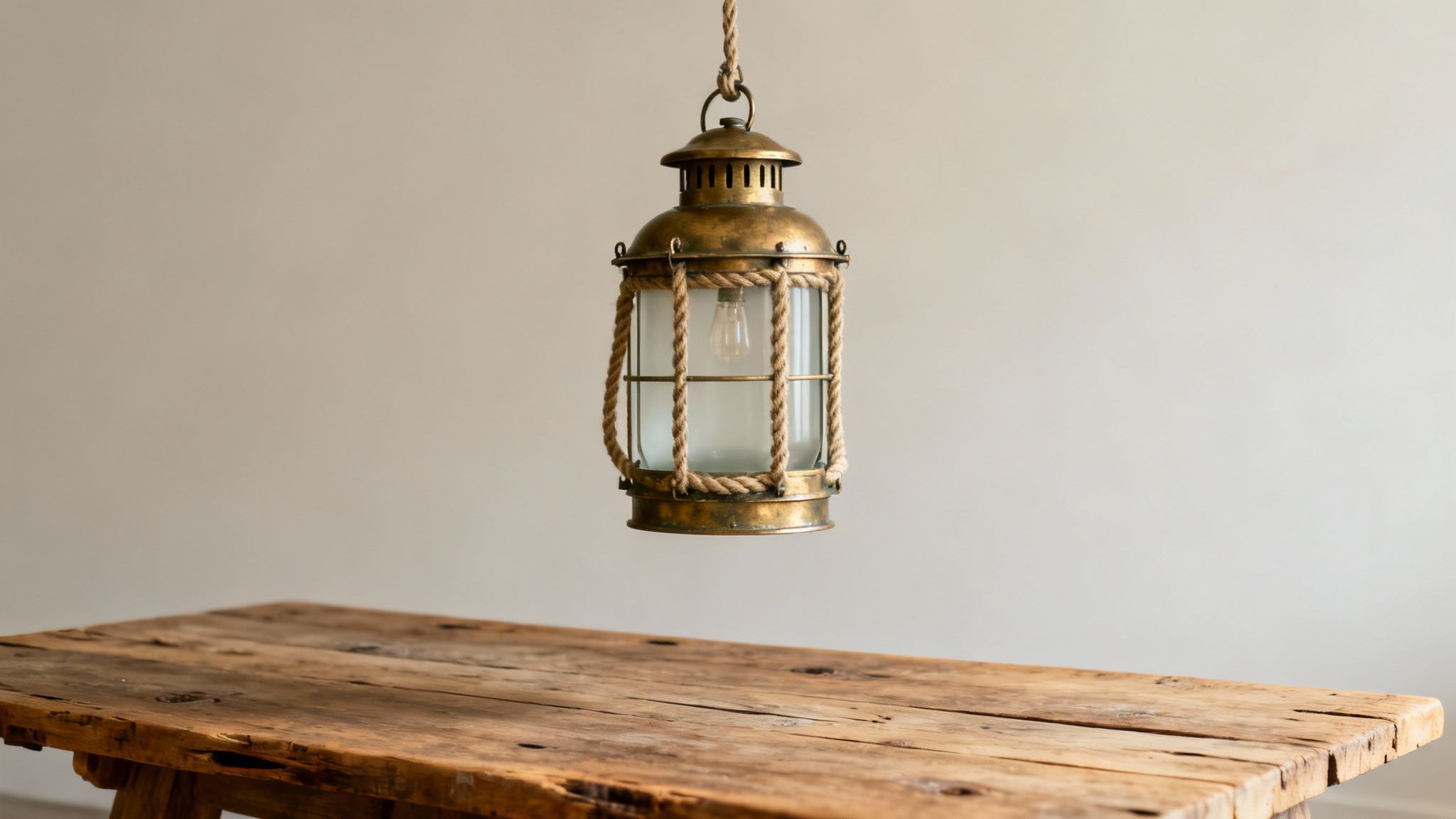
Coastal design uses elements from the sea and nature. Fixtures made with materials like weathered wood, rope, or aged brass feel authentic. For example, a vintage-style lantern over a dining table in a Monterey home adds a touch of history.
This ensures your lighting actively adds to the home's design story. It doesn't just blend into the background.
How to Implement It
Adding these fixtures requires a good balance. For more ideas, explore these timeless nautical interior design ideas.
- Balance Theme with Modernity: Pair a unique nautical piece, like a rope-wrapped sconce, with simpler items in the room. This keeps the space from looking too themed.
- Prioritize Quality Materials: Choose fixtures made from real materials like solid brass or reclaimed wood. Good quality ensures they last and look authentic.
- Group for Impact: Over a kitchen island, hang pendants in groups of three or five. This creates a balanced and interesting look.
Choosing the right fixture is a key part of your lighting plan. For help, explore how statement lighting can elevate high-end coastal living.
4. Layer Lighting and Keep a Cohesive Look
A well-lit coastal home feels balanced and inviting in every room. This requires a layered lighting plan that combines ambient, task, and accent lighting. It also means keeping a consistent style throughout the house.
Why It Works for Coastal Homes
Coastal homes often have open layouts where rooms flow together. A layered and cohesive lighting plan prevents the space from feeling chaotic. For example, nautical-style lights in the living room can complement simple task lights in the kitchen.
This creates a visual connection that enhances the home's relaxed, airy feel. This approach is perfect for homes on the Monterey Peninsula.
How to Implement It
Building a layered lighting plan means designing for both function and overall harmony. Follow these simple steps:
- Design Layers Separately: First, plan each type of light for a room. For a kitchen, this means overhead pendants (ambient), under-cabinet lights (task), and small spotlights (accent).
- Coordinate Finishes and Styles: Pick a main finish, like brushed nickel or woven rattan, to use throughout the home. This creates a consistent look.
- Harmonize Color Temperature: Use a warm 2700K color temperature for your main ambient lighting. Make sure your other lights match this to create a comfortable glow.
By planning each layer carefully, you create a smart and beautiful lighting scheme. For more tips on tricky spaces, see these expert lighting strategies for large and unique home layouts.
5. Choose Weather-Resistant Materials for Exterior Lighting
The coastal environment is beautiful but harsh. Salt air, humidity, and sun can damage outdoor items. A critical lighting tip for coastal homes is to pick outdoor fixtures made from materials that can handle these conditions.
Why It Works for Coastal Homes
Coastal homes from Monterey to Santa Cruz need durable fixtures. Weather-resistant lighting keeps your home's exterior looking good for years. For example, marine-grade brass fixtures develop a nice patina over time that adds to the coastal charm.
Choosing the right materials means your investment will last. This saves you money on replacements and maintenance.
How to Implement It
Picking the right outdoor fixtures means looking at materials and quality. Use these tips to protect your home:
- Prioritize Marine-Grade Materials: Choose fixtures made from solid brass, copper, or powder-coated aluminum. These materials resist salt and moisture better than standard steel.
- Check Durability Ratings: Look for fixtures with an ASTM B117 salt spray certification. This rating means the fixture has been tested for coastal environments.
- Protect Electronics: Make sure all electronic parts are sealed and rated for wet locations. This prevents moisture from causing electrical failures.
Investing in fixtures built for the coast ensures your home's exterior stays beautiful and safe. It's smart to consult a lighting professional who knows about our local climate.
6. Integrate Smart Lighting and Energy-Efficient LEDs
Modern coastal living is about easy elegance and respecting the environment. Smart lighting and energy-efficient LEDs fit this idea perfectly. They offer both advanced control and sustainable performance.
Why It Works for Coastal Homes
The coastal lifestyle is relaxed, and your lighting should be too. Smart systems let you change the mood with your phone or voice. For vacation homes in Santa Cruz or Monterey, smart controls give you peace of mind with remote access.
Paired with LEDs, this is a great lighting tip for coastal homes. It greatly reduces energy use, which fits with California’s eco-friendly mindset.
How to Implement It
Mixing technology with coastal style requires good planning. Consider these tips for a smooth setup:
- Choose Warm, High-Quality LEDs: To keep a warm, inviting glow, pick LED bulbs with a color temperature of 2700K. A high Color Rendering Index (CRI) of 90+ makes colors look natural.
- Program Lifestyle Scenes: Use a smart home system to create preset lighting scenes. A "Sunset" scene can slowly dim the lights for a relaxing evening.
- Install Automated Sensors: Use occupancy sensors in hallways and closets to save energy. Daylight sensors can dim lights when there is enough natural light.
By using these modern solutions, you can make your home more functional and sustainable. To learn more, read about going green on the coast with energy-saving lighting options on homelighterinc.com.
7. Highlight Architectural Details with Accent Lighting
A home's character comes from its unique features, like exposed wood beams or a stone fireplace. An impactful lighting tip for coastal homes is to use accent lighting on the architecture itself. This turns structural parts into beautiful design statements.
Why It Works for Coastal Homes
Coastal homes in areas like Pacific Grove are full of character. They often have high ceilings, rustic beams, and natural materials that should be shown off. Directional lighting adds depth and draws the eye to these details.
This technique makes a structural feature an active and interesting focal point. It brings the home's unique charm to life.
How to Implement It
Highlighting architecture requires a subtle touch. The goal is to create a soft, gallery-like effect.
- Target Key Features: Find the most interesting architectural details. You could uplight exposed beams or use a wall washer to bring out the texture of a stone fireplace.
- Use Warm, Intimate Light: Choose a warm color temperature around 2700K for your accent lights. This keeps the cozy feel that is central to coastal living.
- Layer with Finesse: Use several lower-wattage fixtures instead of one big spotlight. This creates a more sophisticated wash of light without harsh shadows.
- Control the Glare: Pick low-glare fixtures. This ensures the focus stays on the feature you are highlighting, not on a bright light source.
8. Create Outdoor Ambiance with Landscape Lighting
Coastal living is all about the connection between inside and outside. Your lighting plan should include your outdoor spaces. Good landscape lighting improves safety and creates a welcoming, resort-like feel.
Why It Works for Coastal Homes
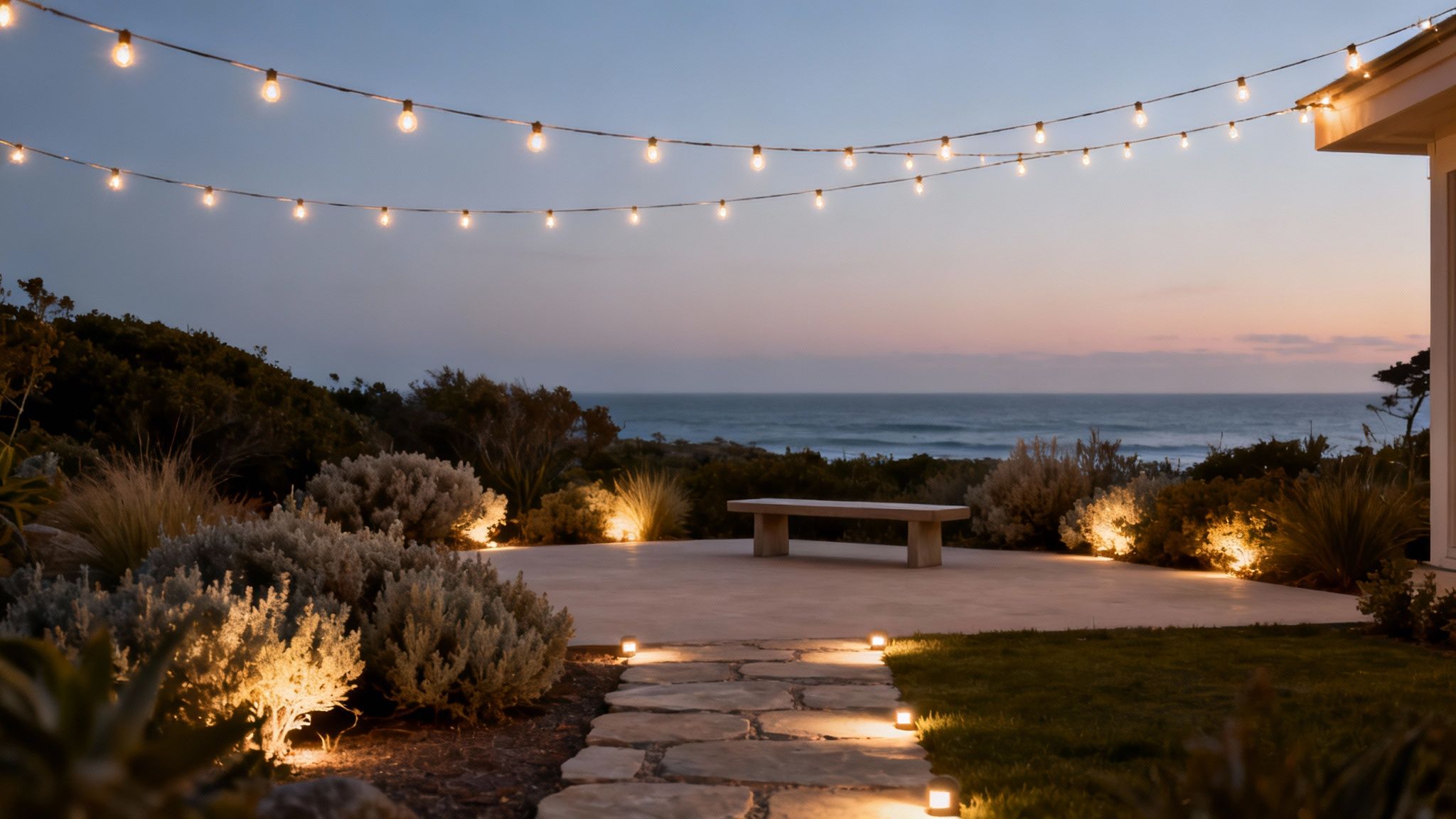
The mild climate on the Monterey Peninsula allows for year-round outdoor living. The right lighting makes patios and gardens usable and magical after dark. For example, warm string lights can make a Pacific Grove patio feel festive.
This approach improves your home's curb appeal. It also creates wonderful spaces for gathering with friends and family.
How to Implement It
A good outdoor lighting plan is built in layers, just like an indoor one. This is a key lighting tip for getting the most out of your coastal property.
- Layer Your Lighting: Plan for three functions. Start with safety lighting like path lights. Add ambient lighting like string lights. Finish with accent lighting to highlight trees or stonework.
- Choose a Warm Glow: Use warm color temperatures (2700K–3000K) for outdoor areas. This creates a welcoming mood that feels natural.
- Automate for Convenience: Install timers or smart controls for your landscape lights. This ensures your home is always beautifully lit in the evening without any effort.
Creating a landscape lighting plan can be complex. For a detailed look at creating beautiful outdoor scenes, explore these landscape lighting ideas for Pebble Beach homes.
Your Local Partner in Coastal Lighting Design
Creating a true coastal feel is about capturing the essence of seaside living with light. The right lighting plan balances the bright natural light of the Monterey Peninsula with warm indoor light. Mastering these tips can turn your house into a calm and functional coastal retreat.
This process is more than just picking pretty fixtures. It's about layering light to create depth and mood. It means choosing dimmable, warm-temperature bulbs to copy the glow of a sunset over the Pacific.
For our area, it also means picking durable, weather-resistant materials for outdoor lights. These are smart investments in your home's future and your daily comfort. Whether you're in Pacific Grove or Salinas, the right lighting makes all the difference.
Key Takeaways for Your Coastal Home
Here is a simple action plan based on these ideas:
- Prioritize Durability Outside: Always choose outdoor fixtures made from materials like solid brass or marine-grade polymers. This is one of the most important lighting tips for coastal-style homes.
- Layer with Intention: Don't just use one overhead light. Combine different types of lighting to create a rich and dynamic space.
- Embrace Smart Technology: Use smart dimmers and efficient LEDs to easily control your home's mood while saving energy. This is a perfect mix of style and sustainability.
- Connect Indoors and Out: Extend your lighting plan outside. Use landscape lighting to highlight your garden and create inviting outdoor rooms.
Mastering coastal lighting helps you create a home that feels both open and cozy. By using these lighting tips for coastal-style homes, every room can reflect the relaxed beauty of its surroundings.
Ready to bring these coastal lighting ideas to life? The team at The Home Lighter Inc. specializes in creating lighting plans for the unique homes of the Monterey Peninsula. Visit our showroom or connect with our consultants at The Home Lighter Inc. to find the perfect fixtures for your project.
FAQs on Coastal-Style Home Lighting
What is the best color temperature for coastal lighting?
For most areas in a coastal home, a warm color temperature between 2700K and 3000K is best. This range creates a soft, inviting glow that mimics natural sunset light and complements materials like wood and linen.
How can I make my coastal home feel brighter without adding more fixtures?
Maximize natural light first. Use sheer window treatments, light-colored paint, and strategically placed mirrors to reflect daylight throughout the room. This makes the space feel airy and bright without increasing energy use.
What materials should I look for in outdoor coastal lighting fixtures?
Look for fixtures made from solid brass, copper, or marine-grade polymers and powder-coated aluminum. These materials are highly resistant to corrosion from salt air and humidity, ensuring they last much longer.
Are dimmers really necessary for a coastal home?
Yes, dimmers are essential. They provide the flexibility to change the room's mood from bright and functional for daytime activities to soft and relaxing in the evening. This control is key to achieving an authentic coastal atmosphere.
How can I add a coastal feel without making my home look too themed?
Incorporate subtle nautical or natural elements. Choose one statement fixture with rope or weathered wood details and pair it with simpler, modern fixtures elsewhere. This adds character without overwhelming the space.