
Direct Answer: Match the fitter type first (spider, uno, or clip-on), then measure the top width, bottom diameter, and height. Bring the lamp and old shade with you if you can.
A woman in her seventies contacted the showroom about an antique floor lamp handed down from her grandmother-in-law. She wanted to know if replacement shades even existed for something that old. And she wished she could just send a photo, because she did not have the words to describe what she had.
That is where most people get stuck. The lamp matters to them, the old shade is torn or yellowed or crushed, and nothing in an online catalog looks like it would fit.
The good news is that lamp shades are more replaceable than people think, as long as you gather the right information first. Here is what to figure out before you walk into any showroom on the Monterey Peninsula.
Start With the Fitter, Not the Size
The fitter is the hardware at the top of the shade that connects it to the lamp. Get this wrong and no measurement matters, because the shade physically will not attach.
There are three you will run into most often:
- Spider fitter. A metal spider sits across the top of the shade and rests on a harp, held down by a finial. This is the standard on most modern table and floor lamps.
- Uno fitter. A ring built into the shade slips over the socket itself and is held in place by the bulb or by threads on the socket. Very common on older bridge lamps and mid-century floor lamps.
- Clip-on. A wire clip grips the bulb directly. Usually found on small accent lamps and chandelier shades.
Antique and vintage lamps often use fitter styles that are no longer standard in current production. A 1950s or 1960s floor lamp may also use a harp size that does not match today’s parts, which means you might need a new harp, a harp saddle, or a small adapter to make a contemporary shade sit correctly.
That is normal, and it is fixable. It is also the kind of detail an online dropdown menu will never ask you about.
The Three Measurements That Actually Matter
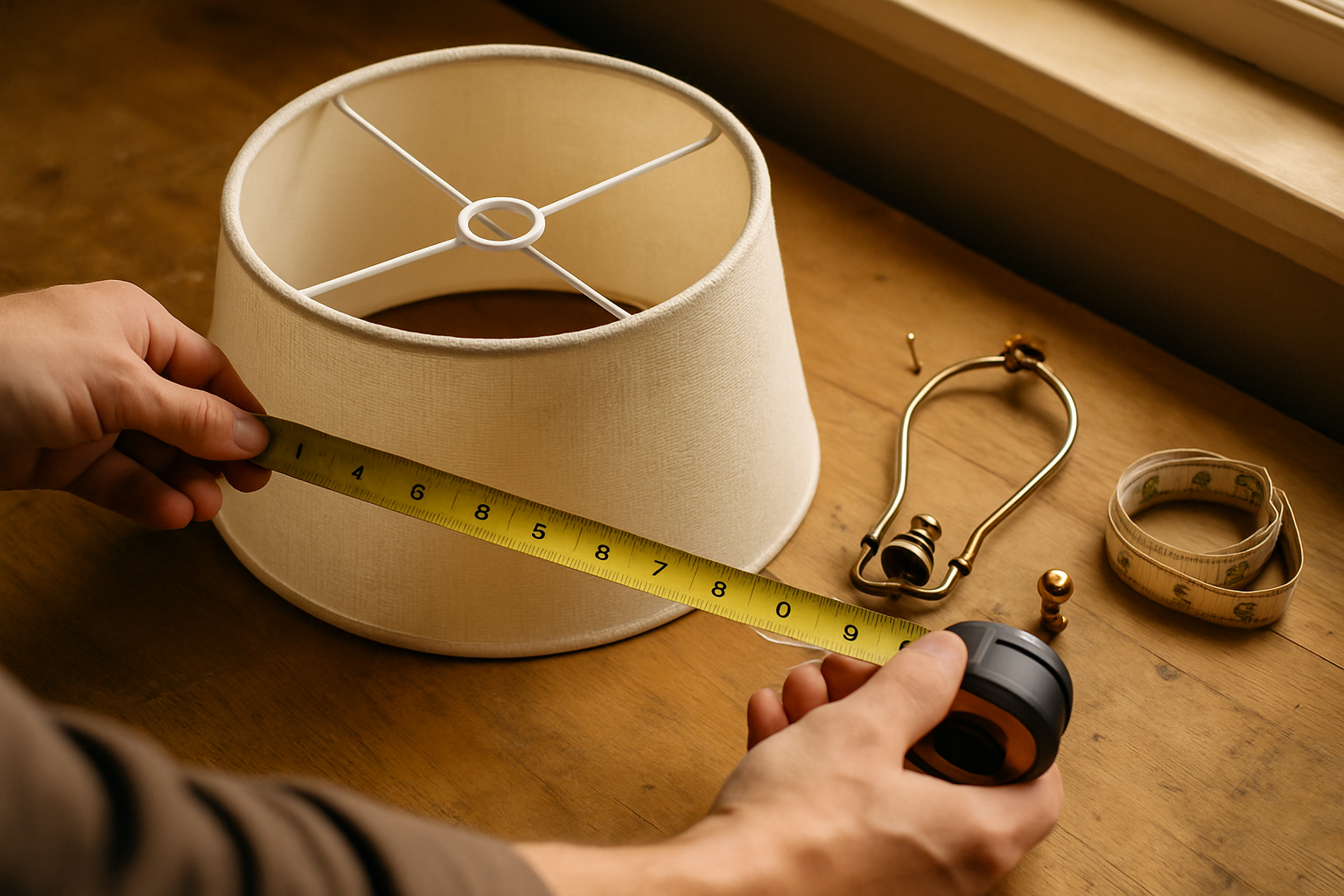
Most people measure the diameter and stop there. Diameter alone is not enough to get a shade that looks right in the room.
Write down all three of these:
- Top width. The diameter across the top opening. This drives proportion and also tells you how much of the socket and hardware the shade will cover.
- Bottom diameter. The widest point at the bottom. A common starting rule is a bottom diameter roughly equal to the height of the lamp base, then adjust by eye.
- Height. Measure the vertical height and, on a sloped shade, the slant along the side. This is the number that decides whether the shade hides the socket or leaves it exposed.
One warning worth taking seriously. If the old shade is warped, sagging, or crushed from decades in a closet, the numbers you take off it are not the original numbers. Measure it, but treat it as a rough reference rather than a spec sheet.
The harp is the U-shaped metal frame that arcs over the bulb. Harp height controls how high the shade sits, and swapping a 9 inch harp for a 10 inch harp changes how much of the base is visible. That single inch is often the difference between a lamp that looks balanced and one that looks like it is wearing a hat too small for it. If you want the full walkthrough, this guide on how to find a replacement lamp shade that actually fits covers the measuring process step by step.
Fitter Types at a Glance
Identify which of these your lamp uses before you shop. Look at the top of the lamp with the old shade removed.
| Fitter Type | How It Attaches | Commonly Found On |
|---|---|---|
| Spider | Rests on a harp, secured by a finial | Most modern table and floor lamps |
| Uno | Ring slips over the socket, held by bulb or threads | Vintage bridge lamps, mid-century floor lamps |
| Clip-on | Wire clip grips the bulb itself | Small accent lamps, chandelier shades |
| Notched or adapted | Uses a saddle, reducer, or adapter ring | Antique lamps with nonstandard hardware |
What to Gather Before You Shop
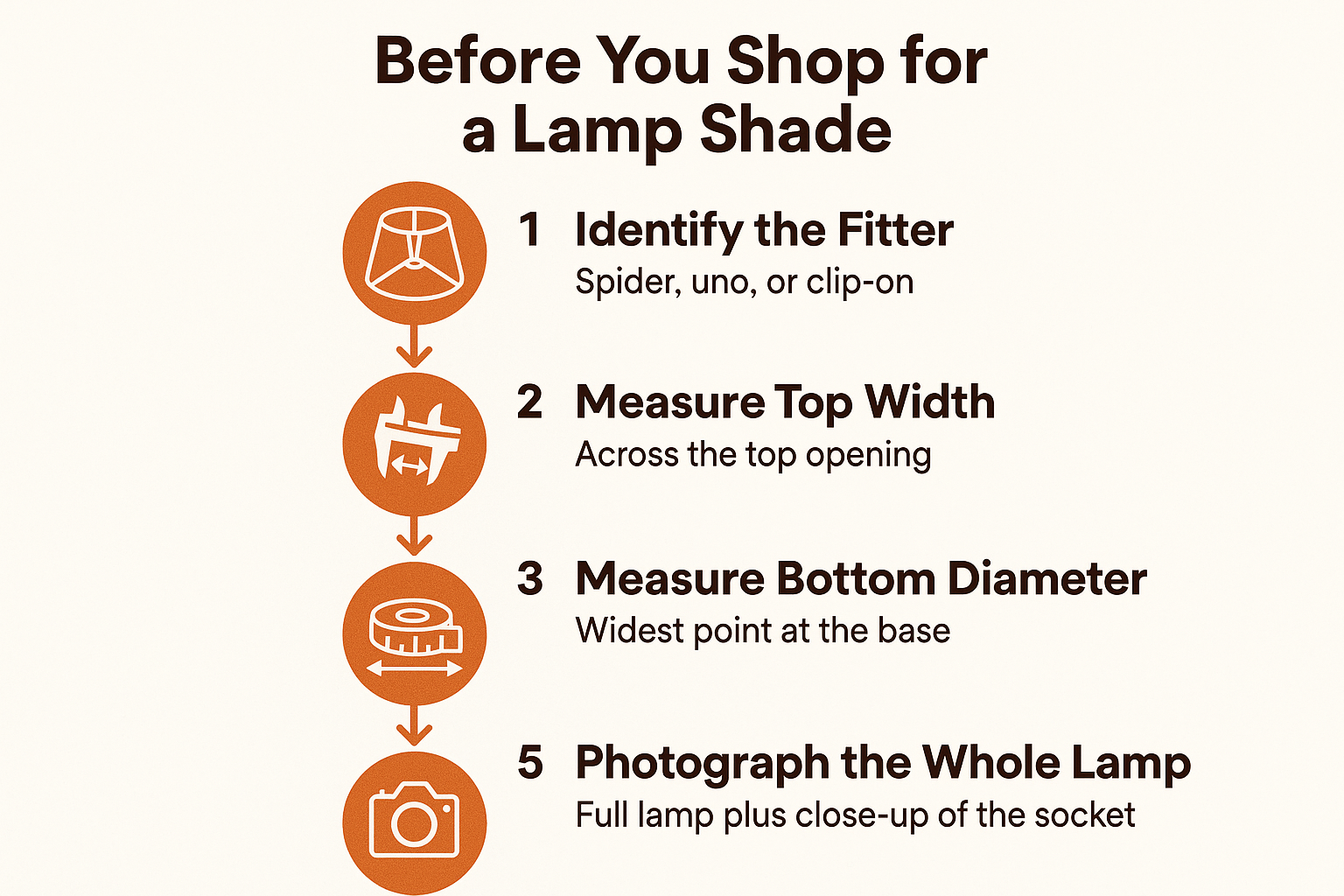
Five pieces of information that turn a frustrating search into a short one.
Material Changes the Light More Than People Expect
Two shades with identical measurements can make a room feel completely different. That comes down to how much light passes through the sides versus how much is pushed out the top and bottom.
Here is a practical test you can run in any showroom. Hold the shade up against a lit fixture and watch where the light goes.
- Dense fabric or a lined shade blocks most side light and throws a column down onto whatever is below. Good for reading in a chair, but it leaves the surrounding wall dark and flattens the room.
- Linen, silk, or rice paper lets warmth pass through the sides and wraps the nearby wall in soft light. The lamp feels like part of the room instead of a spotlight parked in the corner.
- Opaque parchment or metal reads as sculpture during the day and as a tight pool of light at night.
In coastal homes around Pacific Grove and Carmel-by-the-Sea, the fog rolls in early and evenings run long and gray. A shade with some translucency does real work in those rooms, which is worth remembering if your lamp is the main light source in the space.
Bulb choice stacks on top of this. LEDs run far cooler than incandescent bulbs, which matters for paper and silk shades sitting close to the socket, and the color temperature you pick will shift how the shade material reads. This piece on the difference between dim and warm explains why a shade can look right and still feel wrong.
Shade Replacement and Lamp Repair Are Two Different Problems
People call about these interchangeably, and they are not the same job.
Shade replacement is a sourcing and selection task. You are matching hardware, measurements, and material to a lamp that already works. That happens in a showroom with the lamp in front of you.
Lamp repair is electrical work. Rewiring, socket replacement, a cracked switch, a frayed cord, a snapped harp saddle. That belongs with a lamp repair specialist or a licensed electrician, not a lighting showroom.
Know which one you have before you make the trip. Plug the lamp in first. If it lights up and the only problem is the shade, you are shopping. If it flickers, buzzes, or does nothing, deal with the electrical side first.
On cost, replacement shades cover a wide range. A stock drum shade in a common size sits well below a hand-sewn silk shade or a custom shade built to fit unusual hardware. Size, material, lining, and whether the shade is in stock or has to be ordered are what drive the number, so ask for a real quote once someone has seen the lamp.
Frequently Asked Questions About Lamp Shades
Can I bring my old lamp into the showroom?
Yes, and it is by far the best way to do this. Bring the lamp itself, the old shade, and the harp and finial if you still have them. Walk-ins are welcome, and appointments are available for more involved projects.
My lamp is from the 1950s. Will a modern shade fit it?
Often yes, with a small adjustment. Mid-century lamps frequently used harp sizes and uno fitters that differ from current production, so you may need a new harp, a saddle, or an adapter ring. It is a common situation, not a dead end.
What if I only have a photo of the lamp?
A photo helps identify the fitter and the general style, but it cannot give you accurate measurements. Take a straight-on photo of the whole lamp plus a close-up of the socket and harp area, then bring your measurements along with it.
Do I need to replace both shades on a matched pair?
Usually. Fabric ages, and a new shade next to a shade that has spent twenty years in coastal light will not match, even in the same material. If the pair sits in the same room, replace both.
Is there a rule for how big the shade should be?
A reasonable starting point is a bottom diameter close to the height of the lamp base, with the shade tall enough to cover the socket and hardware. Then trust your eye in the actual room, because ceiling height and wall color change how proportion reads.
Bringing an Old Lamp Back Into Service
Greg and Tammy at The Home Lighter have been matching shades to lamps on the Monterey Peninsula since 1969, including plenty of lamps built long before anything on the current market. Walk-ins are welcome at the Pacific Grove showroom at 2034 Sunset Drive, and appointments are available for larger projects. If you have questions about a lamp before you load it into the car, the showroom can be reached at (831) 655-5500.