
The best lighting for a walk-in closet isn’t about finding one perfect bulb. It’s about a layered approach, combining ambient, task, and accent lighting to create a space that’s both functional and beautiful.
This strategy moves beyond a single, harsh overhead light. It ensures every corner is lit, your clothes look true-to-color, and your daily routine feels a little more luxurious.
Your Guide to Perfect Walk-In Closet Lighting
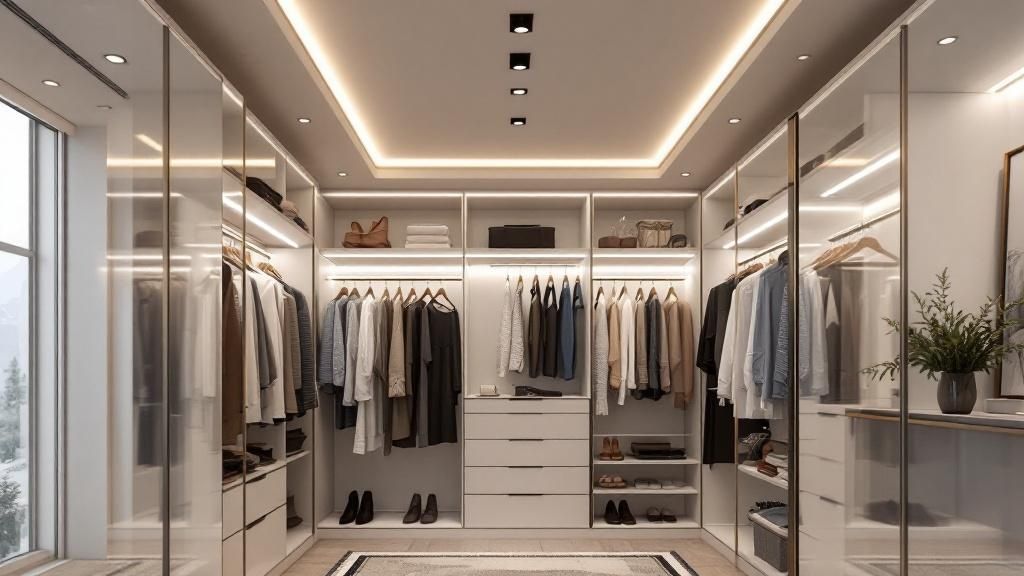
The secret to a fantastic walk-in closet isn't just clever organization—it's smart, strategic lighting that completely transforms the room. Think of it as elevating a simple storage area into your own personal dressing room or boutique.
With modern LEDs and smart controls, closet design has completely changed. It now offers incredible style and efficiency that wasn't possible before. Getting this effect right comes down to understanding the three essential layers of light.
Ambient Light: The Foundation
This is the base layer of your lighting plan, the general illumination that fills the entire space and lets you see where you're going. It sets the overall mood and is the first step to a well-lit closet.
You can learn more about how to create ambient lighting in our detailed guide. Without it, the closet will feel dim and full of shadows, no matter how many other fixtures you add.
Task Lighting: The Workhorse
This is where the magic really happens. Task lighting is focused, targeted light aimed at specific zones—think integrated LEDs under shelves, down the sides of hanging rods, or inside drawers.
It’s what helps you tell the difference between your navy and black socks on a dark morning. This layer is crucial for the functionality of your space.
Accent Lighting: The Finishing Touch
This is the fun part. Accent lighting adds a touch of drama and style, turning your closet into a showroom for your favorite items.
Use it to highlight a special collection of handbags on a shelf or a beloved pair of shoes. It’s not just about function; it’s all about creating a vibe.
Quick Guide to Walk-In Closet Lighting Layers
By weaving these three types of lighting together, you create a closet that's not only incredibly practical but also a genuine pleasure to use every single day. Here’s a quick breakdown of how these three layers work together.
| Lighting Layer | Primary Purpose | Common Fixture Types |
|---|---|---|
| Ambient | Provides overall, general illumination for the entire space. | Recessed ceiling lights, a central flush-mount, or a small chandelier. |
| Task | Illuminates specific work areas for clarity and function. | LED strip lights under shelves, lighting inside drawers, puck lights. |
| Accent | Adds style and highlights specific features or items. | Small spotlights, picture lights, or shelf backlighting. |
Why Great Lighting Transforms Your Closet Experience
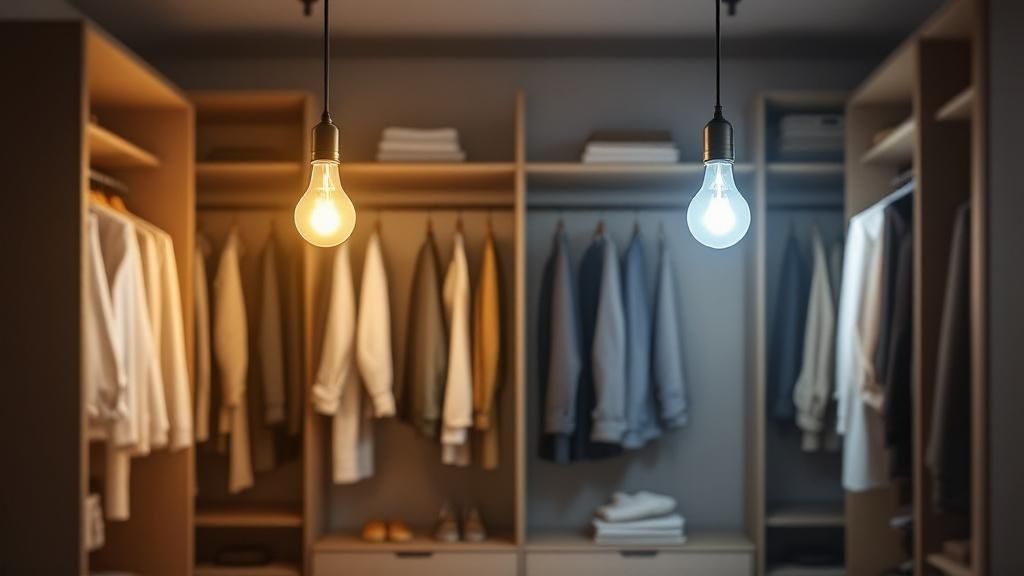
If there's one unsung hero in closet design, it's the lighting. We often focus on shelving and organization, but the right light does more than just help you find your shoes.
Think of your closet like a high-end retail boutique on Ocean Avenue in Carmel. The right illumination makes everything look its best, enhances the true color of your clothes, and elevates the simple act of getting dressed.
No more grabbing what you think is a navy blue shirt only to find out it's black once you step into the daylight. This is a common issue we help Monterey Peninsula homeowners solve.
This shift towards luxurious, functional spaces is why the global walk-in closet industry hit USD 17.5 billion in 2023. You can dive deeper into this trend and see the projected market growth at Data Insights Market.
Investing in quality closet lighting solutions is a relatively small change that delivers a massive upgrade to your daily routine.
Mastering the Three Layers of Closet Lighting
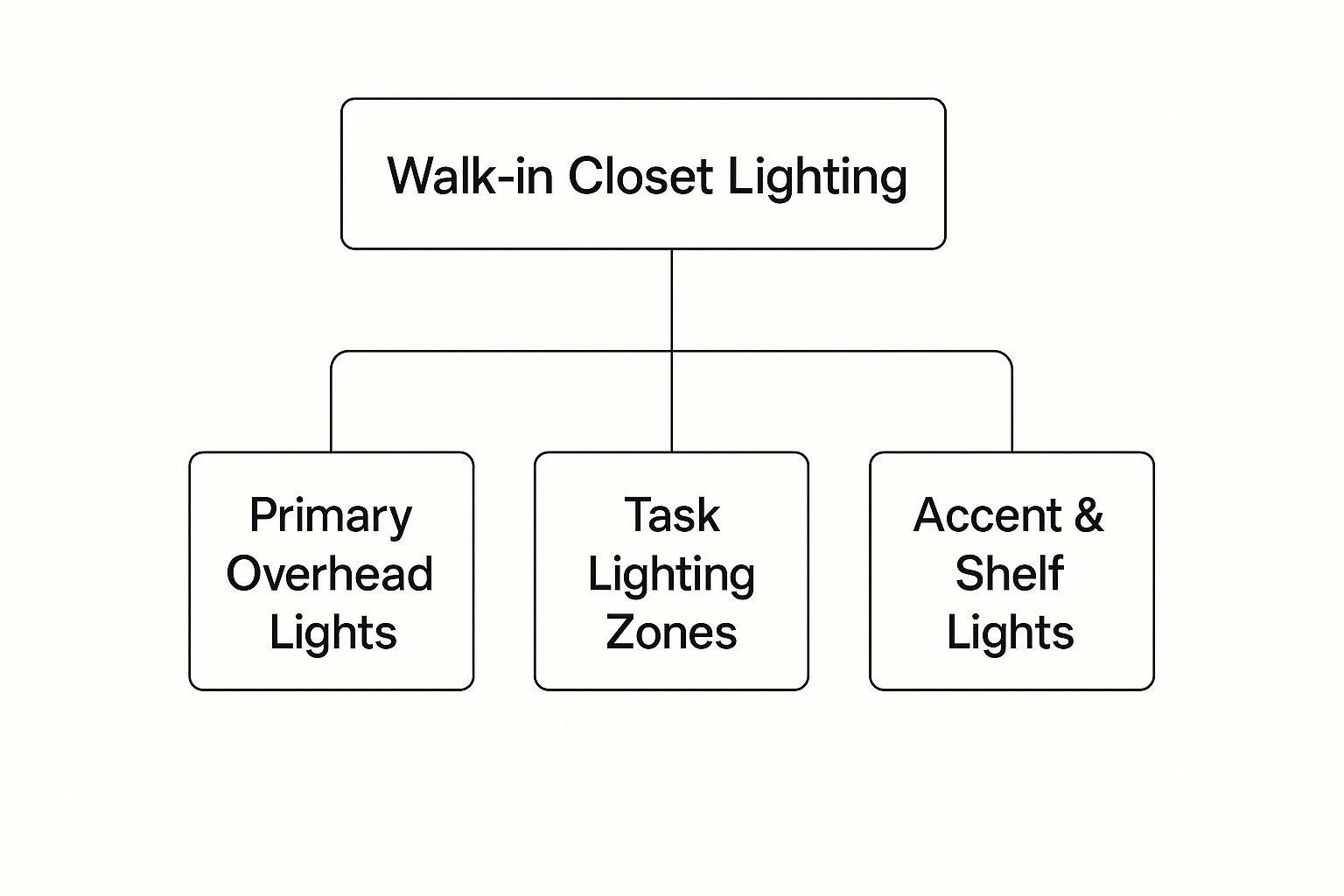
Getting the lighting right in a walk-in closet isn't just about sticking a single bulb in the ceiling. The best designs use three distinct layers of light, working together to create a space that’s both functional and beautiful.
First up is ambient lighting. This is your foundational, all-over light that sets the general mood of the room. Think recessed lights or a chic flush mount fixture that casts a wide, even glow.
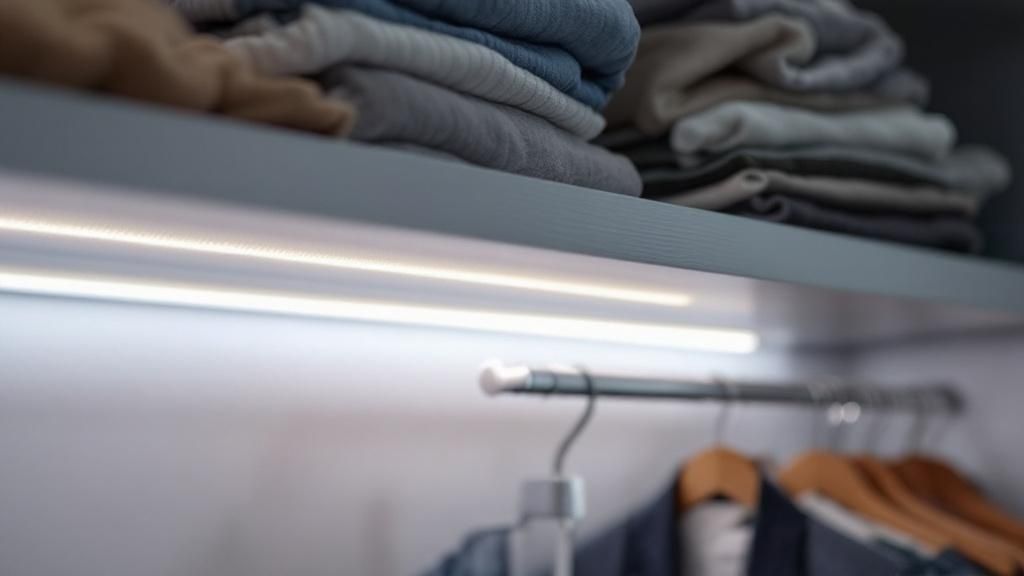
Next, you bring in task lighting. Task lights are focused beams that zero in on specific areas, like integrated LED strips running under your shelves or inside drawers. They’re workhorses, wiping out shadows.
Finally, you add flair with accent lighting. Accent lights create drama and highlight your favorite pieces, like a tiny spotlight aimed at a prized handbag collection. For a closer look at fixture options, our guide on track lighting vs recessed lighting is a great place to start.
A truly effective plan starts with that broad overhead light. Then, it layers in more focused task and accent fixtures to ensure every corner is perfectly lit.
Choosing the Right Fixtures for Your Closet
Once you have a solid lighting plan, it's time to pick the hardware. Every type of fixture brings something different to the table, from bathing the whole closet in a soft glow to putting a spotlight on your favorite accessories.
The real trick is mixing and matching to fit your closet's layout, ceiling height, and your own personal style. You’ll find tons of great options out there.
Sleek recessed cans give you that clean, modern overhead light, while LED strip lights are fantastic for seamless task lighting. This move toward smart, built-in lighting is a big part of why the home built-in closet market is expected to hit USD 13.2 billion by 2033. You can dig deeper into this expanding market at DataHorizzon Research.
And if you have the space, a small chandelier or a few pendants can add a serious touch of class.
Getting Technical: Lumens, Color Temperature, and CRI
To really nail the lighting in your walk-in closet, there are three key terms to understand. Getting these right is the secret to making sure your lighting is not just bright, but actually works for you.
First up is lumens. Think of lumens as the raw power of the light—how much brightness a bulb puts out. More lumens equals a brighter closet.
Next, we have Color Temperature, measured on the Kelvin (K) scale. This tells you what the light itself looks like, from warm yellow to cool blue-white. For closets, you want the neutral sweet spot of 3000K to 4000K for clean, natural light.
But the most important factor of all? That’s the Color Rendering Index (CRI). A high CRI of 90+ is non-negotiable for a closet. It’s a measure of how well the light source reveals the true colors of your clothing.
These same principles are just as critical when you're looking into more advanced setups, like the best smart home lighting systems.
Closet Lighting Technical Specifications Guide
To make this even clearer, let's break down these key specs in a simple table. Think of this as your quick-reference guide when you're out shopping for bulbs or fixtures.
| Metric | What It Measures | Recommended for Closets |
|---|---|---|
| Lumens | The total brightness or light output of a bulb. | 20-30 lumens per square foot is a good starting point. |
| Color Temperature | The warmth or coolness of the light, measured in Kelvin (K). | 3000K to 4000K for a neutral, clean white light. |
| CRI | The ability of a light source to accurately render colors. | 90 or higher is essential for true color matching. |
Having this cheat sheet handy ensures you’re not just guessing. You're making an informed choice that will make your closet both beautiful and functional for years to come.
Smart Lighting and Energy-Efficient Solutions
Modern technology has brought seriously convenient upgrades to closet lighting. Simple additions like motion sensors or door jamb switches mean your lights turn on the second you enter and switch off when you leave.
This is an effortless way to save energy without even thinking about it. This kind of "smarter" closet automation is catching on fast.
The global market for these automated solutions was recently valued at USD 1.45 billion, showing just how much people want this convenience. You can find more market insights at Growth Market Reports.
For the ultimate control, smart lighting systems let you adjust everything from brightness to color temperature from a phone app. This is perfect for fine-tuning the light to see how your outfits really look.
When you pair smart controls with LED technology, you get some of the best energy-efficient lighting solutions available, setting you up for significant savings.
How The Home Lighter Can Help
Navigating the world of layered lighting, CRI, and smart controls can feel overwhelming. That's where a local expert comes in. At The Home Lighter, we've been helping homeowners in Monterey, Salinas, and Santa Cruz find the perfect lighting for over 50 years.
We understand the unique architectural styles and lifestyle needs of the Central Coast. Our team can guide you through our showroom to find fixtures that not only look beautiful but also provide the functional, color-accurate light your walk-in closet deserves.
From a simple consultation to a comprehensive lighting plan, we’re here to make the process easy. Visit us to see how the right lighting can transform your home.
Frequently Asked Questions About Closet Lighting
We get it. Planning your walk-in closet lighting can bring up a lot of questions. Here are clear, straightforward answers to the most common questions homeowners ask.
What is the best type of lighting for a walk-in closet?
The best approach uses a combination of three layers: ambient (overall light like recessed cans or a flush mount), task (focused light like LED strips under shelves), and accent (to highlight specific items). This layered strategy ensures the entire space is both functional and visually appealing.
How bright should the lighting be in a walk-in closet?
A good rule of thumb is to aim for 20-30 lumens per square foot. For a 100-square-foot closet, this means you'd want a total of 2,000-3,000 lumens. This ensures the space is bright enough to see clearly without being harsh or overwhelming.
What color temperature is best for seeing clothes accurately?
For the most accurate color representation, choose a color temperature between 3000K and 4000K. This range provides a neutral, clean white light that mimics natural daylight, preventing colors from looking too yellow (warm) or too blue (cool).
Why is a high CRI important for closet lighting?
CRI (Color Rendering Index) measures how accurately a light source shows true colors. For a closet, a CRI of 90 or higher is essential. It ensures that your clothes' colors look the same in your closet as they do in natural daylight, so you can easily distinguish between similar shades like navy and black.
Are motion sensor lights a good idea for a closet?
Absolutely. Motion sensors or door jamb switches are a fantastic, energy-efficient solution. They automatically turn the lights on when you enter and off when you leave, providing convenience while also helping to lower your electricity bill.