
Direct Answer: Carmel-by-the-Sea caps exterior residential lighting at 3000K color temperature and restricts lumen output. Fixtures that don’t meet these standards may violate city ordinance.
A lot of Carmel homeowners find out about the city’s exterior lighting rules the hard way — after they’ve already bought fixtures. Carmel-by-the-Sea enforces specific restrictions on color temperature and lumen output for residential exterior lighting, and what you find on most ecommerce sites won’t tell you whether a fixture is compliant before it shows up at your door.
These aren’t obscure technicalities buried in a code document. They’re the kind of requirements that affect which path lights, wall sconces, and landscape fixtures you can actually install on your property. Getting it wrong means more than a return shipping headache — it can mean changes requested by the city.
This guide breaks down what the rules actually require, why color temperature is the number that matters most, and how to choose fixtures that look great and hold up to the coastal environment without running into compliance problems.
What Carmel’s Exterior Lighting Ordinance Actually Says
Carmel-by-the-Sea’s municipal code restricts residential exterior lighting to a maximum color temperature of 3000K. Anything above that — the cooler, bluer light common in many modern LED fixtures — is not permitted for exterior residential use within city limits.
The city also restricts lumen output, meaning the total brightness a fixture can emit. While the specific cap can vary depending on fixture placement and context, the intent is clear: exterior lighting in Carmel should be warm, low-glare, and visually unobtrusive against the night sky and streetscape.
This matters for landscape lighting in particular because most big-box and online retailers sell outdoor LED path lights and flood fixtures at 4000K or higher by default. Those products are widely available and aggressively priced — and they’re out of compliance in Carmel.
A few things homeowners should know going in:
- 3000K is the maximum color temperature — warmer temperatures like 2700K are also compliant and often preferred
- Lumen limits apply to the total output of the fixture, not just the bulb spec
- Rules apply to all exterior residential fixtures including path lights, wall-mounted sconces, soffit lighting, and landscape uplights
- Integrated LED fixtures must meet both specs — you can’t simply swap a bulb afterward to get compliant
Always verify current requirements with the City of Carmel-by-the-Sea directly or through a licensed contractor before purchasing. Ordinances can be updated, and the specifics of your project may involve additional review.
Why Color Temperature Is the Spec That Trips People Up
Most homeowners shopping for landscape lighting focus on how a fixture looks — the finish, the shape, the style. Color temperature is easy to overlook because it’s expressed as a number on a spec sheet, and that number doesn’t mean much until you see two fixtures side by side at night.
Color temperature is measured in Kelvin (K). Lower numbers are warmer — the amber glow of a candle runs around 1800K. A standard warm-white LED reads around 2700K to 3000K. Fixtures sold as “bright white” or “daylight” often run 4000K to 6500K, and that’s the range Carmel doesn’t allow outside.
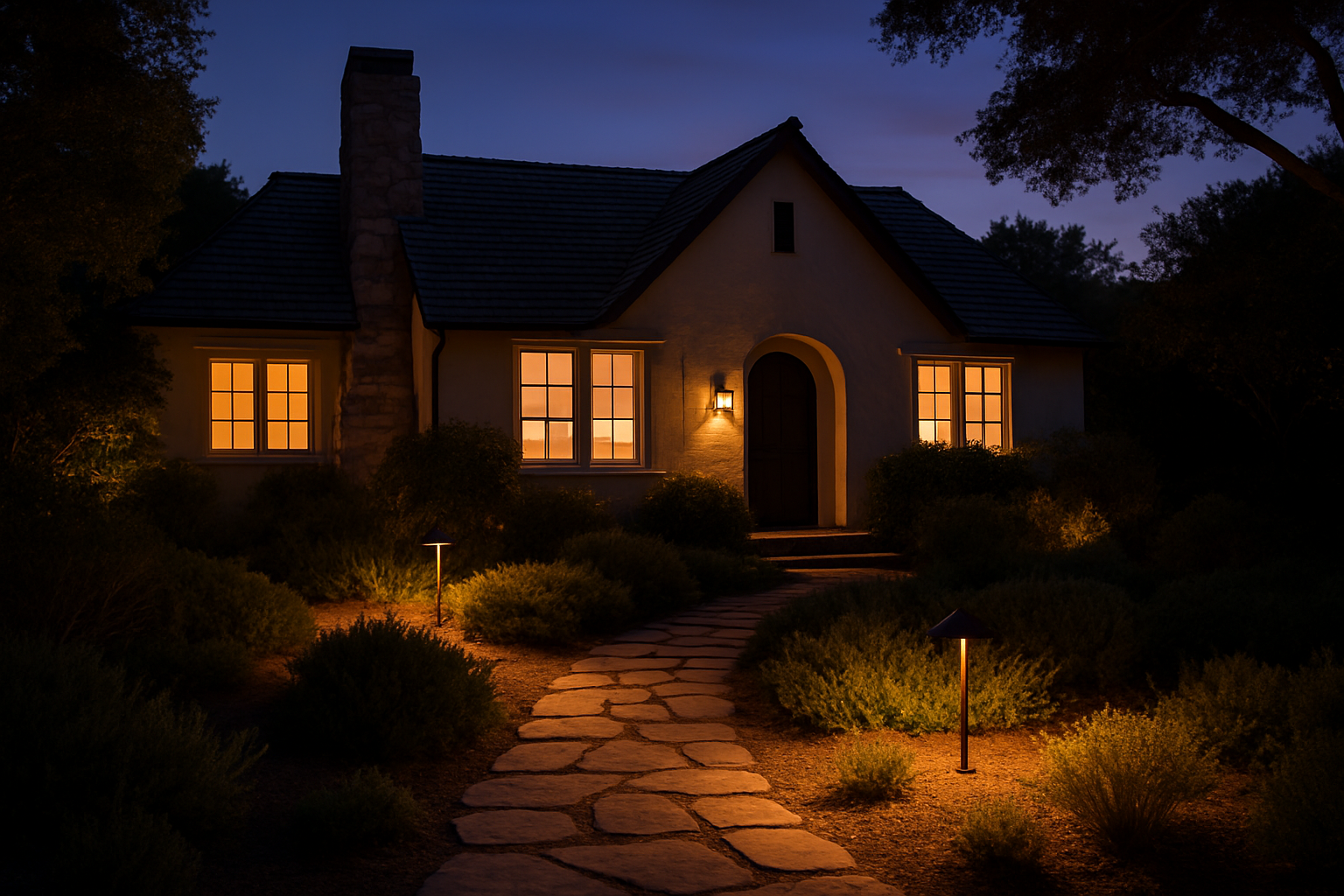
The visual difference is significant. A 3000K fixture on a stone pathway in Pacific Grove or Carmel feels like evening — inviting, quiet, appropriate for the neighborhood. A 5000K floodlight on the same path looks like a parking structure.
Beyond compliance, there’s a practical design reason to stay at 3000K or below: it reads better against the coastal landscape. Warm light plays well with natural stone, wood siding, native plantings, and the fog-diffused nights that are common along this stretch of coast from October through May. As covered in why outdoor lighting on the Monterey Peninsula needs a different approach, the coastal environment here genuinely changes how light behaves outdoors — and warm fixtures perform more consistently in those conditions.
If you’re also thinking about accent light fixtures for landscape focal points like specimen trees or architectural details, the same 3000K ceiling applies and warm temperatures will give you better visual results anyway.
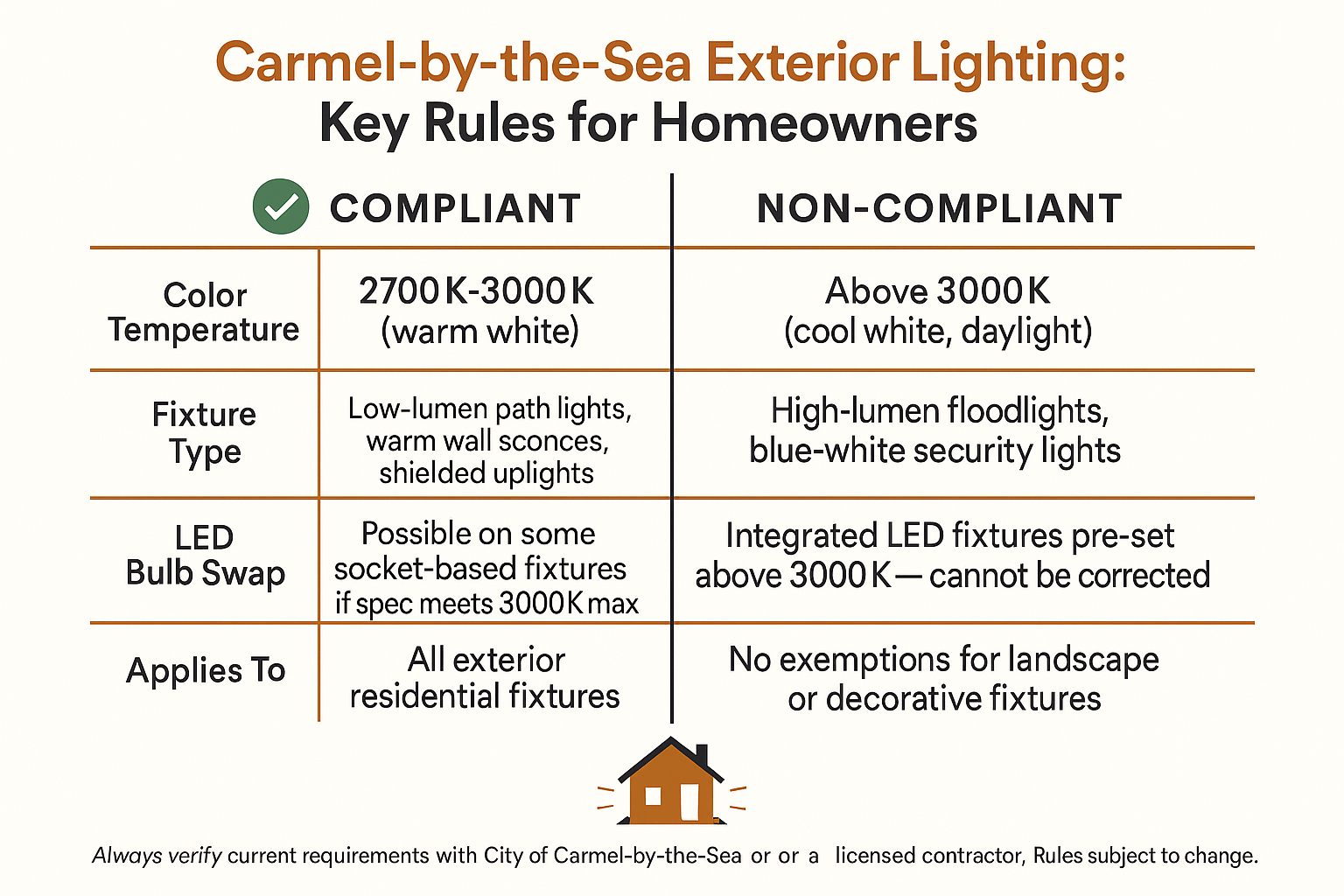
Carmel Exterior Lighting Rules at a Glance
This reference covers the key specs homeowners need to check before buying any exterior fixture for a Carmel-by-the-Sea property.
How to Shop for Fixtures That Actually Pass
The challenge with buying compliant exterior fixtures online is that most product listings don’t lead with color temperature. You have to know to look for it — and even then, some listings are vague or inconsistent in how they report the spec.
Here’s what to check before committing to any exterior fixture for a Carmel property:
- Color temperature listed on the spec sheet: Look for 2700K or 3000K. If a fixture lists “warm white” without a Kelvin rating, ask the retailer for the actual number — “warm white” is not a regulated term.
- Lumen output per fixture: For path lights, figures under 400 lumens per fixture are generally in the low-output range appropriate for residential landscape use. Confirm the actual lumen spec, not just the wattage.
- Integrated LED vs. socket-based: Integrated LED fixtures have the light source built in. If the color temperature is wrong, there’s no bulb to swap. Socket-based fixtures give you more flexibility to correct the spec after purchase.
- Wet or damp rating: The Monterey Peninsula fog belt is real. Any exterior fixture — especially within a few blocks of the water in Pacific Grove or on the Pebble Beach bluffs — should be rated wet location, not just damp. Salt air accelerates corrosion on fixtures that aren’t built for it.
And if you’re also planning fixtures for a covered patio or pergola, the wet/damp distinction matters there too. Outdoor ceiling fans with wet ratings follow the same logic — the coastal environment doesn’t treat standard residential specs kindly.
For Carmel homeowners working on a full landscape or exterior lighting plan, the most reliable way to avoid a compliance problem is to work with someone who already knows which fixtures meet the spec before you order. Browsing a curated showroom where someone can pull the actual spec sheet — and tell you whether a fixture has worked well for other clients in the same neighborhood — saves a lot of time and return shipping.
Common Exterior Fixture Types and Compliance Considerations
This table covers the most common landscape and exterior fixture categories and what to check for each in a Carmel-by-the-Sea context.
| Fixture Type | Key Spec to Check | Common Compliance Issue |
|---|---|---|
| Path Lights | Lumen output + color temp (max 3000K) | Many sold at 4000K–5000K by default |
| Wall Sconces (exterior) | Color temp (max 3000K) + wet rating | Decorative fixtures often listed without Kelvin spec |
| Landscape Uplights | Lumen output + color temp (max 3000K) | Accent uplights frequently sold in daylight (5000K+) range |
| Soffit / Downlights | Integrated LED spec + lumen output | No bulb swap option if LED is factory-set above 3000K |
| Step Lights | Color temp (max 3000K) + damp/wet rating | Lower risk but spec still needs to be confirmed |
| Security / Flood Lights | Color temp + lumen output | High-lumen security lights almost always exceed both limits |
California Title 24 and What It Adds to the Picture
Carmel’s exterior lighting rules are a local ordinance — they apply within city limits regardless of whether you’re doing a full remodel or just swapping a few fixtures. California Title 24 is a state energy code that kicks in specifically when you’re doing permitted construction or renovation work.
Beginning January 1, 2026, updated Title 24 standards affect lighting controls and efficiency requirements for remodels and new construction statewide. For homeowners doing a landscape redesign or adding new exterior circuits as part of a larger project, this means the electrical work and lighting controls will need to meet current state code — not just local aesthetics rules.
The practical overlap for Carmel homeowners looks like this: you may need fixtures that satisfy both sets of requirements simultaneously. A fixture that’s Carmel-compliant at 3000K still needs to be part of a lighting system that meets Title 24 control and efficiency standards if the work is permitted.
For a deeper look at how Title 24 plays out in the context of interior fixture selection during a remodel, the homeowner’s guide to interior lighting fixtures in Carmel and Title 24 rules covers the specifics in plain language. And if you’re also working on landscape lighting in Pebble Beach — which sits just outside Carmel’s city limits — the local rules differ, though the principle of warm, low-impact lighting still applies.
Always confirm current Title 24 requirements with your licensed electrician or contractor before finalizing a lighting plan for any permitted project.
Frequently Asked Questions About Carmel Exterior Lighting Rules
What happens if my existing exterior fixtures don’t meet Carmel’s rules?
In most cases, homeowners aren’t proactively cited for existing fixtures unless there’s a complaint or a permit inspection. But if you’re doing any permitted exterior work — adding circuits, replacing fixtures as part of a renovation — you’ll likely need to bring everything into compliance at that point. When in doubt, check with the City of Carmel-by-the-Sea directly.
Is 2700K better than 3000K for a Carmel property, or does it just matter that I stay under 3000K?
Both are compliant. 2700K reads slightly more amber and candlelit — it works beautifully along pathways and for architectural details on older Carmel cottages. 3000K is a cleaner warm white that works well on more modern homes. Either reads warm against the coastal night sky and avoids the blue-white glare the ordinance is designed to prevent.
Do these rules apply to string lights or holiday lighting?
Carmel’s ordinances around temporary and decorative lighting are separate from the standard exterior fixture rules. Verify current requirements with the city for any temporary installation — rules can vary by season and event context.
Can I just buy fixtures online and check the spec myself?
You can, but the spec is often buried or missing from product listings. Many retailers list wattage without Kelvin, or use vague terms like ‘warm white’ that could mean anything from 2700K to 3500K depending on the manufacturer. If you’re buying without seeing a clear Kelvin rating on the spec sheet, you’re guessing. A showroom where someone can pull the actual spec — and tell you whether the fixture has been used on other Carmel properties — removes that uncertainty.
Does the 3000K rule apply to lights I put inside a covered outdoor patio or under an eave?
Yes. Exterior rules apply to all residential outdoor fixtures, including those mounted under soffits, on covered porches, and inside pergola structures. The fixture is still considered an exterior installation even if it’s partially sheltered.
Not Sure If Your Fixtures Are Compliant?
Greg and Tammy at The Home Lighter carry exterior fixtures they’ve already vetted against Carmel’s color temperature and lumen requirements — so you’re not left reading spec sheets and guessing. The showroom is at 2034 Sunset Drive in Pacific Grove, walk-ins are always welcome, and appointments are available for more involved landscape lighting projects. You can also call at (831) 655-5500 to talk through what you’re working on before you visit.