
Have you ever bought a light fixture online that looked great in photos, but felt flimsy and cheap when it arrived? You're not alone. Many homeowners are tired of buying fixtures that fall apart after a year or come with confusing instructions.
The question isn’t just about price. It’s about learning how to spot real quality when shopping for indoor lighting fixtures. A good fixture is safe, durable, and looks great for years to come.
Why Quality Matters More Than Price
A well-made fixture is an investment in your home. Fixtures made with solid metals, certified LEDs, and high-grade finishes last longer and work better. They can even boost your home’s value.
LEDs from reliable brands can run for 25,000+ hours. That’s about 15 to 20 years of use. Cheap fixtures often cut corners on materials, wiring, and instructions, leading to frustration.
Avoiding the Low-Cost Trap
A common mistake is shopping online for the lowest price, assuming all fixtures are the same. This often leads to buying a flimsy product with a poor finish that peels within a year. You end up spending more to replace it repeatedly.
What you often get with cheap fixtures:
- Flimsy Materials: Thin, plated plastic trying to look like metal.
- Poor Finishes: Paint that chips, tarnishes, or peels away quickly.
- Unreliable Components: Faulty wiring that causes flickering or fails early.
- Safety Risks: A lack of safety testing, which can be a fire hazard.
This guide shows the key differences between a fixture built to last and one that will likely disappoint you.
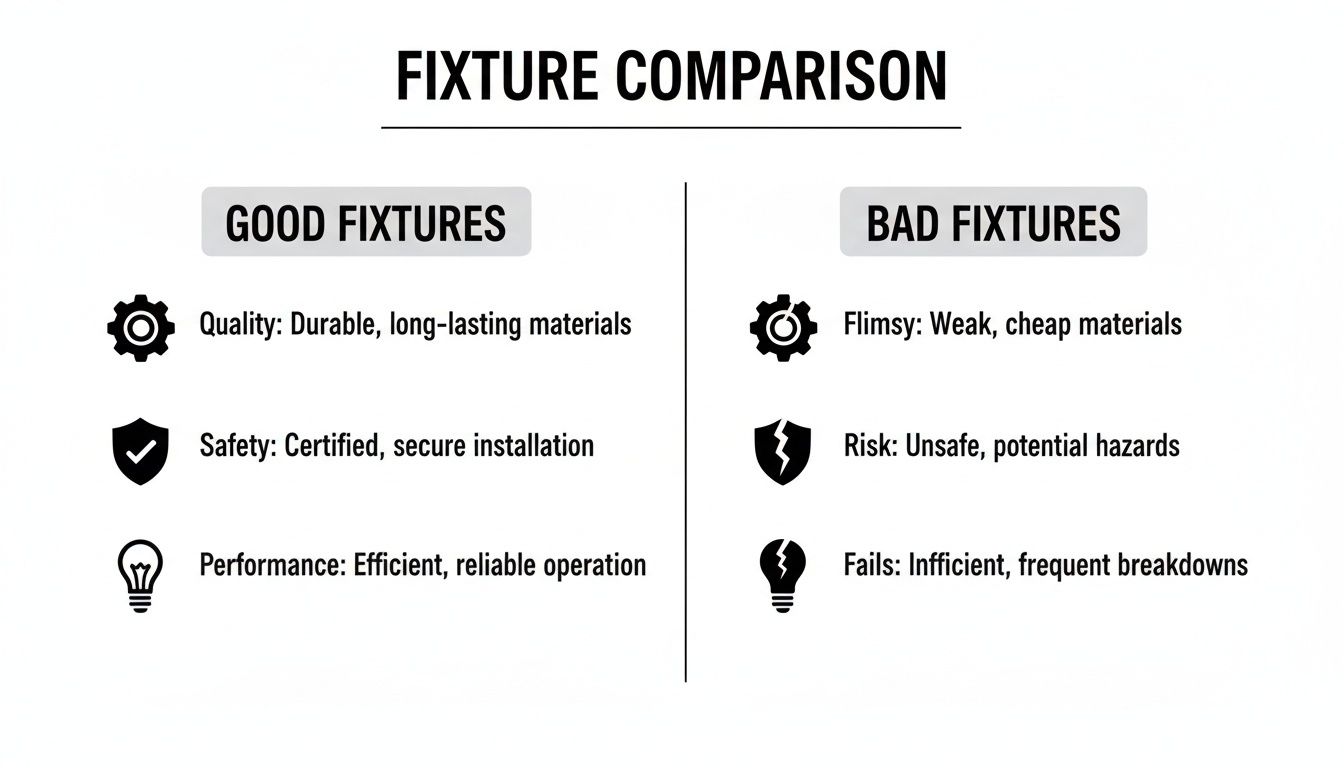
Use this quick checklist to tell a good fixture from a bad one at a glance.
Quick Quality Checklist Good vs Bad Fixtures
| Quality Indicator | What to Look For (Good Quality) | What to Avoid (Poor Quality) |
|---|---|---|
| Material & Weight | Solid metal (brass, aluminum, steel); feels heavy and substantial. | Thin, plated metals or plastic; feels lightweight and hollow. |
| Safety Certification | UL or ETL listed mark clearly visible on the fixture or packaging. | No certification marks, or suspicious-looking labels. |
| Wiring & Components | Thick, insulated wiring; well-secured internal components. | Thin, flimsy wires; loose parts that rattle or shift easily. |
| Finish Quality | Even, durable finish (powder-coated, PVD); no scratches or blemishes. | Thin paint or plating that chips, flakes, or scratches easily. |
| LED & Light Source | Integrated LEDs from reputable brands; rated for 25,000+ hours. | Unbranded, replaceable LEDs with low hour ratings; poor color quality. |
| Warranty | A warranty of 5 years or more. | 1-year warranty or less; difficult return policies. |
Investing more in a quality fixture saves you the cost and headache of replacements. You get durability and performance instead of a low price that doesn't last.
Of course, knowing what makes a fixture good is only half the battle. You also need to understand the different types of light fixtures available. For room-specific advice, this guide to choosing the right kitchen lighting fixtures offers practical tips.
Start With Safety: Look for UL Listing
Before you fall in love with a fixture's design, check for one simple thing: a safety certification. It’s the most important first check you can make. It tells you if you're holding a quality product or something you should avoid.
This simple step provides instant peace of mind.
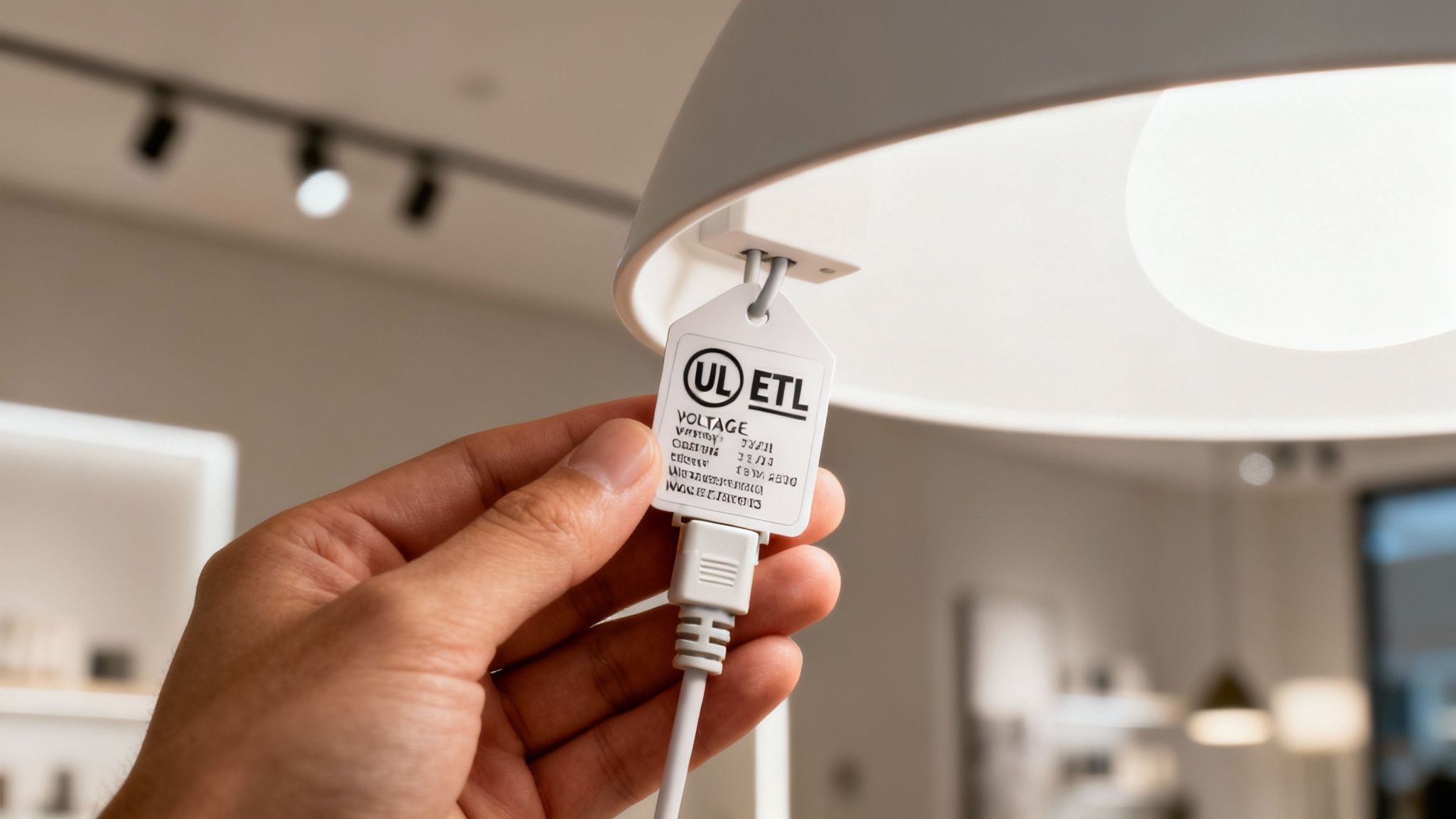
Look for a small sticker or mark from UL (Underwriters Laboratories) or ETL (Intertek). These logos mean the fixture passed strict national safety standards. They are tested for fire and electrical shock hazards, confirming the product is safe for your home.
What This Certification Means for You
A UL or ETL listing is a basic seal of approval. It proves the manufacturer invested in proper engineering and used reliable parts. This is a non-negotiable feature that separates trustworthy fixtures from risky ones sold online.
For homeowners here in Monterey County, this is especially important. Using certified fixtures is often required to meet local building codes. An unlisted fixture could cause you to fail an inspection, leading to delays and extra costs.
A safety certification isn’t just a sticker; it’s a promise that the product has been properly tested to prevent electrical hazards. It’s the baseline for quality.
Finding the Mark and Avoiding Risks
So, where do you find this important mark? It’s usually in plain sight.
Check these common spots:
- On a sticker attached to the power cord
- Printed or stamped on the fixture's base or canopy
- Inside the housing where the bulb goes
- Noted on the product's box or online specs
If you can't find a certification mark, treat it as a major red flag. Unlisted fixtures often use thin wiring and poor parts that can overheat. The price might be low, but the risk to your home and family is never worth it.
Our guide on how to wire a light fixture explains the components that safety standards are designed to protect. Making sure a fixture is UL or ETL listed is the fastest way to weed out the junk.
Get a Feel for Quality: Materials and Build
After checking for safety, it's time to use your hands. You can learn a lot about a fixture's quality just by touching it. The weight and sturdiness tell you if it will last for years or fall apart quickly.
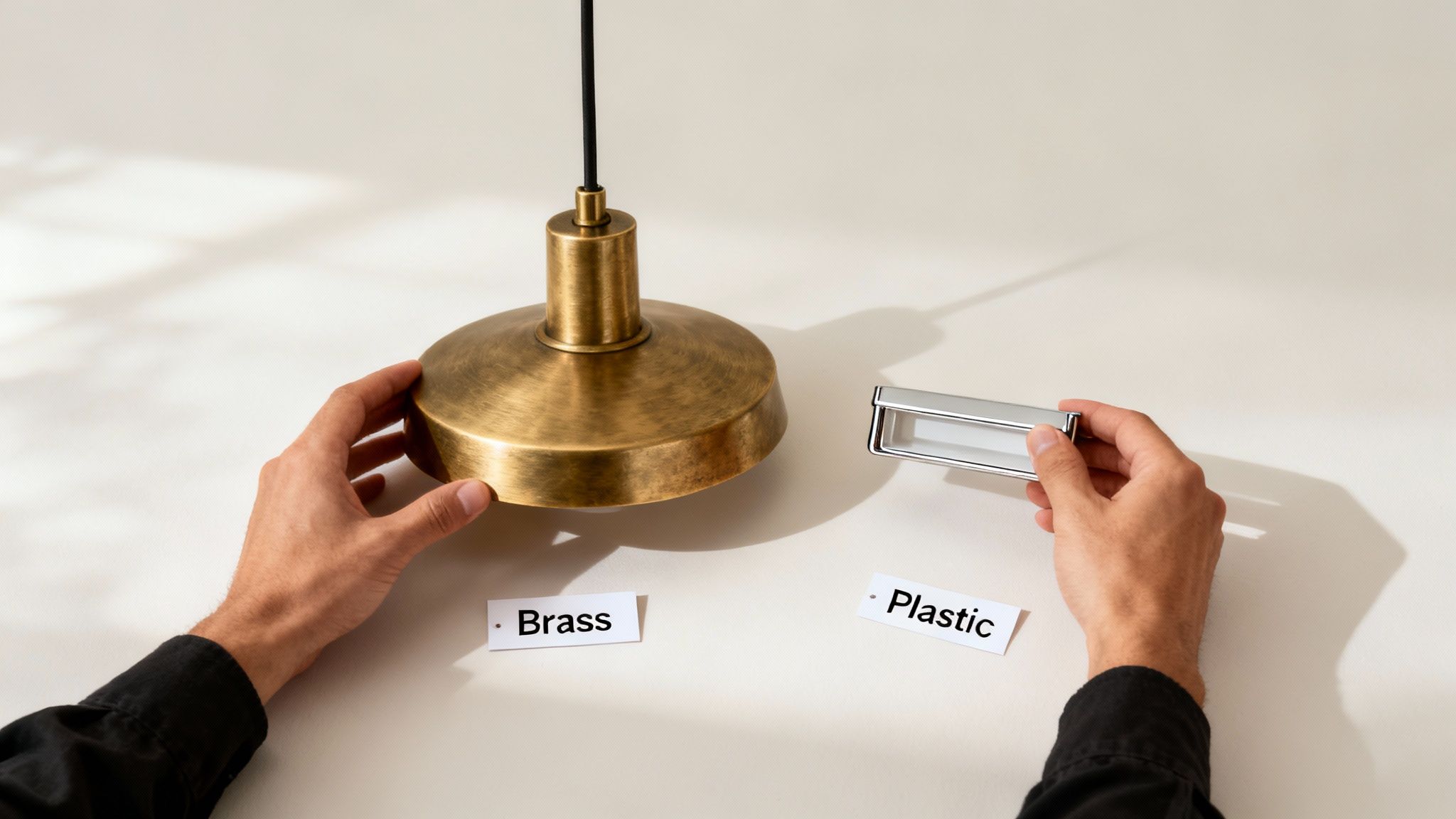
If possible, see a fixture in person. A quality piece made from solid brass, bronze, or aluminum will feel heavy. Cheaper fixtures often use plated plastic or thin metal that feels flimsy and dents easily.
Hands-On Quality Tests
You don't need to be an expert to spot poor construction. Try the simple "tap test."
Gently tap the fixture with your knuckle. Solid metal will make a dull, solid sound. A hollow or plastic piece will make a higher, tinny sound. This test helps you see past a deceptive appearance.
Next, look at how the parts fit together. A well-made fixture, like a classic bronze and crystal chandelier, has tight, clean seams. Poorly made ones often have gaps and loose screws right out of the box. This is the same principle behind choosing hardwood kitchen cabinets for lasting quality—good materials define the product's lifespan.
Finishes That Handle Coastal Air
The finish is another huge sign of quality, especially for homes along the Monterey Peninsula. The salty air in Santa Cruz and Carmel can cause poor finishes to chip or corrode.
A quality fixture will have a durable finish like powder coating or physical vapor deposition (PVD). These methods create a thick layer that resists scratches and corrosion. Run your hand over it—it should feel smooth and flawless.
Come by our Pacific Grove showroom, and we can show you the difference side-by-side. A well-applied finish not only looks richer but is truly built to withstand the unique climate of the Central Coast, making sure your investment stays beautiful for years.
Check the Light Source: LED Performance
A beautiful fixture is only as good as the light it produces. The quality of the internal light source—usually an integrated LED—determines its performance and lifespan. It also affects how your home feels.
It's easy to get lost in technical terms, but a few key numbers tell you what you need to know.
Understanding Brightness and Lifespan
The first things to look at are lumens and LED lifespan. Lumens measure the total brightness the fixture puts out. A good quality fixture should have an LED rated for at least 25,000+ hours.
Many brands talk about long lifespans, but the L70 rating tells the real story. This rating shows how long an LED will run before its brightness drops to 70% of its original output. That's when you would notice it getting dimmer.
A fixture’s true value is measured in decades, not just years. An L70 rating of 50,000 hours means you could run the light for eight hours a day, and it would take over 17 years to look dimmer.
This long-term performance is a huge difference-maker. If you want to dive deeper, check out these lighting quality insights from Acuity Brands.
Seeing True Colors with High CRI
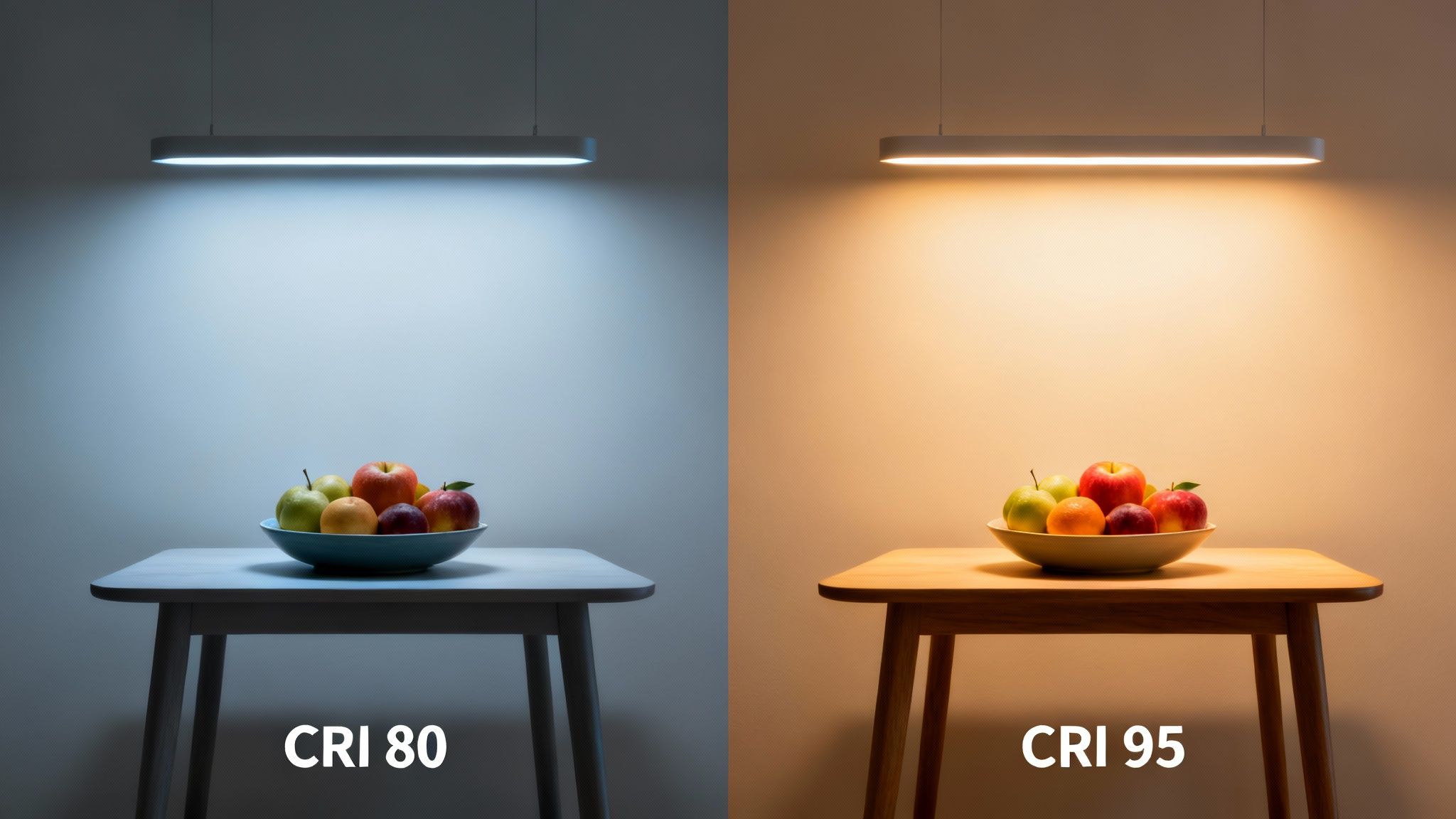
Have you ever noticed that paint colors look different under your lights at night? That’s the Color Rendering Index (CRI) at work. It's a scale from 0 to 100 that measures how accurately a light source shows true colors.
For homes, a CRI of 90 or higher is the gold standard. A high CRI makes wood tones richer and paint colors truer. It also makes skin tones look natural, creating a comfortable atmosphere.
Low-quality LEDs often have a CRI around 80. This can make colors look dull or washed out. When you shop for a fixture, always look for a CRI of 90+ to do justice to your home's design.
To make your next upgrade easier, explore our guide on what makes LED retrofit fixtures a smarter choice.
Look at the Warranty and Brand Reputation
A manufacturer’s warranty shows how confident they are in their product. It tells you how long they expect their fixture to last.
A one-year warranty on a fixture is a quiet admission that it isn’t built for the long haul. In contrast, reputable brands will offer warranties of five years or more. A long warranty is a clear sign of superior parts and better construction.
The Power of a Good Brand
A brand's reputation is your safety net. Choosing a brand known for quality means you have support if something goes wrong. This includes help with troubleshooting or finding replacement parts years later.
Before you buy, look up the brand online. Reading reviews from other homeowners helps you see past the marketing. You can get a real sense of the product's long-term reliability.
A strong warranty and a trusted brand name are your best insurance against disappointment. They prove the company is willing to stand behind its craftsmanship, giving you confidence that you’re making a lasting investment.
Why Performance Metrics Matter
A good brand also provides clear performance data. Understanding key metrics is vital for judging quality. Many people only focus on wattage, which measures energy use, not brightness.
Modern LED technology is very efficient. High-quality LED fixtures deliver over 80 lumens per watt, while old incandescent bulbs averaged only 15. That is a huge improvement. You can learn more about key metrics for LED lighting from the experts at PacLights.
By looking at the warranty, reputation, and performance, you can confidently tell if a fixture is good quality.
How The Home Lighter Can Help
You can't judge the true quality of a fixture from a photograph. That’s why seeing it in person is so important. When you can feel its weight and inspect the finish, you know what you’re getting.
The Home Lighter only carries indoor lighting fixtures that pass our hands-on inspection. We reject flimsy, mass-market pieces. Instead, we select long-lasting options built with real craftsmanship, and we explain every choice in person.
The Showroom Advantage
Shopping online often feels like a gamble. You're trying to guess a product's quality from vague descriptions. Visiting a showroom removes that uncertainty.
Frustrated with flimsy fixtures in your Monterey or Santa Cruz home? Book an appointment at our Pacific Grove showroom. You’ll find indoor lighting that’s beautiful, durable, and designed to last—without the usual disappointment.
Our experts are here to let you compare fixtures side-by-side. When you can feel the quality for yourself, you really understand how experiential retail is changing the way we buy lighting.
Frequently Asked Questions About Lighting Quality
Here are answers to some of the most common questions we hear in our showroom.
Is A More Expensive Light Fixture Always Better Quality?
Not always, but price is often a good clue. A higher price usually means the fixture is made from better materials, like solid brass instead of plated steel. It also points to better LED technology and longer warranties.
That said, don't just look at the price. Focus on quality markers like a UL listing and a warranty of at least five years. Those are the true signs of a fixture built to last.
What Does A UL Or ETL Listing Really Mean?
This mark is your proof of safety. It means an independent lab like Underwriters Laboratories (UL) has tested the fixture to ensure it meets national safety standards. They’ve confirmed it won't be a fire or electrical shock hazard.
It's a critical sign that you're looking at a well-made product. We tell our clients to never buy a fixture that doesn't have a UL or ETL certification. It’s simply not worth the risk.
How Important Is The Warranty On A Light Fixture?
It's incredibly important. A short, one-year warranty is a huge red flag. It suggests the manufacturer doesn't have much faith in their product's longevity.
On the other hand, a warranty of five years or more tells a different story. It shows the company stands behind their engineering and craftsmanship.
Can I Tell If A Fixture Is Made Of Solid Metal Online?
This can be tricky, which is why seeing a fixture in person is best. When shopping online, look for specific words like "solid brass" or "solid aluminum" in the product details.
If the description is vague, like "metal construction," be skeptical. Another good tip is to check the product weight. Solid metal fixtures are always heavier than hollow or plastic imitations.
How do I know if the LED in a fixture is good quality?
Look for an LED lifespan of 25,000+ hours and a Color Rendering Index (CRI) of 90 or higher. Good quality LEDs produce bright, true-to-life color and last for many years. Avoid fixtures with unbranded LEDs or low CRI ratings, as they can make colors look dull.