
Imagine this: with one tap on your phone, every light in your home adjusts exactly how you want it. That’s the power of a smart lighting control system. It turns your house into a responsive, smart environment that syncs with your daily life.
What Are Smart Lighting Control Systems?
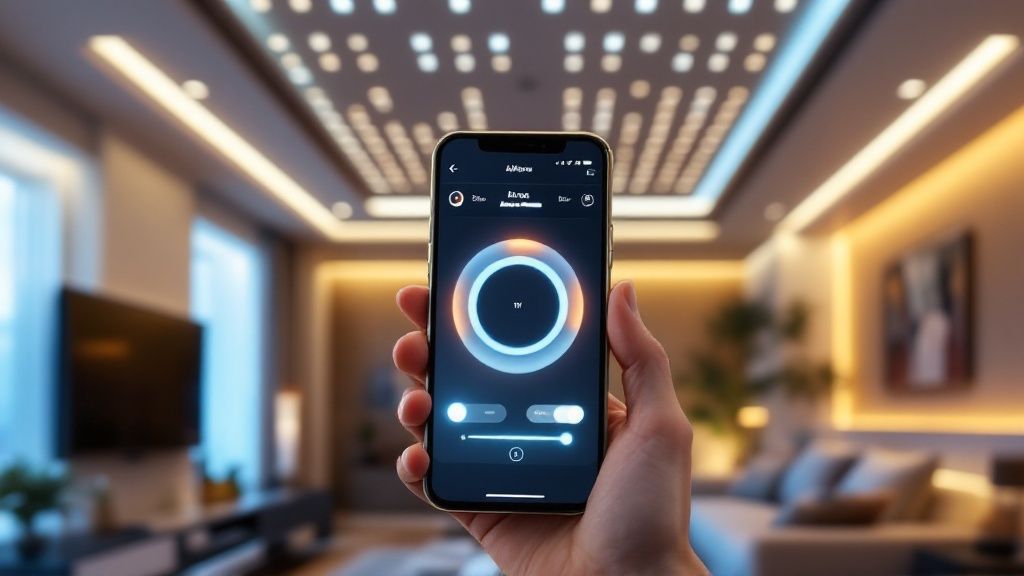
We've all walked through the house at night to turn off forgotten lights. A smart lighting control system is the perfect answer to that common hassle. Think of it as a network of connected lights and devices you can manage from anywhere.
Instead of just flipping a switch, you can:
- Create Scenes: Program a "Movie Night" scene that dims the main lights and brings up soft accent lighting.
- Set Schedules: Have your lights automatically turn on when you arrive home or fade on gently in the morning.
- Use Voice Commands: Ask your smart speaker to turn off all the lights when you go to bed.
- Boost Security: Schedule lights to turn on and off while you're away, making it look like someone is home.
More Than Just a Gadget
Smart lighting is more than a fun convenience; it's a key upgrade for any modern home. These systems are part of the larger Smart Home world, where devices work together to make life simpler. Your lights can even sync with your thermostat or security cameras.
The core idea is simple: make your home's lighting work for you. It adds comfort, security, and a touch of class to any space, from a historic Monterey home to a new build in Santa Cruz.
A Growing Trend in Home Design
The global market for lighting control systems was valued at about USD 32.9 billion in 2023. It is projected to more than double to about USD 76.7 billion by 2030. This growth is driven by a desire for energy savings and smart technology.
This technology also unlocks amazing design options. You can highlight artwork with focused lights or brighten a workspace with perfect task lighting. Our guide on https://homelighterinc.com/lighting-showroom/what-is-task-lighting/ shows how the right light can transform a room.
How These Intelligent Systems Actually Work
Ever wondered what happens when you ask Alexa to dim the lights? Think of a smart lighting system like an orchestra. You are the conductor, using your phone or voice to lead the lights, switches, and sensors.
For the magic to happen, three key parts need to work together. Your command is at the top, and the lights that do the work are at the bottom.
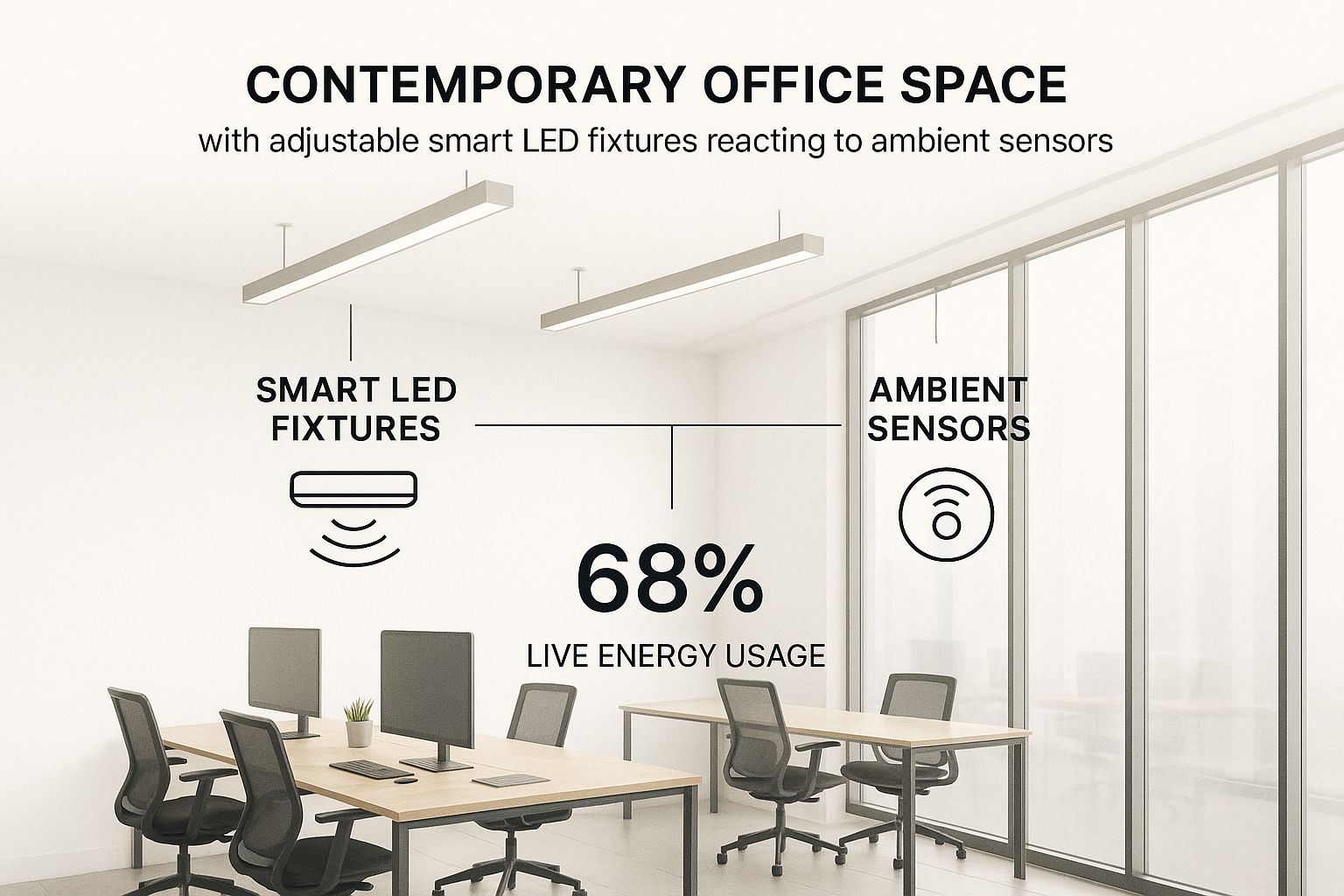
This visual shows that every command is processed by a central brain before it reaches a bulb.
The Brain: The Central Hub or Controller
The "brain" of the operation is the central hub. This command center takes your instructions and tells the other devices what to do.
Some systems use a physical hub that plugs into your router. Others are "hub-less," connecting directly to your home's Wi-Fi. Either way, this part is essential for keeping everything in sync.
The Messengers: Communication Protocols
Once the brain has a command, it needs a way to send that message. That's where communication protocols come in. These are the invisible messengers that carry signals through your home.
You don't need to be a tech expert, but knowing the main types helps. Each one has its own strengths that affect how well your system performs.
Comparing Smart Lighting Communication Protocols
| Protocol | How It Works | Best For | Key Consideration |
|---|---|---|---|
| Wi-Fi | Connects devices directly to your existing home router, just like your laptop or phone. | Simple setups with a handful of devices or for homeowners new to smart tech. | Can slow down your network if you add too many devices. |
| Zigbee | Creates a "mesh" network where devices can pass signals to each other, extending the range and strengthening the connection. | Larger homes or setups with many devices spread far apart. | Requires a dedicated hub to translate signals for your Wi–Fi network. |
| Z-Wave | Also uses a "mesh" network but operates on a lower frequency than Wi-Fi. | Homes with lots of other wireless devices to avoid signal interference. | Like Zigbee, it also needs a hub to communicate with your router. |
The goal is to choose a protocol that ensures your lights respond instantly. The right messenger prevents frustrating delays and keeps your system running smoothly.
The Performers: Lights, Switches, and Sensors
Finally, we get to the "performers"—the devices that do the work. These are the physical parts you see and use every day.
- Smart Bulbs: These are LED bulbs with built-in brains that can change brightness and color.
- Smart Switches & Dimmers: These replace your standard wall switches, making your existing fixtures "smart."
- Sensors: Motion sensors can turn lights on when you enter a room. Daylight sensors can adjust your indoor lighting based on natural light, a great feature for homes on the sunny Monterey coast.
When you learn what is cove lighting and pair it with smart dimmers, you can create a beautiful, soft glow. When the brain, messengers, and performers all work together, you get a seamless system.
Real-World Benefits for Your Home and Lifestyle
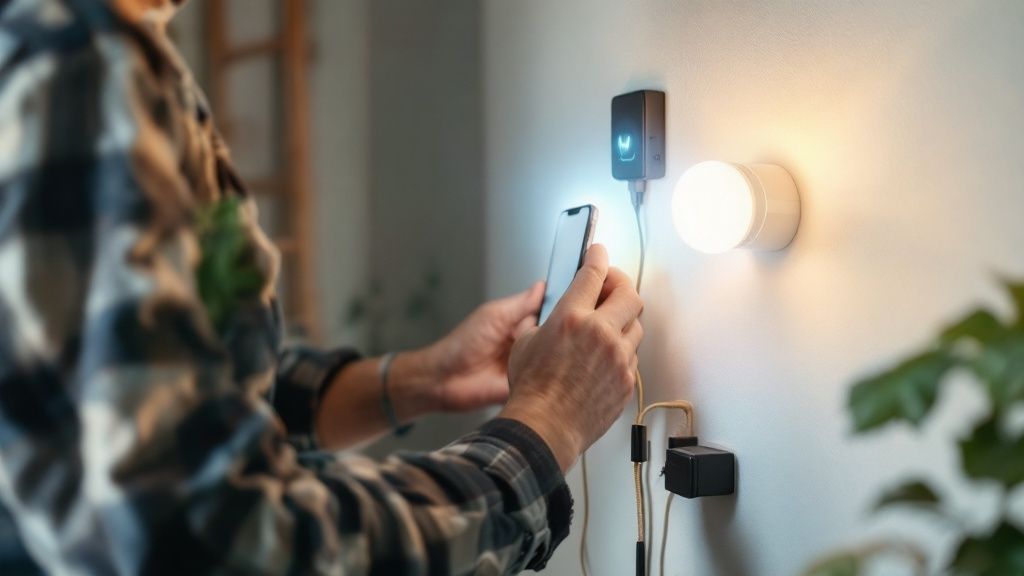
The real magic of smart lighting is how it improves your daily life. It’s about creating a home that’s safer, more comfortable, and synced with your routines. Let’s look at how these systems can elevate your home.
Effortless Convenience and Control
Imagine settling in for a movie. With one tap, a "Movie Night" scene kicks in. The overhead lights dim, and accent lights shift to a warm hue.
This convenience continues all day. A "Good Morning" scene can gently raise the brightness in your bedroom. An "Away" button can shut off every light in the house as you leave.
Enhanced Security and Peace of Mind
A well-lit home is a safer home. You can schedule exterior lights to turn on at dusk and off at dawn. This simple automation can deter potential intruders.
The real genius is what it can do when you're away.
Smart lighting can mimic your daily patterns, turning lights on and off in different rooms. This "Vacation Mode" creates the convincing illusion that someone is home, giving you peace of mind.
Energy and Cost Savings
A smart lighting system can lower your energy bills. By giving you precise control, it helps eliminate wasted electricity from lights left on in empty rooms.
Most smart lighting uses LED technology, which is up to 75% more efficient than old incandescent bulbs. When you pair that efficiency with motion sensors, the savings add up. The smart lighting market is projected to hit USD 127.5 billion by 2032, largely because these systems are so good at cutting energy use.
Improved Ambiance and Mood
Lighting greatly affects how a space feels. With the ability to adjust brightness and color, you can create the perfect atmosphere for any moment.
- For morning energy: Set kitchen lights to a cool, bright white.
- For a relaxing evening: Tune living room lights to a warm, dim glow.
- For entertaining guests: Create a vibrant, inviting scene.
As you consider smart lighting, it’s worth thinking about the benefits and value of home automation as a whole. Intelligent systems are key to a comfortable home.
How to Choose the Right Smart Lighting System
Choosing the right smart lighting system doesn't have to be overwhelming. The best path depends on your goals, budget, and how much control you want. You can start small or go all-in with a whole-home system.
First, think about what you want your lighting to do. Are you looking for convenience in one room or a security boost for your whole property? Answering that question will point you in the right direction.
Starting Simple with Smart Bulbs
The easiest entry point is with smart bulbs. These are individual LED bulbs that you screw into your existing lamps. You control them with a phone app using Wi-Fi or Bluetooth.
This approach is perfect for renters or anyone wanting to test the waters. It’s an affordable and flexible way to experience smart control.
Upgrading to Smart Switches and Dimmers
For a more permanent solution, smart switches and dimmers are a great choice. These devices replace your existing wall switches. This makes all the lights on that circuit "smart," even with traditional bulbs.
A big advantage is that your lights still work from the wall switch. This is more intuitive for family and guests. This approach creates a clean look that many homeowners on the Monterey Peninsula prefer.
Whole-Home Integrated Systems
For the best reliability and performance, a whole-home integrated system is the gold standard. These systems are professionally designed and installed. They connect all your lighting and other smart devices into one seamless network.
An integrated system is like a central nervous system for your home's lighting. It ensures instant response and flawless automation, removing the guesswork of a DIY setup.
This is the best option for new construction in Salinas or major remodels in Santa Cruz. A professional ensures every part works together perfectly. Our guide on the best smart home lighting systems offers a deeper look at these solutions.
Key Questions to Ask Yourself
Before you decide, consider these key questions. Your answers will help you find the perfect system for your home.
- What is your budget? You can start with a few smart bulbs for under $100 or invest in a professionally installed system.
- Are you a DIYer or do you prefer professional help? Installing smart switches can be a weekend project, but a whole-home setup is best left to a pro.
- How much do you want to control? Do you want to manage one room or every light inside and outside your house?
- What ecosystem do you use? Make sure your system works with your preferred voice assistant, like Amazon Alexa, Google Assistant, or Apple HomeKit.
Integrating Smart Lighting with Your Home Design
Great lighting design elevates your home's entire look. A smart lighting control system isn't just a tech gadget; it's a powerful design tool. It creates a living atmosphere that adapts to your life.
Thinking of your lighting in layers is key to a professional look. With smart controls, you can manage these layers to create dynamic and beautiful spaces.
Layering Light with Smart Control
Designers often think about lighting in three layers. A smart system gives you independent control over each one.
- Ambient Lighting: This is your room's main light, from recessed cans or a chandelier. Smart dimmers let you set this base layer to a soft glow or a brighter level.
- Task Lighting: This is focused light for getting things done, like under-cabinet lights in the kitchen. You can program these to turn on automatically.
- Accent Lighting: This adds drama and focus to artwork or architectural details. Smart controls can turn these on at sunset to highlight your home’s best features.
Imagine your general ambient light automatically softening in the evening while accent lights brighten to highlight a painting. That's the elegance a smart lighting system delivers.
Matching Smart Lighting to Central Coast Styles
Here on the Monterey Peninsula, our homes have a distinct character. Smart lighting should enhance that charm, not feel like a sterile tech addition.
For a classic Spanish-style home in Carmel, a smart system can create scenes with warm-toned light that feels like candlelight. This can perfectly highlight rustic wood beams.
On the other hand, a modern coastal home in Santa Cruz benefits from clean, adaptable light. Tunable white LEDs can shift from a crisp morning light to a soft evening glow, mirroring the natural daylight over the Pacific.
Smart lighting gives you the power to honor your home's architectural soul. It’s about using technology to amplify character, not overwrite it.
To see how technology is shaping home aesthetics, explore the current home design trends. The right lighting is vital for creating a home that feels modern and true to its roots.
Your Guide to a Professional Smart Lighting Setup
While DIY products are a great start, there’s a big difference when you bring in a professional. An expert takes the guesswork out of the equation. This ensures your system is reliable and a perfect fit for your home from day one.
A professional setup is about designing a whole experience. For homeowners in Monterey, Salinas, and Santa Cruz, we create systems that work flawlessly and feel natural.
The Value of Expert Installation
Choosing a professional is an investment in long-term performance and peace of mind. It ensures your system is a joy to use for years.
Here’s what you gain:
- Guaranteed Compatibility: We ensure every part works together, so you avoid the headache of mismatched devices.
- Optimized Performance: A professional designs a rock-solid network, which means no lag and instant response.
- Seamless Integration: Your smart lighting will feel like it was built into your home, not just tacked on.
A professional installation transforms a smart lighting system from a simple convenience into an essential, reliable feature of your home.
A Growing Priority for Homeowners
The demand for professionally managed smart homes is rising. In fact, the global market for smart lighting control systems is projected to hit around USD 64.6 billion in 2025. This shows that homeowners want stable, professionally supported systems they can count on.
Frequently Asked Questions (FAQs)
Do I have to replace all my light bulbs?
No, you don't have to. We can install smart switches and dimmers that replace your current wall switches. This makes your existing light fixtures and bulbs "smart," allowing you to control them from a single point.
What happens if my internet goes out?
You won't be left in the dark. Your physical wall switches will always work manually, just like normal. You will temporarily lose control via your phone app and voice commands, but you can still turn lights on and off by hand.
Is a smart lighting system expensive?
The cost is very flexible. You can start with a few smart bulbs in one room for under a hundred dollars. A full, professionally installed whole-home system is a larger investment but offers the best reliability and control.
How secure are smart lighting systems?
Reputable brands build in security features like data encryption and provide regular software updates. To keep your system safe, use a strong, unique password for your Wi-Fi and turn on two-factor authentication for your smart home accounts.
Can smart lighting save me money on my energy bill?
Yes, it can. Most smart bulbs are energy-efficient LEDs, which use up to 90% less energy than old incandescent bulbs according to the U.S. Department of Energy. Features like scheduling, motion sensors, and dimming also cut down on wasted electricity, leading to savings on your monthly bill.
Ready to see how a The Home Lighter Inc. smart lighting system could transform your home? Visit us at https://homelighterinc.com or come see us at our Pacific Grove showroom to get your design consultation started.