
Imagine your garden paths and patio glowing warmly every evening. You didn't flip a switch or worry about the energy bill. That’s the simple reality of modern solar-powered outdoor lighting, a smart and easy upgrade for any home.
Why Smart Homeowners Are Choosing Solar Lighting
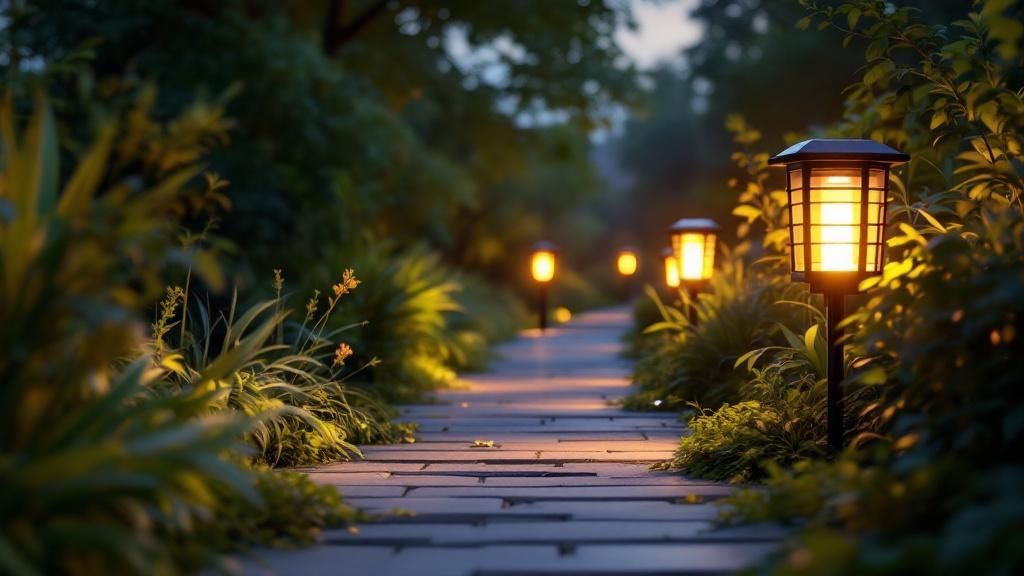
Solar-powered outdoor lights are a simple yet powerful way to improve your home's exterior. Think of them as tiny, independent power stations around your property. Each one soaks up the California sunshine all day, ready to cast a welcoming glow at dusk.
This self-sufficient design is a great fit for the Central Coast lifestyle. They add security, boost curb appeal, and create the perfect mood for outdoor living. And they do it all while being kind to the environment.
Effortless Style Meets Modern Technology
The idea is simple. A small solar panel captures sunlight, and a battery stores the energy. An efficient LED bulb uses that power to light up your space after dark.
You don't need to bury wires or call an electrician. Best of all, there is no impact on your monthly utility costs. Today's technology is also much better than the dim solar lights of the past.
Modern options are bright, durable, and stylish. They are one of the easiest upgrades you can make with an immediate impact. For more ideas, see the top outdoor lighting trends for Monterey homes in 2025.
Key Benefits for Your Central Coast Home
Switching to solar lighting has unique advantages for homeowners in Monterey, Salinas, and Santa Cruz.
- Zero Ongoing Energy Costs: Once you buy the lights, the sun provides free power. Light up your whole landscape without a bigger electricity bill.
- Simple, DIY Installation: With no wiring, you can place these lights anywhere. It often takes just minutes to stake them along a path or mount them on a fence.
- Enhanced Safety and Security: Well-lit walkways prevent trips and falls at night. Automatic lighting also deters intruders, adding security to your home.
- Eco-Friendly Living: Using renewable solar energy reduces your home's carbon footprint. It’s a small change that fits a sustainable lifestyle.
Solar-powered outdoor lighting is an investment in your home's beauty and security. It helps you create a stunning outdoor space powered entirely by nature.
How Solar Lights Capture and Use Sunlight
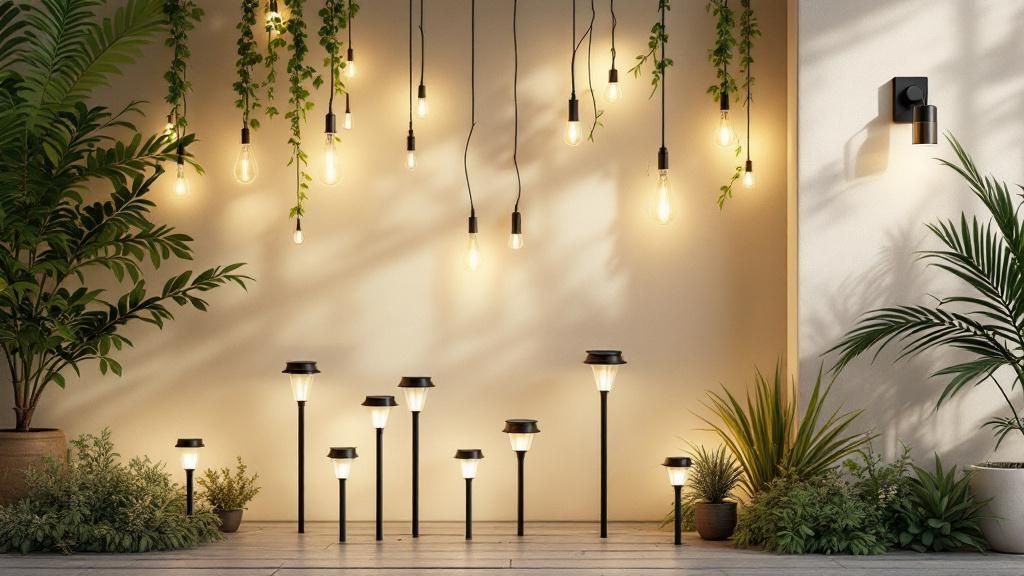
Have you ever wondered how that little solar light in your garden works? The technology is surprisingly simple. Three core parts work together to turn sunshine into a beautiful nighttime glow.
Each solar powered outdoor lighting fixture is its own mini power station. Once you understand the parts, you can make smarter choices for your home. This ensures your walkways and garden are always perfectly lit.
The Solar Panel: The Collector
The small, dark rectangle on top of the light is the solar panel. It acts like a leaf on a plant, turning sunlight into electricity.
This process happens silently all day, even on cloudy Monterey afternoons. The size and quality of this panel affect how quickly the light can charge up for the night.
The Rechargeable Battery: The Storage Tank
The electricity from the panel needs to be stored until it gets dark. That’s the job of the rechargeable battery. It holds onto the energy gathered during the day.
Most modern solar lights use lithium-ion batteries, like those in your smartphone. They are lightweight, hold a lot of power, and last a long time. A tiny sensor tells the battery when to stop charging and start powering the light.
The LED Bulb: The Light Source
Finally, the LED (Light Emitting Diode) bulb brings the stored energy to life. When the sun goes down, the sensor signals the battery to release its power to the LED. The LED then lights up your space.
LEDs are perfect for solar power because they are very efficient. They produce bright light while using very little energy. This is why a fully charged battery can keep the light on for eight hours or more.
Understanding Key Terms
When shopping for solar lights, you'll see a few technical terms. Knowing them will help you pick the perfect product.
- Lumens (lm): This measures brightness. A pathway light might need only 15-50 lumens for a gentle glow. The best outdoor security lighting can be 300-800 lumens or more.
- Battery Capacity (mAh): This tells you how much energy the battery can hold. A higher mAh number usually means the light can run longer.
- IP Rating: This two-digit number shows how weatherproof a light is. For coastal areas like Santa Cruz, an IP65 rating is great. It means the light is protected from dust and rain.
Finding the Perfect Solar Light for Every Space
Solar lighting isn't a one-size-fits-all solution. The beauty of this technology is the wide variety of options available. Each type is designed for a different job.
Knowing the common types makes it easier to choose the right fixture. You can light a welcoming path, highlight a tree, or improve your home's security. This guide will help you create a great lighting plan for your Central Coast home.
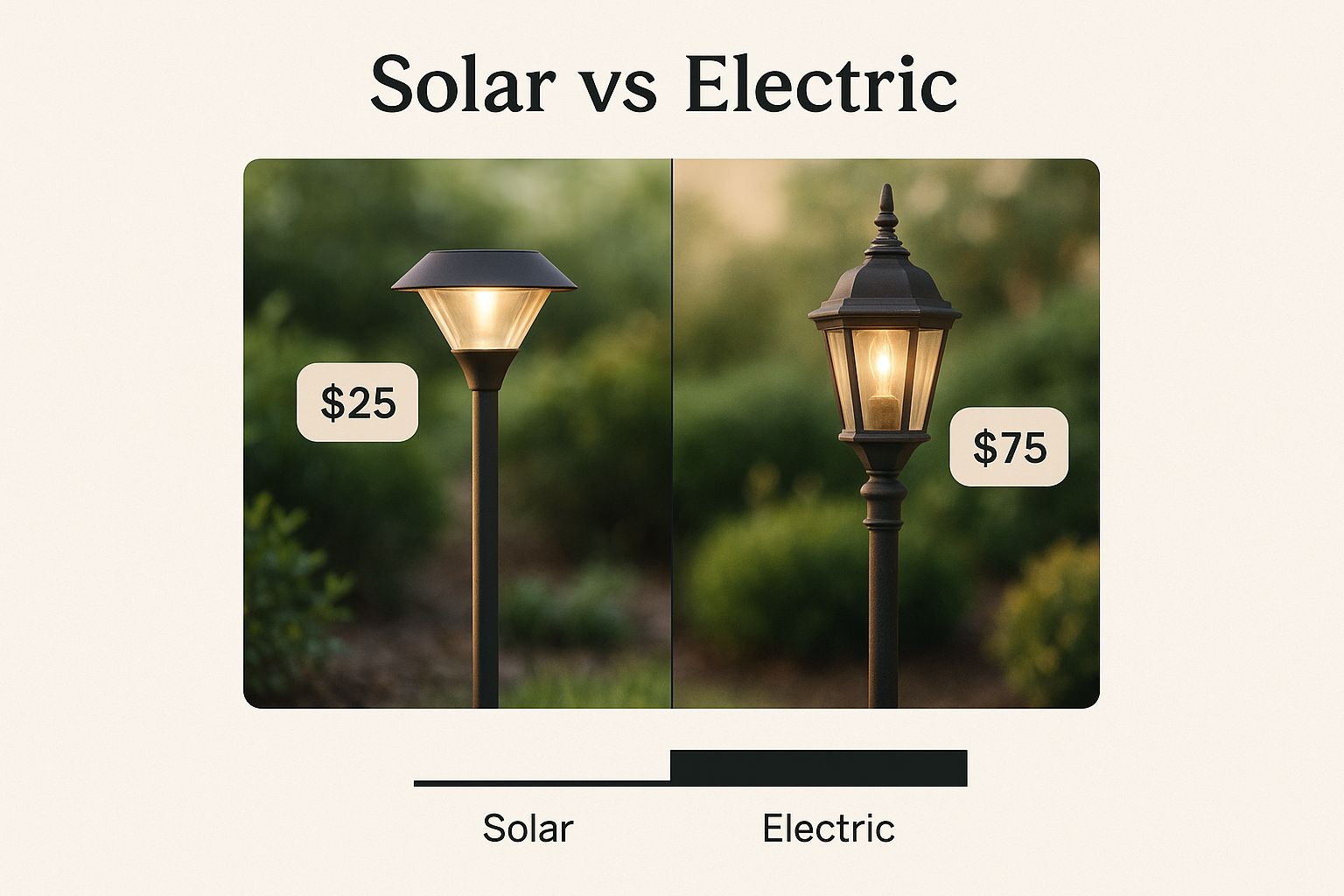
As you can see, today’s solar fixtures look as good as traditional wired lighting. But they don't have the complex installation or monthly energy bills. Let's look at the different types of solar lights and what they do best.
A Quick Guide to Solar Light Types
Choosing the right solar light is about matching the fixture to its purpose. This table breaks down the common types to help you find the perfect fit.
| Light Type | Primary Use | Typical Lumens | Best Placement |
|---|---|---|---|
| Path Lights | Gentle guidance & ambiance | 10-50 | Along walkways, driveways, garden beds |
| Spotlights | Highlighting features & drama | 75-400 | Uplighting trees, walls, architectural details |
| String Lights | Festive mood & decoration | Varies | Patios, decks, pergolas, gazebos |
| Security Lights | Safety & deterrence | 300-800+ | Entryways, garages, dark corners, fences |
Solar Path Lights
Solar path lights are what most people imagine when they think of solar lighting. These are usually stake-mounted lights you place along walkways and garden beds. They provide a soft glow to guide your steps.
For homeowners in Monterey and Salinas, they are perfect for marking the trail to the front door. Look for path lights that cast a warm, downward-facing light to avoid harsh glare. A brightness of 10-50 lumens per light is usually enough.
Solar Spotlights and Accent Lights
To draw attention to specific features, solar spotlights are your best choice. These powerful lights create a focused beam, perfect for uplighting trees or garden sculptures. They add depth and drama to your yard at night.
Spotlights are brighter than path lights, often ranging from 75 to 400 lumens. Many models have adjustable heads, so you can aim the light exactly where you want it. For more tips, check our guide to outdoor lighting.
A well-placed spotlight can turn a flat yard into a beautiful space. You can highlight the texture of a stone wall or the branches of a tree.
Solar String Lights
For a festive, cozy vibe on a patio or deck, nothing beats solar string lights. They are all about setting a mood for outdoor dining or entertaining. They provide a warm, intimate glow that helps guests relax.
Since they are for decoration, brightness isn't the main focus. Instead, look at the length of the string and the style of the bulbs. Choose options with shatterproof bulbs to handle the coastal air in Santa Cruz.
Solar Wall and Security Lights
Solar wall lights are all about practicality and safety. These fixtures mount on walls or fences to light up entryways and dark corners. They help deter intruders and prevent accidental falls.
Solar security lights often come with extra features:
- Motion Sensors: These turn the light on only when movement is detected. This saves battery life and can startle trespassers.
- High Lumen Output: A good security light should be at least 300-800 lumens.
- Adjustable Settings: Many allow you to choose different modes, like a dim "always-on" setting that brightens with motion.
Installation and Care for Year-Round Performance
One of the best things about solar lighting is how easy it is to set up. Most solar lights are designed for a simple DIY installation. With just a little care, they will shine brightly all year long.
The key to their success is sunlight. Your solar panel needs direct sun to charge its battery. Placing it in a shady spot won't give it the energy it needs.
Simple Installation for Lasting Results
Placement is the most important step. Watch how the sun moves across your yard during the day. Finding the sunniest spots will make a big difference.
- Find the Sunniest Location: Your solar panel needs at least 6-8 hours of direct sunlight each day. South-facing spots are usually best.
- Avoid Obstructions: Look out for shadows from trees or roof overhangs. Even a little shade can reduce how well your light charges.
- Ensure Stability: Make sure your light is secure, whether it's staked in the ground or mounted on a wall. A wobbly fixture might not get enough sun.
Easy Maintenance for Peak Performance
Solar lights are low-maintenance, but not zero-maintenance. A few quick checks will keep them working like new. This is especially true near the coast where salt spray can be an issue.
A quick wipe-down of the solar panel every few weeks can dramatically improve charging. Dust and grime can block sunlight from reaching the solar cells.
Follow this simple routine:
- Clean the Panels: Use a soft, damp cloth to wipe the solar panels every few weeks. Avoid harsh chemicals that could scratch the surface.
- Check the Batteries: If a light seems dimmer than it used to, the battery might need to be replaced. This is usually after a few years of use.
- Inspect for Damage: Check your lights after a big storm or yard work. Make sure all connections are tight and no water has gotten inside.
FAQs: Your Solar Lighting Questions Answered
It's normal to have questions when trying something new for your home. Here are answers to common questions about solar powered outdoor lighting. We want you to feel confident about making the switch.
How Long Do Solar Lights Actually Last?
The LED bulbs in a quality solar light can last for 10 years or more. They are very efficient and don't produce much heat.
The rechargeable battery is the other main part. Most modern solar lights use lithium-ion batteries. They usually perform well for about 3-5 years before they might need to be replaced.
Do Solar Lights Still Work on Cloudy Days?
Yes, they do, which is important for our foggy Monterey Peninsula mornings! Solar panels don't need direct sunshine to work. They can still generate a charge from the daylight that filters through clouds.
On very overcast days, charging will be slower. A light that runs for 10 hours after a sunny day might run for 4-6 hours after a cloudy one. That's why finding the sunniest spot is so important.
Are Solar Lights Bright Enough for Security?
Yes. While some solar lights are for soft, decorative lighting, many are designed for security. A good solar security light can be 300-800 lumens or more. This is bright enough to light up a dark driveway or entryway.
What Does an IP Rating Mean?
An IP (Ingress Protection) rating is a durability score. It's a two-digit number that tells you how well a light is sealed against dust and water.
For outdoor lights near the coast, look for a rating of IP65 or higher. This means the light is sealed against dust and can handle rain. It's built to last in our local climate.
Where can I get expert advice on lighting for my home?
The experts at a local lighting showroom can provide personalized guidance. They can help you choose high-quality fixtures that fit your home's style and security needs. Professional advice ensures you make a great investment.
Ready to find the perfect solar lighting to enhance your property? The experts at The Home Lighter, Inc. are here to offer personalized guidance. We’ll help you select high-quality fixtures that will beautify your home and keep it secure for years to come.