
Have you ever bought a light fixture online or from a big-box store and felt disappointed by the quality? If you've run into issues like chipped finishes, poor hardware, or confusing installation instructions, you're not imagining it. Many homeowners are frustrated by lights that don't last.
The real question is: how do you know what’s actually worth your money? The answer usually comes down to the materials and craftsmanship, which you can't see in a product photo.
The Real Reason Your Lights Feel Flimsy
If you've ever felt that pang of disappointment, you're in good company. Consumer complaints on forums repeatedly call out flaky finishes, missing parts, and low-quality materials on mass-market fixtures. Many of these products are designed for high sales volume, not for long life in a real home.
This isn't just bad luck; it's by design. While they look good in photos, they rarely hold up. Many people assume things like:
- “If it looks good online, it must be fine.”
- “All light fixtures are basically the same—just pick one.”
- “Designer lighting is overpriced for no reason.”
But fixtures vary hugely in material, construction, and durability. To sell a fixture for a low price, manufacturers have to cut corners somewhere. This usually means using cheaper materials that make a light fixture feel flimsy and unreliable.
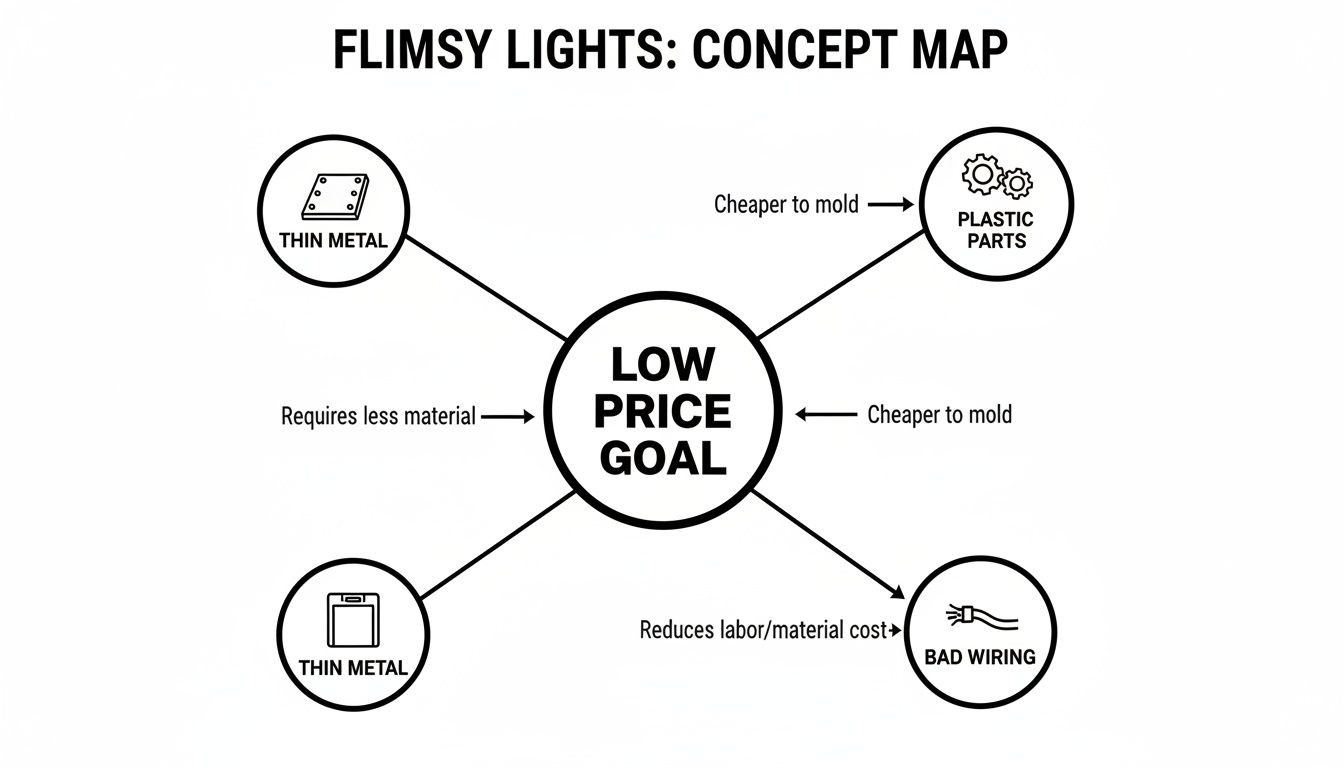
As you can see, a low price tag often forces manufacturers to use thinner metals, brittle plastics, and subpar wiring. These are the exact reasons why a fixture might feel cheap and fail early. This concept isn't unique to lighting; you see it across all home furnishings when you look into the true cost of quality.
The reality is that lighting is often a “you get what you pay for” situation. A fixture that looks beautiful online but throws too little light or fails within a year is ultimately a waste of money.
This cycle of buying, getting frustrated, and replacing is all too common. The first step to breaking free is learning to spot the difference between a well-made fixture and a flimsy one before you buy.
Quick Guide To Spotting Quality Lighting
It can be tough to tell a quality fixture from a cheap one with just a glance, especially online. But once you know what to look for, the signs become obvious. This table breaks down the key differences.
| Characteristic | Signs of a Cheap Fixture | Signs of a Quality Fixture |
|---|---|---|
| Material Feel | Lightweight, thin, or hollow-feeling metal. Lots of plastic parts. | Substantial weight, solid metal (brass, steel, aluminum). |
| Finish Quality | Painted-on finishes that easily scratch or flake. Uneven color. | Plated or powder-coated finishes. Even, durable coating. |
| Glass & Shades | Thin, fragile glass with visible seams or bubbles. Flimsy fabric. | Thick, high-quality glass. Well-made shades with clean seams. |
| Wiring & Sockets | Thin, unbranded wiring. Flimsy plastic or aluminum sockets. | Thick, insulated wiring (often cloth-wrapped). Solid ceramic sockets. |
| Hardware | Soft screws that strip easily. Ill-fitting parts. | Hardened steel screws. Parts that fit together smoothly. |
| Certifications | Missing or questionable safety listings (like UL or ETL). | Clear UL or ETL certification marks for safety and quality standards. |
Keep these points in mind next time you're shopping. Picking a fixture based on these quality markers, not just the price tag, is how you find lighting that you'll love for years to come.
Why The Materials In Your Fixture Matter
Ever fall in love with a light fixture online, only to have it arrive and feel cheap? A beautiful photo can easily hide a flimsy reality. The materials are the foundation of a light fixture’s durability, much like the difference between solid wood and particleboard furniture.
When you're asking, "why do my light fixtures always feel cheap or fall apart?", the answer is almost always hiding in the metal, glass, and internal parts you can't see in a picture.
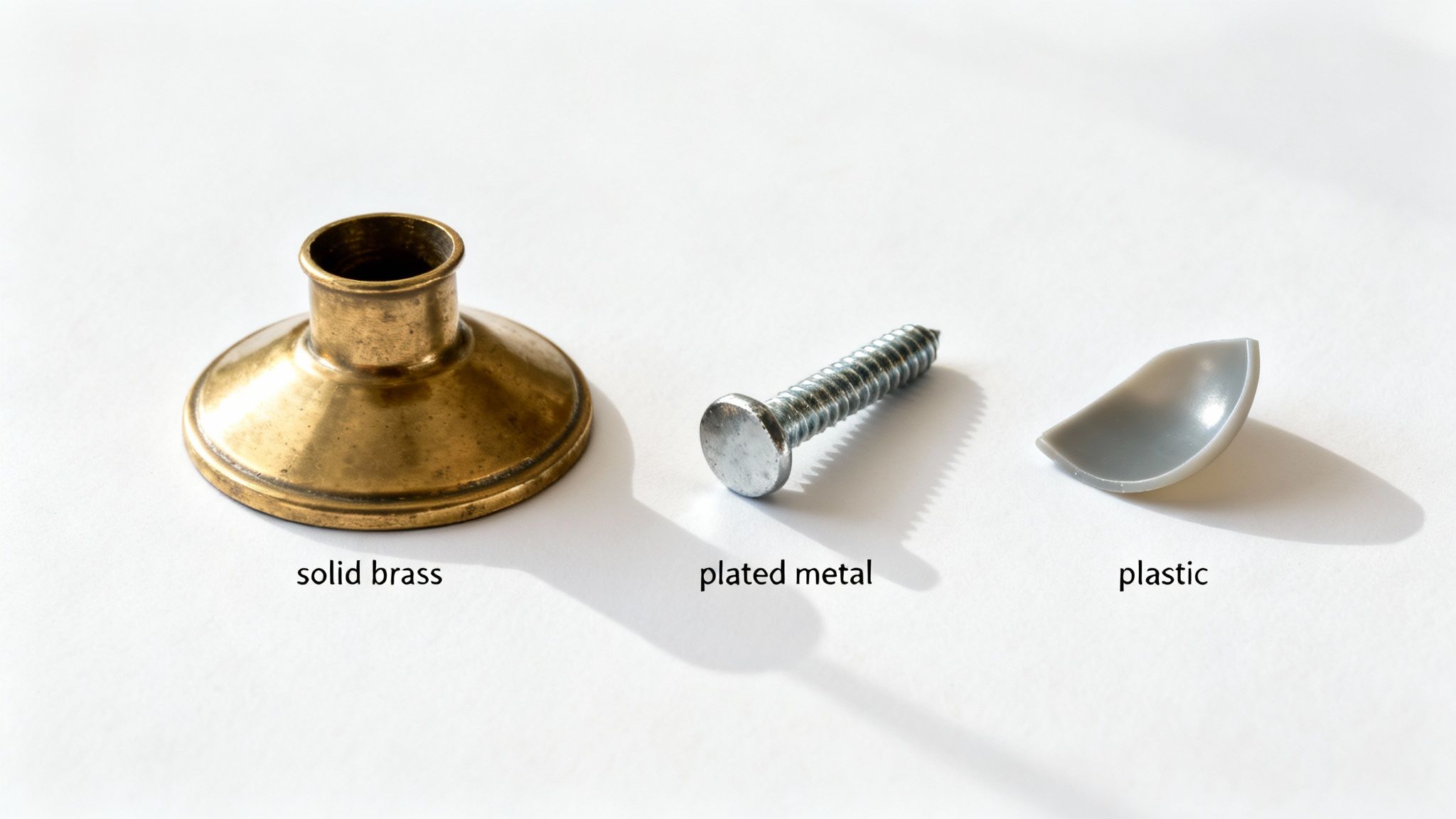
From Solid Brass To Plated Steel
You can feel the difference right away. High-quality fixtures often use materials like solid brass, high-grade steel, or artisan-blown glass. These materials have a satisfying weight and are built to resist denting and corrosion. You can see how premium materials come together in our guide to bronze and crystal chandeliers.
In contrast, most mass-market fixtures are made from thin steel with a plated finish. That plating can easily chip or peel, exposing the raw metal underneath. This leads to rust and discoloration you might see after only a year or two.
The Clear Difference In Glass And Shades
The same rule applies to glass and fabric shades. A well-made fixture might feature hand-blown glass, which is thicker, clearer, and more resilient to heat. Cheap, mass-produced glass shades are often thin and brittle, making them likely to crack.
The brutal truth about why your light fixtures feel so flimsy is rooted in shoddy construction and poor material choices. In the budget segment, over 70% of mass-market products use subpar components that simply can't handle real-world stress like vibrations, humidity, or thermal cycling.
Coastal Climate Considerations For Monterey Homes
For homeowners here on the Central Coast, from Salinas to Santa Cruz, material choice is even more critical. The salty, humid air in our region is very harsh on low-quality metals.
What happens when a cheap fixture is exposed to our coastal climate?
- Rapid Corrosion: Salt speeds up the rusting process, causing finishes to bubble and flake.
- Structural Weakness: Rust can eat away at screws and mounting hardware, making the fixture unsafe over time.
- Discoloration: The once-shiny finish becomes dull and pitted, ruining the fixture's look.
Choosing fixtures made from marine-grade materials is essential for long life here on the Monterey Peninsula. It’s the difference between a light that looks beautiful for a decade and one that needs replacing after a single foggy winter.
How Mass Production Compromises Quality
Have you ever unboxed a new light fixture and just felt that it was cheap? Or had one flicker out months after you installed it? The global lighting industry often focuses on trendy, low-cost fixtures, which can mean a drop in quality.
To keep prices low, manufacturers often take shortcuts where you can’t see them—inside the fixture itself.
This is especially true with modern LED lights. The exterior might be sleek, but cheap internal drivers—the tiny electronics that regulate power—can be inside. When these low-quality drivers fail, you get flickering, dimming, or a fixture that just quits.
The Problem With Volume Over Value
A large part of the lighting market is built on a simple model: sell as many units as possible, as quickly as possible. Long life isn't always part of the plan. This focus on volume is responsible for the headaches many homeowners face.
You see it in common issues like:
- Missing or Mismatched Parts: When thousands of units are made daily, quality control can suffer. That's why you might open a box to find essential screws or brackets are missing.
- Inconsistent Finishes: Ever buy two "matching" sconces, only to find the color is different between them? That's a classic sign of rushed production.
- Nightmare Instructions: Poorly translated instructions can turn a simple project into a frustrating struggle.
This push for quantity over quality is growing. The global lighting fixtures market is set to grow from US$40.1 billion in 2025 to US$53.2 billion by 2032, driven by demand for inexpensive LEDs. To meet that demand, some manufacturers swap durable metals for thin plastic composites that can warp from heat.
"You have to be very rich to buy cheap things." – French Proverb
This old saying is very true. A low price tag today often means paying for replacements and repairs tomorrow. It’s a common story where mass-produced items feel temporary when compared to pieces built with care.
Investing in well-made lighting from the start saves you money and stress. It's why we focus on brands that prioritize durability, which you can see in our article on Holtkotter's German craftsmanship.
A light fixture is an appliance, and it has to endure stress from its environment. Cheap materials are an obvious problem, but a fixture's failure is often sped up by heat, vibration, and electrical changes. These hidden forces can cause even decent-looking lights to fail too soon.
These are the silent killers that turn a bargain buy into a recurring headache. Industry data shows that budget models fail at rates 3 to 5 times higher than well-engineered ones. For homeowners here on California's Central Coast, this is a huge deal for exterior lighting. The corrosive salty air alone can eat through 40% of low-grade fixtures in just 2-4 years. If you're interested in the broader market trends, the full research from Grand View Research has more details.
Heat: The Silent Fixture Killer
Even though modern LED fixtures are efficient, they still generate heat. A quality LED handles that heat well. A well-made fixture has a properly sized heat sink, a part designed to pull heat away from the sensitive electronics.
To cut costs, mass-market LEDs often use undersized heat sinks. This traps heat, "cooking" the internal driver and the LED chips from the inside out. This is the top reason so many LED fixtures start flickering or burn out early.
Vibrations and Loose Connections
Every home has minor vibrations from footsteps or closing doors. In a solid fixture, the hardware—screws, nuts, and brackets—is made from strong metal designed to hold tight.
Cheap fixtures often use soft, low-grade screws that can't keep a firm grip. Over time, those tiny vibrations work the connections loose. This not only makes the fixture wobbly but is a common cause of flickering. Our guide on how to install recessed lighting emphasizes how critical secure fittings are.
A quality light fixture isn't just about the metal you can see; it's about the engineering you can't. It's built to withstand the daily stresses that cheap fixtures simply ignore.
The Damage From Electrical Surges
The electrical current in your home isn't perfectly stable. Small power changes happen all the time. A high-quality fixture has an internal driver with built-in protections to handle these electrical peaks and valleys.
Budget fixtures often skip this key protection. This leaves their parts exposed to every little surge, degrading them over time until one day, the light just gives out.
How To Choose Lighting That Actually Lasts
Now that you know what makes a light fixture fail, let's talk about how to choose one that won't. The secret is to shop smarter. This means viewing lighting as a long-term investment in your home.
It's easy to be drawn in by a slick photo and a low price online, but that's often how you end up with a fixture that disappoints. It's time to become a smarter shopper by looking beyond the surface.
Your Checklist For Quality Lighting
Breaking free from the cycle of cheap fixtures is easier than you think. Use this simple checklist the next time you're shopping to make sure you bring home a light that’s built to last.
- Feel the Materials: Whenever possible, get your hands on the fixture. Quality lighting has a certain heft to it. Does it feel solid, or is it flimsy and hollow?
- Look for Safety Certifications: Always check for a UL or ETL listing on the product. These marks are your guarantee that the fixture has been tested to meet strict safety standards.
- Ask About the Warranty: A company that is confident in its product will offer a solid warranty. A one-year warranty is standard, but premium brands often offer longer terms.
- Research the Brand’s Reputation: Focus on brands known for craftsmanship and reliability, not just for trendy styles. Brands with reputations for quality are a safer bet.
Think of buying a light fixture like you would any other important investment. Ask yourself, "Will this look good and work well in five or ten years?" This one simple question can steer you away from flimsy buys.
Thinking Like An Investor
When you invest in quality lighting, you're buying peace of mind. You’re choosing a fixture that won't need to be replaced in a year, saving you money and hassle. It's a key part of how high-end design meets high efficiency in fixtures built for the future.
This approach gives you the power to make confident decisions based on real quality, not just a pretty picture. It's the best way to fill your home with lighting you'll love for years.
Why You Should See Your Lighting In Person
Have you ever bought a light fixture online, only to feel disappointed when you unbox it? A slick product photo can hide a cheap, flaky finish or flimsy hardware.
The biggest mistake people make is assuming that what looks good in a picture will actually look and feel good in their home.
You can’t feel the weight of solid brass or inspect the details of a hand-applied finish through a computer screen. That’s why the best way to avoid a cheap fixture is to see it and touch it in person before you buy.
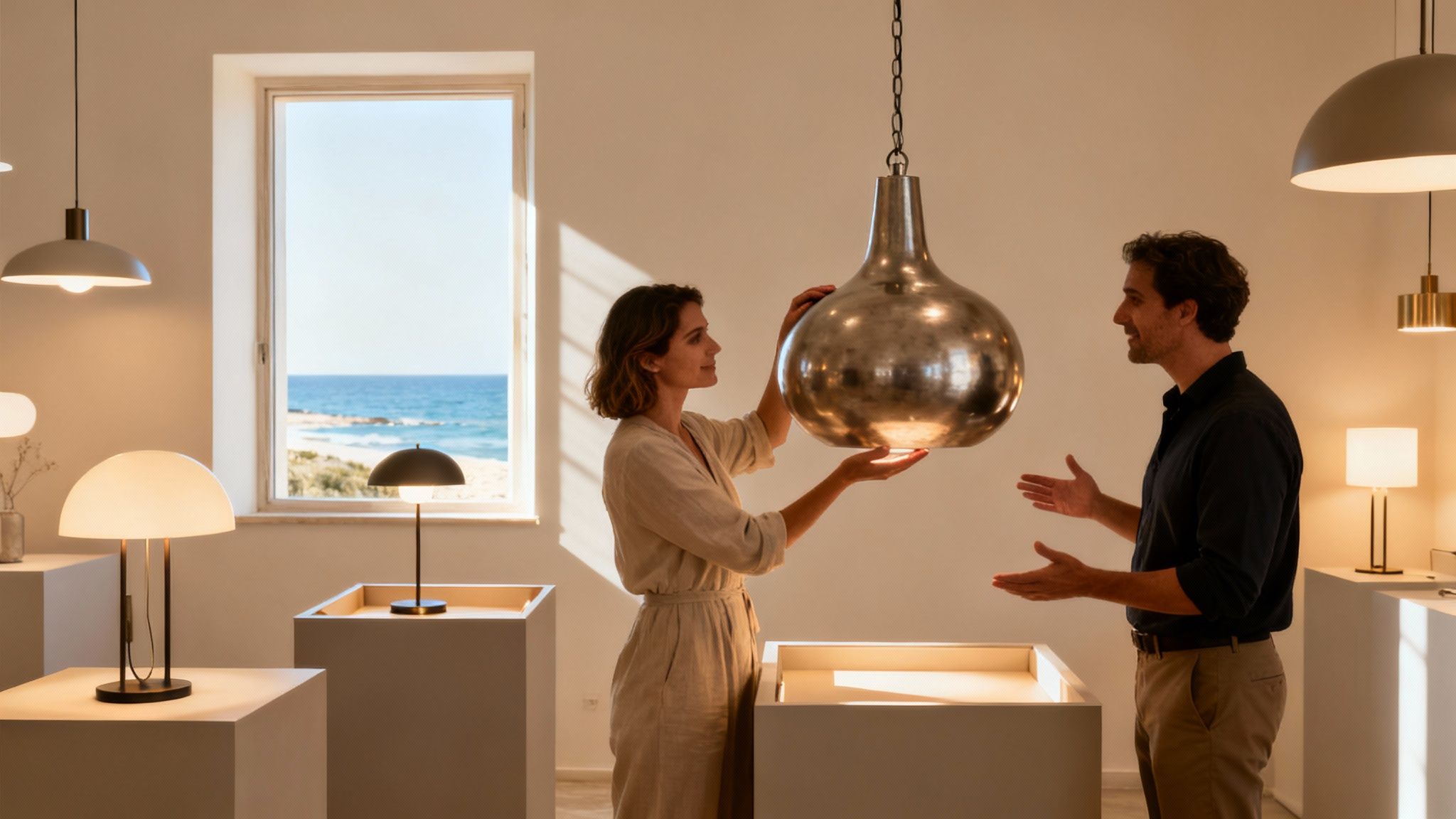
Experience Quality Firsthand
At The Home Lighter, Greg and Tammy personally curate every fixture in the showroom. You won’t find mass-produced junk here. Every piece meets a high standard for materials, construction, and durability.
Visiting our showroom gives you the chance to:
- Feel the Difference: Pick up a fixture and notice its weight. You can feel the quality.
- Inspect the Details: Look at the quality of the welds, the consistency of the finish, and the clarity of the glass.
- See True Light: Understand how a fixture actually casts light in a real space, not just a studio photo.
A fixture can be beautiful, but if it throws too little light into your space, it is ultimately a waste of money. Lighting is definitely a “you get what you pay for” situation.
A Local Solution For The Central Coast
If you live around Monterey, Salinas, or Santa Cruz and are tired of returning online lighting orders, stop by our Pacific Grove showroom. We’ll help you find fixtures that look beautiful and last—without the surprises.
Come see for yourself how experiential retail is changing the way we buy lighting and finally stop the frustrating cycle of buying and returning. We’ll help you find fixtures that are truly built to last.
Answering Your Top Questions About Lighting Quality
Here are some quick answers to common questions about lighting quality to help you invest in fixtures with confidence.
Is expensive lighting always better quality?
Not always, but a higher price often means the manufacturer used better materials, like solid brass, and better internal electronics. A longer warranty is also a good sign they believe in their product. Look for tangible signs of quality like solid metal construction and a UL or ETL safety listing.
What does a UL or ETL listing mean?
A UL (Underwriters Laboratories) or ETL (Intertek) listing means the fixture was tested by an independent lab and meets strict North American safety standards for its wiring and construction. You should always avoid light fixtures that don't have these certifications, as it's a major red flag for quality.
How can I tell if a fixture is made of solid metal?
A solid metal fixture will feel much heavier than a thinly plated one. If you tap it, solid metal produces a dull sound, while thin metal often sounds hollow. The best way to learn the difference is to visit a showroom where you can feel the materials firsthand.
Why do my LED fixtures burn out so fast?
When an LED fixture fails early, it's almost always due to poor heat management or a cheap internal driver. In budget fixtures, heat gets trapped and "cooks" the electronics. Investing in a fixture from a reputable brand ensures it's engineered to last for its full advertised lifespan.
Will a quality fixture still look good in 5-10 years?
Yes, that's the goal of investing in quality. Fixtures made from solid materials with durable finishes are designed to resist fading, chipping, and corrosion. Unlike trendy, mass-produced items, well-made lighting is built to be a lasting part of your home's design.
Ready to stop the cycle of disappointing fixtures? The experts at The Home Lighter Inc. can guide you to beautiful, well-made lighting that will stand the test of time. Visit our Pacific Grove showroom or get in touch with us today to start your project.