
A traditional pendant light feels both elegant and familiar. Unlike modern designs, traditional pendant lights use historic shapes and classic materials. Think of warm brass, rich bronze, and detailed glass. They are more than just lights; they are decorations that add history and character to your home.
This guide will help you understand what makes these lights special. We will explore different styles and materials. You'll also learn how to choose the right size and where to place them.
What Defines a Traditional Pendant Light?
When you think of traditional design, words like "classic," "timeless," and "ornate" come to mind. A traditional pendant light is a perfect example of these ideas. It acts as a beautiful focal point that feels connected to the past. This is the opposite of modern fixtures, which focus on simple lines and industrial materials.
These classic lights are all about the details. They create a warm and welcoming feeling. This makes them a great fit for many homes on the Central Coast, from historic Monterey houses to charming Carmel cottages. Their lasting appeal comes from a mix of beautiful craftsmanship and comforting shapes that never go out of style.
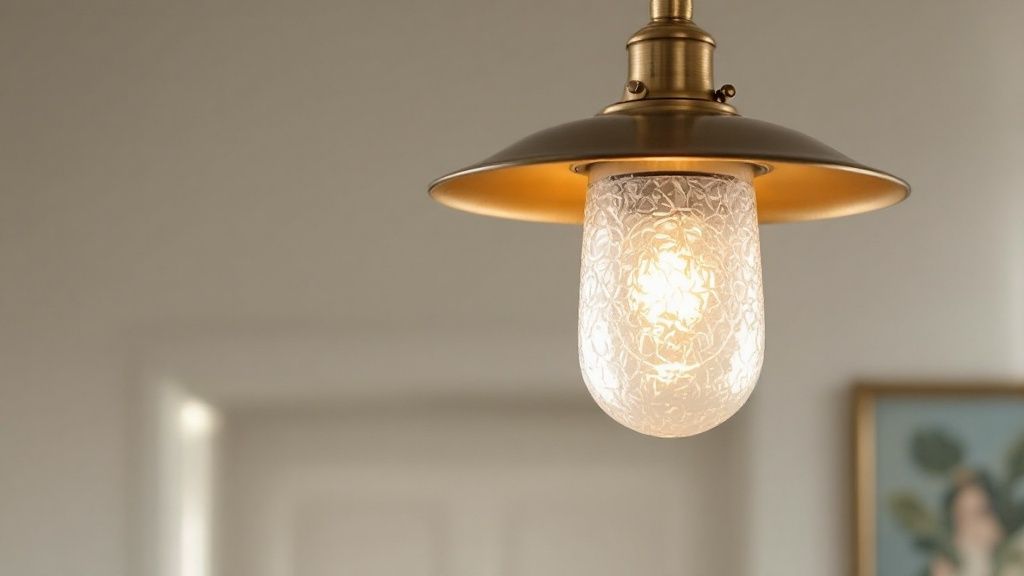
Key Features to Look For
So, what makes a pendant light "traditional"? Most of them share a few main features. Knowing what to look for will help you find the perfect light for your space.
Keep an eye out for these details:
- Warm Metal Finishes: You will often see aged brass, oil-rubbed bronze, and polished nickel. These finishes add a sense of history that you don't get from chrome or matte black.
- Classic Shade Shapes: Traditional pendants often have shades made of glass or fabric. Common shapes are bowls, bells, lanterns, and classic schoolhouse globes that soften the light.
- Decorative Details: The small touches matter. Look for detailed metalwork, curved arms, and decorative tops. These details add elegance and show quality craftsmanship.
- Inspired by History: The designs often get ideas from historical times like the Colonial or Victorian eras. This gives them a familiar and timeless quality.
Why Choose a Traditional Style?
Choosing traditional pendant lights adds a feeling of grace to your home. In a world full of fast-changing trends, these lights have a lasting appeal. They also work well with many decor styles, including transitional and modern farmhouse.
For homeowners here on the Monterey Peninsula, this style fits our area's history. A lantern pendant in a Spanish-style entryway or a schoolhouse pendant in a Salinas farmhouse kitchen just feels right. It's a choice that honors tradition while providing beautiful light for today's life.
Timeless Traditional Pendant Styles
"Traditional" does not mean just one look. It is a collection of classic designs, each with its own personality. Learning about these styles is the first step to finding the perfect traditional pendant lights for your home.
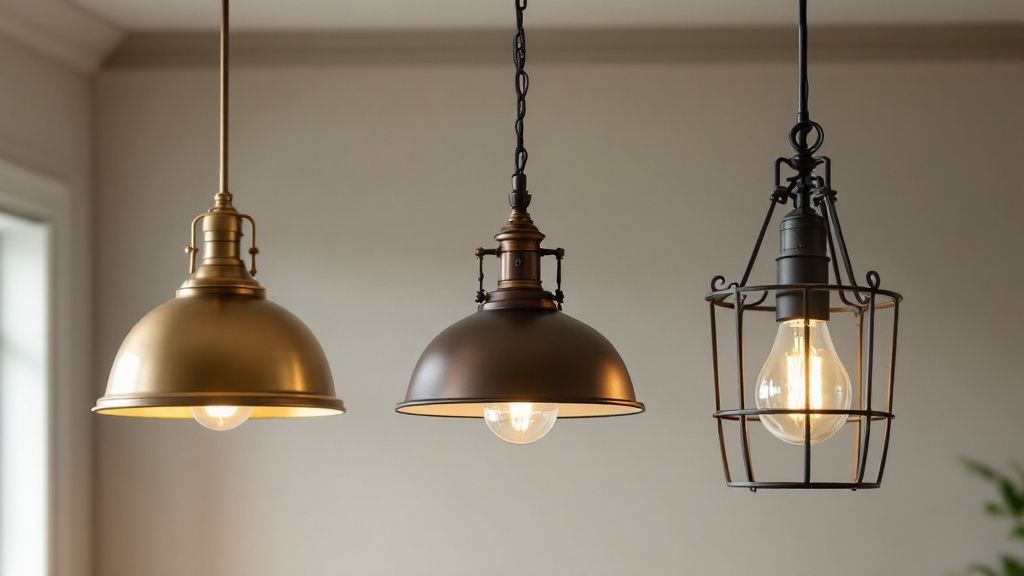
From a grand entryway to a cozy kitchen nook, each style has a purpose. Some provide broad, soft light for a whole room. Others offer focused light for tasks or create a dramatic centerpiece. Let’s look at some of the most popular traditional pendant styles.
Lantern Style Pendants
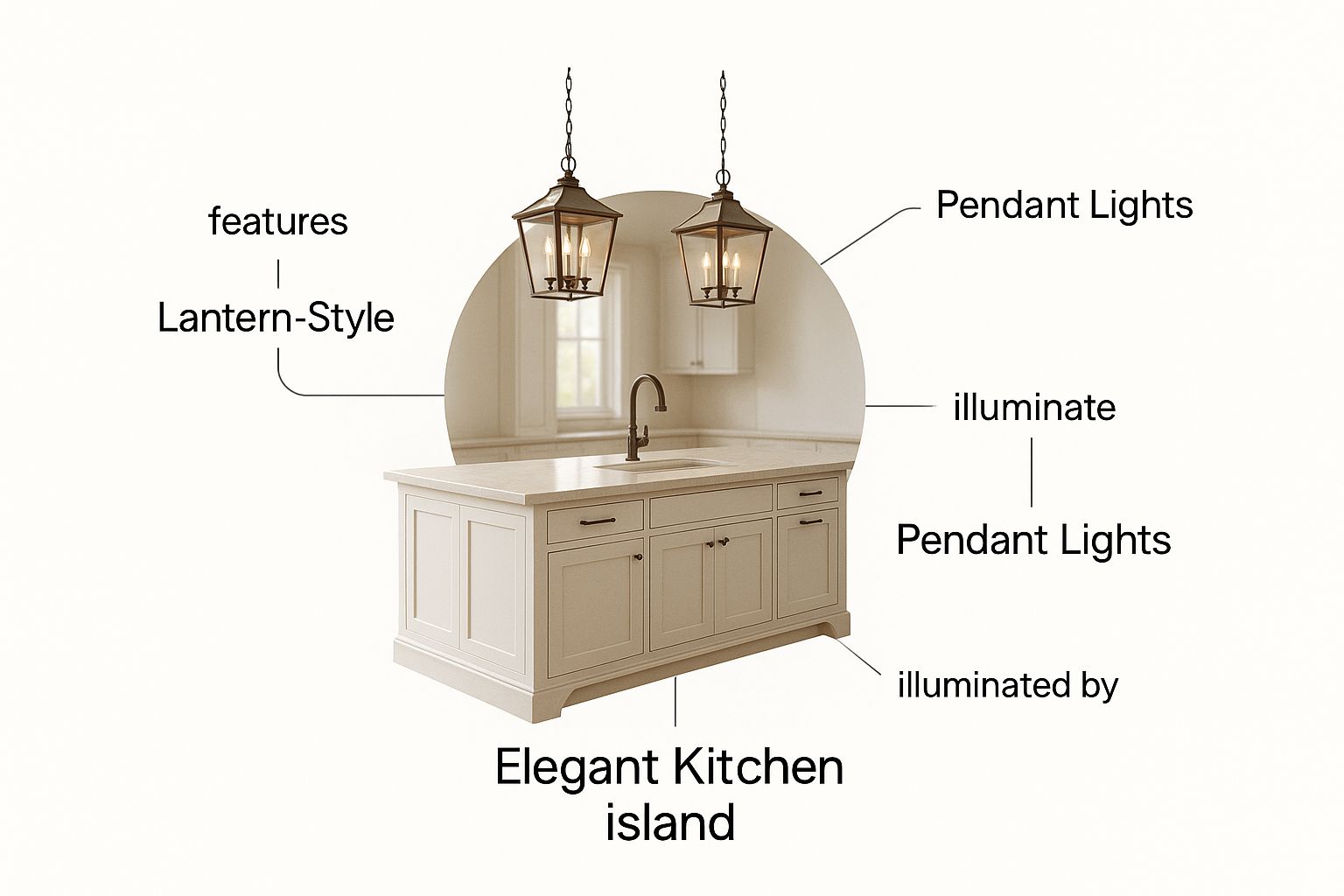
Inspired by old candle-lit lanterns, these pendants add historic charm. They usually have a metal frame, like bronze or iron, with clear glass panels. This makes them perfect for creating a strong first impression in entryways and on covered porches.
Their open design provides clear, bright light. A lantern-style fixture can add a feeling of heritage. It fits well with the Spanish and Colonial-style homes we see across the Monterey Peninsula.
Schoolhouse Pendants
As the name suggests, schoolhouse pendants were first used in schools and libraries in the early 1900s. Their design is simple but memorable. They usually have a milky-white glass globe shade that creates a soft, even glow. This gives you warm light without any harsh glare.
Because they provide such comfortable light, they are a great choice for kitchens, hallways, and bathrooms. A row of schoolhouse pendants over a kitchen island offers great task lighting. It also adds a touch of classic charm.
Bowl Pendants
For quiet, simple elegance, bowl pendants are a wonderful choice. These lights have a bowl-shaped shade, often made from alabaster or frosted glass. The shade directs most of the light upward toward the ceiling. This indirect lighting fills the room with a soft, gentle glow.
Bowl pendants are ideal for dining rooms or living areas where you want a calm atmosphere. The light bounces off the ceiling, creating a peaceful setting. For more ideas, see our guide on pendant lighting ideas for your living room.
Candlestick Style Pendants
If you love the look of a grand chandelier but need something smaller, a candlestick pendant is a great option. These lights have arms that hold small bulbs that look like candles. They add a formal, dramatic touch to any room.
They often make a statement in dining rooms or tall entryways. Their vertical shape can be fully appreciated in these spaces. They come in many sizes and finishes, from rustic iron to fancy, crystal-decorated pieces.
Choosing Materials for a Classic Feel
The materials used in a traditional pendant light give it its soul. The right metals and shade materials create a timeless look. This makes the fixture feel like a natural part of your home's story.
It’s no wonder these classic lights are popular. A recent market analysis on pendant lamps shows a strong, steady interest from homeowners. People value lighting that combines beautiful materials with lasting style.
Classic Metals and Finishes
The metal on a traditional pendant sets the tone for the whole light. It can feel rustic or formal, depending on the material and finish. Your choice should match other hardware in the room, like cabinet pulls and faucets.
Here are some popular metals you'll find:
- Bronze: Often with an oil-rubbed finish, bronze has a deep, dark warmth. It pairs well with Spanish Colonial architecture and rustic farmhouse designs.
- Brass: From shiny and polished to soft and aged, brass brings a warm, golden glow. It adds classic elegance to formal dining rooms and entryways.
- Iron: Wrought iron, usually in black or dark gray, has a sturdy, handcrafted feel. It’s a great choice for lantern-style pendants and rustic fixtures.
Selecting The Perfect Shade Material
The shade material is just as important as the metal frame. It shapes the light itself. The shade decides if the light is soft and gentle or clear and direct.
Understanding the different glass types can help you make a better choice. The type of glass can change the fixture's entire look.
Some classic shade options include:
- Seeded or Clear Glass: Perfect for lantern styles, this glass allows for bright, clear light. The small bubbles in seeded glass add a nice vintage texture.
- Fabric Shades: Linen or silk shades create a soft, warm glow that feels cozy. They are great for bedrooms and living areas.
- Alabaster or Frosted Glass: These materials soften the light beautifully. They get rid of harsh glare and cast a gentle, even light, often used in bowl pendants.
Don't forget that modern technology can be part of this classic look. Many traditional fixtures work with the latest bulbs. Exploring energy-efficient lighting solutions helps you get timeless style with modern performance.
How to Size and Place Your Pendants Perfectly
Getting the size and placement right is the secret to a professional-looking design. The right size fixture won't look too small in a big room or too large in a small space. It makes sure the light works well without upsetting the room's balance.
Luckily, you don't have to guess. There are simple rules to help you avoid common mistakes. These tips will help you choose and place your lighting with confidence.
Finding the Right Size Pendant
Picking the perfect pendant starts with looking at your space. For a single pendant that is the main light in a room, a simple formula can help. Just add the room's length and width (in feet). That number is your suggested pendant diameter in inches.
Example: For a 12-foot by 14-foot room, add 12 + 14 to get 26. A pendant with a diameter around 26 inches would be a great fit for that space.
When hanging pendants over a surface like a kitchen island, the rules are different. The goal is to light the area well without it feeling crowded.
- Over a Kitchen Island: Leave about 6 inches of open space on each side of the island. The pendant's width should be about two-thirds the width of the island.
- Over a Dining Table: The pendant should be about one-half to two-thirds the width of your table. This keeps the light centered and provides good lighting for meals.
Mastering Hanging Height
Once you know the size, the next step is hanging the pendant at the right height. This is important for both looks and function. The "right" height depends on where the light is going.
A light hung too high over a dining table loses its cozy feeling. One hung too low over a kitchen island becomes an obstacle.
Here are the key height guidelines:
- Over a Kitchen Island: The bottom of the pendant should hang 30-36 inches above the countertop. This provides good task lighting while staying out of your line of sight.
- Over a Dining Room Table: Aim for 30-36 inches between the tabletop and the bottom of the fixture. This lights the table without blocking the view of people across from you.
- In an Entryway: With standard 8-foot ceilings, the bottom of the pendant should be at least 7 feet from the floor. For a tall, two-story foyer, hang the pendant around the level of the second floor.
Spacing Multiple Pendants
When you hang more than one pendant, spacing is key. Incorrect spacing can make the lights look cluttered or too far apart. The goal is to create a nice visual rhythm.
For a kitchen island, hanging two or three pendants is popular. First, find the center of your island. Then, measure out equally to place your lights. This makes sure they are symmetrical and provide even light across the whole surface.
Blending Traditional Pendants with Your Home Decor
One of the best things about traditional pendant lights is how well they work with different styles. They fit perfectly in classic homes, but they can also add warmth to modern designs. The key is to create a sense of harmony.
Think of a traditional pendant like a classic piece of jewelry. It can make a modern outfit look great, just as it does with a vintage one. With a few simple tricks, you can make a traditional pendant the star of your room, no matter your style.
Creating a Cohesive Look
The easiest way to make a traditional pendant fit is by matching its finish to other hardware in the room. This simple step ties the whole space together. It makes your design feel polished and complete.
Look for ways to connect finishes through:
- Kitchen Hardware: Match your pendant's bronze finish to your cabinet pulls and faucet.
- Furniture Details: A brass pendant can match brass details on a bookshelf or side table.
- Door and Window Hardware: Don't forget small things like doorknobs. Repeating a metal finish creates a subtle sense of unity.
Considering how your lighting fits with your furniture is also important. Looking at general condo furnishing ideas can help you make sure your lighting choices work with your home's overall look.
The Pendant as a Focal Point
Sometimes, the best design choice is to let one amazing traditional pendant be the main focus. A beautiful lantern in an entryway can set the tone for the entire room. This works especially well in modern farmhouse or transitional interiors, where the classic light adds history and warmth.
A single, well-chosen traditional pendant can act as an "anchor" for a room's design. It gives the eye a beautiful place to rest. It can also make all the other design pieces around it feel more grounded.
Local Style on the Monterey Peninsula
For homeowners here on the Central Coast, traditional lighting feels right at home. The historic charm of Monterey Peninsula homes is a great match for the warmth of these lights. A schoolhouse pendant in a kitchen or a rustic iron fixture in a great room connects the home to its roots.
It’s a beautiful way to honor local style while providing lovely, functional light. To achieve this, focus on creating a soft, welcoming glow. You can learn more about how to create ambient lighting in our guide.
Let an Expert Help You Find the Perfect Light
Choosing the right lighting can feel like a big job, but you don't have to do it alone. Working with a local expert can make the process fun and creative. A lighting consultant can help you find the perfect traditional pendant that fits your home, style, and budget.
At The Home Lighter, Inc., we are your partners in design. Our goal is to provide a warm, expert experience. We want you to feel confident in the choices you make for your home.
Your Local Lighting Showroom
We invite homeowners from Monterey, Salinas, and Santa Cruz to visit our showroom. Seeing these beautiful lights in person helps you appreciate the quality and craftsmanship. Our experts offer advice designed for the unique homes on the Central Coast.
Choosing the right fixture is just the start. To get the most from your new traditional pendant lights, you'll want control over the mood they create. Our guide on how to install dimmer switches offers easy, step-by-step advice. Our mission is to help you find lighting that not only lights up your home but makes it better. Let us help you bring your vision to life.
Frequently Asked Questions About Traditional Pendants
When you're ready to add timeless charm to your home, a few questions often come up. Choosing the right traditional pendant means balancing a classic look with modern needs. Here are answers to some common questions.
Can I use LED bulbs in traditional pendant lights?
Yes, absolutely! Most new traditional pendant fixtures are made to work with LED bulbs. This gives you the best of both worlds: classic style with modern energy savings and a much longer bulb life.
To get that warm, classic glow, look for a "warm white" LED bulb. This is usually around 2700K on the color temperature scale. Many of these bulbs are also dimmable, so you can control the room's mood.
How do I clean and maintain my fixture?
Keeping your traditional pendant looking great is usually easy. A little regular care is all it takes.
- For Metal: Dust gently with a soft, dry microfiber cloth to keep the finish looking good.
- For Glass Shades: Wipe the glass with a slightly damp cloth. For extra cleaning, spray a gentle glass cleaner onto the cloth, not directly on the shade.
Always turn the light off and let the bulb cool before cleaning. Avoid harsh chemical cleaners, as they can damage delicate finishes.
Are traditional pendants only for kitchens?
Not at all! They are a classic choice for kitchens and dining rooms, but they are very versatile. Their timeless look fits in beautifully all over the house.
For example, a pair of small pendants can work as bedside lamps, saving space on nightstands. A single lantern pendant makes a grand statement in a foyer. They can also add charm to hallways, home offices, and even laundry rooms. Pendants can also be used as accent lighting, which you can learn about in our guide on what is accent lighting.
What is the difference between a pendant and a chandelier?
This is a great question because they can look similar. A pendant is usually a single light that hangs from one cord or chain. Think of it like a necklace with one charm.
A chandelier is more complex. It has multiple lights that often branch out from a central point. While some large pendants can feel as dramatic as a chandelier, the key difference is a single light source versus multiple light sources.
Can I install a pendant on a sloped ceiling?
Yes, in most cases, you can. Many modern pendants come with a special swiveling piece at the top. This hardware allows the fixture to hang straight even on an angled ceiling.
If the light you love doesn't have one, you can often buy a sloped ceiling adapter. This small part ensures your pendant hangs correctly and safely. Just check the product details or ask a lighting expert to be sure it will work.
Ready to find the perfect traditional pendant for your home? The team at The Home Lighter Inc. is here to help you choose a fixture you'll love for years. Explore our collections and get expert advice at https://homelighterinc.com.