
The Monterey Peninsula has a light all its own. From the soft haze of morning fog to the dramatic glow of a Pacific sunset, our coast is unique. But generic lighting trends often miss this magic, leaving homeowners with designs that feel disconnected from our environment.
This guide is different. It’s made for people who want their home’s lighting to reflect the Central Coast. We’ll explore eight lighting ideas inspired by the natural beauty and architecture of Monterey, Carmel, and Pacific Grove.
You will learn how to layer light to mimic a foggy morning. We'll also cover using shadows like kelp forests and programming lights to capture a perfect sunset. Let's illuminate how to get that authentic coastal glow and create timeless, locally inspired design.
1. Coastal Fog-Inspired Diffused Ambient Lighting
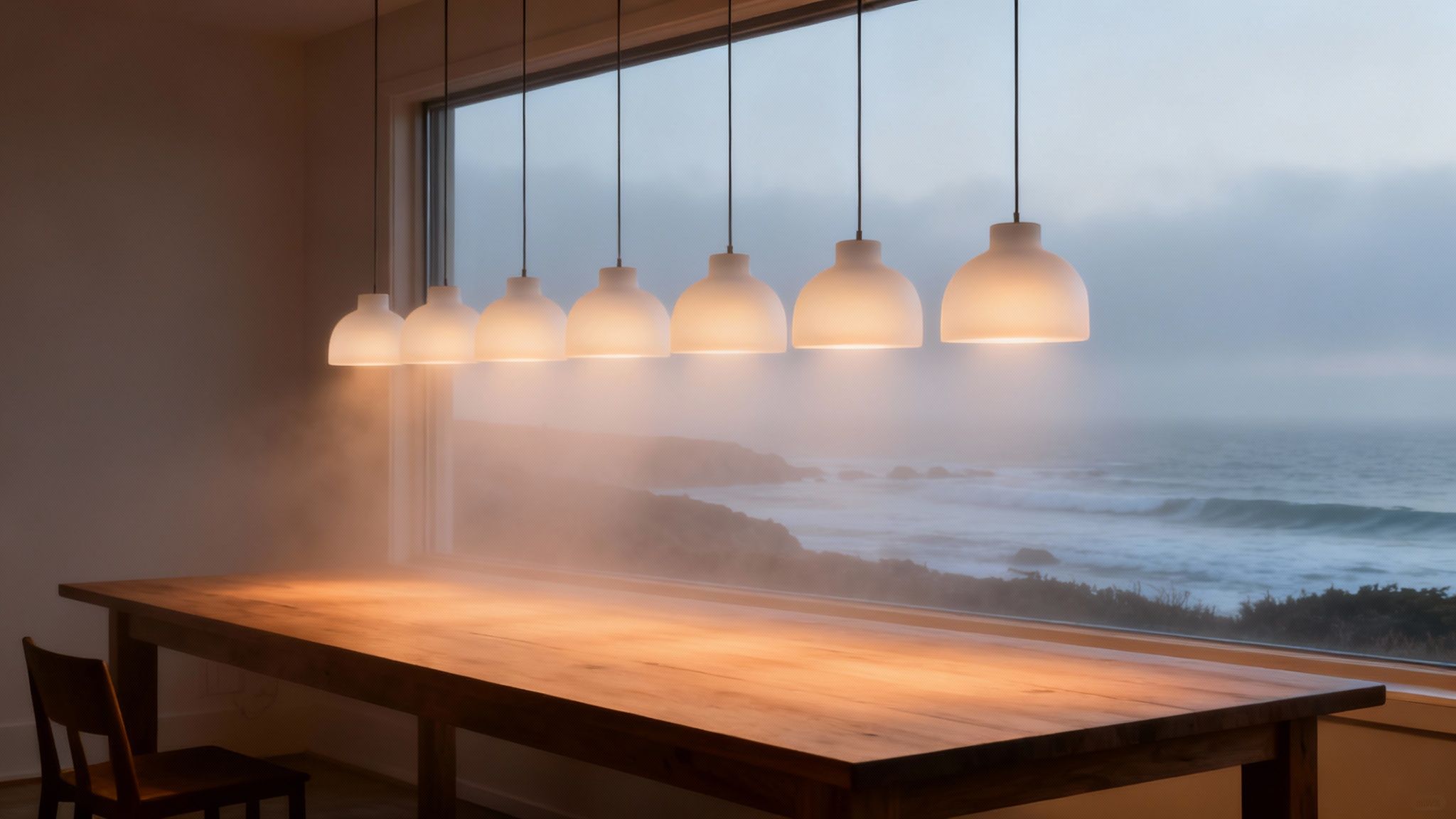
One of the most defining features of the Monterey Peninsula is its iconic marine layer. This soft coastal fog rolls in from the Pacific, softening the landscape and creating a calm mood. Bringing this feeling indoors is the idea behind diffused ambient lighting.
 Ambient Lighting” />
Achieving the Fog-Like Glow
The goal is to get rid of sharp shadows and create a soft, even light. This is done by using fixtures that scatter light instead of directing it. Think of how sunlight filters through a foggy sky—the light is everywhere but comes from no single spot.
- Fixture Types: Choose fixtures with frosted or opal glass shades. Fabric drum shades and alabaster bowls are also great choices.
- Architectural Context: This technique works well in homes with open floor plans, from modern Carmel builds to historic Pacific Grove houses. It makes spaces feel larger and calmer.
- Color Temperature: Stick to a warm color temperature between 2700K and 3000K. This range mimics the soft light of early morning or late afternoon.
Expert Insight: Diffused lighting is the foundation of a welcoming space. Starting with a soft, fog-inspired layer creates a canvas for other lights.
Layering and Control
Diffused light works best as part of a layered system. For more on building a complete plan, you can learn how to create effective ambient lighting. Use dimmers on all ambient fixtures to adjust the brightness and create the perfect mood.
2. Kelp Forest Silhouette Backlighting
The underwater world of Monterey Bay holds a special magic. Towering kelp forests filter sunlight into dramatic, shifting patterns. This inspires a powerful lighting technique: silhouette backlighting.
Achieving the Kelp-Like Silhouette
The key to this effect is placing a light source behind an object. This casts a bold shadow against a glowing background. It adds depth, drama, and an artistic touch to any space.
- Fixture Types: Linear LED strips, in-ground well lights, and narrow-beam spotlights are ideal. Place them behind decorative screens or sculptural plants.
- Architectural Context: This technique is a showstopper for modern accent walls in Carmel or Big Sur homes. Outdoors, it can turn a fence into a living art installation.
- Color Temperature: A cooler temperature, around 4000K, can create an authentic underwater feel. For a warmer look, a 3000K light will create a golden glow.
Expert Insight: Silhouette lighting is about what you don't see. It shifts focus from an object to its shape, creating mystery and sophistication.
Layering and Control
This dramatic effect is best used as an accent. It provides no functional task light, so it must be supported by other lighting. Dimmers are essential for controlling the intensity. For more ideas, look into advanced landscape lighting techniques.
3. Seawater Reflection LED Strip Lighting
Monterey Bay's water shimmers with sunlight by day and reflects the city's glow by night. This moving quality of light on water can be brought indoors with low-profile LED strip lighting. This technique mimics the gentle, rippling light seen on the Pacific.
Achieving the Shimmering Effect
The goal is to create indirect, linear light that seems to move like water. These strips are tucked into architectural details to wash light across surfaces. This creates a sense of depth and movement.
- Fixture Types: Use flexible, high-quality LED tape or strip lights. For outdoor use, choose marine-grade or IP65-rated strips to withstand moisture and salt air.
- Architectural Context: This technique is perfect for contemporary coastal homes. It's great for under-cabinet lighting, backlighting wall panels, or tracing the edge of a pool deck.
- Color Temperature: A crisp 4000K-5000K can mimic bright sun on the bay. A warmer 3000K can replicate the golden glow of a sunset on water.
Expert Insight: LED strips offer amazing design flexibility. They let you place light in spots where traditional fixtures won't fit.
Layering and Control
This reflective lighting is an accent layer. It must be balanced with ambient and task lighting. To learn more about integrating these fixtures, see how cove lighting works. A smart controller lets you dim them or even program color-changing scenes.
4. Monterey Stone & Granite Uplighting
Our coastline is defined by dramatic granite cliffs and rocky outcrops. This natural stone is also widely used in local architecture. Strategic uplighting celebrates this texture and strength.
Achieving the Earthy Glow
The goal is to graze stone surfaces with light from below. This highlights their natural textures and colors. It creates dramatic shadows and adds a sense of permanence.
- Fixture Types: Use ground-mounted or wall-mounted uplights. Look for durable, weather-resistant fixtures in finishes like bronze or brass.
- Architectural Context: This method is perfect for illuminating stone veneers on Carmel luxury homes or historic retaining walls in Monterey. It connects the property to the surrounding landscape.
- Color Temperature: A warm color temperature, between 2700K and 3000K, is essential. This range enhances the earthy tones of granite and sandstone.
Expert Insight: Angle is everything with uplighting. A shallow angle pulls out maximum texture. Experiment with placement to find the most dramatic effect.
Layering and Control
Uplighting on stone should be part of a complete outdoor lighting plan. For more ideas, explore our guide on landscape lighting design ideas. Using a zoned system with dimmers lets you adjust the intensity for different occasions.
5. Sunset-Gradient Programmable Color Lighting
Few sights are as captivating as a Monterey Bay sunset. The sky transitions through a brilliant spectrum of warm peaches, deep oranges, and cool blues. You can now replicate this daily spectacle indoors with programmable lighting systems.
Achieving the Sunset Effect
The idea is a slow, seamless transition of color and intensity that mirrors a real sunset. This is done using smart, color-tunable LED fixtures. They can be programmed to shift automatically throughout the evening.
- Fixture Types: Cove lighting, wall wash fixtures, and integrated LED strips are ideal. They cast a broad, colorful wash of light across ceilings and walls.
- Architectural Context: This technique is a showstopper in contemporary homes with ocean views. It creates a memorable, relaxing environment.
- Color Temperature: This system dynamically shifts its color. It starts in the warm 2700K range and moves through vibrant oranges before settling into deep blues.
Expert Insight: The key to a successful sunset gradient is subtlety. The transitions should be almost unnoticeable, allowing the mood to shift naturally.
Layering and Control
Automated sunset scenes are the heart of this lighting scheme. However, they must be integrated with other layers of light. For help with these advanced fixtures, explore the options of smart lighting control systems. Syncing the system to local sunset times creates the most authentic connection to the Monterey landscape.
6. Artichoke & Thistle-Inspired Sculptural Pendant Lighting
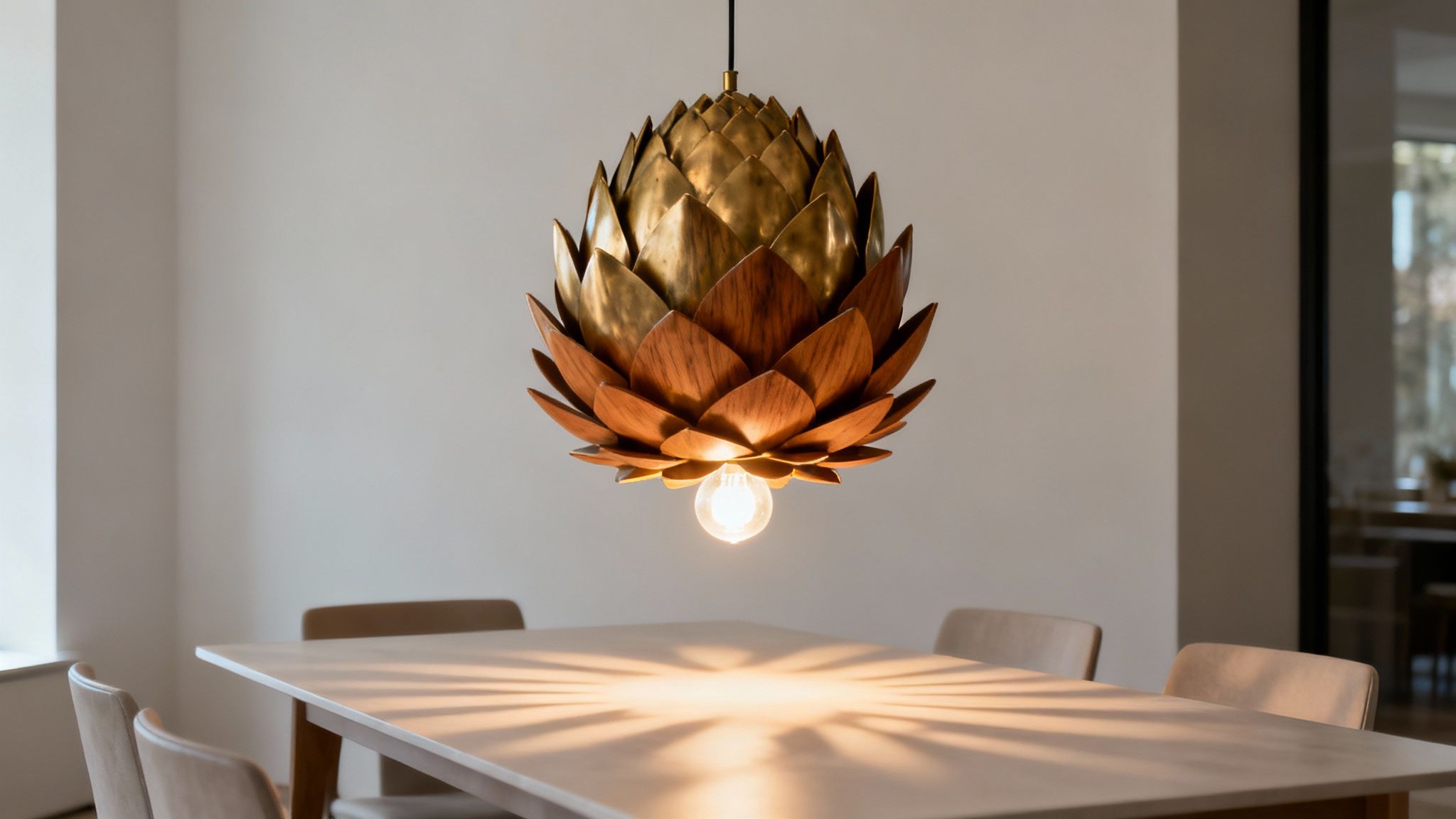
Monterey's landscape is rich with hardy, structural plants like artichokes and coastal thistle. These plants have a unique architectural beauty with layered, overlapping forms. This inspires sculptural pendant lighting that celebrates our region's botanical heritage.
Achieving the Sculptural Look
The goal is to use a fixture that acts as a piece of art. These lights often have complex designs that mimic the petals of an artichoke. They draw the eye and make a bold statement.
- Fixture Types: Look for pendants with layered "leaves" made from materials like laser-cut wood or brushed brass. They create a dynamic interplay of light and shadow.
- Architectural Context: This style is perfect for adding a focal point above a dining table or in an entryway with high ceilings. It connects the space to the local environment.
- Color Temperature: A warm-white bulb of around 2700K is ideal. This temperature enriches the natural materials of the fixture and creates a cozy atmosphere.
Expert Insight: A sculptural pendant is more than a light source; it's a conversation starter. Position it where it can be appreciated from multiple angles.
Layering and Control
Due to their complex shapes, these pendants can cast dramatic shadows. A dimmer is essential to control the intensity. Ensure the fixture is hung with enough clearance, at least 30 inches above a tabletop, to avoid overwhelming the space.
7. Maritime Navigation Light Red & Green Accent Lighting
Monterey's identity is tied to its maritime heritage. This history provides a unique design language, including the colors of navigation lights. Using red ("port") and green ("starboard") lights as accents is a sophisticated way to honor this nautical past.
Achieving the Nautical Nod
The key here is to be subtle. Instead of using actual beacon fixtures, the goal is to integrate colored light in a modern way. It adds character and speaks to the soul of coastal living.
- Fixture Types: The most effective applications use integrated LED strips. These can be recessed into architectural features like coves or along staircases.
- Architectural Context: This technique shines in spaces for entertaining, like home bars or outdoor patios. It reinforces a strong sense of place.
- Color Temperature: Pair these red and green hues with a warm white ambient light (around 2700K). This keeps the space feeling inviting.
Expert Insight: The success of this idea lies in its restraint. Use colored light as a deliberate accent to highlight one feature, not the whole room.
Layering and Control
Treat these colored lights as a final, artistic layer. They are best controlled on a separate circuit and dimmer. This lets you turn them on in the evening for a dramatic mood shift. For more ideas, consider lighthouse-inspired LED designs to complete the maritime theme.
8. Bioluminescent-Effect Aquatic Lighting Installations
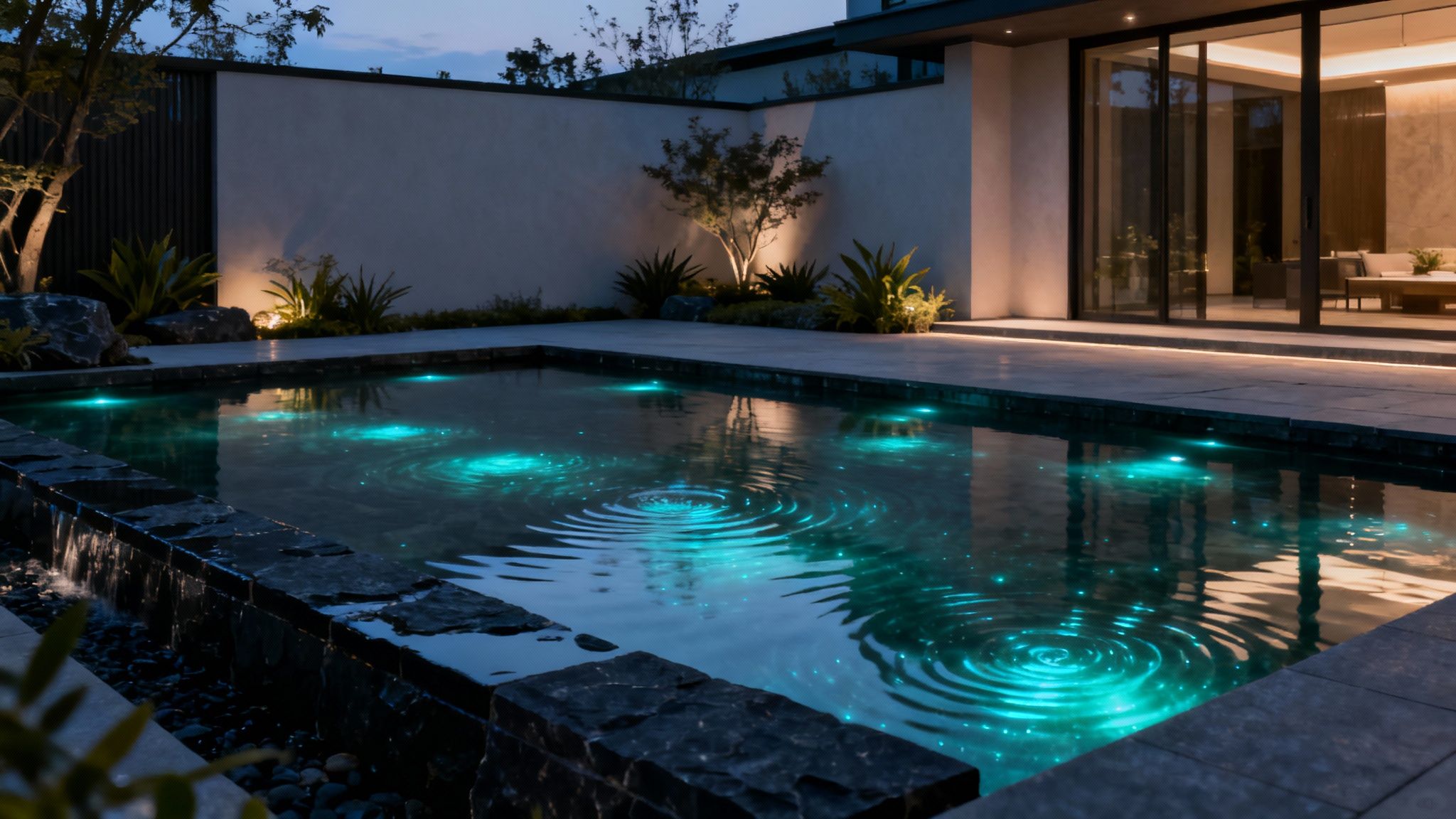
Monterey Bay is famous for its mesmerizing bioluminescence. Microscopic organisms create a magical glow in the water. This natural wonder can be recreated with innovative aquatic lighting.
Capturing the Ocean's Glow
The key to this effect is subtlety. The goal is not to light up a pool but to create pockets of gentle, moving light. It’s about creating an experience rather than just providing light.
- Fixture Types: Use specialized, waterproof, low-voltage LED fixtures designed for underwater use. Small spotlights or flexible LED strips are ideal.
- Architectural Context: This concept is stunning in homes with minimalist water features or resort-style pools. It transforms a simple garden fountain into a dynamic art installation.
- Color Temperature: To accurately replicate bioluminescence, a specific blue-green light spectrum is needed. This is typically in the 450-505 nanometer (nm) range.
Expert Insight: The magic of a bioluminescent effect lies in its restraint. Use extremely low light levels to create a glow that appears natural and mysterious.
Installation and Environmental Care
Proper installation is crucial. Place fixtures in protected water features to prevent algae growth. Timers are also essential to limit blue light exposure at night, protecting local wildlife and preserving dark skies.
How The Home Lighter Can Help
Translating Monterey's natural elegance into a cohesive lighting plan is where art meets science. As we've explored, creating an authentic coastal glow is about more than just picking fixtures. It’s about layering light, understanding color, and connecting your design to your home's unique character.
Whether you're drawn to the soft diffusion of coastal fog or the vibrant hues of a Pacific sunset, the right lighting can transform your living space. We see these concepts not as rules but as a flexible palette to paint with light. These are timeless strategies for enhancing architecture and daily life.
By embracing these lighting ideas inspired by Monterey’s natural beauty and architecture, you create a home that is both beautiful and a genuine reflection of its environment. It’s an investment in comfort and the unique story of your space.
Frequently Asked Questions (FAQs)
What is the best color temperature for coastal lighting?
For most coastal interiors, a warm color temperature between 2700K and 3000K works best. This range creates a cozy, inviting atmosphere that mimics the warm glow of sunrise or sunset on the coast.
How can I make my home feel like it belongs in Monterey?
Focus on natural materials and soft, layered light. Use fixtures made of wood, brass, or stone. Create a base layer of soft, diffused ambient light and add accents inspired by local nature, like kelp forests or the ocean's shimmer.
Are LED lights a good choice for coastal homes?
Yes, LEDs are an excellent choice. They are energy-efficient and long-lasting. Look for fixtures with durable, corrosion-resistant finishes like brass or marine-grade stainless steel to withstand the salty air.
What's the biggest lighting mistake to avoid in a coastal home?
The biggest mistake is using only one harsh, overhead light source. This creates glare and unflattering shadows. A successful coastal design relies on multiple layers of light—ambient, task, and accent—to create depth and warmth.
How can I light my outdoor space to match the coastal theme?
Use uplighting on stone walls or trees to create texture. Path lights can guide visitors safely. Consider subtle, low-voltage lights in water features to mimic bioluminescence. Always choose fixtures rated for wet or damp locations.
Ready to bring the coastal glow into your home? The team at The Home Lighter, Inc. can help you translate these ideas into a stunning lighting plan. Visit our showroom or schedule a consultation to start your design journey with your local lighting partner.