
Many people think LED lighting is cold, blue, and sterile. This common complaint comes from choosing the wrong products.
The truth is, you can get warm, cozy, and long-lasting light from LEDs. You just need to know what to look for on the label. The key is picking the right color temperature, CRI, and a quality fixture.
Why Your LEDs Look Harsh and What You Can Do About It
Have you ever felt like you were in a hospital instead of a cozy living room? That harsh, blue-tinted light is a common problem. It's the result of poor product selection.
This isn't a flaw in LED technology itself. It is an easily avoidable mistake.
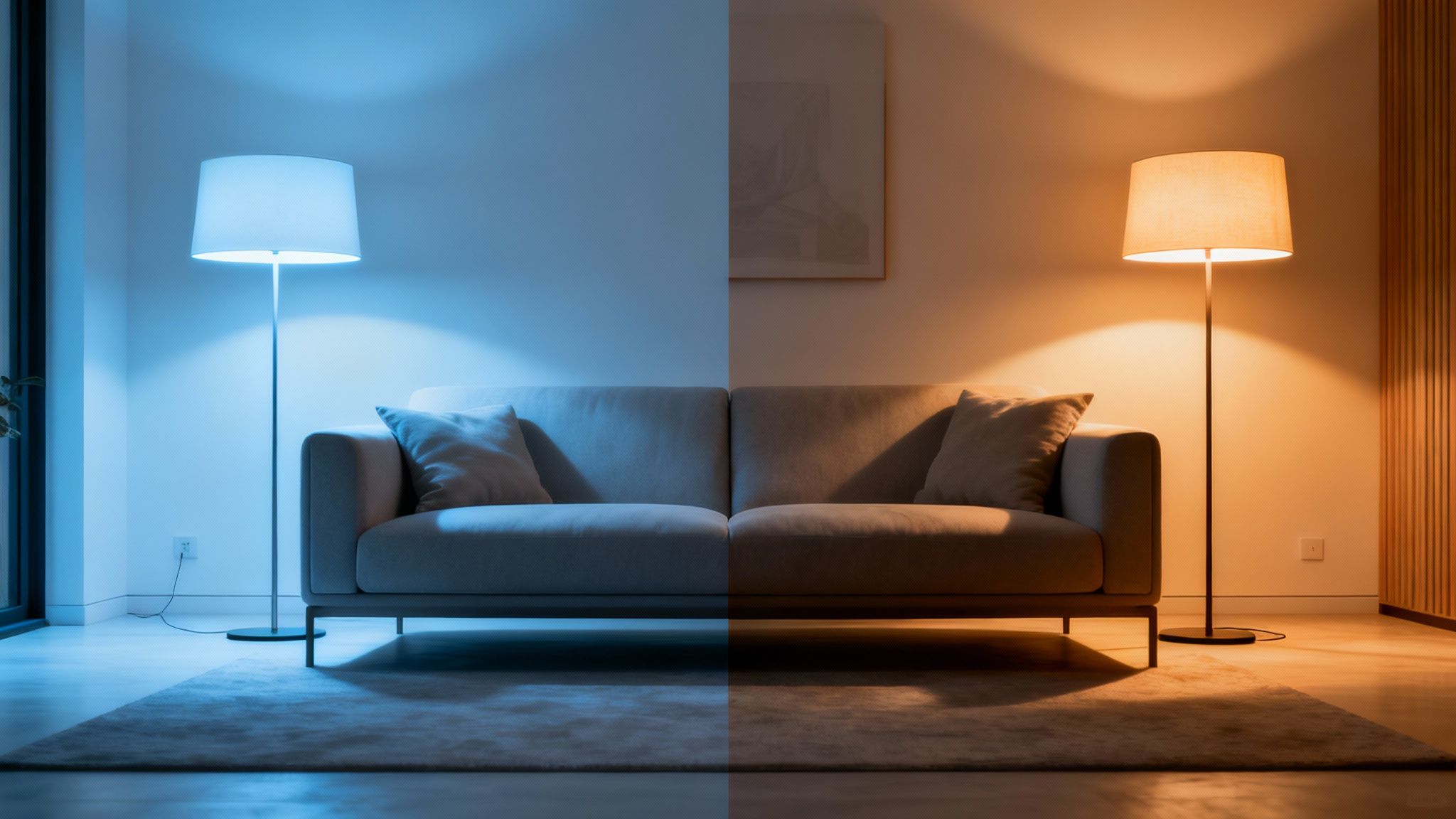
The secret to a warm, inviting atmosphere is understanding two key numbers. Getting these right makes the difference between a room that feels clinical and one that feels like home.
The Key Specs for Warm Light
Think of these two numbers as the DNA of your light bulbs. They define the light's character and how it interacts with your space.
- Color Temperature (2700K–3000K): This number determines if the light appears warm (yellowish) or cool (bluish). For warm light, you need a lower number like 2700K or 3000K.
- Color Rendering Index (CRI 90+): This measures how accurately light shows the true colors of your paint and furniture. A high score of 90 or more is a must to keep things from looking washed-out.
Many complaints we hear from contractors and homeowners on the Monterey Peninsula are from choosing the wrong specs. A 5000K "daylight" bulb feels sterile in a living room. A low CRI light makes everything look dull.
Why Quality Integrated LEDs Are Not a “Rip-Off”
Another concern is that integrated LEDs are a bad deal if they fail. This worry usually comes from bad experiences with cheap, generic products from big online stores.
High-quality integrated LEDs are different. They are engineered systems designed to last. They now offer lifespans over 25,000 hours and often include strong manufacturer warranties.
This means warm, natural, and long-lasting light is completely possible. Stop using generic online listings to pick your lights. Always confirm the color temperature, CRI, and dimmer compatibility for your home.
This is especially important for rooms like bedrooms and living areas. Proper planning for your kitchen lighting fixtures also makes a huge difference during remodels.
Need help picking the right LED interior fixtures for your next job in Monterey, Salinas, or Santa Cruz? Schedule a design consult at The Home Lighter—we’ll help you spec it right, the first time.
Choosing The Perfect Color Temperature For Every Room
Getting your home's lighting to feel right starts with Color Temperature, or CCT. It’s the secret to creating a specific mood.
Measured in Kelvin (K), it’s a simple concept. The lower the Kelvin number, the warmer and more golden the light. The sweet spot for a warm, natural feel is between 2700K and 3000K.
If you want to learn more, our comprehensive guide to choosing color temperature has all the details.
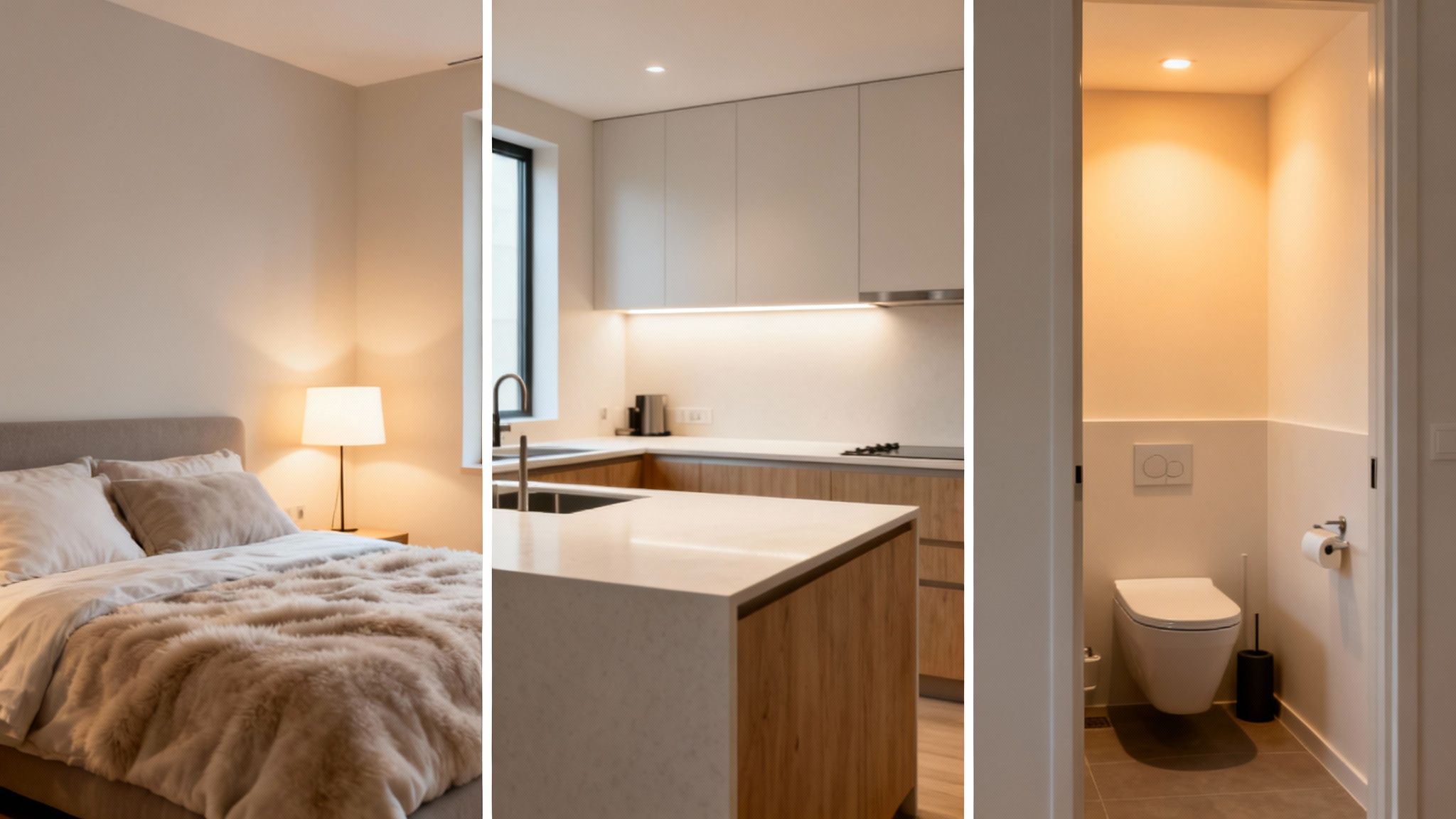
Warm And Cozy Spaces (2700K)
For rooms where you relax, a lower Kelvin temperature is best. It creates an intimate, cozy atmosphere.
- Living Rooms and Dens: A CCT of 2700K is the best choice here. It captures the soft, inviting glow of a sunset over Monterey Bay.
- Bedrooms: We almost always recommend 2700K in bedrooms. This warm glow helps create a sanctuary for rest.
The right light defines a room's purpose. Considering lighting ideas for various spaces can help set a welcoming tone from the moment you walk in.
Bright And Functional Areas (3000K)
Some rooms need clearer light, but they don't have to feel sterile. A slightly higher Kelvin gives you functional light that’s still comfortable.
We find that 3000K hits the perfect balance for our clients. It delivers clean light for tasks while keeping a soft, yellowish undertone.
- Kitchens: The industry standard for kitchens is 3000K. It’s bright enough for cooking but warm enough to keep the kitchen feeling like the heart of the home.
- Bathrooms: A CCT of 3000K offers great visibility for grooming. It shows skin tones more naturally than cooler lights.
- Home Offices: A 3000K light can boost focus without being harsh. It creates a professional vibe that’s still comfortable.
Quick Guide to LED Color Temperature
| Room or Area | Recommended Color Temperature (CCT) | Resulting Atmosphere | Common Use Case |
|---|---|---|---|
| Living Rooms & Dens | 2700K | Warm, Cozy, Inviting | General relaxation, watching TV, entertaining guests |
| Bedrooms | 2700K | Serene, Restful, Intimate | Winding down, reading before sleep, creating a calm retreat |
| Kitchens | 3000K | Bright, Clean, Welcoming | Food preparation, cooking, socializing around the island |
| Bathrooms | 3000K | Clear, Natural, Functional | Grooming tasks (makeup, shaving), general illumination |
| Home Offices | 3000K | Focused, Alert, Comfortable | Task-oriented work, video calls, reducing eye strain |
| Hallways & Entryways | 2700K – 3000K | Welcoming & Navigable | Creating a warm first impression and ensuring safe passage |
Choosing the right color temperature is about personal preference, but these guidelines are a great starting point. Today's high-quality LEDs deliver these warm tones instantly, unlike old CFL bulbs.
Making Colors Pop with a High Color Rendering Index
Once you have the right warmth, you need to make sure the light shows true colors. Have you ever picked a paint color that looked wrong at home? The problem is likely a low Color Rendering Index (CRI).
CRI is a score from 0 to 100. It measures how accurately a light source reveals colors compared to sunlight. For homes on the Central Coast with natural wood and coastal colors, a high CRI is essential.
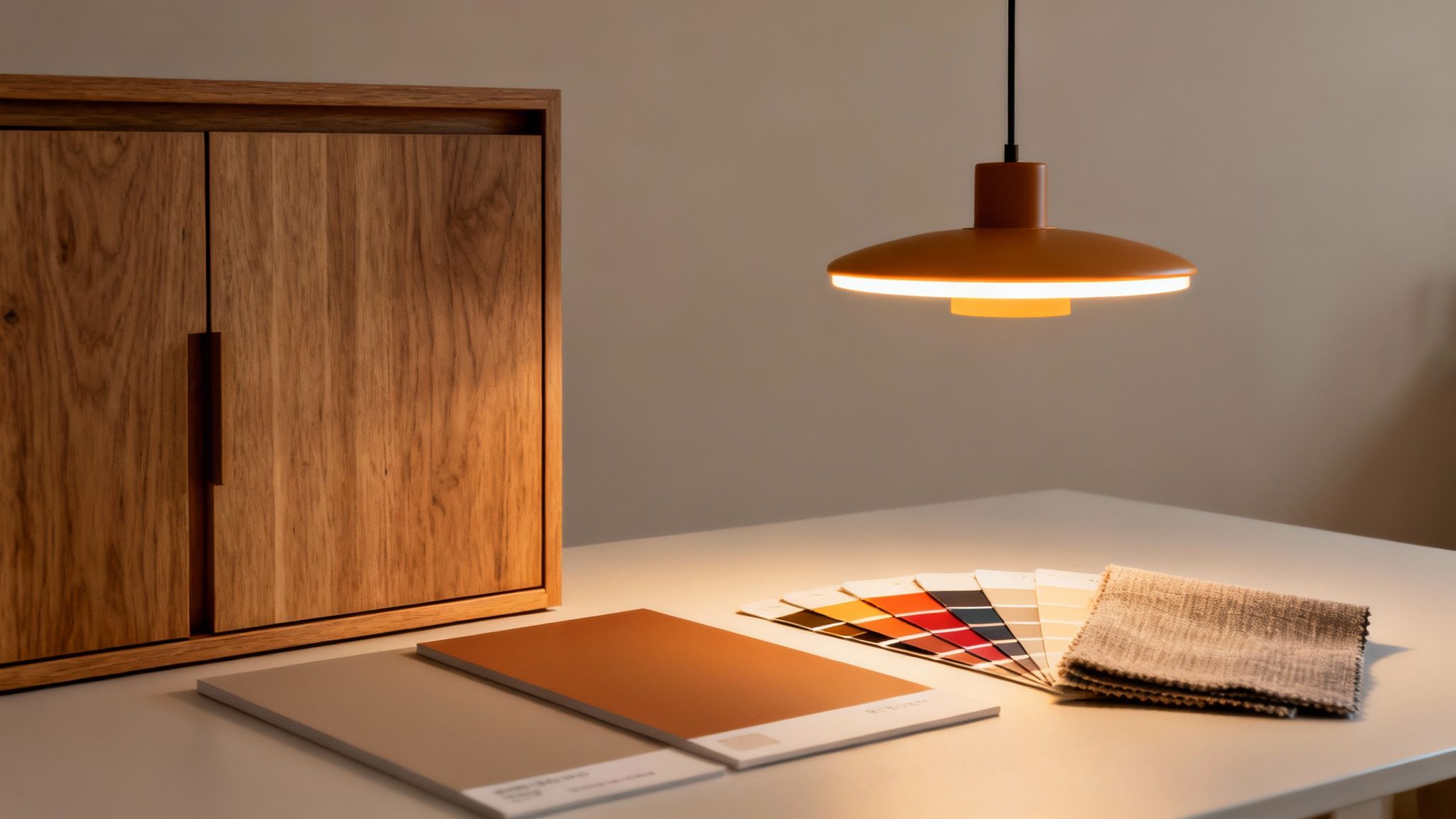
Why a High CRI Is a Must-Have
A low-CRI light can make vibrant reds look brown. It can make rich blues look gray. A low CRI misrepresents the colors you chose for your home.
This is especially clear in certain areas:
- Kitchens: High CRI makes fruits and vegetables look fresh. It ensures your cabinets and countertops look exactly as you planned.
- Bathrooms: It reveals true skin tones, which is vital for applying makeup.
- Living Rooms & Art Walls: High-CRI lighting brings artwork and textiles to life.
For more on this topic, our guide on how to choose the right light bulb breaks it down further.
The Magic Number for Natural Color
So, what number should you look for? While a CRI above 80 is okay, we always tell clients to aim higher.
For truly natural color, always choose LEDs with a CRI of 90 or higher. This is the professional standard for high-end home lighting. It guarantees that everything in your home looks vibrant and true.
The jump from an 80 CRI to a 90+ CRI is dramatic. It greatly improves the feel of a space.
Bringing Your Monterey Peninsula Home to Life
Imagine your home bathed in a soft glow that mimics a Pacific sunset. That's the magic of pairing warm color temperature with high-CRI LEDs. They render skin tones and wood grains with lifelike warmth.
This commitment to quality light transforms a house into a home. It honors your design choices. By matching a warm CCT with a high CRI, you get light that is both cozy and clear.
How to Make Sure Your LEDs Genuinely Last for Decades
One of the biggest promises of LEDs is their long lifespan. But if you've had an LED fail after just a year, you know not all fixtures are the same.
A high-quality integrated LED is a complete, engineered system. When you invest in a quality fixture, you're buying a product designed to last for 25,000 to 50,000 hours. This is the result of smart design.
The Hidden Heroes of LED Longevity
Two parts are critical for getting decades of performance: the driver and the heat sink. Cheap products often cut corners here, which is why they fail early.
- The Driver: This is the electronic brain of the LED. A cheap driver is the number one cause of flickering, buzzing, and early failure.
- The Heat Sink: LEDs generate a little heat. A heat sink pulls that heat away from the LED chip, preventing it from overheating.
Think of it like a high-performance car. You wouldn't put a cheap engine in a luxury vehicle. The same principle applies to your home's lighting.
Putting LED Lifespan into Perspective
That 25,000-hour rating sounds great, but what does it mean for your home in Monterey? Let's do some simple math.
If you use a light fixture for an average of 3 hours per day, a 25,000-hour rated LED will last over 22 years. That's more than two decades without changing a bulb.
This is why we see high-quality LEDs as a true investment. It’s a set-it-and-forget-it solution.
The Critical Role of Dimmer Compatibility
There’s one more detail to watch out for: dimmer compatibility. You can’t hook up a modern LED fixture to any old dimmer switch.
Older dimmers were designed for incandescent bulbs. This mismatch can cause flickering, buzzing, and can damage the LED's driver. This can slash the lifespan of your new fixture.
To ensure your LEDs last, you must use a modern dimmer rated for LED use. Look for models labeled CL or ELV. This creates a stable electrical environment for smooth, flicker-free dimming.
You can explore modern options in our guide to LED retrofit light fixtures. This focus on efficiency is also why LEDs contribute to commercial building energy efficiency. Quality LEDs use up to 85% less energy and maintain their brightness for years.
Your Action Plan for Selecting the Perfect Lighting
Now, let's put this knowledge into practice. This is your guide to choosing warm, natural, and long-lasting LEDs. No more guesswork.
Think of this as your final quality check before you buy. Whether you’re working with a contractor in Santa Cruz or picking fixtures yourself, these details guarantee you get the light you expect.
The Non-Negotiable Checklist
Just focus on these three critical specs. They make all the difference in how your home looks and feels.
- Warmth Comes First (2700K–3000K CCT): Always check the Color Temperature. For that cozy glow, stay in the 2700K to 3000K range.
- Demand True Color (CRI 90+): A Color Rendering Index of 90 or higher is non-negotiable. It makes sure everything looks vibrant and true.
- Insist on Quality: Source your fixtures from trusted brands with solid warranties. It’s your best insurance against early burnout.
Understanding why quality matters is key. Longevity comes from a system of high-quality parts working together.
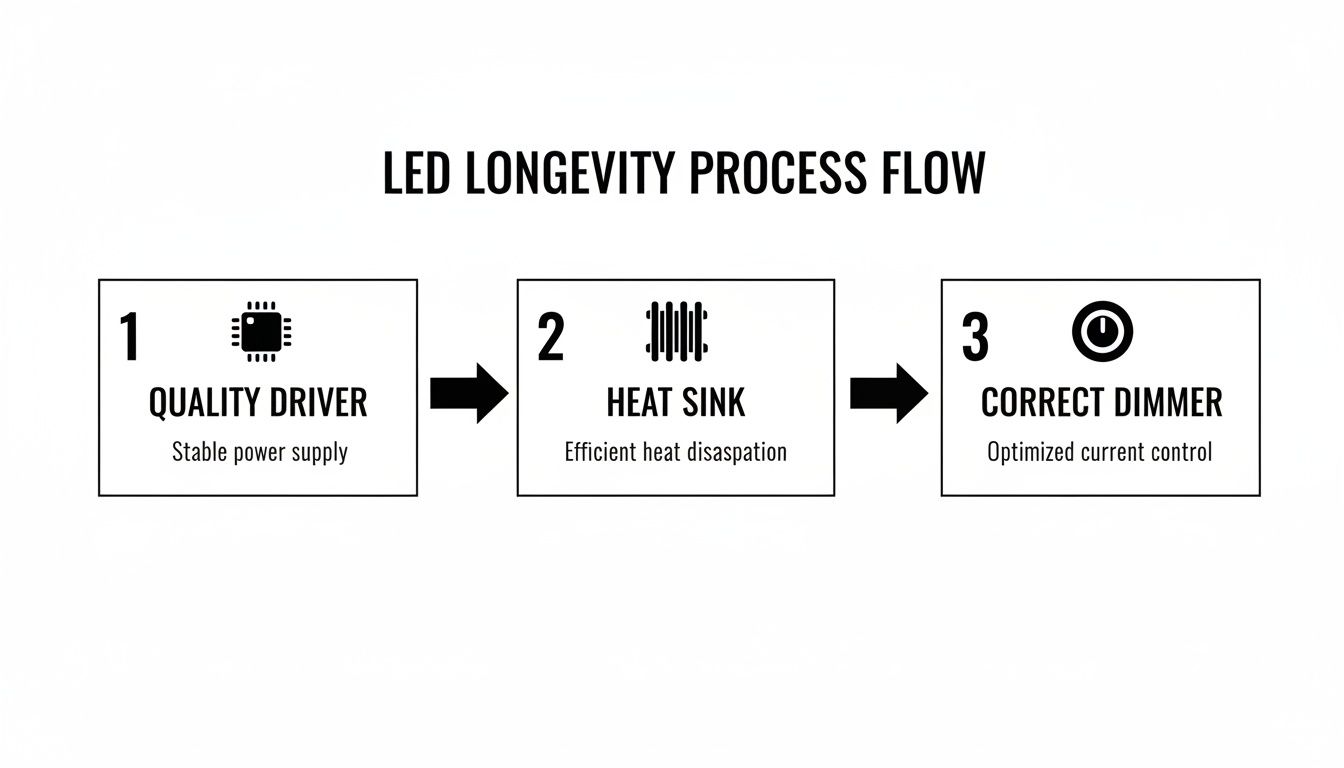
As you can see, the driver, heat sink, and dimmer are all critical. If one part fails, the whole system is at risk.
A Local Insight for Coastal Living
Here on the Monterey Peninsula, our homes are sanctuaries from the cool evening fog. Our architecture celebrates natural materials like rich woods and rustic stone.
Warm, layered lighting is the perfect complement to this coastal style. A 2700K light with a high CRI enriches the texture of wood beams and creates a cozy, welcoming haven.
By following this plan, you can get warm, natural light from LEDs that actually last. It’s about choosing quality over the lowest price. Sourcing reliable fixtures is a core part of creating energy-efficient lighting solutions that look stunning for years.
Get Your Lighting Right the First Time with Expert Help
Navigating the world of LEDs can feel like learning a new language. Guessing with online products often leads to disappointment. This is where a hands-on, local approach makes a difference.
Working with a lighting expert is about getting it right from the start. It’s about specifying fixtures that deliver the warm, beautiful, and long-lasting performance you want.
A Partner in Your Project
Whether it's a new build in Carmel or a remodel in Salinas, our goal at The Home Lighter is to get your project specified correctly. We help you navigate California's energy codes without sacrificing your design vision.
Choosing lighting shouldn't feel like a gamble. With expert guidance, you can confidently invest in high-quality fixtures that will perform beautifully for decades.
We live here, so we understand the coastal lifestyle of our community. We partner with top-tier brands like Tech Lighting to ensure quality.
Ready to stop guessing and start specifying with confidence? If you're planning a project in Monterey, Salinas, or Santa Cruz, schedule a design consultation with The Home Lighter.
Frequently Asked Questions About LED Lighting
What is the best color temperature for warm light?
For a warm, cozy, and inviting atmosphere similar to old incandescent bulbs, choose a color temperature of 2700K. For a slightly crisper but still warm and natural light that works well in kitchens and bathrooms, 3000K is an excellent choice.
Why do my LED bulbs flicker?
Flickering is almost always caused by an incompatibility between the LED fixture and the dimmer switch. Older dimmers are not designed for the low power draw of LEDs. The solution is to replace the old switch with a modern dimmer specifically rated for LED use (often labeled CL or ELV).
What does CRI mean for my home lighting?
CRI stands for Color Rendering Index. It's a score from 0 to 100 that measures how accurately a light source shows the true colors of objects. For home interiors, you should always look for a CRI of 90 or higher to ensure your paint, furniture, and skin tones look natural and vibrant.
Are integrated LED fixtures a bad investment if they burn out?
While it's true you can't just replace a bulb, high-quality integrated LED fixtures are designed to last for 25,000 hours or more—that's over 20 years with average use. Choosing fixtures from reputable brands with strong warranties protects your investment and ensures you won't have to worry about premature failures.
Can I use the same LED light in every room?
You can, but for the best results, you shouldn't. The lighting should match the function of the room. Use warmer 2700K lights in relaxing spaces like bedrooms and living rooms, and use brighter, cleaner 3000K lights in task-oriented areas like kitchens, bathrooms, and home offices.
Need a hand picking the right LED interior fixtures for your next project in Monterey, Salinas, or Santa Cruz? Schedule a design consult at The Home Lighter Inc. We’ll help you spec it right, the first time.