
When choosing a light bulb, you might see terms like "warm white" or "daylight." These descriptions refer to the light's color temperature, which is a key part of setting the mood in your home. It's all about the look and feel of the light itself—from a cozy, yellow glow to a crisp, cool white.
Color temperature is measured on a scale using a unit called Kelvin (K). A low Kelvin number means the light is warm and amber, like a candle. A high Kelvin number gives off a cool, blue-white light that feels more like natural daylight.
Understanding Color Temperature: The Basics

Have you ever walked into a room and felt instantly relaxed, while another space made you feel energized? The lighting's color temperature was likely the secret ingredient. This isn't about the physical heat of the bulb, but the visual warmth or coolness of the light it shines.
Think about sunlight throughout the day. In the morning, sunlight has a warm, reddish-yellow glow (low Kelvin). As the day goes on, the light becomes much brighter and whiter (high Kelvin).
The Kelvin Scale Explained
Understanding the Kelvin scale is the first step to controlling your home's atmosphere. Most home lighting falls between 2700K to 6500K. Lower numbers mean warmer, more yellow light, and higher numbers mean cooler, bluer light.
Choosing the right light is so important that the global LED market, which offers many color options, is expected to reach $118.4 billion by 2029. This shows how much people value getting their lighting just right.
A Quick Look at the Kelvin Scale
| Kelvin Range | Light Appearance | Common Names | Best For |
|---|---|---|---|
| 2000K – 3000K | Warm Yellow to Soft White | "Warm White" | Living rooms, bedrooms, creating a cozy feel |
| 3100K – 4500K | Neutral to Cool White | "Bright White" or "Cool White" | Kitchens, bathrooms, offices, task lighting |
| 4600K – 6500K | Bright, Bluish White | "Daylight" | Garages, workshops, security lighting |
This table helps you match the light to the room's purpose and mood.
Choosing the right spot on the Kelvin scale allows you to use light as a powerful design tool, shaping the atmosphere of every room in your home.
This scale empowers you to make smart choices that change how a room feels. A warm 2700K bulb in the living room encourages comfort. Meanwhile, a cooler 4000K light in the kitchen helps you see clearly while you cook.
For homeowners on the Monterey Peninsula, this means creating a cozy escape from foggy coastal evenings. To learn more, check out our guide on how to choose the right light bulb.
How Color Temperature Affects Mood and Function
Color temperature is more than just a number on a box. It's the invisible hand that sets the entire mood for a room. The right choice can make a space feel warm and inviting, while the wrong one can feel cold or sterile.
This response is built into us. For thousands of years, the warm glow of a fire meant safety and comfort. Modern lighting uses this same idea, with warmer light helping us relax and feel at ease.
Creating Cozy and Relaxing Environments
Warm light, usually in the 2700K to 3000K range, is perfect for a cozy, intimate atmosphere. Its soft, yellowish tones are naturally calming and tell our brains it's time to wind down. This makes it the ideal choice for living rooms, dens, and bedrooms.
For anyone living in Monterey, Salinas, or Santa Cruz, this is how you create an inviting retreat from a cool, foggy evening. A living room with 2700K light feels like a sanctuary. This choice also supports our natural sleep cycles, a concept explored in circadian lighting.
Key Insight: Warmer light temperatures (2700K–3000K) are fantastic for promoting relaxation and comfort, making them ideal for living areas.
Boosting Focus and Clarity
On the other hand, cooler light temperatures create a feeling of crisp energy. Ranging from 3500K to 5000K, this light is brighter and whiter, much like natural daylight. This type of light sharpens our focus and helps us see details clearly.
This is the light you want in task-oriented spaces where you need to get things done:
- Kitchens: See the true colors of your food while you chop and cook.
- Bathrooms: Apply makeup or shave with total precision.
- Home Offices: Stay focused and alert throughout your workday.
Remember, light temperature also changes how colors look in a room. This is very important when choosing the right color schemes for your walls and furniture. A paint color can look completely different under warm versus cool light.
Choosing the Right Color Temperature for Each Room
Now for the fun part: putting this knowledge to work in your home. Choosing the right light is about blending a room's function with its feeling. The goal is to create a lighting plan where every room looks its best and supports what you do there.
This isn't about finding one "perfect" Kelvin number for your whole house. It’s about creating different atmospheres that flow together, from a cozy living room to a bright, functional garage.
This chart is a great visual guide to common temperatures and where they work best.
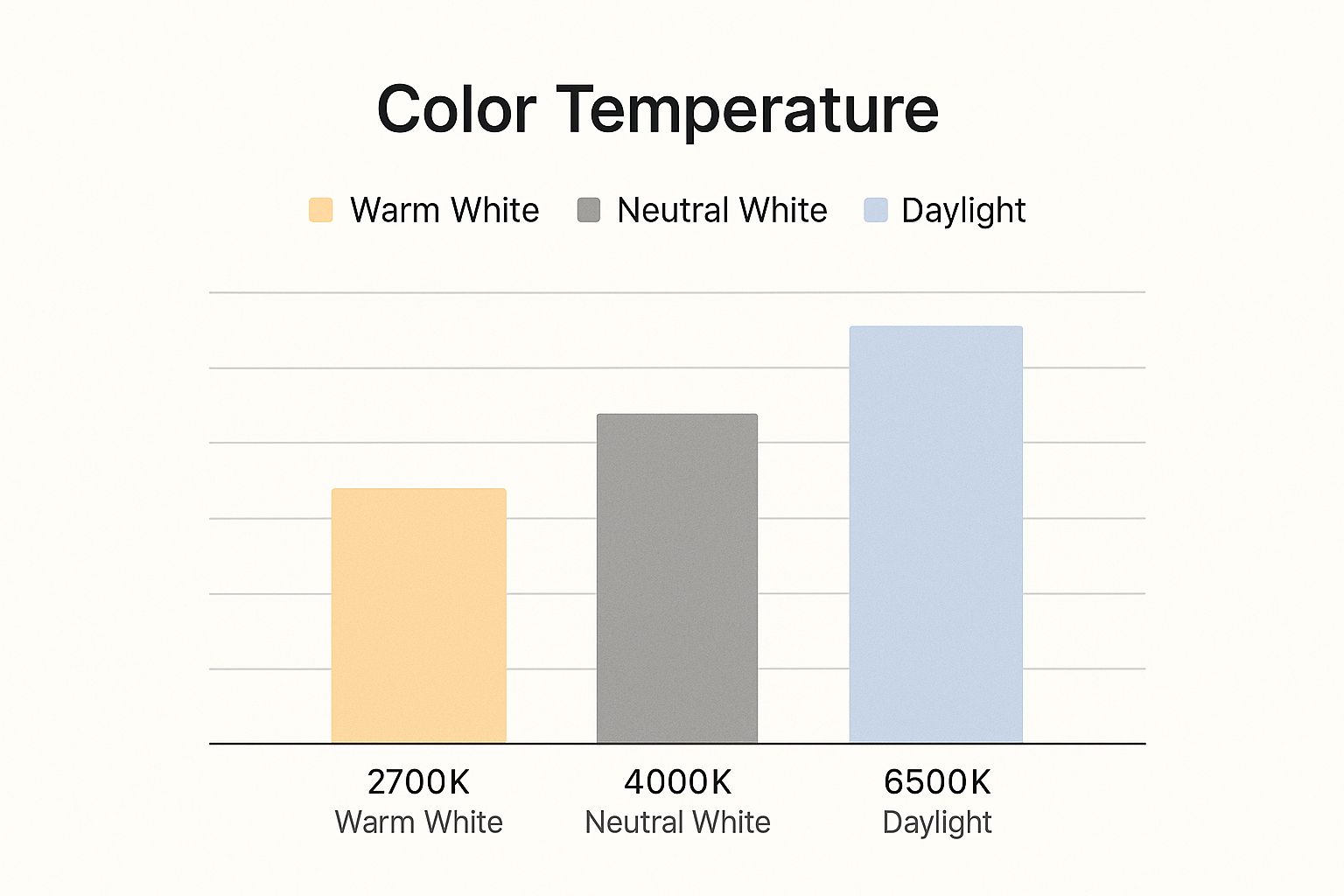
As you can see, the warmer end of the scale is all about relaxation. The cooler temperatures are designed for focus and getting work done.
Room-by-Room Lighting Recommendations
To make it even easier, here is a detailed guide. This table breaks down the ideal Kelvin ranges for specific rooms, so you can see what works best and why.
| Room | Recommended Kelvin Range | Primary Function | Desired Mood |
|---|---|---|---|
| Living Room | 2700K–3000K | Relaxation, Socializing | Cozy, Warm, Inviting |
| Bedroom | 2700K–3000K | Rest, Winding Down | Serene, Calm, Intimate |
| Dining Room | 2700K–3000K | Eating, Entertaining | Welcoming, Appetizing |
| Kitchen | 3000K–4000K | Food Prep, Cooking, Cleaning | Clean, Bright, Functional |
| Bathroom | 3000K–4000K | Grooming, Self-Care | Crisp, Clean, Alert |
| Home Office | 4000K–5000K | Work, Study, Focus | Productive, Alert, Energetic |
| Garage/Workshop | 5000K+ | Projects, Tasks, Storage | High-Visibility, Clear, Safe |
| Hallways | 3000K | Transition, Welcoming | Neutral, Inviting |
This chart is your starting point for creating a home that feels just right in every room.
Warm and Inviting Spaces (2700K-3000K)
For any room where you want to relax and connect with people, warm light is the perfect choice. It creates a comfortable, welcoming vibe that puts everyone at ease.
- Living Rooms & Bedrooms: This range is the sweet spot for a personal sanctuary. The soft glow from a 2700K bulb is incredibly close to candlelight, perfect for unwinding.
- Dining Rooms: Ever notice how food looks better in some restaurants? Warmer tones make meals look more appealing and encourage relaxed conversation.
Task Areas (3500K-4100K)
Some rooms need to be functional, but they shouldn't feel cold. For these spaces, a more neutral white light gives you the clarity you need for tasks without feeling sterile.
- Kitchens & Bathrooms: These rooms are hubs of activity. A 3500K or 4000K light is crisp enough to see what you're doing, whether it's chopping vegetables or applying makeup.
Expert Tip: Layering light in the kitchen is a game-changer. Use a warmer temperature for overhead lights and cooler, focused task lighting under the cabinets.
Garages and Specific Task Lighting (5000K+)
When it's time to focus, you need light that works with you. For spaces where precision is key, a cooler, daylight-like temperature is the way to go.
- Home Offices: The right light can make all the difference. Cooler temperatures are proven to reduce eye strain and boost productivity. Learn more in our guide to the best lighting for a home office.
- Garages & Workshops: When you’re working on a project or searching for a tool, you need powerful visibility. A bright 5000K light cuts through shadows, making your workspace safer.
By making thoughtful choices, you can create a home that is beautiful and perfectly tuned to your life.
Why It Matters for Interior Design and Bulb Shopping
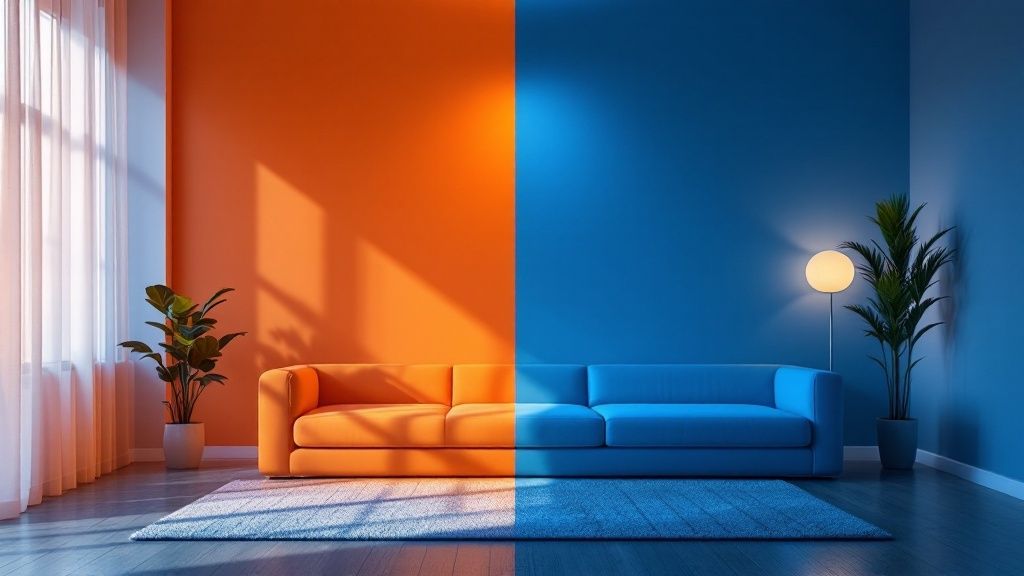
Think of lighting as the final, crucial piece of your interior design. Getting it wrong can make even a well-designed space feel disconnected. The right light pulls every element in a room together.
Your paint, fabrics, and furniture are the canvas. Light is the filter you see it all through. The right lighting makes colors pop, while the wrong kind can make them look dull or strange.
Matching Light to Your Color Palette
The way light and color work together is powerful. Warm lighting brings out warm tones like reds and yellows. Cool lighting does the same for cooler palettes of blues and grays.
A cozy, golden light (2700K) will make earthy tones and rich woods feel even more inviting. But that same light can make a modern gray wall look muddy. On the flip side, a clean, bright light (4000K) makes blues and greens look sharp and vibrant.
🎨 Lighting That Complements Your Color Palette – Our experts help you select lighting temperatures that enhance your paint, furniture, and textures. We make sure your design vision comes to life exactly as you imagined.
Keeping Your Lighting Cohesive
Mismatched bulbs in the same room—like a warm lamp next to a cool overhead light—create a jarring feeling. This common mistake can make a beautiful space feel subtly off.
Working with a lighting specialist helps you build a cohesive plan. We ensure every fixture contributes to a unified feel, creating smooth transitions from one room to the next. For more ideas on setting the right mood, discover luxury bedroom lighting ideas.
Smart LED lighting, which allows you to adjust color temperatures, is growing in popularity by 14.9% each year. These systems give you amazing control to fine-tune your lighting. Learn more about setting a mood with our guide on how to create ambient lighting.
Experience the Difference in Our Showroom
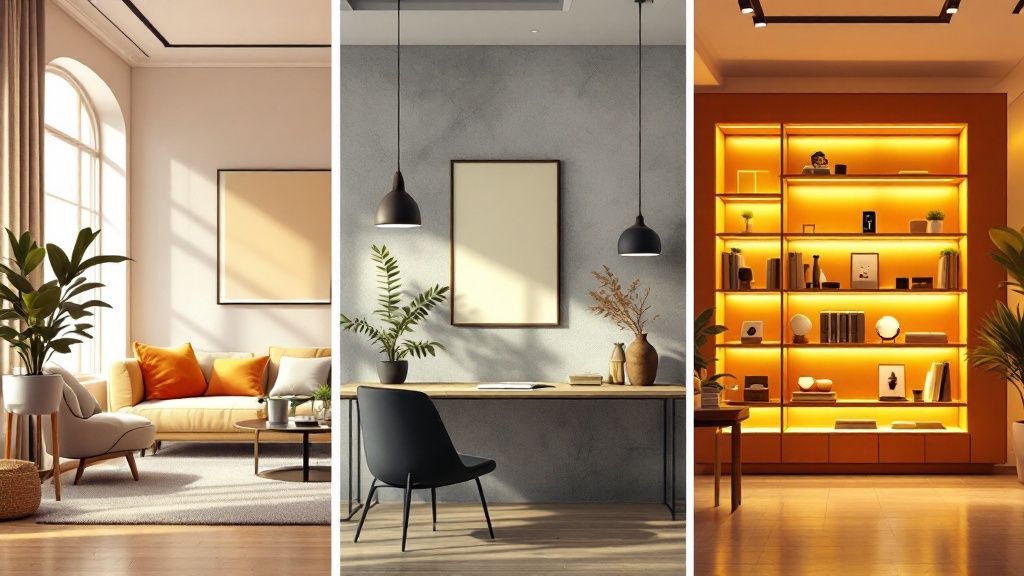
Reading about lighting online is a great start, but it can only take you so far. Charts and photos can't capture the true feeling of how light interacts with paint, wood, or countertops.
To really understand what color temperature is, you need to see it with your own eyes. Experiencing it firsthand takes the guesswork out of the equation.
See and Compare for Yourself
At our Pacific Grove showroom, we’ve created a hands-on environment where you can do just that. Instead of trying to imagine the difference between 2700K and 4000K, you can compare them side-by-side. You'll see exactly how a warm, inviting light feels versus a crisp, neutral one.
With the big shift to energy-efficient LEDs, homeowners have more choices than ever. Seeing them in person is the best way to choose.
💡 Hands-On Showroom Experience – See and compare different color temperatures in-person at our Pacific Grove showroom. Find the perfect match for your home’s unique style and materials.
Trusted Lighting Guidance for the Monterey Bay Area
Whether you’re in Pebble Beach, Salinas, or Santa Cruz, our team offers trusted, local support. We serve the Monterey Bay area with personalized, design-focused help. We’ll walk you through the options, answer your questions, and help you create a lighting plan that feels just right.
Our goal is to help you avoid common lighting mistakes and ensure your space feels exactly the way you want it to. This is what sets us apart.
🌟 Trusted Lighting Guidance – We’ll help you avoid common lighting mistakes and ensure your space feels exactly the way you want it to.
Ready to see the difference? Learn more about our showroom experience here and plan your visit.
Frequently Asked Questions
You've got the basics, but you might still have a few questions. Here are answers to some of the most common things our clients ask.
Can I mix different color temperatures in the same room?
Yes, if you do it with a purpose. This is called light layering, and it’s a great way to add depth and function. For example, your kitchen can have warm 3000K overhead lights and a cooler 4000K pendant over the island for task lighting. The key is to make it look intentional.
Does color temperature affect my energy bill?
No, this is a common myth. A bulb's color temperature has no impact on how much energy it uses. A 2700K LED uses the same energy as a 5000K LED of the same wattage. Energy efficiency is about the bulb's technology (like LED vs. incandescent), not its color.
What is the difference between CRI and color temperature?
They measure two different things.
- Color Temperature (Kelvin): This is the color of the light itself—warm yellow or cool blue-white.
- Color Rendering Index (CRI): This tells you how accurately that light shows the true colors of objects, on a scale of 0-100. A high CRI (90+) is important in kitchens and bathrooms.
How do I find the best color temperature for me?
The "best" choice is personal and depends on how you use a room. Our guide is a great starting point, but the perfect Kelvin temperature is what makes you feel most comfortable. Visiting our showroom is the best way to see how different temperatures feel and look with your materials.
What is tunable white lighting?
Tunable white lighting is a feature in smart bulbs that lets you change the color temperature with a remote or app. You can set your lights to a bright 4000K for working and then change them to a warm 2700K for relaxing. It offers the ultimate in personalized lighting control.
At The Home Lighter Inc., we believe seeing is believing. Our Pacific Grove showroom is designed to help you experience the real impact of color temperature, so you can make confident choices for your home. Visit us for personalized, expert guidance and discover the perfect lighting for your space. Learn more at ae3a47147b.nxcli.io/.