
Planning kitchen lighting can feel technical, but what you really want is a bright, stylish space without dark corners or harsh glare. The secret is to use "layered lighting." This just means combining three types of light to make sure every part of your kitchen is well-lit and welcoming.
This guide will show you how to layer ambient, task, and accent lighting for a kitchen that is both beautiful and functional.
Why a Smart Lighting Plan Is So Important
If you're remodeling your kitchen, you're probably thinking a lot about lighting. You're not alone. Data shows that 94% of kitchen remodels include lighting upgrades. And 63% of projects add pendant lights over the island.
These numbers show that good lighting is a top priority for homeowners. It transforms how your kitchen looks and how you use it every day. To learn more, you can explore the importance of lighting in kitchen design.
The Most Common Lighting Mistake
Many people install one light fixture in the middle of the ceiling and call it a day. This is the biggest mistake you can make. It creates shadows in your work areas and makes the room look flat and dull.
When you stand at the counter, a single ceiling light is behind you. Your body blocks the light, casting a shadow right where you need to see. A layered lighting plan avoids this problem completely.
By layering different types of light, you gain full control over your kitchen's mood. You can have bright light for cooking and then dim everything for a relaxing evening.
At The Home Lighter, we help you avoid guesswork. We specialize in custom kitchen lighting layouts for homeowners on the Monterey Peninsula, from Pacific Grove to Salinas. We create plans that combine function and beauty, so you never end up with dark corners.
For more ideas, check out our guide on the best types of home lighting.
Layer 1: Start with Ambient Lighting for General Brightness
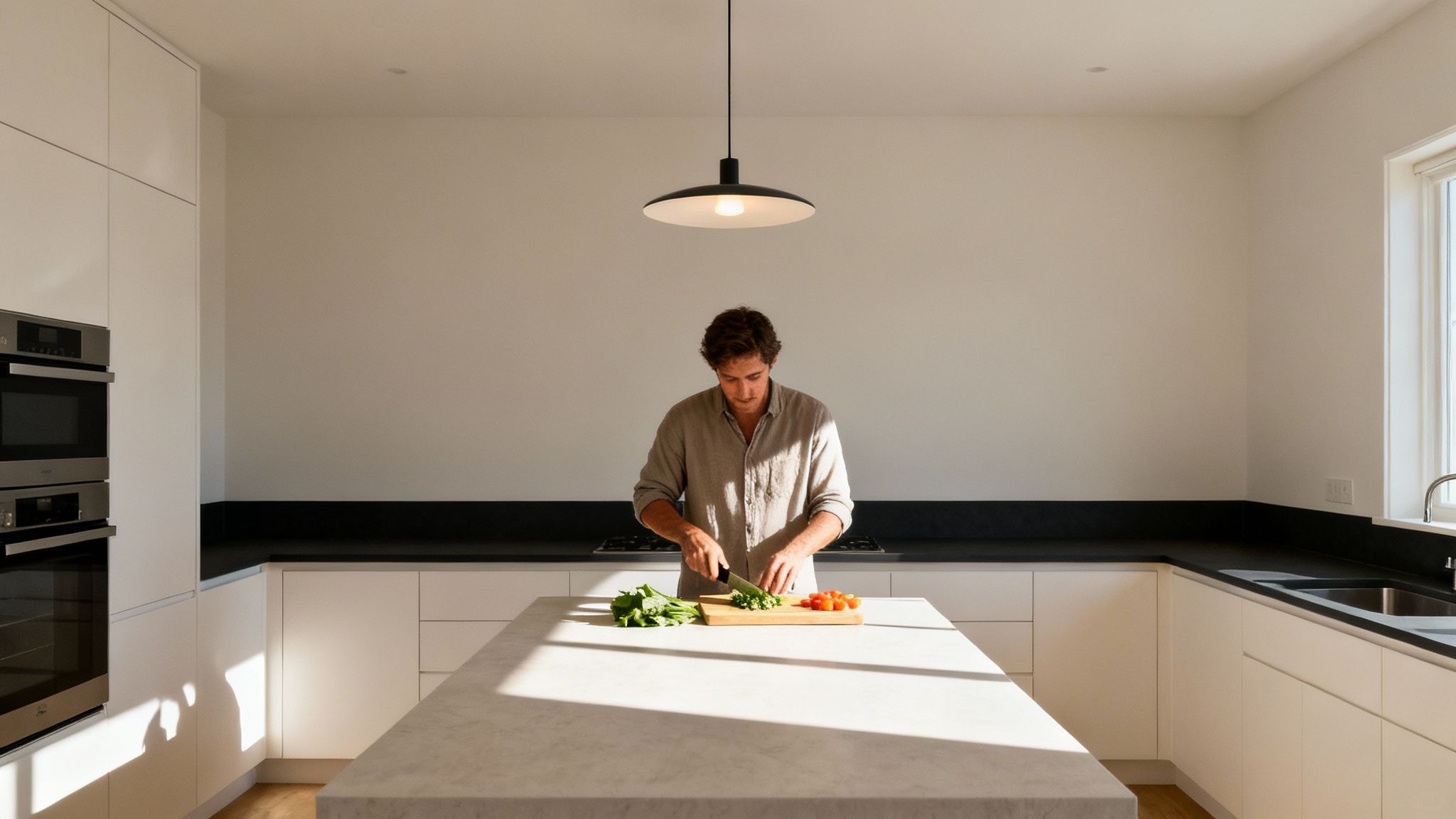
Ambient lighting is the foundation of your plan. It provides the overall light that fills the room and makes it feel bright and welcoming. This layer ensures you can move around safely and gets rid of dark corners.
Recessed lights (or "can lights") are a popular choice for ambient lighting. They sit flat with the ceiling and provide a clean, even glow. For the historic homes in our area, a stylish flush-mount fixture can also work well.
How Many Lights Do I Need?
You don't have to guess. A simple formula can help you figure out the right number of lights. First, calculate the square footage of your kitchen (length x width). Then, aim for 30 to 40 lumens per square foot.
Here’s an example for a kitchen in Salinas:
- Kitchen Size: 12 feet x 15 feet = 180 sq. ft.
- Lumens Needed: 180 sq. ft. x 35 lumens = 6,300 lumens
If you use standard LED recessed lights that produce 800 lumens each, you would need about eight fixtures to light the room evenly.
Where to Place Your Lights
Spacing is key to avoiding dark patches. A good rule is to space recessed lights at a distance equal to half of your ceiling height. For an 8-foot ceiling, place lights about 4 feet apart.
Keep them about 2 to 3 feet from the walls to avoid casting shadows on your cabinets. This ensures the light spreads evenly across the room. For more details, see our tips on the perfect placement for recessed kitchen lighting.
Layer 2: Add Task Lighting for Work Areas
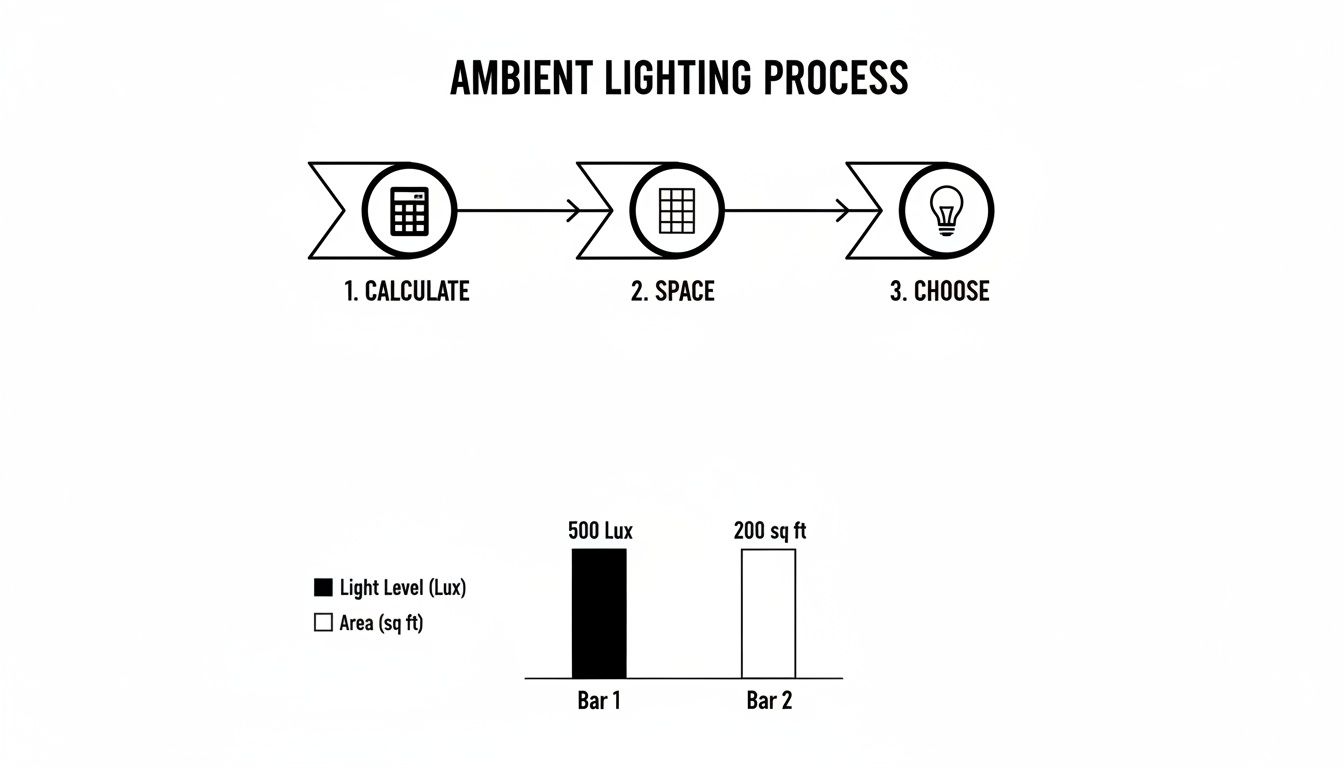
Task lighting provides focused light for your work zones, like countertops, the sink, and the stove. This is the layer that gets rid of shadows where you chop, cook, and clean. Good task lighting makes your kitchen safer and easier to use.
The kitchen lighting market is expected to grow from $12.6 billion in 2021 to $25.7 billion by 2031, largely because homeowners want better task lighting. You can explore more about these market trends to see why it's so important.
The Best Way to Light Countertops
Under-cabinet lighting is the best way to light your countertops. These fixtures are mounted directly above your workspace, so they eliminate shadows completely. This makes kitchen tasks safer and much more pleasant.
The global demand for better kitchen lighting is huge. Market research predicts the industry will grow from USD 15.95 billion in 2023 to USD 26.39 billion by 2030. A big reason is the demand for shadow-free task lighting. You can read the full research on kitchen lighting trends.
There are a few great options for under-cabinet lights:
- LED Tape Lights: These provide a clean, continuous line of light.
- Puck Lights: Small, round lights that create focused pools of light.
- Linear Fixtures: Slim, bar-style lights that are easy to install.
To help you choose, we have a guide to under-cabinet lighting options.
Lighting for Your Island and Sink
Your kitchen island and sink also need their own task lighting. Pendant lights are a perfect choice here. They provide focused light while adding a stylish design element.
For pendant lights, aim to hang them 30 to 36 inches above the countertop. If you use more than one, space them about 30 inches apart. This creates a balanced look and provides excellent light for your tasks.
Layer 3: Use Accent Lighting for Style and Mood
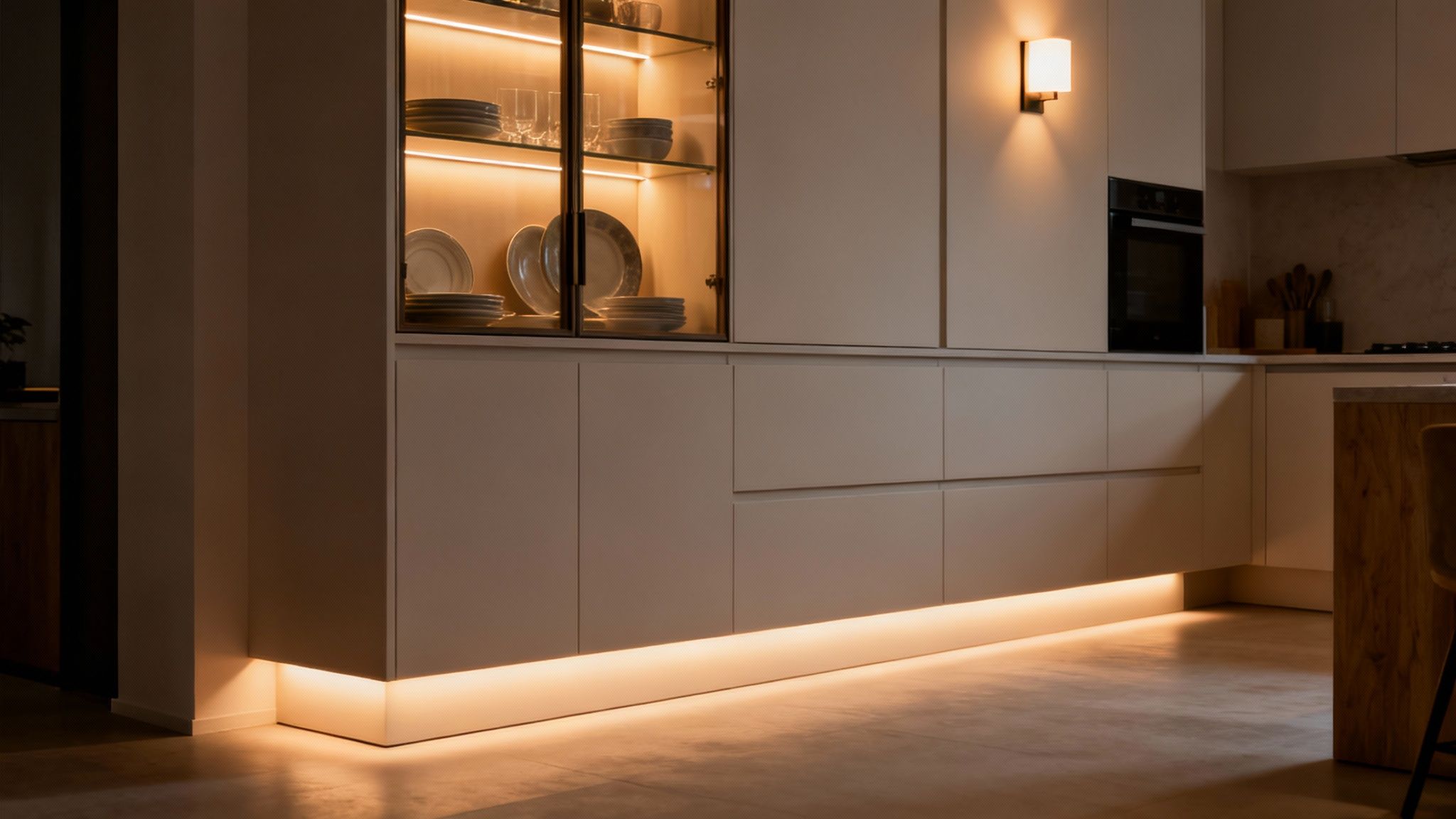
Accent lighting is the final layer. It adds mood and personality to your kitchen. This layer highlights architectural details, art, or beautiful finishes. It’s what makes your kitchen feel professionally designed.
Here are a few creative ways to use accent lighting:
- In-Cabinet Lighting: Use LED strips or puck lights inside glass-front cabinets.
- Toe-Kick Lighting: Place an LED strip under your lower cabinets for a soft glow.
- Above-Cabinet Lighting: Add light above your upper cabinets to make the room feel taller.
Accent lighting adds warmth, character, and a custom feel. It ensures your kitchen is as beautiful as it is functional.
Accent lighting can also be used to highlight a piece of art or an interesting feature. Small spotlights can be aimed to draw attention to what you love. To learn more, read our guide on what accent lighting is.
Choose the Right Bulbs and Controls
The right bulbs and dimmers are essential. They control the warmth, brightness, and flexibility of your kitchen lighting.
Color Temperature and CRI
Two numbers matter most: color temperature and the Color Rendering Index (CRI).
- Color Temperature: This measures how warm (yellow) or cool (blue) the light is. For a warm, inviting kitchen, choose bulbs between 2700K and 3000K. Avoid anything higher, which can feel sterile or blue.
- Color Rendering Index (CRI): This measures how accurately a light shows true colors. Always choose bulbs with a CRI of 90 or higher. This ensures your food and cabinets look their best.
Why Dimmers Are a Must-Have
Dimmers give you complete control over your kitchen's atmosphere. You should install dimmers on each lighting layer: ambient, task, and accent. This allows you to adjust the light for any activity, from bright for cooking to low for relaxing.
Modern LEDs are very energy-efficient. They use 75% less energy and last 25 times longer than old incandescent bulbs. This efficiency is a major reason the kitchen lighting market is expected to grow from $14.19 billion in 2023 to $23.54 billion by 2030, according to maximizemarketresearch.com.
To understand brightness, check out our guide on what lumens are in light bulbs.
Get Expert Help for Your Kitchen Lighting Plan
Creating a layered lighting plan takes the guesswork out of your renovation. It ensures your kitchen is bright, functional, and free of dark spots. For homeowners in Pacific Grove, Salinas, Santa Cruz, and across the Monterey Peninsula, expert advice is close by.
At The Home Lighter, Inc., we offer design consultations to create a custom lighting layout that fits your needs. Stop by our appointment-only showroom to see fixtures and get expert advice. We'll help you create a kitchen lighting plan that works—and wows.
Frequently Asked Questions (FAQs)
What is the best spacing for recessed lights in a kitchen?
A good rule is to space them at a distance equal to half your ceiling height. For an 8-foot ceiling, place lights about 4 feet apart. Keep them 2 to 3 feet from walls to prevent shadows.
Should my kitchen lights be on separate switches?
Yes. Putting each layer (ambient, task, accent) on a separate switch with a dimmer gives you the most control. You can adjust the lighting for any activity or mood.
What is layered lighting?
Layered lighting is a design strategy that uses three types of lighting to illuminate a room. These are ambient (overall light), task (focused light for work), and accent (for style and mood).
What color temperature is best for kitchen lighting?
A warm white color temperature between 2700K and 3000K is best for kitchens. This range creates a comfortable and inviting atmosphere without feeling too yellow or sterile.
What is CRI and why is it important for a kitchen?
CRI stands for Color Rendering Index. It measures how accurately a light source shows true colors. A CRI of 90 or higher is essential in a kitchen to make sure food, cabinets, and paint colors look natural and vibrant.
Planning the perfect kitchen lighting doesn't have to be overwhelming. At The Home Lighter Inc., we offer personalized design consultations to help you create a custom layout that combines function and beauty, ensuring you never end up with dark corners again. Visit us at https://homelighterinc.com to get started.