
Shopping for light bulbs used to be simple. You’d look for the wattage, grab a 60- or 100-watt bulb, and call it a day. More watts meant more light. Simple, right?
That old rule of thumb is officially outdated, thanks to modern, super-efficient bulbs like LEDs. Today, understanding lumens is the key to finding the best lighting for your home.
Your Quick Guide to Understanding Light Bulb Lumens
Here's the most important thing to know: watts don't measure brightness. Watts measure how much energy a bulb uses. An old 100-watt incandescent bulb was bright, but it also wasted a lot of energy as heat.
Today, a new LED bulb can produce the exact same amount of light while using a small fraction of the power. This is where lumens come in. They are the most accurate way to know how bright a bulb will be.
Lumens (lm) are the true measure of a light bulb's brightness. Think of it as the volume knob for light—the higher the lumen number, the brighter the light.
By focusing on lumens instead of watts, you can choose the exact brightness you need for any room. It’s the modern way to shop for lighting, helping homeowners across the Monterey Peninsula create spaces that are beautiful, perfectly lit, and energy-efficient.
Lumens Vs. Watts: A Quick Comparison
To help you switch from thinking in watts to lumens, here's a handy chart. It shows the lumens you should look for to replace old incandescent bulbs.
| Incandescent Wattage | Equivalent Lumens (Brightness) | Typical LED Wattage (Energy Use) |
|---|---|---|
| 40 Watts | 450 lumens | 4-5 Watts |
| 60 Watts | 800 lumens | 8-10 Watts |
| 75 Watts | 1,100 lumens | 11-13 Watts |
| 100 Watts | 1,600 lumens | 14-17 Watts |
| 150 Watts | 2,600 lumens | 25-28 Watts |
As you can see, you can get the classic brightness of a 100-watt bulb—about 1,600 lumens—from an LED that only uses around 15 watts. It's a huge difference in energy savings without sacrificing any light.
Of course, brightness is only one part of the story. The color of the light, measured on the Kelvin scale, is just as important for creating the right mood in your home.
Why Lumens Are the New Standard for Brightness
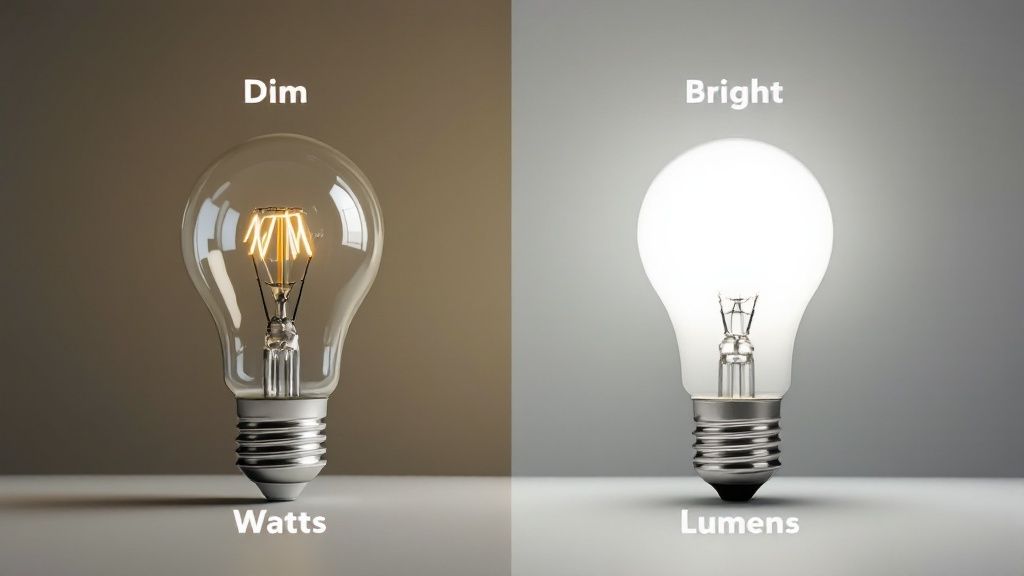
For years, we were trained to think about light bulbs in terms of watts. But with the rise of energy-efficient lighting like LEDs, that old rule no longer works. Technologies like LED, CFL, and halogen all use different amounts of energy to produce the same amount of light.
An LED lights vs halogen comparison shows this clearly. A classic 60-watt incandescent bulb and a modern 10-watt LED can both produce 800 lumens of light. The LED gives you the same warm glow but uses 80% less energy. You can learn more about how newer bulbs stack up in our breakdown of CFL vs incandescent lighting.
This shift to lumens empowers you to make smarter, more cost-effective choices for your home. You no longer have to guess if a low-watt bulb will be bright enough.
Decoding the Lighting Facts Label
To make things easier, manufacturers now include a "Lighting Facts" label on bulb packaging. It’s similar to a nutrition label on food and gives you key information at a glance.
Here’s what to look for:
- Brightness (Lumens): This is the most important number. It tells you exactly how much light the bulb will produce.
- Estimated Yearly Energy Cost: This gives you a real-world idea of what the bulb will cost to run based on average use.
- Life Expectancy: This shows how long the bulb is expected to last, usually measured in years.
- Light Appearance (Kelvin): This scale tells you if the light will be warm and cozy (yellowish) or cool and crisp (bluish-white).
By focusing on lumens first, you can confidently pick the perfect bulb. It guarantees you get the brightness you need for your Monterey home, along with the energy savings you expect from modern lighting.
Knowing how to read this label is the key to getting your home's lighting just right. It removes the guesswork and helps you find the perfect balance between beautiful light and smart efficiency.
How to Choose the Right Lumens for Every Room
Now let's apply this knowledge to your home. A kitchen where you're chopping vegetables needs much more light than a bedroom where you relax. Getting this balance right is the secret to a home that is both functional and inviting.
So, how do you find the right number of lumens? A simple way to start is by thinking about the room's size and its purpose.
Lighting professionals often use foot-candles, which is simply one lumen per square foot. For a living room, a good target is about 20 foot-candles. If your living room is 100 square feet, you would need a total of 2,000 lumens to light it well.
Here's a chart showing our general lumen recommendations for common rooms.
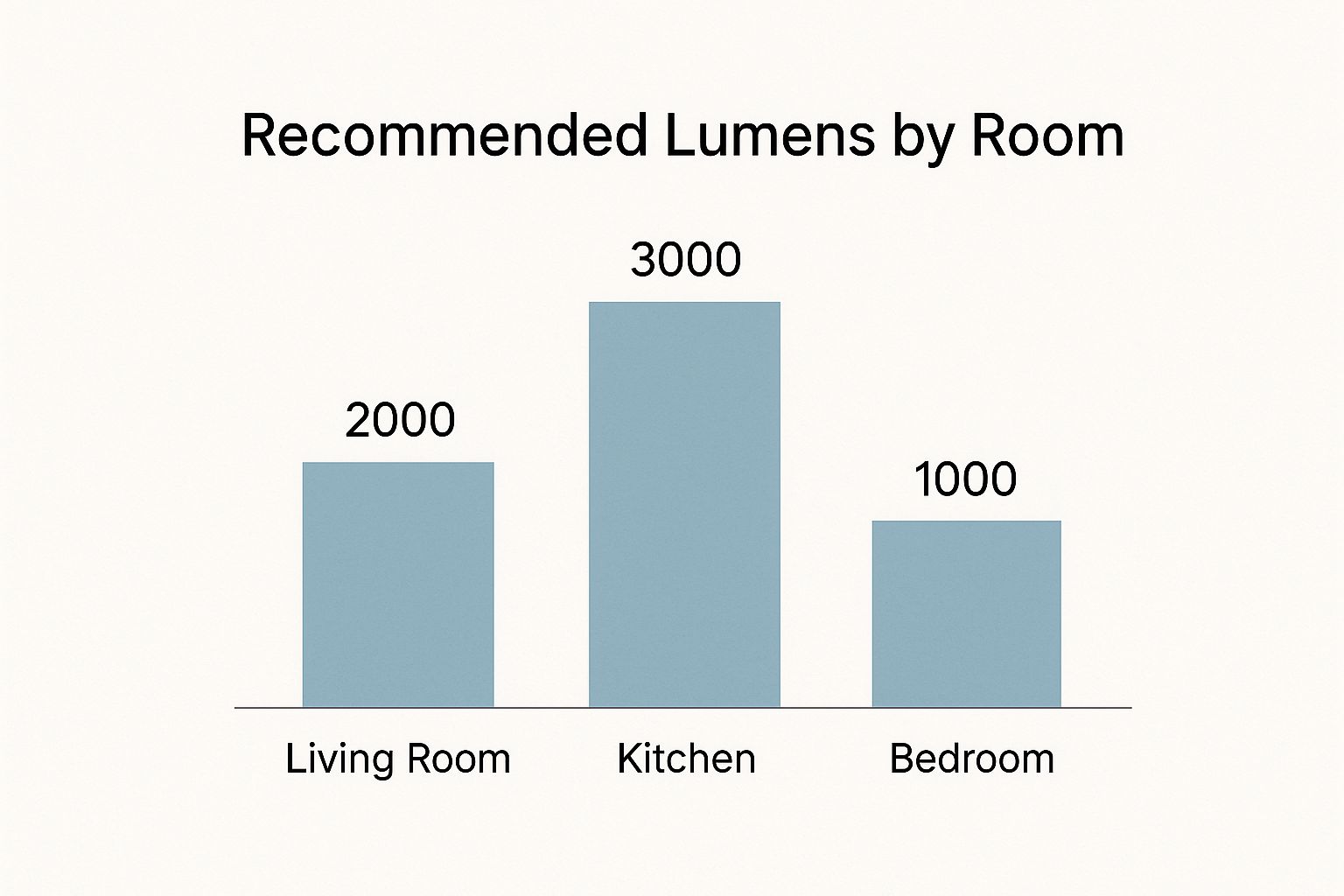
As you can see, task-focused spaces like kitchens and home offices need the most lumens. Cozy spots like bedrooms require much less light to create a relaxing atmosphere.
Recommended Lumens by Room Type
Here is a quick reference table to use as a starting point.
| Room Type | Primary Function | Recommended Total Lumens |
|---|---|---|
| Kitchen | Task-Oriented (Cooking, Prep) | 5,000 – 10,000 lumens |
| Bathroom | Task-Oriented (Grooming) | 4,000 – 8,000 lumens |
| Home Office | Focused Work, Reading | 3,000 – 6,000 lumens |
| Living Room | General Use, Relaxation | 1,500 – 3,000 lumens |
| Dining Room | Ambience, Eating | 3,000 – 6,000 lumens |
| Bedroom | Relaxation, Reading | 1,000 – 2,000 lumens |
| Hallway | General Navigation | 500 – 1,000 lumens |
Remember, these are just guidelines. A larger room or one with dark walls and furniture might need more lumens, while smaller, brighter spaces may need fewer.
Lighting for the Monterey Peninsula Lifestyle
For those of us living along the Central Coast, from Salinas to Santa Cruz, natural light is a huge part of our lifestyle. Your home's lighting should complement the beautiful coastal light, not fight it.
A great strategy is to use layered lighting with dimmer switches. This allows you to have bright, crisp light for tasks during the day, then soften it to a cozy glow as the sun sets.
Using dimmers gives you complete control over your lumens. You can instantly adjust the brightness to suit any activity, from hosting a dinner party to unwinding with a book.
This flexibility is what makes a house feel like a home. Knowing your target lumen range is the first step, but layering light sources—like recessed lights and pendants—gives you the tools to perfect the atmosphere. If you need help planning your layout, check out our insights on how many recessed lights you need in a room.
Of course, a personalized consultation at The Home Lighter can help you design a layered lighting plan that truly brings your vision to life.
Combining Brightness with Style: LEDs and Lumens
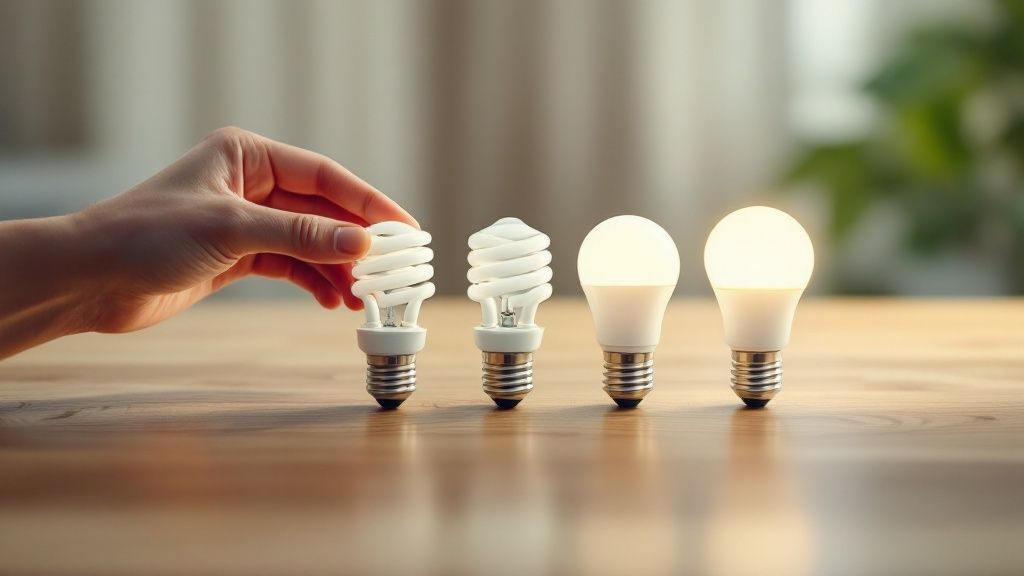
Knowing about lumens is the first step, but the real magic happens when you connect that knowledge to your home's design. In the past, getting bright light meant using large, hot incandescent bulbs. This limited creativity, as fixtures had to be built around the bulb itself.
Thankfully, modern LED technology has changed everything. Today's LEDs can pack an incredible amount of brightness into tiny, efficient packages. You no longer have to choose between a fixture's style and the light you need.
This is where lighting design shines—finding the perfect harmony between the lumens a room needs and the fixture that tells your home's story.
The Power of Expert Guidance
For those living on the Monterey Peninsula, from Salinas to Santa Cruz, this balance is key. Our coastal lifestyle calls for designs that are both beautiful and functional. An elegant pendant can pour thousands of lumens onto your kitchen island, while a discreet sconce casts a soft glow down a hallway.
At The Home Lighter, our design consultants specialize in turning your vision into a real lighting plan. We don’t just sell fixtures; we guide you to the right brightness and style to create a space that feels truly inviting.
This personalized approach removes the guesswork. Instead of feeling overwhelmed by options, you get expert advice tailored to your home's unique style. We can walk you through our curated showroom collections by appointment, helping you make choices you’ll love for years to come.
Making Smart Choices in the Lighting Showroom
Once you understand lumens, walking into a lighting showroom feels less overwhelming and more empowering. When you know how much brightness a room needs, you can focus on finding fixtures that work for your home's design. This knowledge turns shopping from a guessing game into a focused, creative project.
Scrolling through online stores just isn't the same. It’s one thing to see a picture of a fixture, but it’s another to see how it casts light in person. This is where visiting a showroom and talking with an expert makes all the difference.
From Lumens to the Perfect Fixture
At The Home Lighter, our by-appointment showroom experience is designed to be stress-free. Our consultants—serving the Monterey, Salinas, and Santa Cruz communities—are here to translate your lumen needs into the perfect lighting solution.
We combine your vision with our local expertise to make sure your final choice is a functional piece of art that elevates your home. We'll help you pick fixtures that are scaled correctly and provide the right amount of light for the coastal California lifestyle.
We also ensure you get the best value, offering authorized internet pricing with the support of real, local customer service—not just an online cart.
Whether you need a statement chandelier or are curious about smart lighting control systems, we’re here to guide you. Our goal is to make sure you leave feeling confident and excited about how new lighting will transform your space.
Frequently Asked Questions About Lumens
You've got the basics down, but lighting can be tricky. To help clear up any remaining questions, here are answers to common concerns we hear from homeowners in our Monterey showroom.
1. Do more lumens always mean better light?
Not necessarily. While more lumens mean a brighter bulb, "better" light depends on the room's purpose. A cozy bedroom needs far fewer lumens than a busy kitchen island. Too many lumens can create uncomfortable glare, so it's all about matching the brightness to the activity.
2. How do dimmer switches affect lumens?
Dimmers give you direct control over a bulb's lumen output. When you turn the dimmer down, you reduce the electricity flowing to the bulb, which lowers its brightness. This allows a single fixture to provide bright task lighting one moment and soft mood lighting the next.
3. What is the difference between lumens and color temperature?
This is a great question. Lumens measure the quantity of light (how bright it is), while color temperature (Kelvin) measures the quality of light (its color). A high lumen number means a brighter light, while a low Kelvin number (like 2700K) creates a warm, yellowish glow. You choose both values to get the exact look you want.
4. Can I use a high-lumen bulb in any fixture?
You should always check the fixture's maximum wattage rating, which is usually on a sticker near the bulb socket. The good news is that high-lumen LEDs use very few watts, so it’s easy to find a bright bulb that is safely within the rating of most fixtures.
5. Why should I visit a lighting showroom instead of a big-box store?
At The Home Lighter, you get personalized expertise you can't find elsewhere. Our consultants help you understand how lumens, fixture style, and room layout work together. Instead of just grabbing a box off a shelf, you get guidance tailored to your Monterey Peninsula home to create a perfect blend of function and style.
Ready to transform your home with the perfect lighting? The experts at The Home Lighter Inc. are here to guide you every step of the way, from understanding lumens to selecting the perfect fixtures for your space. Visit our showroom or schedule a consultation today!