
Direct Answer: A warm dimming LED gets warmer in color as it dims, dropping from about 3000K to 1800K. A standard LED only gets darker, staying the same cool color at every level.
You put in new LED fixtures. They look great at full brightness. Then you turn the dimmer down for dinner and the room feels flat, gray, a little clinical.
That is not your imagination, and it is not the dimmer’s fault. Most standard LEDs dim in output but not in color, so a 3000K fixture is still 3000K when it is barely on.
Warm dimming LED technology was built to fix exactly that. This article covers what the technology actually does, why the dimmer you pair it with matters more than usual, and how it lines up with California Title 24 rules on Monterey Peninsula remodels.
What Warm Dimming LED Technology Does in a Home
An old incandescent or halogen bulb did two things at once when you turned it down. It got dimmer, and it got warmer in color, sliding toward orange as the filament cooled.
That second part is what your eye reads as cozy. It is why candlelight and firelight feel the way they do.
A standard LED only does the first part. Turn a 3000K LED down to 10 percent and you get a dim room lit by the same color of light you had at full blast, which is why it can feel cold instead of soft.
Warm dimming LEDs are engineered to copy the incandescent curve:
- At 100 percent output, many read around 3000K, a clean warm white
- Around 50 percent, they typically drift into the 2400K to 2700K range
- At 10 percent or lower, they can land near 1800K to 2200K, the range of candlelight and firelight
The difference in a dining room, a bedroom, or a reading corner at low levels is real, not subtle. If you want more background on why brightness and color are two separate controls, the difference between dim and warm breaks it down further.
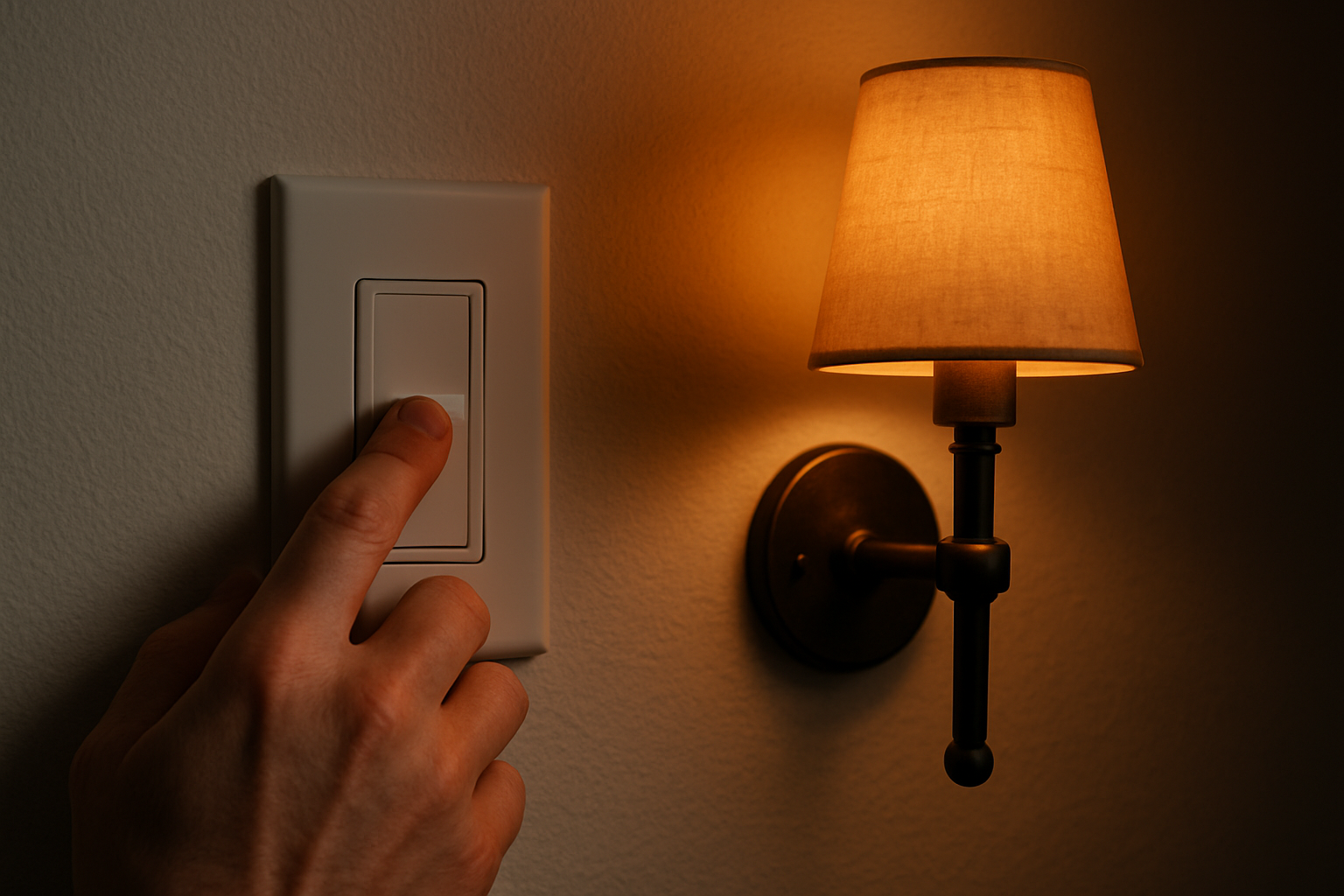
The Dimmer Is Half the Fixture
Here is the part that trips people up. A warm dimming fixture only behaves the way it was designed to when it is paired with a compatible dimmer.
Run one on the wrong control and you can see:
- Flicker or a visible shimmer at low levels
- A hard drop-out where the light cuts off well above zero
- No color shift at all, so you paid for warm dimming and got a plain dimming LED
- Buzzing from the wall box or the fixture itself
Standard LEDs have this issue too, but warm dimming raises the stakes because the color behavior is the whole point of the product. Manufacturers publish compatibility lists for a reason, and those lists are not printed on a box at a warehouse store.
We hear the fallout from this regularly. One homeowner in Carmel Valley called after an electrician pulled a dining room chandelier down and found it needed a different transformer and dimmer combination before it would work right.
This is a conversation to have before fixtures are ordered, not after they are on the ceiling. If you are new to control types, home lighting controls explained is a useful primer on dimmers, scenes, and smart systems.
Standard LED vs Warm Dimming LED at Different Levels
Here is roughly how the two behave as you turn them down. Actual numbers vary by manufacturer and fixture line.
| Dim Level | Standard 3000K LED | Warm Dimming LED | How the Room Reads |
|---|---|---|---|
| 100 percent | 3000K | About 3000K | Nearly identical, clean warm white |
| 50 percent | 3000K | About 2400K to 2700K | Warm dimming starts to feel like lamplight |
| 25 percent | 3000K | About 2200K | Standard LED looks gray, warm dimming looks golden |
| 10 percent or lower | 3000K | About 1800K to 2000K | Candlelight range vs a dim, cool wash |
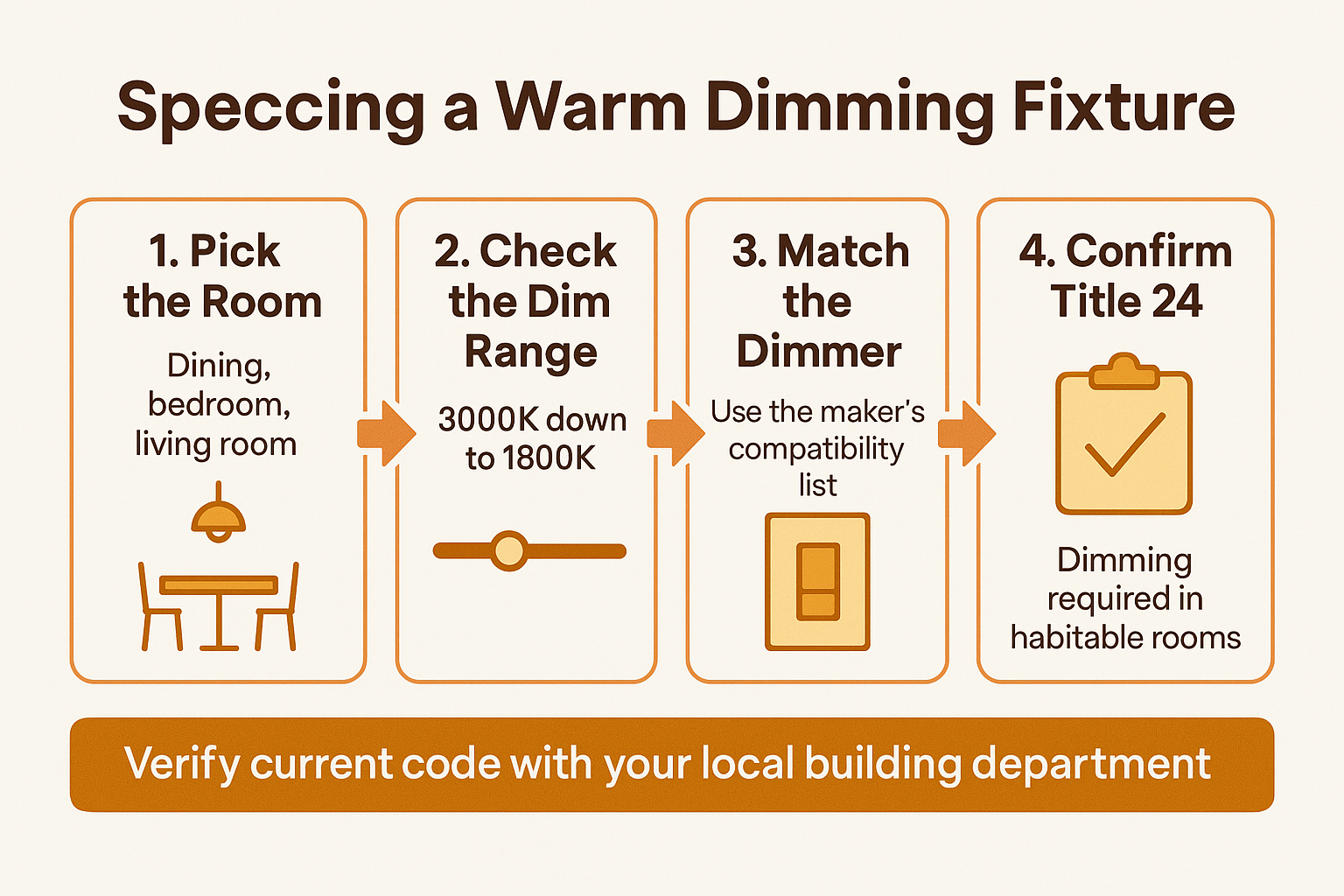
How to Spec a Warm Dimming Fixture Without a Do-Over
Four decisions, in order, that keep a warm dimming purchase from turning into a return.
Title 24, Dimming, and Monterey Peninsula Remodels
California’s energy code has required dimming capability in habitable rooms for a while now, and the standards updated again effective January 1, 2026. If you are pulling a permit for a kitchen, bath, or whole-home remodel in Monterey County, this applies to you.
Warm dimming fixtures satisfy the dimming requirement while solving the aesthetic complaint most homeowners have about LEDs at low levels. The code and the design preference point the same direction, which does not happen often.
A few things worth knowing:
- The requirement is about controls and efficiency, not about which fixture style you choose
- Compliance details differ between a permitted remodel and a like-for-like fixture swap
- Your licensed electrician or contractor is the one who signs off on the work and confirms what your permit needs
You can read the current standards directly from the California Energy Commission. Always verify current requirements with your local building department, since interpretation can vary by jurisdiction.
One more local note. Carmel-by-the-Sea caps residential exterior fixture color temperature at 3000K and limits lumen output, so outdoor selections carry their own rules on top of state code. That topic is covered in more depth in warm and elegant outdoor lighting.
Where the Upgrade Is Actually Worth It
Warm dimming used to live mostly in recessed cans and tape light. It now shows up from premium manufacturers in pendants, chandeliers, and wall sconces, which changes where it makes sense in a house.
The rooms where it earns its keep are the ones you use at low light:
- Dining rooms, where the fixture over the table sets the whole mood
- Bedrooms and nurseries, where late-night light should not feel like a hallway
- Living rooms with a fireplace, where cool LED light fights the fire
- Any spot where a client wants the feel of a restaurant at 8pm
Expect a premium over a comparable standard LED fixture, since the driver and LED array are doing more work. How much depends on the brand, the fixture category, and the finish, so it is best to price a specific piece rather than assume a blanket markup.
It is usually not worth chasing in a laundry room, garage, or pantry. Those spaces run at full output and the color shift never comes into play. If restaurant-style ambiance is the goal, how restaurants light a room covers the layering side of the equation.
Frequently Asked Questions About Warm Dimming LEDs
Can I get warm dimming with a bulb instead of a whole new fixture?
Sometimes. There are warm dimming replacement bulbs in common bases, and they can work well in lamps and older fixtures. But integrated LED fixtures with warm dimming built in usually hold the color curve more smoothly, because the driver and LEDs were designed together.
Will a warm dimming fixture work with the dimmers already in my house?
Maybe, and that is the honest answer. Older dimmers were built for incandescent loads and often do not play well with LED drivers. Check the manufacturer’s compatibility list for the specific fixture, and have your electrician confirm the wall control before anything gets ordered.
Is 1800K too orange for a whole room?
At full brightness it would be. But warm dimming fixtures only reach that range when they are turned way down, around 10 percent, where your eye expects warm light. It reads as candlelight, not orange.
Does warm dimming count toward Title 24 compliance?
The dimming capability is what the code cares about in habitable rooms, and warm dimming fixtures dim. The efficiency and control details still need to be confirmed for your specific permit, so let your contractor or building department make that call.
Can I use warm dimming fixtures outdoors in Carmel-by-the-Sea?
Exterior fixtures there face a 3000K cap and lumen limits, and a fixture that starts at 3000K and warms as it dims stays within that ceiling. Still, verify the specific ordinance language with the city before you buy, since exterior rules are enforced closely.
Want to See Warm Dimming Before You Commit?
Reading about a color shift and watching one happen on a lit fixture are two different things. Greg and Tammy at The Home Lighter keep working displays in the Pacific Grove showroom at 2034 Sunset Drive, where Monterey County homeowners and designers can compare a warm dimming fixture against a standard LED side by side. Walk-ins are welcome, appointments are available for more involved projects, and the phone is (831) 655-5500.