
Moving into a new home is an exciting start, but the work isn't over when the boxes are inside. Many homes come with basic, builder-grade fixtures that lack personality and function. This can leave your new space feeling generic and poorly lit.
Upgrading your lighting is one of the best projects to do in your first year. It can turn a new house into your personalized home. For those moving in 2026, trends in smart tech and layered design offer great ways to improve your living areas.
This guide covers 5 must-do lighting fixes after moving in 2026 that make the biggest impact. We'll go beyond simple fixture swaps to cover upgrades that improve mood, function, and even your home's value. From smart controls to layered lighting plans, these steps will make your new home on the Monterey Peninsula beautifully and intelligently lit. Lighting is a great first step, but for a broader checklist, you can discover key things to do after moving into your new home.
1. Ditch Builder-Grade Fixtures for Your Style
When you move in, even to a new house, you often get generic, one-size-fits-all lighting. These "builder-grade" lights are chosen because they are cheap, not because they look good or work well. The first year is the perfect time to replace these bland lights with fixtures that show your style.
This upgrade is more than just a cosmetic change. It's a key step in making a house feel like your home. Swapping a basic ceiling light or a dated sconce instantly sets the tone for your design.

Why This Fix Is Key
Your light fixtures are like the jewelry of your home. They can be statement pieces or subtle accents that complete a look. Sticking with builder-grade options can make your home look plain.
Plus, standard fixtures often give off poor-quality light, creating harsh shadows or not enough brightness. Upgrading lets you pick pieces that look great and spread light better for a comfy, inviting feel. If you're looking to completely change a space, learn how to change a ceiling fan to a light fixture.
Avoiding Common Size and Scale Mistakes
A big challenge is choosing the right size fixture. A common mistake is picking a chandelier that's too small for a dining room or pendants that look tiny over a large kitchen island. This throws off the room's balance.
Key Insight: The right fixture is about proportion, not just brightness. An expert lighting designer can help you avoid costly errors, especially in rooms with high ceilings, which are common in Monterey Peninsula homes.
Here are a few quick tips:
- For chandeliers: Add your room's length and width in feet. The sum, in inches, is a good guide for the fixture's diameter. (For example, a 12' x 14' room suggests a 26" diameter fixture).
- Dining tables: Hang chandeliers 30-36 inches above the tabletop.
- Kitchen islands: Hang pendants about 30-36 inches above the counter.
Choosing fixtures can be overwhelming, but you don't have to do it alone. Visit The Home Lighter's lighting showroom in Pacific Grove with your room's measurements, and our experts can help you find the perfect pieces.
2. Implement Layered Lighting for Function and Mood
Relying on a single overhead light is a common design mistake. This often creates a flat, unwelcoming feel with harsh glare and shadows. The solution is layered lighting, which combines three types of light to add depth, flexibility, and mood.
This method uses ambient, task, and accent lighting together. Implementing this is a crucial part of the 5 must-do lighting fixes after moving in 2026 because it transforms a generic space into a thoughtfully designed one.
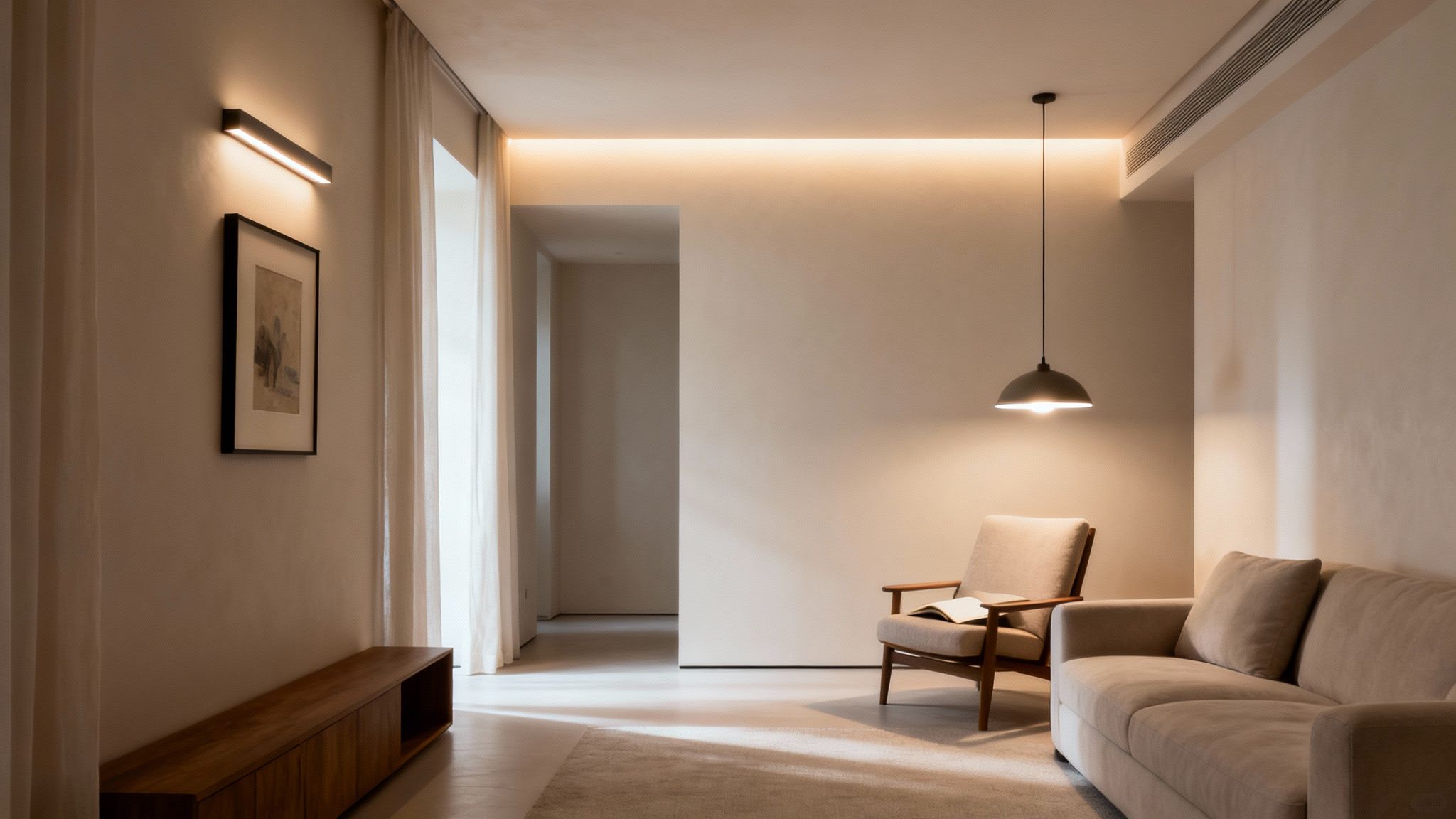 ambient lighting, a comfortable sofa, an armchair, and a wooden console.” />
Why This Fix Is Key
Layered lighting is the secret behind every well-designed room. It meets all of a room's needs, from general light to specific tasks and beautiful highlights. Without layers, a kitchen can feel too bright, or a living room can feel dim.
By using these three layers, you get full control over your home's atmosphere. The Home Lighter’s consultative approach is perfect for helping new homeowners on the Central Coast achieve a professional, layered look.
The Three Layers of Light
A good lighting plan starts with understanding each type of light. A common mistake is adding fixtures without a clear purpose, which leads to a cluttered design.
Key Insight: Lighting layers should be controlled separately. Using different switches and dimmers for your ambient, task, and accent lights gives you the most flexibility to change the mood for any occasion.
Here’s a breakdown of the three layers:
- Ambient Lighting: This is the main layer that provides overall light. Think of it as a stand-in for natural light. Common sources are recessed lights and chandeliers.
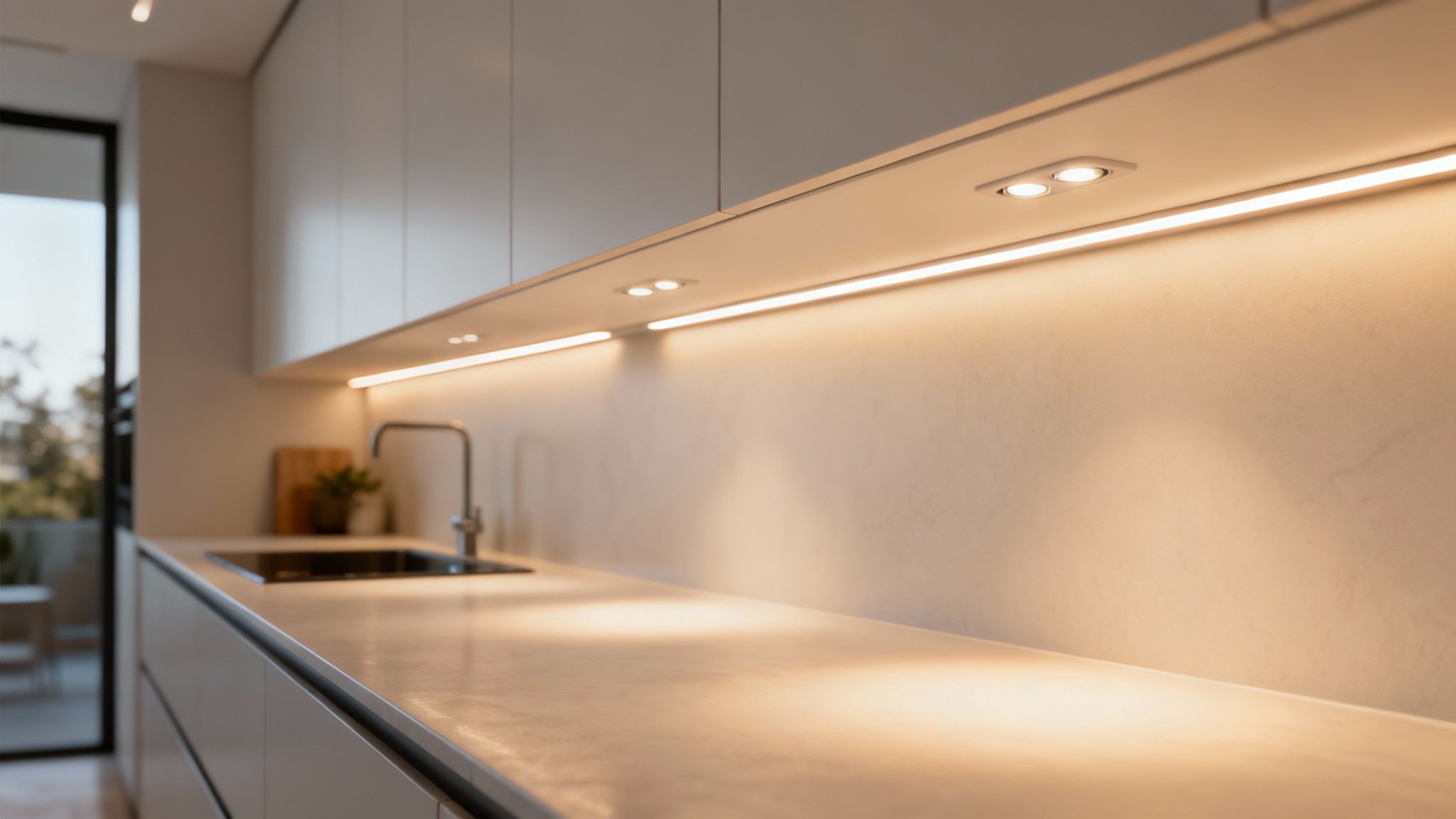
- Task Lighting: This focused light helps with specific activities like cooking, reading, or working. Under-cabinet lights in the kitchen and bedside lamps are good examples.
- Accent Lighting: This is the final, decorative layer. It highlights art, architectural features, or decor. Track lights and wall sconces are great for adding drama.
Creating a layered plan can seem complex, but our experts can help you design a plan for every room. Learn more about creating a balanced living room lighting layout on our blog.
3. Upgrade to Smart and Sustainable Lighting
After you move in, think about upgrading to smart and energy-efficient lighting. Replacing old fixtures with options like dimmable LEDs and motion sensors saves money and adds value to your home. This fix is a must-do for modern homes in 2026.
Smart lighting lets you control your lights with an app or your voice. This not only makes your home more modern but also supports a sustainable lifestyle. This is a big selling point for California homes.
Why This Fix Is Key
An LED upgrade is one of the quickest ways to see savings. LEDs use up to 80% less energy than old incandescent bulbs and last much longer, according to the U.S. Department of Energy. This means lower utility bills and fewer bulb changes.
Beyond savings, smart technology gives you amazing control over your home's feel. You can set schedules, create lighting "scenes" for different activities, and adjust brightness with ease.
How to Get Started with Smart LEDs
A common mistake is thinking a smart upgrade has to be complicated. You can start small by replacing bulbs in key areas, like the living room or kitchen, with smart LEDs.
Another issue is pairing new LED bulbs with old dimmer switches, which can cause flickering. Always make sure your dimmer is compatible with LEDs.
Key Insight: Modern lighting is about more than just on and off. A smart LED system gives you full control over your home's mood, function, and energy use.
Here are a few tips:
- Start Simple: Try smart bulbs in lamps first before changing out wall switches.
- Check Dimmers: Make sure your dimmer switches are marked as LED-compatible.
- Think About Color: Use warm white light (around 2700K) for relaxing spaces like bedrooms. Use a cooler white light (3000K-4000K) for task areas like kitchens and home offices.
At The Home Lighter, our consultants can help you find the right smart and energy-saving products. Learn more about the benefits of an LED lighting upgrade for your home.
4. Give Outdoor Spaces Equal Attention
It’s easy to focus on the inside of your new home and forget about the outside. But your outdoor lighting is very important. Good lighting for your entryway, patio, and yard improves curb appeal, security, and how you use your space at night.
This is one of the most critical of the 5 must-do lighting fixes after moving in 2026. New homeowners often delay this step, but we recommend tackling it early. This is especially true in coastal areas like the Monterey Peninsula where people love to entertain outside in the evening.
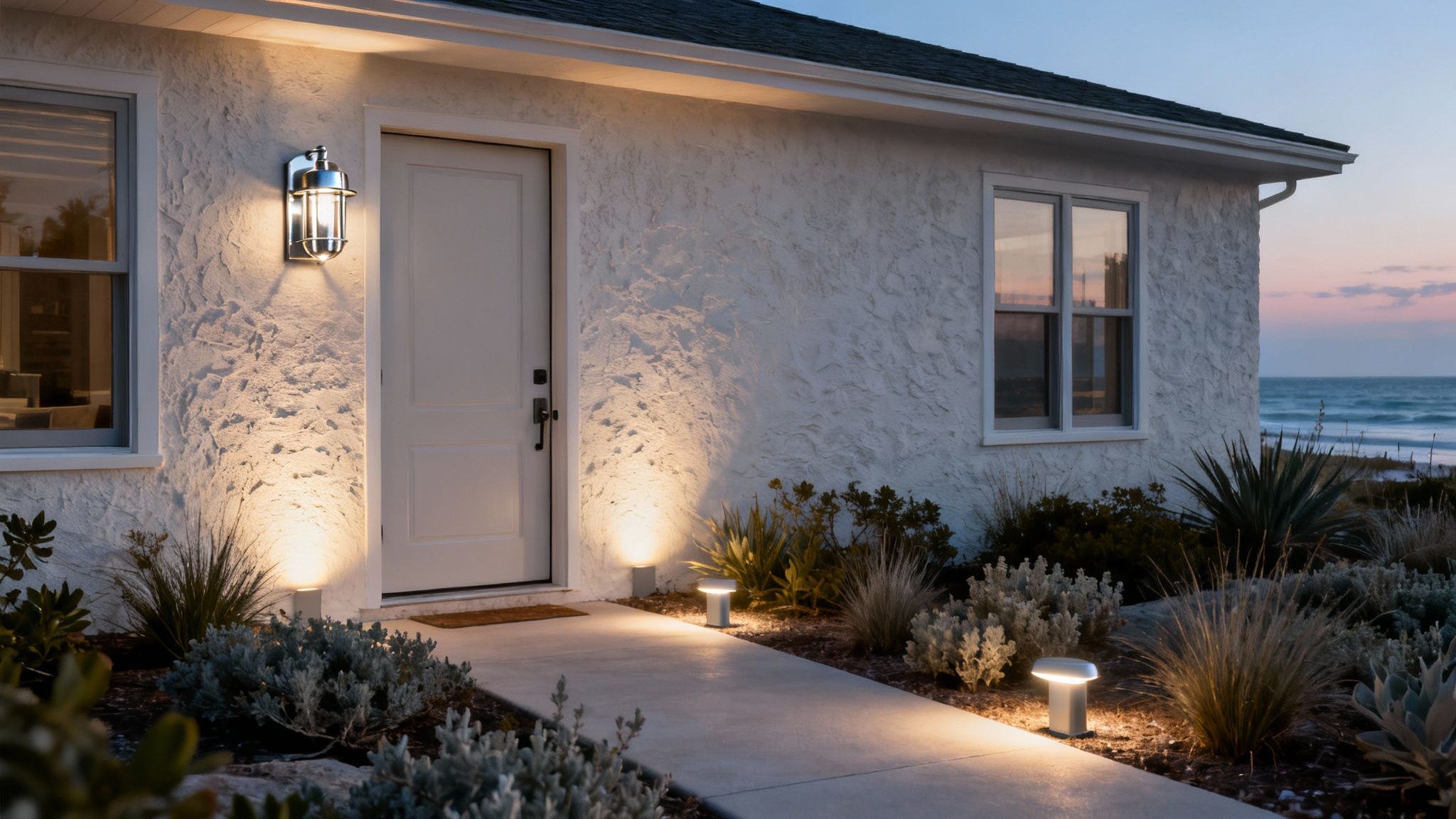 landscape lighting at dusk with ocean backdrop.” />
Why This Fix Is Key
Outdoor lighting has two jobs: security and beauty. A well-lit home is a proven way to discourage trespassers. Lit pathways and entryways help you and your guests move around safely.
For homes in Monterey, Salinas, or Santa Cruz, choosing the right fixtures is even more important. The salty coastal air can quickly ruin standard outdoor lights. Investing in marine-grade materials like brass or copper is a must to make sure your fixtures last.
Avoiding Common Outdoor Lighting Mistakes
A common mistake is creating "hot spots" of harsh, glaring light while leaving other areas dark. The goal is to create a balanced, gentle light. Another error is choosing fixtures that can't handle the coastal weather.
Key Insight: A good outdoor lighting plan should focus on safety, security, and beauty all at once. For coastal homes, the fixture material is just as important as the light bulb to prevent rust and damage.
Here are a few tips:
- Focus on Safety First: Light up all entry doors, steps, and paths.
- Boost Security: Use motion-sensor floodlights over garages and in dark corners.
- Choose Coastal-Ready Materials: Pick fixtures made of marine-grade brass, copper, or powder-coated aluminum.
- Create Ambiance: Use uplighting to show off trees or architectural details. Add dimmable lights on patios for a warm, inviting feel.
The Home Lighter can help you pick the right fixtures and design a plan for your property. Get more landscape lighting design ideas on homelighterinc.com.
5. Check and Repair Old or Broken Fixtures
When you move into a used home, you get its lighting history—good and bad. This can include fixtures that are broken, unsafe, or just out of style. A full check of every light and switch should be a top priority.
This check is about more than just flipping switches. It's about making sure your home's electrical system is safe. Finding problems like flickering lights or rusty fixtures early can prevent bigger issues later.
Why This Fix Is Key
Previous owners might have ignored faulty lighting. Problems like buzzing sounds, broken dimmers, or rusty outdoor lights are common. Leaving these problems can waste energy and even be a fire hazard.
A full check helps you decide what to fix first based on safety and function. A broken light in a guest room is a simple fix, but a fixture with frayed wires is a serious safety problem that needs immediate attention.
How to Do a Lighting Check
The best way to do this is to go room by room. This helps you keep track of every problem and plan your next steps. You can decide if it's a simple DIY fix or a job for a professional.
Key Insight: Don't assume a fixture is fine just because it turns on. Listen for odd sounds like buzzing. Look for signs of heat damage or rust, especially in kitchens, bathrooms, and outside.
Here are a few tips for your check:
- Make a List: Go through each room and test every light switch. Write down any issues you find.
- Look for Damage: Check fixtures for rust, cracks, or exposed wires. This is extra important for coastal homes in the Monterey Peninsula.
- Find Old Technology: Look for outdated fixtures that could be replaced with energy-saving LEDs.
- Set Priorities: Organize your list by what's most important. Safety hazards should come first.
For any repair that is more than changing a lightbulb, it's safest to call a professional. If you find old wiring, our team at The Home Lighter can connect you with trusted local electricians. For tips on more complex jobs, learn how to wire a light fixture safely.
Frequently Asked Questions (FAQs)
1. What is the first lighting fix I should make after moving in?
Start by replacing any generic, builder-grade fixtures in high-traffic areas like the entryway, kitchen, or living room. A new chandelier or stylish pendant light can immediately personalize your space and set the tone for the rest of your home.
2. What is layered lighting and why do I need it?
Layered lighting is a design strategy that uses three types of light—ambient (overall), task (for specific activities), and accent (to highlight features). You need it because it makes rooms more functional and visually appealing, eliminating harsh shadows and creating a warm, inviting atmosphere.
3. Is upgrading to LED lights really worth the cost?
Absolutely. While LED bulbs may cost more upfront, they use up to 80% less energy and can last over 20 times longer than traditional incandescent bulbs. This leads to significant savings on your utility bills and less time spent changing bulbs.
4. How do I choose the right size chandelier for my dining room?
A good rule of thumb is to choose a chandelier with a diameter that is about half to two-thirds the width of your dining table. It should hang so the bottom is 30-36 inches above the tabletop to provide good light without blocking anyone's view.
5. What kind of outdoor lights should I get for a coastal home?
For homes near the coast in areas like Monterey or Santa Cruz, choose fixtures made from marine-grade materials like solid brass, copper, or powder-coated aluminum. These materials are designed to resist rust and corrosion from salt in the air, ensuring they last much longer.
Let Us Light the Way in Your New Home
Moving to Monterey, Salinas, or Santa Cruz? Let us help you turn your new house into a home with lighting that fits your life and style. From swapping out old fixtures to designing a full layered lighting plan, these five fixes are a great way to start.
Don't let common mistakes like the wrong size fixture or poor layering keep your new house from feeling perfect. The design experts at The Home Lighter Inc. are here to guide you. We can help you pick the perfect fixtures and create a plan for your home. Visit The Home Lighter Inc. today or book an appointment in our Pacific Grove showroom. Let us help you bring your vision to light.