
Choosing the best lights for your bathroom ceiling isn't just about picking a fixture that looks nice. It’s about creating a strategic blend of safety, brightness, and layered light that makes your space both functional and inviting.
The right approach involves a primary ambient light, like a damp-rated flush mount or semi-flush mount, combined with focused task lighting. Most importantly, any light near water needs the correct IP safety rating to keep your home and family safe.
Why Your Bathroom Ceiling Light Matters So Much
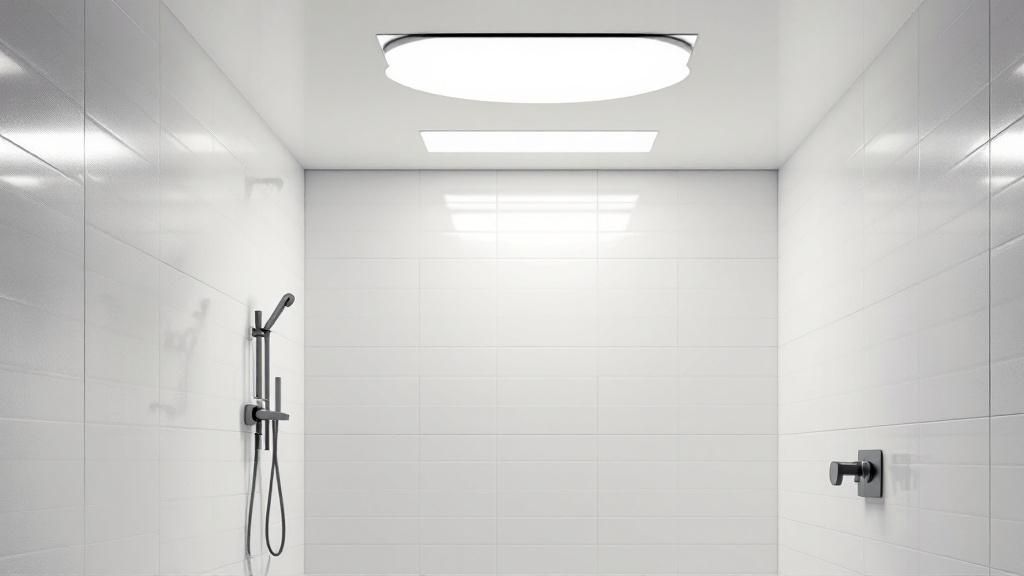
The ceiling light in your bathroom is more than just a fixture; it's the foundation of the room's entire atmosphere. It’s the first light you switch on in the morning and the last one you turn off at night.
Good lighting transforms daily routines, turning a frustrating task like shaving or applying makeup into a simple pleasure. Get it wrong, and you're left squinting in the shadows. Think of it as an investment—not just in your home's value, but in your daily comfort.
The Three Pillars of Great Bathroom Lighting
Think of designing your bathroom lighting like baking a cake. You need the right elements in the right amounts. For bathroom lighting, those essential ingredients are Safety, Brightness, and Layering.
-
Safety (IP Ratings): Bathrooms are wet, humid environments. Not just any light will do. We'll break down what IP ratings are and why choosing a fixture rated for damp or even wet locations is non-negotiable.
-
Brightness (Lumens): Lumens are simply a measure of how bright a light is. The goal is to find that sweet spot—bright enough for clarity, but not so harsh that your bathroom feels sterile.
-
Layering (Ambient, Task, and Accent): Your ceiling fixture is the star of the show, providing the main ambient light. But it can't do all the work alone. Truly great lighting comes from layering that general light with focused task lighting and subtle accent lights.
Great bathroom design isn’t just about tile and fixtures; it’s about creating a space that works for you. The right ceiling light is the cornerstone, providing the illumination that makes the room feel open, clean, and safe.
Bathroom Lighting Essentials at a Glance
| Lighting Aspect | Key Consideration | Best Practice Recommendation |
|---|---|---|
| Fixture Type | The main source of general illumination. | Choose a flush mount or semi-flush mount for even, widespread ambient light. |
| Safety Rating | Protection against moisture and steam is critical. | Look for an IP44 rating or higher, especially for fixtures near showers or tubs. |
| Brightness Level | Must be adequate for visibility without being harsh. | Aim for 75-100 lumens per square foot for balanced, functional brightness. |
Understanding these basics is the first step toward transforming your bathroom into a beautifully illuminated retreat. As you start thinking about styles, our guide to bathroom lighting upgrades has plenty of ideas to get you inspired.
Getting a Grip on Bathroom Lighting Basics
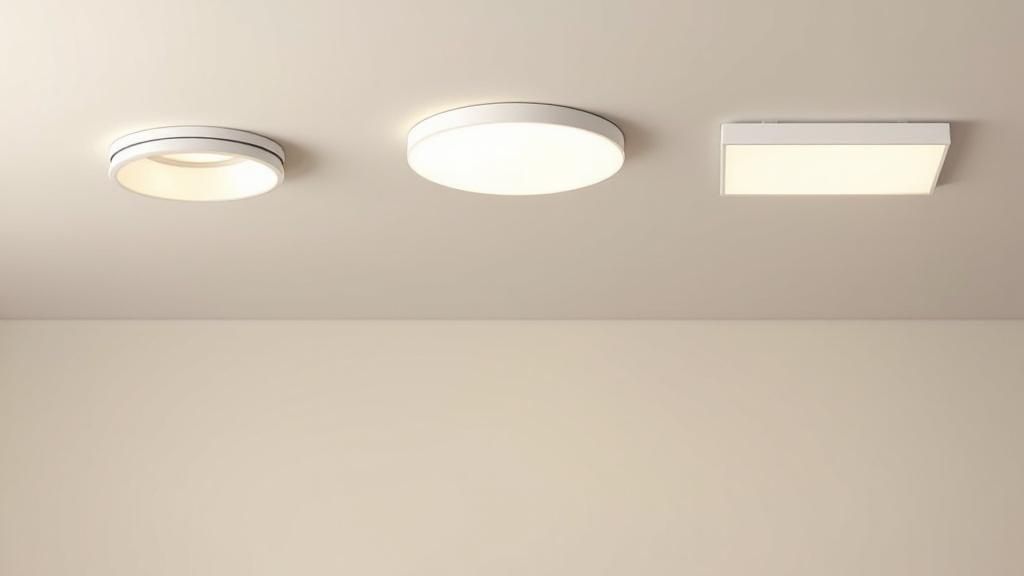
Before you pick the best lights for your bathroom ceiling, it helps to step back and look at the big picture. Getting your lighting right is like putting together a great outfit; you need foundational pieces, functional items, and a few accessories to tie it all together.
Your ceiling light is almost always the star of the show, providing what we call ambient light. It's the broad, general light that fills the room, making sure you can see where you're going and setting the overall mood.
The Three Layers of Great Bathroom Lighting
Here's a hard truth: a single ceiling light just can't do it all. If you rely on one overhead fixture, you’re almost guaranteed to get unflattering shadows, especially when you’re standing at the mirror. That’s why we, as lighting professionals here at The Home Lighter, always design with layers.
- Ambient Lighting: This is your primary, room-filling light. It usually comes from a flush mount, semi-flush mount, or a series of recessed lights on the ceiling. Its main job is to provide a safe, comfortable level of brightness.
- Task Lighting: This is your workhorse light. It’s focused and directed right where you need it for specific activities like shaving or applying makeup. Vanity lights or sconces on either side of the mirror are classic examples, as they light your face evenly.
- Accent Lighting: Think of this as the "jewelry" of your lighting plan. It adds a touch of drama or highlights something special, like beautiful tile work or an architectural detail. A wet-rated spotlight in a shower niche is a perfect use of accent lighting.
When these three layers come together, they create a bathroom that is not just practical but also feels balanced and inviting. Homeowners are catching on, with the global bathroom lighting market projected to grow significantly. According to Data Insights Market, this trend reflects a growing desire for beautifully functional solutions.
Making Sense of Lumens and Kelvin
Beyond the types of lights, there are two key terms you absolutely need to know: Lumens and Kelvin. They might sound technical, but they're pretty simple once you get the hang of them.
Lumens tell you how bright a light is. For years, we thought in watts, but watts measure energy use, not brightness. For most bathrooms, a good target is 75 to 100 lumens per square foot to make sure the room feels bright and airy, not like a cave.
Here’s an easy way to think about it: Imagine filling a bucket with a hose. Watts are like the effort it takes to turn the handle, but lumens are the actual amount of water coming out. More lumens means more light.
Kelvin (K) tells you the color of the light. This is all about mood. The Kelvin scale describes whether a light feels warm and yellowish or cool and bluish-white. Getting this right is critical.
- 2700K – 3000K (Warm White): This is that cozy, inviting glow perfect for a relaxing, spa-like retreat. It's ideal for our coastal homes from Monterey to Carmel, where a warm interior contrasts perfectly with the cool ocean air.
- 3500K – 4000K (Neutral White): This clean, bright white is fantastic for task areas like the vanity. It shows colors accurately without feeling sterile, which is exactly what you need when matching foundation or checking your shave.
- 5000K+ (Cool White/Daylight): This light is very bright and blue-toned. While it has its place in commercial settings, most people find it feels far too clinical and harsh for a bathroom at home.
By balancing these layers and dialing in the right brightness and color, you’re not just lighting a room—you’re creating an experience.
The Best Fixture Types for Your Bathroom Ceiling
Now that we've covered the basics, it’s time to get into the fun part: the fixtures themselves. Choosing the best lights for your bathroom ceiling is all about matching the right hardware to your space—its size, ceiling height, and your personal taste.
The fixture you pick is the heart of your ambient lighting. It’s the main light source that fills the whole room and sets the mood. Let's break down the most popular options.
Comparing Bathroom Ceiling Fixture Types
To help you visualize the best fit for your space, here’s a quick side-by-side comparison. Each one has its own strengths depending on your ceiling height, style, and how you need the light to work.
| Fixture Type | Best For | Pros | Cons |
|---|---|---|---|
| Flush Mount | Bathrooms with low ceilings (8 feet or less). | Maximizes headroom; provides broad, even light; comes in many styles. | Can feel less decorative; doesn't create dimensional light. |
| Semi-Flush Mount | Bathrooms with medium to high ceilings (9 feet or more). | Adds a decorative touch; bounces light off the ceiling for a softer glow. | Hangs down slightly, reducing clearance in low-ceiling rooms. |
| Recessed | Modern, minimalist designs and targeted lighting. | Creates a clean, uncluttered look; excellent for task and accent lighting. | Installation is more involved; may require multiple fixtures for full coverage. |
| Chandelier/Pendant | Large bathrooms with high ceilings for a statement piece. | Acts as a stunning focal point; provides luxurious, multi-directional light. | Requires significant vertical space; must be damp- or wet-rated. |
Ultimately, the right fixture is the one that meets both your practical needs and your design vision.
Flush Mount Fixtures
Got a bathroom with a lower ceiling—say, eight feet or less? Flush mount lights are your best friend. We see this a lot in the charming older homes around the Monterey Peninsula. These fixtures sit right up against the ceiling, so they don't eat up any precious headroom.
Because they cast light downward and outward, flush mounts are fantastic for general ambient lighting. They come in tons of styles, from simple drum shapes to more ornate designs, so you can easily find one that fits right in.
Semi-Flush Mount Fixtures
Just like the name says, semi-flush mounts hang down just a few inches from the ceiling on a short stem. That little gap is key—it lets light spread both down and up. The light that hits the ceiling bounces back down, creating a softer, more dimensional feel.
These are a great pick for bathrooms with medium to high ceilings (nine feet or more). They add more decorative punch than a standard flush mount, hitting that sweet spot between pure function and stylish flair.
Recessed Lighting
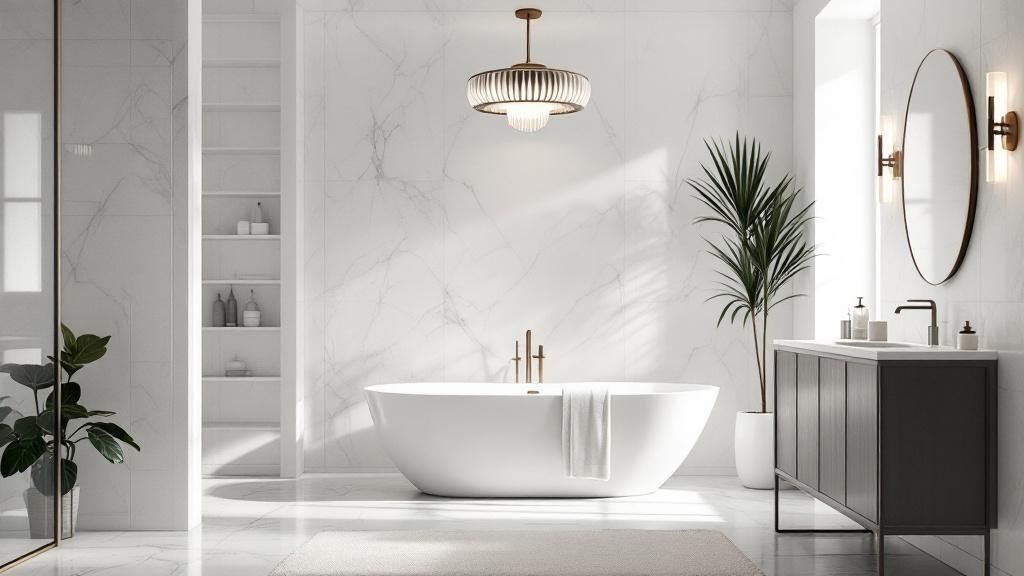
If you’re going for a clean, minimalist vibe, nothing beats recessed lighting. Often called can lights, these are set right into the ceiling, leaving you with a smooth, uncluttered surface. They cast focused pools of light, which makes them incredibly versatile.
In a bathroom, recessed lights are real workhorses. You can arrange them in a grid for all-over brightness or place them strategically where you need them most.
- In the Shower: A single wet-rated recessed light is an absolute must. It lights up what's often the darkest part of the bathroom, making it safer and easier to clean.
- Over the Toilet: If you have a separate water closet, a recessed light provides perfect, targeted illumination without another bulky fixture.
- As General Lighting: A few recessed lights can easily replace a single central fixture, giving you smooth, even ambient light.
A great design strategy we often recommend is using recessed lights for foundational ambient and task lighting, then adding decorative sconces as the "jewelry" of the room. This layered approach delivers on both function and style.
While your ceiling fixture handles the ambient light, don't forget it needs a partner. To get that perfect, shadow-free light at your mirror, take a look at our guide on choosing the right bathroom vanity lighting.
Chandeliers and Pendants
For a truly show-stopping look in a larger bathroom with high ceilings, a chandelier or pendant can be a game-changer. Damp-rated chandeliers are now a go-to for adding a dose of luxury to a primary bathroom. They become an instant focal point while casting beautiful, multi-directional light.
The most important thing here is to make sure the fixture is damp-rated or wet-rated, especially if it’s near splash zones. This look is especially stunning in the spacious, high-ceilinged homes you see in the hills of Carmel or Santa Cruz.
Decoding IP Ratings for Bathroom Safety
Water and electricity are not friends. When they get too close in a bathroom, safety has to be your number one concern. This is where the crucial Ingress Protection (IP) rating comes into play.
Think of the IP rating as a two-digit code. The first number (0-6) tells you how well it resists solids like dust. The second, more important number for bathrooms (0-8), tells you how well it stands up to water. The higher that second number, the better the protection.
Breaking Down the Bathroom Zones
To make things easy, designers think of bathrooms in terms of "zones." Each zone has a different level of expected water exposure, which dictates the minimum IP rating a fixture needs. This is especially important for our coastal homes from Santa Cruz to Monterey, where salty, humid air already puts fixtures to the test.
Let’s walk through these zones so you can choose a light that’s not just beautiful, but—more importantly—safe.
-
Zone 0: Right inside the bath or shower basin. Any light fixture here must be low-voltage and completely submersible. You're looking for a rating of at least IP67.
-
Zone 1: This is the area directly above your bath or shower. Fixtures here will get a regular dose of steam and splashes. A rating of IP44 is the minimum, but going with IP65 is a smarter choice.
-
Zone 2: This is the immediate splash zone around the shower, bath, and sink. An IP44 rating is the standard here, ensuring your light is protected from splashing water.
-
Zone 3 (Outside Zones): This covers all other areas where direct water spray is unlikely. While there's no specific requirement, it's wise to use fixtures with at least an IP20 rating to guard against condensation.
Understanding these zones empowers you to look beyond style and make an informed safety decision. A beautiful fixture is only the right choice if it’s also the safe choice for its specific location.
For a closer look at how different fixtures can meet these safety needs, check out our guide on the types of bathroom lighting fixtures for your Monterey home.
Why Higher Ratings Matter for Longevity
Getting the IP rating right isn't just about passing an inspection; it's about protecting your investment. A fixture with a low rating will corrode, flicker, and fail in a damp, steamy environment. By matching the IP rating to the zone, you're buying a light that will perform safely and reliably for years.
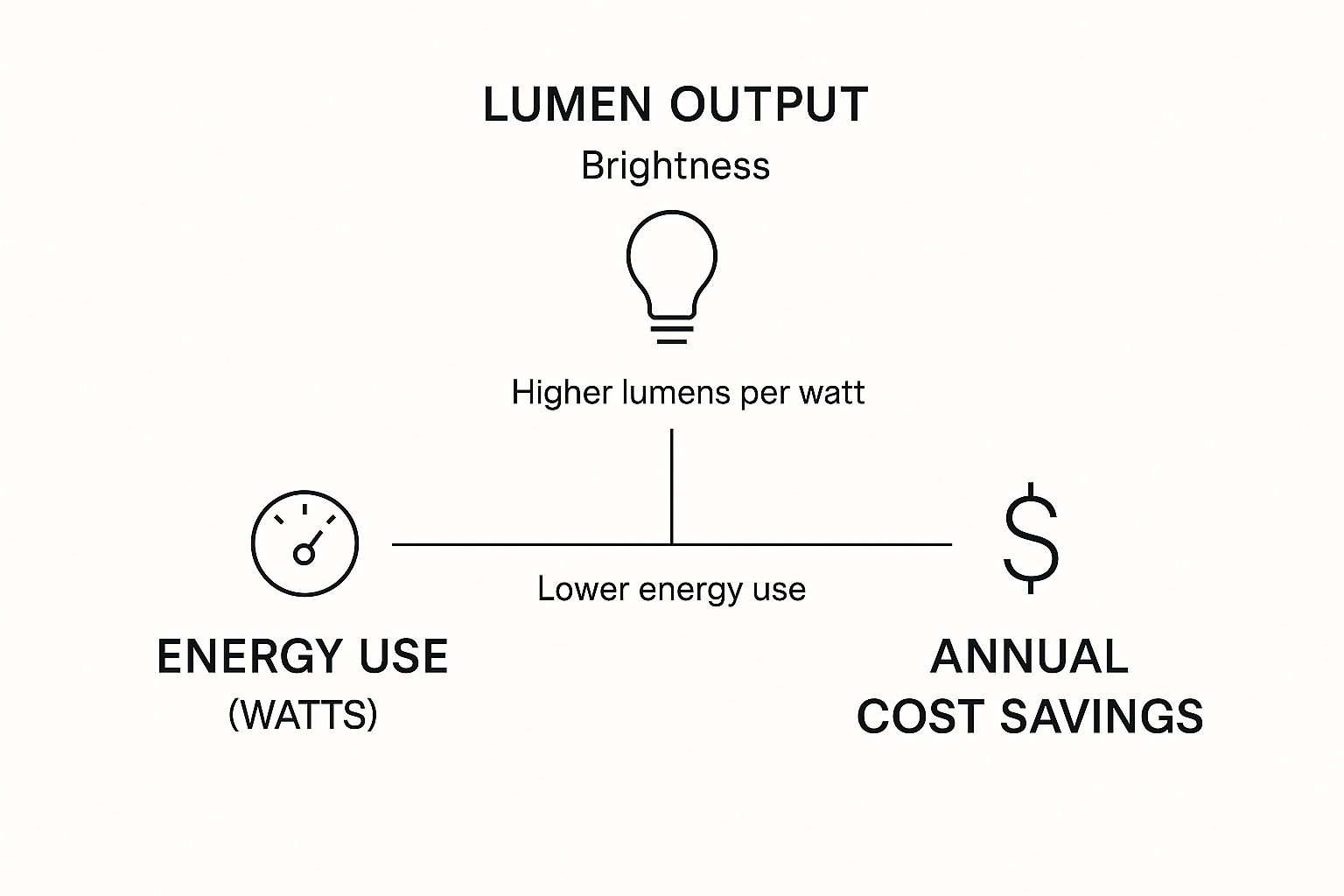
As you can see, choosing efficient fixtures complements a safe lighting plan by lowering energy use. It's all part of creating a bathroom that's as smart and durable as it is beautiful.
Integrating Smart and Energy-Efficient Lighting
Today's bathroom lighting needs to do more than just flip on and off. The best ceiling lights are now beautiful, intelligent, and highly efficient, bringing a new level of convenience and luxury to your home.
This desire for smarter solutions is driving huge growth in the market. Valued at over $50 billion, the ceiling light market is expected to surge past $70 billion in the next decade, according to Market Research Future. Features like dimmers, voice control, and smart integration are fueling this trend.
The Unbeatable Advantages of LED Technology
At the heart of any modern bathroom lighting plan is LED (Light Emitting Diode) technology. LEDs have completely taken over the lighting world for a few very good reasons.
First, their lifespan is incredible. A quality LED can shine for 25,000 hours or more. That means you could go over a decade without ever having to change a burnt-out bulb in your ceiling.
Beyond longevity, LEDs are champions of energy efficiency. They use up to 90% less energy than old incandescent bulbs, which translates directly to lower electricity bills. To see how this can impact your home, look at our guide to energy-efficient lighting solutions.
Creating Your Perfect Atmosphere with Smart Controls
This is where things get really fun. Smart features put you in the driver's seat, letting you dial in the perfect light for your mood, the time of day, or what you're doing. These aren't just gadgets anymore; they're accessible tools that make daily routines better.
The best light is one that adapts to you. Smart controls transform a static fixture into a dynamic tool that can energize your morning, help you relax in the evening, and provide safety at night.
Think about how these smart features could work for you:
- Dimmers: This is the most essential smart feature. A dimmer lets you go from brilliant, task-ready light all the way down to a soft, gentle glow for a relaxing bath. This one simple control massively expands what your ceiling light can do.
- Tunable White Lighting: This tech lets you change the actual color of the white light. You can set it to a cool, crisp white (around 4000K) to wake up, then shift it to a warm, cozy amber (around 2700K) to wind down.
- Motion Sensors and Automation: A ceiling light with a motion sensor is a lifesaver for those middle-of-the-night bathroom trips. You can program it to turn on at a very low, gentle level—just enough to see by without that jarring blast of bright light.
By bringing these technologies into your bathroom, your ceiling light becomes an active part of your daily wellness routine.
Local Insight: How The Home Lighter Can Help
Picking the right lights for your bathroom can feel overwhelming. You're trying to make sense of lumens, IP ratings, and a dozen different fixture styles. At The Home Lighter, we’re here to cut through the confusion and act as your guide.
Think of us as design translators. Our job is to turn the technical jargon of lighting into a conversation about comfort, function, and style. We start by understanding how you actually use your space, then build a lighting plan that feels right for you.
Your Local Lighting Experts on the Central Coast
Our roots are planted firmly here on the Monterey Peninsula. That gives us a real, practical understanding of what homeowners in our community need. We know the local architecture, the coastal climate, and the character of our neighborhoods.
- For Coastal Homes: We help our neighbors in Carmel and Pacific Grove choose corrosion-resistant fixtures with high IP ratings that handle the salty, humid air.
- For Historic Properties: In Salinas and older parts of Monterey, we find fixtures that honor a home's character while delivering safe, modern, and efficient light.
- For New Builds: We work with builders from Santa Cruz down to Big Sur, creating lighting plans that are cohesive, compliant, and perfectly suited to the home's design.
Our goal is simple: we want to do more than just sell you a light fixture. We offer a true partnership to make sure your bathroom lighting is a lasting investment in your home's safety, function, and beauty.
This one-on-one approach is what truly makes a difference. We take the guesswork out of the entire process, so you can be confident that the lights you choose not only look fantastic but are built to last.
FAQs: Your Bathroom Lighting Questions, Answered
Choosing the right ceiling lights often sparks a lot of specific questions. We hear them all the time in our showroom, so let's clear up some of the most common ones.
How many lumens do I need for my bathroom ceiling?
For the main ambient light, a good starting point is 75-100 lumens per square foot. A small powder room might need about 2,000 total lumens, while a larger primary bath could easily need 4,000 lumens or more to feel properly lit. A bathroom with dark tiles will need more lumens, while a bright, white bathroom may need fewer.
Can I put a dimmer on any bathroom ceiling light?
Not always. It's critical to check that the light fixture, the bulb (if separate), and the dimmer switch are all compatible. An incompatible setup can cause annoying flickering or humming. Most modern LED fixtures are designed to be dimmable, but always check the product specs before you buy.
What is the difference between damp-rated and wet-rated lights?
This is a big one, and it's all about safety. It is especially important in the high-moisture areas common on the Central Coast.
- Damp-Rated Lights: These handle humidity and condensation, making them perfect for general bathroom areas, like the main ceiling fixture outside the shower.
- Wet-Rated Lights: These are completely sealed to withstand direct splashes of water. A wet-rated fixture is required for any light placed directly inside a shower stall or right over a bathtub.
Choosing the right rating is non-negotiable for safety. For a deeper dive into designing for our unique coastal climate, check out our lighting guide for Monterey homes.
Are recessed lights a good idea for a bathroom ceiling?
Yes, they are an excellent choice for a clean, modern look. A wet-rated recessed light in the shower is a must-have for safety and functionality. In the main bathroom area, a grid of recessed lights can provide smooth, even ambient illumination, often replacing the need for a central fixture.
What is the best color temperature (Kelvin) for a bathroom?
The best color temperature depends on the mood you want to create. A warm white (2700K-3000K) is great for a relaxing, spa-like feel. For task areas like the vanity, a neutral white (3500K-4000K) provides clear, accurate light for grooming. Many homeowners layer both using dimmers and tunable fixtures.
At The Home Lighter, Inc., we believe the best lighting plan starts with asking the right questions. If you have more, our team is always here with the expert answers you need to create a bathroom that’s perfectly lit for you. Visit us at https://homelighterinc.com to start a conversation.