
A chandelier in your foyer is the first thing people see. It’s more than just a light; it’s a centerpiece that sets the mood for your whole house. The right chandelier can make a small entrance feel bigger or a tall one feel cozy.
Your Foyer's First Impression Starts With Light
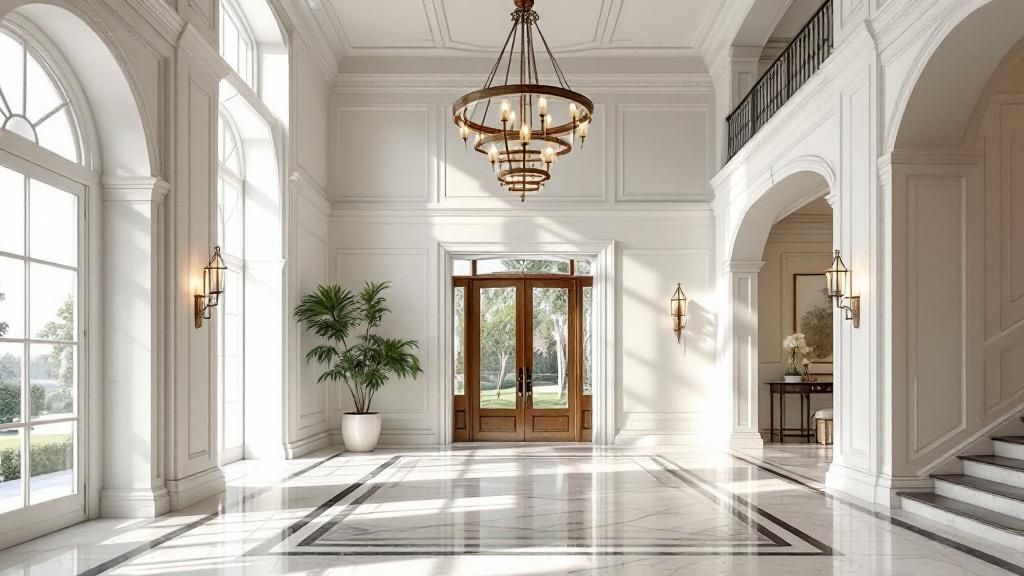
The right light fixture does more than light the way. It makes people feel welcome as soon as they step inside. For homeowners on the Monterey Peninsula, this first impression is key. It should show off the coastal style and relaxed living our area is known for.
Whether your home is a Spanish-style house in Carmel or a modern beach home in Santa Cruz, your foyer chandelier says "welcome." It’s your best chance to show your home's personality right at the front door.
Why Your Foyer Chandelier Matters
A foyer light has to look good and work well. It does several important jobs at once.
- It Sets the Tone: A chandelier tells guests if your home is traditional, modern, or rustic.
- It Creates a Focal Point: In a space people just walk through, a great chandelier gives the eye something to focus on. It makes the entryway feel complete.
- It Enhances Architecture: The right light can highlight tall ceilings or a beautiful staircase.
More people are focusing on creating beautiful entryways. This has made the chandelier a must-have item. The global chandelier market was valued at USD 8.1 billion and is expected to grow to USD 11.0 billion as more people buy statement lighting.
Your foyer is where your home makes its first impression. Every detail, from the light fixture to the rug, helps create a welcoming experience.
Beyond the chandelier, every element helps in transforming your space's first impression. When you choose a foyer chandelier, you're not just hanging a light. You are starting your home’s story.
Finding the Perfect Chandelier Size and Scale
Choosing the right size chandelier can feel tricky, but a few simple rules make it easy. Getting the size right is the most important step. A light that’s too small looks forgotten, while one that's too big can make the space feel crowded.
Let's look at two simple rules for sizing your chandelier. These formulas take the guesswork out of it. They will help you find a fixture that fits your space perfectly.
The Rule of Width: Ensuring a Grand Statement
First, let's figure out how wide your chandelier should be. This simple math ensures the fixture is big enough to be a focal point without being too much.
Here’s the simple formula:
Foyer Length (in feet) + Foyer Width (in feet) = Ideal Chandelier Diameter (in inches)
For example, if your foyer is 12 feet long and 10 feet wide, you add them together (12 + 10 = 22). This means you should look for a chandelier that is about 22 inches wide. This simple math helps your chandelier look just right.
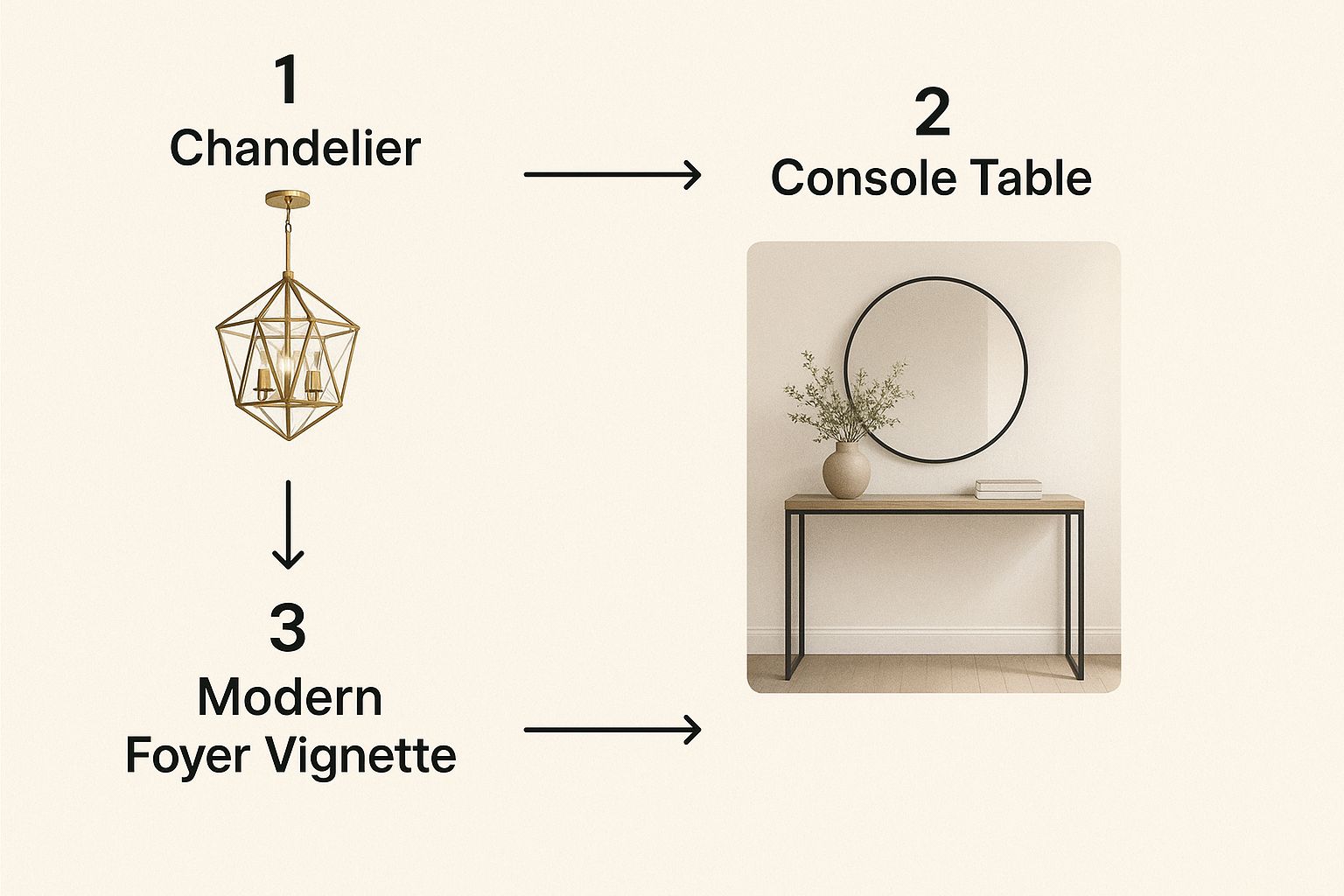
This picture shows how a geometric chandelier can define a modern foyer. It proves that a good fixture is like a piece of art. It completes the room's design.
The Rule of Height: Filling Vertical Space
After you know the width, it's time to figure out the height. This is very important in homes with tall foyers, which are common on the Central Coast from Monterey to Santa Cruz. The goal is to fill the tall space without the light hanging too low.
A good rule of thumb is:
- Allow 2.5 to 3 inches of chandelier height for every foot of ceiling height.
For a foyer with a 10-foot ceiling, you would look for a chandelier that is between 25 and 30 inches tall. For a grand two-story entryway with an 18-foot ceiling, the ideal fixture would be between 45 and 54 inches tall. This makes sure the chandelier is big enough to draw the eye up.
Finding the Perfect Hanging Height
Now that you have the right size, where do you hang it? The hanging height is important for safety and looks. You don’t want the chandelier to be so low that people hit their heads.
Here is a quick guide for where to hang your chandelier.
| Chandelier Height Placement Rules |
| :— | :— |
| Ceiling Height | Recommended Hanging Height (Bottom of Chandelier to Floor) |
| Standard (8-9 ft) | At least 7 feet of clearance from the floor. |
| Two-Story (10 ft+) | Hang level with the second-floor landing. |
| With Window Above Door | Center the fixture in the window for a nice view from outside. |
These rules make sure your chandelier is both beautiful and practical.
- Single-Story Foyer: The bottom of the chandelier should be at least 7 feet above the floor.
- Two-Story Foyer: In a tall space, the bottom of the fixture should hang about even with the second floor.
- Foyer with a Window: If you have a window above your door, center the chandelier so it can be seen from outside. This adds elegance and curb appeal.
Following these tips ensures your chandeliers for foyer look great and are placed safely. By choosing the right size and hanging position, you create a welcoming entrance.
Matching Chandelier Styles to Your Home
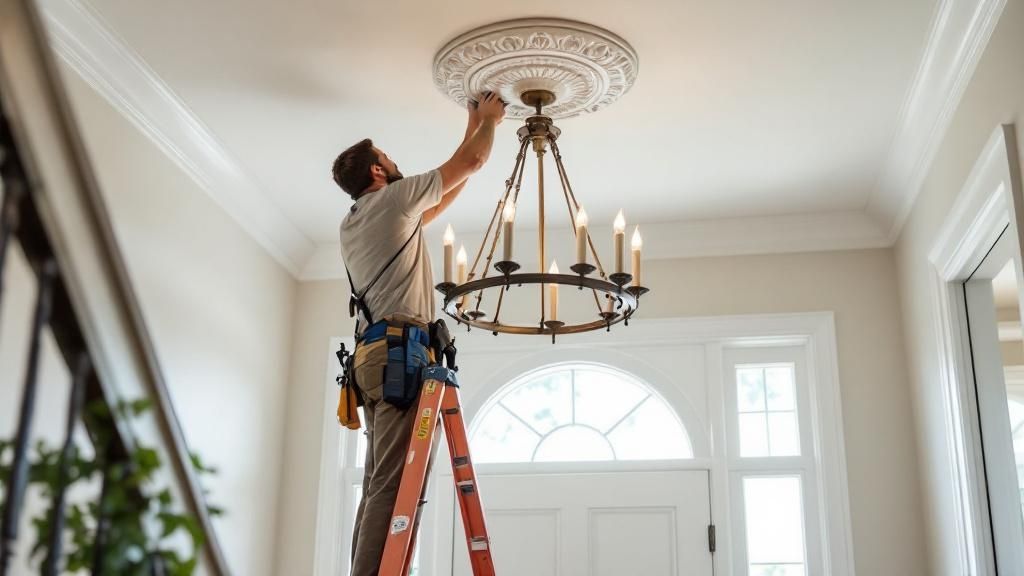
A chandelier should feel like it belongs in your home. It should match the architecture and tie the space together. Picking the right style is about matching the light's personality to your home's character.
From Spanish homes in Monterey to modern coastal designs in Santa Cruz, every style has a light that fits. Let's look at popular chandelier styles to help you find the right one.
Traditional and Crystal Chandeliers
A traditional chandelier is what many people think of for a grand entryway. These fixtures are elegant, with graceful curves and fancy details. They often use materials like aged brass, bronze, and sparkling crystal.
A crystal chandelier adds glamour to any space. It catches and scatters light, creating a beautiful, welcoming glow. This style is perfect for homes with a grand staircase or high ceilings. Learn how a crystal chandelier for your foyer can create a stunning entrance.
Modern and Contemporary Styles
Modern chandeliers are all about clean lines and simple shapes. They skip the fancy details and focus on bold forms. Think of metal sculptures or sleek glass fixtures.
Contemporary design is similar but often has softer curves. These fixtures are great for homes with open floor plans. They make a strong artistic statement at the front door.
A chandelier's style is its voice. A traditional crystal fixture whispers elegance, while a modern piece speaks of simplicity and confidence. Choose a voice that matches your home.
Rustic and Farmhouse Charm
For homes with a relaxed, natural feel, rustic and farmhouse chandeliers are a great fit. These styles use natural materials and warm finishes. They make a space feel cozy and lived-in.
- Rustic Chandeliers: These often use wrought iron and distressed wood. They bring warmth and history to a space, perfect for Spanish or Craftsman homes.
- Farmhouse Chandeliers: This style mixes rustic with a cleaner look. Think simple wagon wheel designs or fixtures with a matte black finish.
Transitional: A Blend of Old and New
Can't decide between traditional and modern? You don't have to. Transitional style blends the best of both worlds.
A transitional chandelier might have a classic shape but use modern materials. This flexible style is popular because it feels both timeless and fresh. It fits well in many homes across the Central Coast.
Choosing Your Chandelier's Materials and Finishes
The materials and finish give a chandelier its character. These choices show off your personality. They decide if your fixture feels warm and classic or cool and modern.
From timeless crystal and brass to modern matte black, the options are endless. Each choice affects how the chandelier looks and how much care it needs. This helps you find a fixture that fits your style and your life.
Exploring Popular Finishes
The finish is the coating on the chandelier's frame. It’s often the first thing people notice. Finishes can be shiny, brushed, matte, or aged.
- Polished Finishes (Nickel, Chrome): These are bright and shiny, which feels sleek and modern.
- Brushed and Satin Finishes (Brass, Nickel): These have a softer look that is great at hiding fingerprints.
- Matte Finishes (Black, White): Matte black is bold and dramatic. It works with modern, industrial, or farmhouse styles.
- Aged and Antique Finishes (Brass, Bronze): These finishes look weathered. They bring a sense of history and warmth, perfect for traditional or Spanish-style homes on the Central Coast.
A Look at Chandelier Materials
The actual materials of a chandelier also matter. The right material can match your home's style.
Crystal is a classic choice. It bends light to create a dazzling, luxurious effect. A bronze and crystal chandelier is a great example. The warm metal and sparkling glass create an elegant, welcoming glow.
Other popular materials include:
- Wrought Iron: This material is durable and has a rustic charm. It is often used in Spanish or farmhouse designs.
- Wood and Natural Fibers: Materials like beaded wood or rattan create a relaxed, coastal vibe.
- Glass: From clear globes to colored art glass, this material is very versatile. It can look clean and simple or be a dramatic piece of art.
Your chandelier's finish and materials should work with other things in your foyer. Think about your door handles, stair railing, and even picture frames.
How to Coordinate Finishes in Your Foyer
You don't have to match everything perfectly. Mixing metals is a popular design choice, but it should be done with care. The goal is to create a look that feels planned, not random.
A good rule is to use one main metal for about 60-70% of the hardware. Then you can add one or two other metals as accents. For example, if your door handles are satin nickel, a chandelier in aged brass can add warmth.
Making Sense of Lighting Specifications
Choosing a beautiful chandelier is the first step. Making sure it lights your foyer well is the next. This involves technical terms like lumens and Kelvin.
Don't worry, they're simple concepts. Think of them as a recipe for creating the perfect lighting. Getting these details right will make your entryway feel warm and bright, not harsh.
Lumens: How Bright Is Bright Enough?
Lumens measure a light's brightness. For years, we used watts to measure brightness. But watts really measure energy use. Today’s LED bulbs use less energy, so lumens are a better way to know how bright a light will be.
How many lumens do you need for a foyer? A good rule is to aim for 2,000 to 4,000 total lumens for an average foyer. This gives you plenty of light without being too bright. If you have a very tall foyer, you may need more.
Kelvin: Setting the Mood With Color
Next is Kelvin (K). This number tells you the color of the light. It says if the light feels warm and cozy or cool and bright.
- Warm Light (2700K – 3000K): This is a soft, yellowish glow like a candle. It’s relaxing and inviting, making it a popular choice for homes.
- Neutral Light (3500K – 4000K): This light is whiter and looks more like natural daylight. It feels clean and bright.
- Cool Light (5000K+): This is a crisp, bluish-white light. It's often used in offices or hospitals because it can feel too harsh for a home’s entrance.
For most homes on the Central Coast, a warm light between 2700K and 3000K is perfect for a welcoming feel. To learn more, our guide explains what Kelvin means in lighting.
A dimmer switch is a great addition to your foyer. It lets you change the brightness from a full, welcoming glow to a soft evening light.
The Power of Dimmers
A dimmer switch for your foyer chandelier is a game-changer. It is a small change that gives you a lot of control.
With a dimmer, you can turn the light all the way up when guests arrive. Later, you can dim it for a soft, elegant glow. It lets you change the light for any occasion. Make sure you choose a dimmer that works with your chandelier and bulbs.
Bringing Your Vision to Life with Expert Guidance
Going from an idea to a finished chandelier is a process. Having an expert to help makes a big difference. At The Home Lighter, we are your local lighting experts. We help homeowners and designers across the Monterey Peninsula choose the perfect light.
Seeing a chandelier in our showroom helps you understand its true size and quality. Our team is here to help you with all the details. We can help you pick a style and calculate the right size for your home.
Your Local Lighting Partner
We know the unique home styles here on the Central Coast. Our advice is based on what looks great in our local homes, from Salinas to Santa Cruz. We want to make sure your project is a success.
Choosing a foyer chandelier is about creating a feeling. Our experts help you find a light that matches your vision, budget, and home.
Whether you're a homeowner, designer, or builder, visit our Salinas showroom or schedule a consultation. We can also show you modern, energy-efficient lighting solutions that look beautiful and save you money. Let's work together to light up your home.
Answering Your Foyer Chandelier Questions
After you've picked a style and size, you might still have a few questions. That's normal! We've gathered some common questions we hear from homeowners to help you feel confident.
How do I clean my foyer chandelier safely?
First, always turn off the power at the circuit breaker. For crystal fixtures, use a crystal spray cleaner and a soft microfiber cloth. For metal chandeliers, a dry dusting is often enough. For a deeper clean, use a cloth with a bit of mild soap and water, then dry it completely.
Can I install a chandelier on a sloped ceiling?
Yes. Many homes on the Central Coast have sloped ceilings. A chain-hung chandelier will hang straight on its own. For a chandelier with a rod, you will need a sloped ceiling adapter to make it hang straight.
What if my foyer has a very high ceiling?
A two-story foyer needs a chandelier that is large enough to fit the space. Make sure you have enough chain and wire to hang it at the right height. Most chandeliers come with 6 to 8 feet, but you can usually order more. A large, multi-tiered chandelier works well in a tall space so it doesn’t look too small.
Is a dimmer switch really necessary?
A dimmer switch is not required, but we highly recommend it. It gives you full control over the mood of your entryway. You can make the light bright for guests or dim it for a soft glow in the evening.
Where can I find the right light bulbs?
Choosing the right light bulbs is just as important as the fixture itself. You need to consider brightness (lumens) and color (Kelvin). Our guide on how to choose the right light bulb can help you find the perfect bulbs for your chandelier.
Ready to find the perfect chandelier for your foyer? The expert team at The Home Lighter Inc. is here to guide you. Visit our showroom or schedule a consultation to bring your vision to life. https://homelighterinc.com