
Choosing energy-saving lighting for your home used to feel like a compromise. "Eco-friendly" often brought to mind bland, uninspired designs. Many of us right here on the Monterey Peninsula felt stuck choosing between a beautiful home and a sustainable one.
Thankfully, that trade-off is a thing of the past. Today's affluent homeowners expect both beauty and responsibility in their purchases. You don’t have to compromise style to make sustainable lighting choices.
The New Standard of Luxury Green Lighting
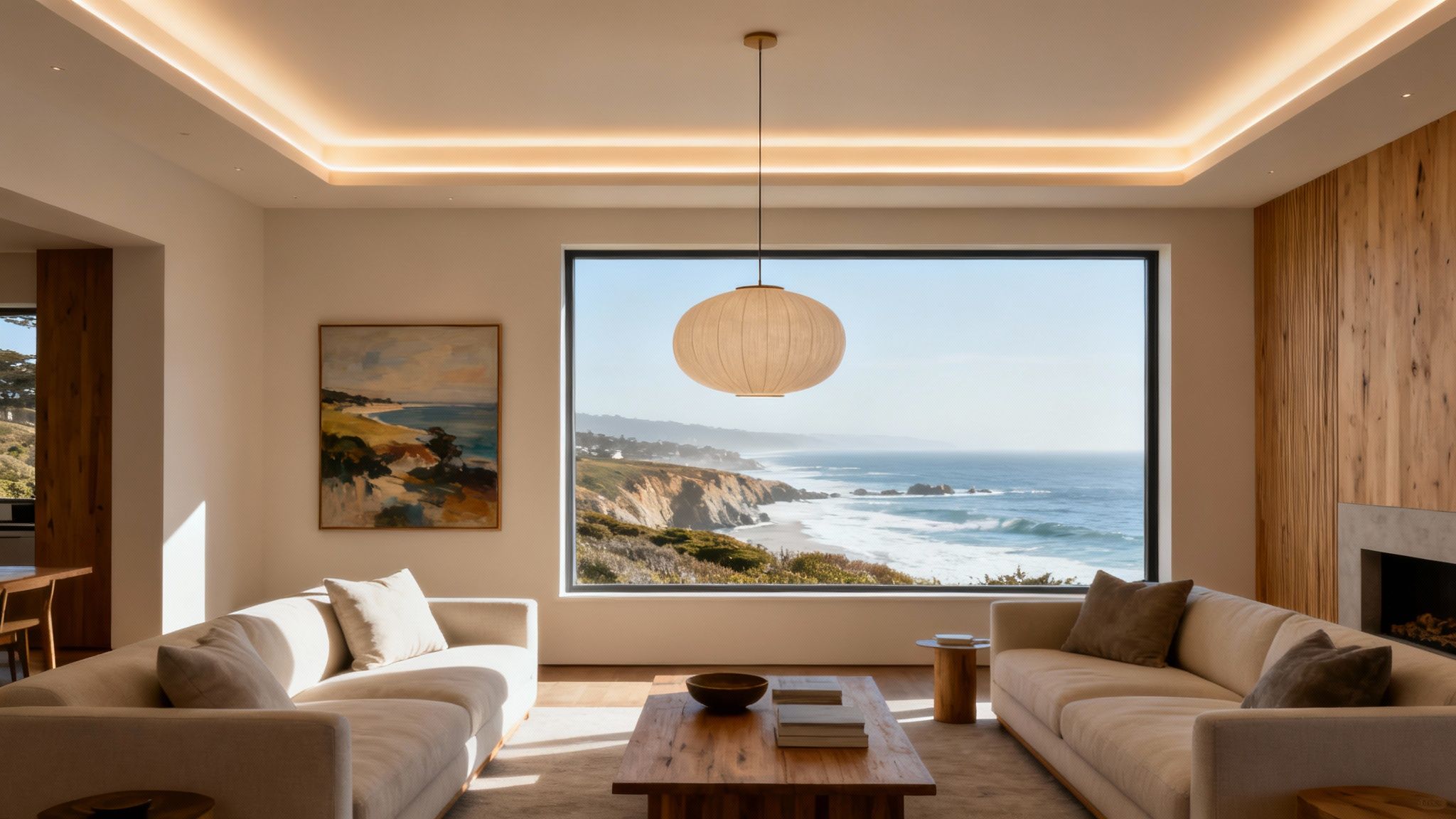
Today, high-efficiency lighting is the new benchmark in luxury home design. Advanced LED technology doesn't just match the style of older lighting. It often enhances it, giving you more creative freedom than ever before.
This isn't just a local trend. In fact, 62% of U.S. consumers now actively seek sustainable products. This mindset is especially true among luxury buyers who want their homes to reflect their values.
Understanding the Building Blocks of Light
You don't need an engineering degree to pick great lighting. You just need to understand three simple concepts that affect how light looks and feels. Nailing these is one of the key elements of a luxury home.
-
Lumens (Brightness): Forget about watts. Lumens tell you the actual brightness of a bulb. More lumens mean more light, helping you create bright spaces with less energy.
-
Color Temperature (Warmth): Measured in Kelvin (K), this is all about the mood. A lower Kelvin number (around 2700K) gives a warm, cozy feel. A higher one (4000K) produces a clean, crisp light for kitchens and workspaces.
-
Color Rendering Index (CRI): This is the secret to making your interiors pop. CRI shows how accurately a light source reveals the true colors of your decor. Always look for a high CRI of 90+ to ensure everything looks vibrant and true.
To make this even easier, here’s a quick-glance table to keep these terms straight.
Key Lighting Terms at a Glance
| Lighting Term | What It Measures | Why It Matters for Style |
|---|---|---|
| Lumens (lm) | The total amount of visible light produced by a source. | Determines how bright or dim a room feels. More lumens create an airy, open atmosphere. |
| Color Temperature (K) | The warmth or coolness of the light’s color. | Sets the mood. Warm light (2700K) is cozy and inviting; cool light (4000K+) is crisp and energizing. |
| Color Rendering Index (CRI) | How accurately light reveals the true colors of objects, on a scale of 0-100. | A high CRI (90+) ensures your paint, fabrics, and artwork look vibrant and true-to-life. |
Getting a feel for these three metrics is the key to unlocking lighting that's both efficient and perfectly tailored to your home.
The biggest shift we've seen is that sustainability is no longer an afterthought—it's woven into the very fabric of luxury design. The most beautiful, high-end fixtures now come with advanced, energy-saving technology built right in.
By mastering lumens, Kelvin, and CRI, you can confidently select lighting that lowers your energy bills and elevates your home's entire aesthetic. It’s about creating a space that feels both responsible and truly refined.
Matching Sustainable Fixtures to Your Home
Choosing the right bulb is a great start. But the fixture itself is where green design truly comes alive with style. Think of a fixture as jewelry for your room—it defines the space and pulls your vision together.
Today’s top designers craft breathtaking fixtures from responsible and beautiful materials. For those of us on the Central Coast, this means finding pieces that complement our unique architectural styles. This could be a Spanish Colonial in Carmel or a modern coastal retreat in Santa Cruz.
Aligning Fixtures with Architectural Style
A home's architecture tells a story. The right lighting should feel like a natural part of that narrative. Choosing a sustainable fixture that fits your home's style ensures a timeless, cohesive look.
Here’s how we think about pairing fixtures with local styles:
- Spanish and Mediterranean Homes: These homes crave warmth and texture. Look for wrought iron chandeliers with LED candelabra bulbs, hand-blown recycled glass pendants, or sconces made from reclaimed wood.
- Modern Coastal Retreats: These spaces call for clean lines and natural materials. Sleek, integrated LED fixtures are a great choice. We also love minimalist pendants made from sustainable bamboo or artisan-crafted metal.
- Craftsman and Bungalow Styles: Honoring the handcrafted feel of these homes is key. Fixtures made by local artisans, pieces with recycled glass, and designs with natural woods and warm metals work beautifully.
The Beauty of Sustainable Materials
The materials in a fixture impact both its environmental footprint and its look. Many high-end designers now use low-impact and recycled materials. They turn what was once waste into true works of art.
Choosing a fixture made from recycled glass or reclaimed wood isn’t just an eco-conscious decision; it’s an aesthetic one. These materials bring a unique story and an organic texture into your home that mass-produced items simply can't replicate.
As you shop, look for these beautiful and responsible options:
- Recycled Glass: Hand-blown from recycled materials, these fixtures have unique variations that catch the light beautifully.
- Reclaimed Wood: Sourced from old buildings or fallen trees, reclaimed wood adds instant warmth and history.
- Bamboo and Rattan: These fast-growing resources are lightweight and add a natural, airy feel perfect for our coastal lifestyle.
- Recycled Metals: Many makers now use recycled aluminum, steel, and brass, which reduces the need for new mining.
Integrated LEDs and Artisan Pieces
Integrated LED fixtures and artisan-made pieces are two great options. They blend style and efficiency perfectly.
Integrated fixtures have the LED technology built right into the design. This allows for incredibly sleek, minimalist shapes. You can learn more about how this works by exploring the benefits of LED retrofit light fixtures.
Choosing a fixture from a local artisan is another wonderful way to support sustainable production. These pieces are often made by hand with local materials. For updating existing setups, practical advice on tasks like transforming a ceiling fan into a dedicated light fixture can ensure every light meets your goals.
Layering Light for Ambiance and Efficiency
Great lighting is never about a single, blazing fixture in the center of a room. The real magic comes from layering light. This technique creates depth, mood, and functionality.
By combining different types of light, you can shape a room’s atmosphere and improve its energy efficiency. We call this a "green by design" approach. It's about using the right light only where you need it.
The Three Essential Layers of Light
Professional lighting design uses three core layers. When each layer uses energy-saving LEDs, the result is a space that feels both luxurious and responsible.
- Ambient Light: This is your foundation—the general, overall light in a room. Think recessed lights, chandeliers, or flush mounts.
- Task Light: This is focused light for specific activities like reading or cooking. Under-cabinet strips and desk lamps are perfect examples.
- Accent Light: This is where the drama happens. Accent lighting highlights features like artwork or architecture. Track lighting and picture lights add visual interest.
The genius is in how you combine them. By focusing bright task lighting where you need it, you can lower the overall ambient light level. This saves energy without making the room feel dim. Learn more in our guide on how to create ambient lighting.
Layering in Action: Room by Room
Let's bring this concept to a Carmel living room. Instead of one massive chandelier, a layered plan is far more effective.
Start with dimmable LED recessed cans for a soft ambient glow. Add a stylish floor lamp for task lighting next to a chair. Finally, use adjustable LED spotlights as accent lighting on wooden beams or artwork.
A layered lighting plan gives you total control. You can switch from a bright feel for a party to a soft ambiance for a quiet evening—all with the touch of a dimmer.
The same principles work in a modern Santa Cruz kitchen. Dimmable pendants over the island provide ambient light. Bright LED strips under the cabinets offer perfect task lighting. Every light has a specific job, so no energy is wasted.
This simple framework guides you to lighting that is both beautiful and eco-conscious.
Turning Efficiency into a Design Tool
Layering isn't just an energy-saving trick; it’s a key part of high-end interior design. It allows you to play with light and shadow to make rooms feel larger and more dynamic.
A warm LED spotlight on a stone fireplace creates a stunning focal point. Uplighting a large plant can create artistic shadows. By using targeted, low-wattage accent lights, you celebrate your home's best features while keeping energy use down.
Smart Lighting Control for Modern Living
Smart lighting systems are an essential tool in modern home design. They offer a level of control that changes how you experience your living spaces.
Smart controls let you create custom lighting ‘scenes’ for any activity. With a single touch, you can trigger a 'dinner party' setting that dims overhead lights and highlights your artwork. This precision ensures you only use the energy you need.
More Than Just Convenience
The magic of smart lighting is its ability to automate energy savings. Dimmers are a perfect example. Dimming an LED bulb saves electricity and extends the bulb's lifespan.
Occupancy and vacancy sensors take things a step further. An occupancy sensor automatically turns lights on when you enter a room and off when you leave. It's a set-it-and-forget-it way to be efficient.
Smart controls are the bridge between a beautifully designed space and an intelligently efficient one. They allow your lighting to respond to your lifestyle, creating the perfect atmosphere while ensuring no watt is ever wasted.
The newest AI-driven systems use sensors to detect daylight. They automatically adjust indoor light levels. This can cut lighting-related electricity use by up to 50%.
Creating Ambiance and Saving Energy
Smart lighting is about setting the perfect mood while being effortlessly responsible. The ability to fine-tune brightness lets you tailor your environment for any occasion.
- Morning Routine: Program lights to slowly brighten with a cool, energizing color.
- Movie Night: A single button can dim all the lights for a cinematic experience.
- Security: Schedule outdoor lights to turn on at dusk and off at dawn.
The difference between a basic switch and a smart system is night and day. We've put together a quick comparison to show you what's possible.
Smart Control vs. Standard Switch
| Feature | Standard Switch | Smart Lighting Control |
|---|---|---|
| Control | On/Off | Dimming, color tuning, scene creation, scheduling |
| Energy Savings | None | Significant savings through dimming, sensors, and automation |
| Convenience | Manual | Remote control via app, voice commands, automated scenes |
| Ambiance | Static | Fully customizable to match mood, activity, or time of day |
| Security | Manual | Automated schedules and "vacation" modes to enhance home security |
| Bulb Lifespan | Standard | Extended lifespan due to lower power usage from dimming |
When you're ready to explore, checking out the best smart lighting systems can open your eyes to what's possible. To see how we integrate these controls on the Monterey Peninsula, look at our approach to smart lighting control systems.
Lighting Insights For Coastal Living
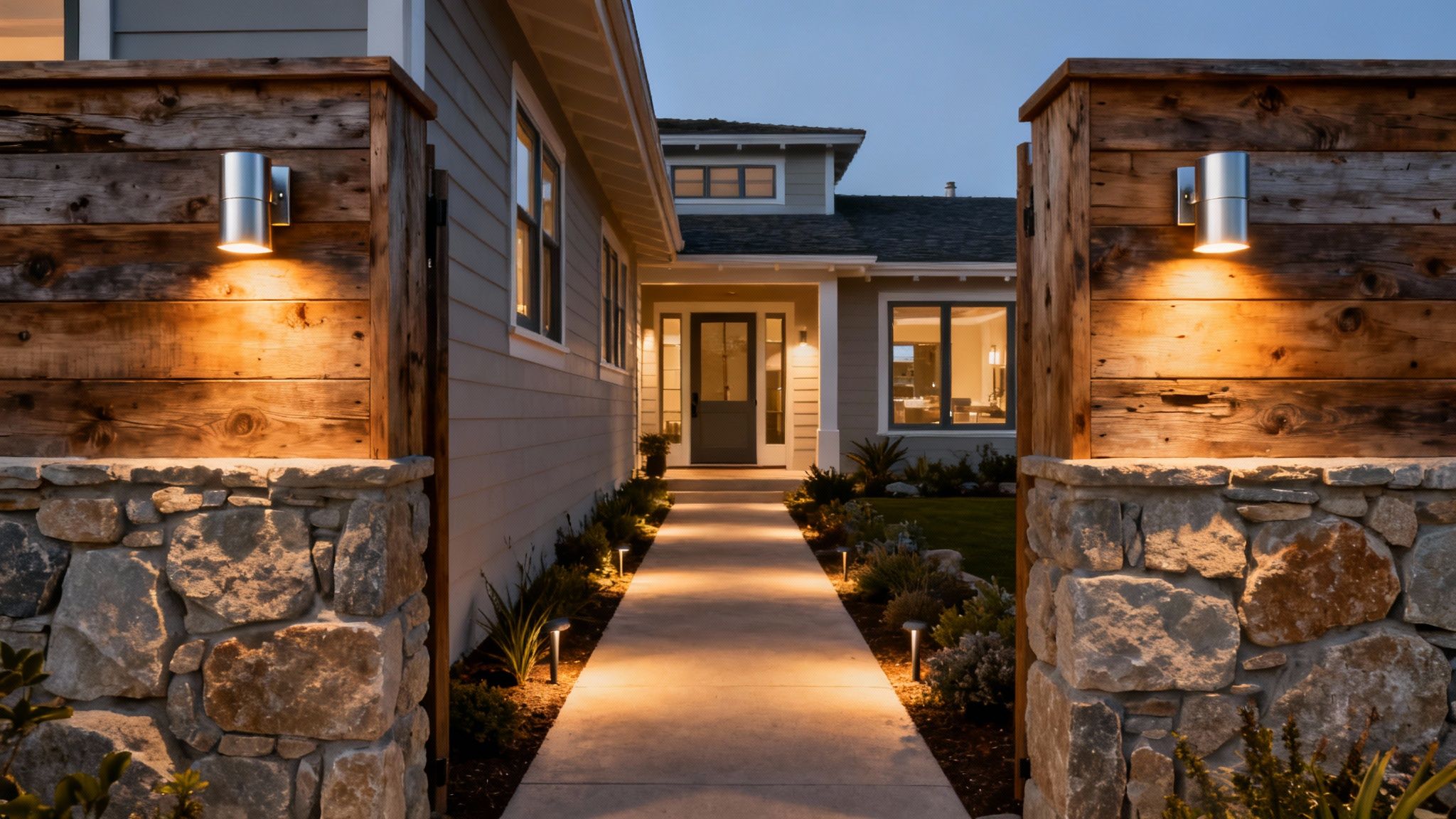
Living on the Monterey Peninsula is a dream. But the salty air and coastal fog can be brutal on a home’s exterior. Standard outdoor lighting fixtures often rust, pit, or fail.
Choosing the right materials is a key part of any smart, sustainable lighting plan. For our climate, "green by design" means picking fixtures built to last. This cuts down on waste and the headache of replacements.
Choosing Fixtures That Withstand the Elements
When it comes to outdoor lighting for homes in Monterey, Carmel, or Santa Cruz, the material is everything. You need something that can handle salt, moisture, and sun.
We steer our clients toward these high-performance materials:
- Solid Brass and Copper: These are the gold standard. Instead of rusting, they develop a gorgeous natural patina over time that adds character.
- Marine-Grade Stainless Steel: Engineered to resist saltwater corrosion, this is another fantastic, long-lasting option.
- Powder-Coated Aluminum: A high-quality powder coat creates a tough barrier that shields the aluminum from the elements.
For homes on the coast, a fixture specifically rated for marine environments isn't a luxury—it's a necessity. It ensures your investment will look beautiful and perform safely for years.
Prioritizing these tough materials turns your outdoor lighting into a one-time investment. You can see examples in our collection of coastal style lighting fixtures.
Understanding California's Title 24
If you're building or remodeling in California, you’ve probably heard of Title 24. It’s our state's building energy efficiency standard, and it has specific rules for lighting.
In simple terms, Title 24 requires high-efficacy light sources like LEDs. It also requires controls like dimmers or sensors in most spaces. Think of these rules as a framework for creating smarter, more efficient homes.
Your Local Guide to Compliant, Beautiful Lighting
Navigating Title 24 requirements can feel overwhelming. But it doesn’t have to be. As a local lighting showroom on the Monterey Peninsula, this is our specialty.
Our job is to help you find lighting that is compliant, durable, and in sync with your vision. We can show you how to meet every requirement without sacrificing style.
How We Make Green Design Simple
Feeling inspired but a little overwhelmed? We get it. Taking that vision for a stylish, sustainable home and turning it into reality involves many choices. You don't have to figure it all out alone.
At The Home Lighter, our consultants are here to make the whole process simple. Think of us as your personal guide to a cohesive, beautiful, and efficient lighting plan that works for your home.
Your Partner in Sustainable Style
It all starts with a conversation. We want to hear your vision for the space—how you live in it and the styles you love. We make choosing energy-saving lighting an exciting design process.
Our consultative approach covers all the bases:
- Perfecting Color and Ambiance: We'll help you dial in the exact color temperature (Kelvin) and brightness (lumens).
- Creating Layered Plans: We’ll design the right mix of ambient, task, and accent lighting.
- Navigating Title 24: Our deep knowledge of California's energy codes means your project will be fully compliant.
- Selecting Stylish Fixtures: Let us guide you through our curated collection of high-end, designer-forward fixtures that are both gorgeous and green.
Our goal is simple: remove the guesswork. We'll show you just how effortless and elegant a green-by-design philosophy can be in your own home.
We invite you to stop by our Pacific Grove showroom or book a consultation. Come see for yourself how beautiful and responsible lighting can be.
Frequently Asked Questions
Can LEDs feel as warm as old incandescent bulbs?
Absolutely. The idea that all LEDs are cold and clinical is a myth. Today’s LEDs offer a huge range of color temperatures, measured in Kelvin (K). For that classic, cozy glow, just look for an LED rated around 2700K.
Do I have to replace my existing light fixtures to use LEDs?
Not always. Many existing lamps and fixtures work perfectly with new screw-in LED bulbs. However, for the best performance and a cleaner look, we often recommend integrated LED fixtures. In these, the LED technology is built right into the design.
What is California's Title 24 and why does it matter for my lighting?
Title 24 is California's energy code. It is designed to make homes more efficient. For lighting, it requires using high-efficiency sources like LEDs and including controls like dimmers or occupancy sensors in most rooms. Our team can help you find beautiful, compliant fixtures.
Is energy-efficient lighting more expensive upfront?
Sometimes, a high-quality LED fixture has a higher upfront cost. But the real story is in the long-term savings. LEDs use up to 80% less energy and last much longer. This means a lower electricity bill and fewer replacement costs over time.
How can I make sure my "green" lighting still looks luxurious?
Focus on fixtures made from high-quality, sustainable materials like recycled glass, reclaimed wood, or solid brass. Work with a lighting expert who understands both aesthetics and efficiency. At The Home Lighter, we specialize in curating luxury lines that prove you never have to sacrifice style for sustainability.
Ready to bring beautiful, sustainable lighting into your home? The experts at The Home Lighter Inc. are here to guide you every step of the way. Visit our showroom or book a consultation to explore curated, designer-forward lines that blend timeless style with modern efficiency.
Explore Our Services and Book a Consultation at The Home Lighter, Inc.