
Getting the height of a dining room chandelier just right can make or break a space. A gorgeous fixture hung too high looks lost. One hung too low becomes an awkward obstacle.
The sweet spot is surprisingly simple. Aim for the bottom of the fixture to hang between 30 to 36 inches above your dining table. This range lights your meals beautifully without blinding guests or blocking their view.
Setting The Scene With Perfect Chandelier Placement

Think of your chandelier as the anchor of the dining room. It’s the centerpiece that sets the stage for family dinners and holiday gatherings. When the placement is right, the whole room feels complete.
The goal is to connect the chandelier and the table below. This ensures the light is focused where it's needed, casting a special glow. It's a key part of great lighting design.
The Standard Rule Of Thumb
For most homes with a standard 8-foot ceiling, that magic number of 30 to 36 inches from the tabletop is the professional go-to. But what about rooms with taller ceilings, which we see often here on the Central Coast? That's where you need to adjust.
For every foot of ceiling height above 8 feet, add an extra 3 inches to the hanging height. This tweak keeps the fixture in scale with the room.
This adjustment is your starting point for a balanced, professional look. For a 10-foot ceiling, you'd aim for a height of 36 to 42 inches above the table. For more great advice, you can always explore what other industry experts have to say about chandelier height.
Before you grab the ladder, a quick reference guide helps. Ceiling height is the biggest factor in adjusting the standard 30-36 inch rule. This table helps you find the right height for your space.
Chandelier Height Quick Reference
| Ceiling Height | Recommended Height Above Table |
|---|---|
| 8 Feet | 30 – 36 inches |
| 9 Feet | 33 – 39 inches |
| 10 Feet | 36 – 42 inches |
| 11 Feet | 39 – 45 inches |
| 12 Feet | 42 – 48 inches |
Think of this table as your cheat sheet. Find your ceiling height, and you’ll have a clear range to aim for. It takes the guesswork out of the process.
Finding Your Chandelier's Ideal Height and Scale
While there are many design "rules," a few simple formulas can help. Getting the math right ensures your chandelier feels intentional and scaled to the room. Let’s walk through the two key calculations for height and scale.
We often start with the 30-36 inch guideline for hanging a chandelier over a dining table. This is a great rule for standard 8-foot ceilings. But here on the Monterey Peninsula, we see many homes with taller, more dramatic ceilings.
For these spaces, just add three inches to your hanging height for every foot of ceiling height above eight feet. If your dining room has a 10-foot ceiling, hang your chandelier 36 to 42 inches above the table. It's a small change that makes a big difference.
This visual helps break down the basic measurement process.
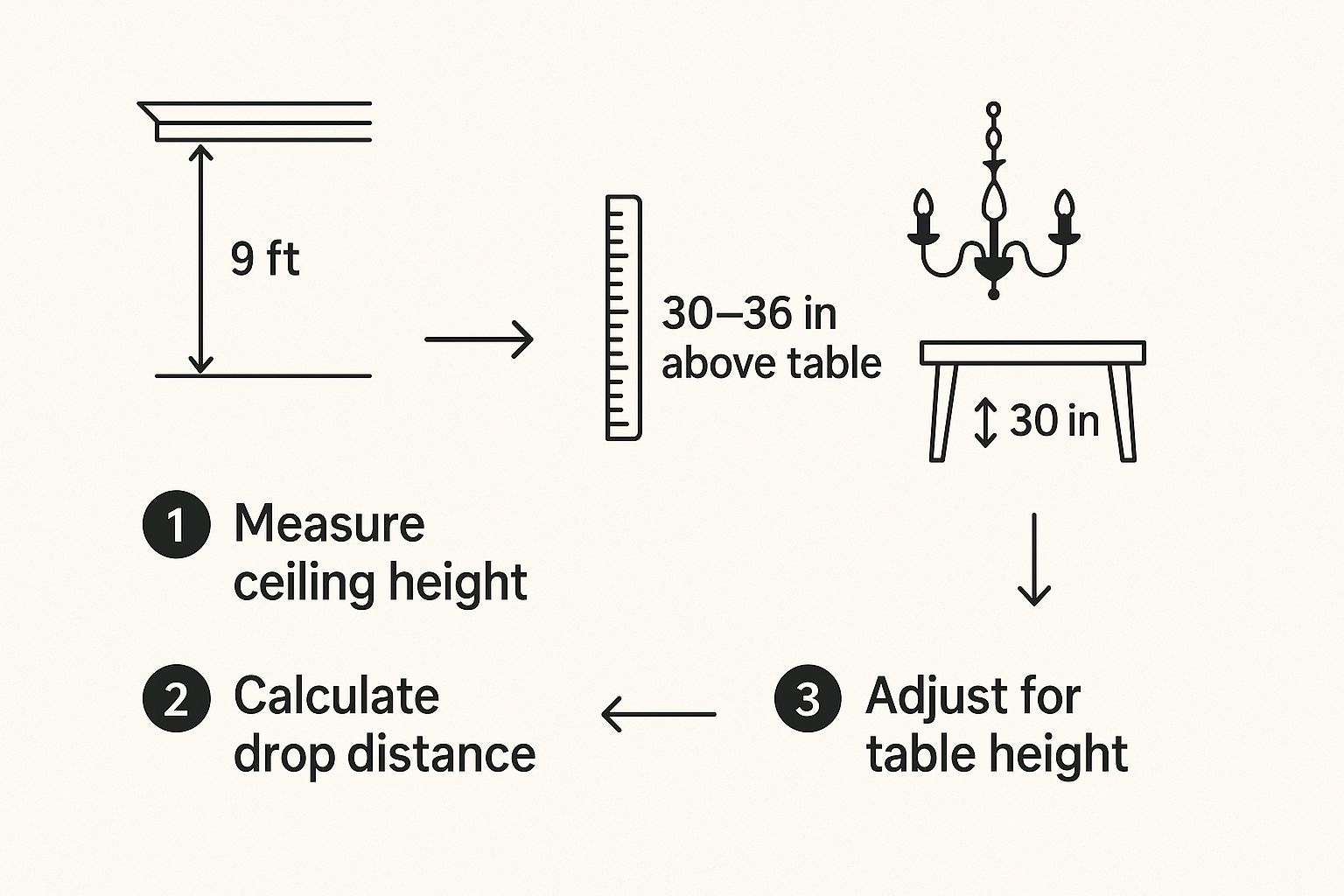
As you can see, the key relationship is between the chandelier and the tabletop. This distance stays consistent even as the ceiling gets higher.
Calculating the Right Chandelier Diameter
Getting the diameter right is just as important as the height. A fixture that’s too small will get lost in the room. One that's too large can overwhelm your dining table.
Here’s an easy formula: add the length and width of your room (in feet). Treat that sum as inches for your ideal diameter. For example, a 14 by 16-foot room adds up to 30 feet, which means a 30-inch diameter chandelier would be a great fit.
Key Takeaway: The goal is to balance both the vertical height and the horizontal scale. A perfectly scaled chandelier should feel like a natural part of your dining table.
For a more in-depth look at these calculations, take a look at our guide on chandelier height above a dining table.
Adapting the Rules for Your Unique Space
Standard formulas for chandelier height are a fantastic starting point. But the real design magic happens when you tweak those rules to fit your home's unique character.
Every dining room has its own personality. Maybe you have a long, rectangular table that would look stunning with a linear fixture. A grand, single chandelier often feels more dramatic over a round or square table.
Considering Visual Weight and Style
The style of your chandelier has a huge impact on its visual weight—how heavy it appears to be. This is where you can start to play with the height.
A delicate, airy fixture made of glass or thin metal can often hang a few inches lower. Because you can see through it, it doesn't block sightlines across the table.
But if you’ve chosen a heavy, solid chandelier, it's best to stick to the upper end of the height range. If you hang a bulky fixture too low, it can make the room feel crowded.
A lighter, more open chandelier offers more placement flexibility. A heavier, solid fixture requires sticking closely to the 30-36 inch guideline.
Lighting for Open-Concept Living
Many homes on the Central Coast have open floor plans. The dining area flows right into the living room or kitchen. In these spaces, a chandelier does more than just light up your dinner.
It becomes a design element that helps define the dining zone. By placing it correctly, you create a visual anchor. It's a perfect example of how layers of light make a space functional and beautiful. Understanding what task lighting is can help you build a cohesive lighting plan.
How Placement Affects Atmosphere and Conversation
A dining room chandelier sets the stage for every meal you host. Getting the height right shapes the function and feel of your space. It influences everything from the mood to the flow of conversation.
Proper placement creates an inviting atmosphere. A correctly hung chandelier casts a warm, focused glow over the table. This focused light naturally draws people in, encouraging them to relax and connect.
Protecting Sightlines and Conversation
One of the most practical things to consider is a clear sightline across the table. A chandelier hung too low becomes a visual barrier. This can stifle conversation and make the room feel cluttered.
The goal is simple: light up the table without blocking the view. A well-placed chandelier enhances the dining experience by supporting social interaction.
The Quality of Light
The height of your fixture also impacts the quality of the light. Hang it too high, and the light can feel distant and dim. Hang it too low, and you risk creating an uncomfortable glare in your guests' eyes.
Most designers recommend hanging the bottom of the fixture 34 to 36 inches above the tabletop. This is the sweet spot for even light without being harsh. For a deeper dive, Homes & Gardens offers some great insights on hanging chandeliers.
For the best results, think about layering your lighting. Pairing your chandelier with other sources creates depth. By learning what accent lighting is, you can add a professional touch to your dining room.
Common Chandelier Hanging Mistakes to Avoid

Sometimes the best way to get something right is to learn what can go wrong. A few common pitfalls can trip up even savvy homeowners. Avoiding these errors is key to a beautiful, functional result.
One of the most frequent issues is a fixture that's hung way too high. When a chandelier hugs the ceiling, it looks disconnected from the dining table. This fails to create the intimate atmosphere you want in a dining room.
Hanging It Too Low
On the flip side, going too low is an even bigger problem. A low-hanging chandelier blocks sightlines and forces guests to peer around it. It's also a literal headache waiting to happen when someone stands up.
A fixture that's too low makes the whole room feel crowded. You're looking for that perfect sweet spot. The chandelier should light the table without getting in the way.
Expert Tip: Before making the final cut, have a friend hold the chandelier in place while you sit at the table. Move to every seat to check sightlines and feel if the height is right.
Overlooking Scale and Measurements
Another classic mistake is choosing a light that's out of scale. A tiny chandelier in a grand room gets lost. A massive one will overwhelm a smaller space.
Finally, people often forget to account for the entire fixture, including the chain. Many measure from the ceiling to the chandelier's body but forget the hardware. This can throw off your final height of a dining room chandelier by several inches.
For a wider look at what to watch out for, you can explore more of the most common home lighting mistakes.
When Your Space Needs a Personal Touch
While these rules of thumb are a great start, some homes don't fit the standard mold. We see it all the time here on the Monterey Peninsula—homes with vaulted ceilings or unique historic layouts.
If that sounds like your home, a professional eye can make all the difference.
Our team at The Home Lighter can help you find a chandelier that hangs at the perfect height. Getting the placement just right can change how a room feels and functions. A well-chosen fixture can also be one of many energy-efficient lighting solutions.
We believe the right light should feel like it was always meant to be there. Getting the height and scale perfect is the key.
Swing by our Pacific Grove showroom or schedule a chat with us. Let's work together to make sure your dining room lighting is everything you've envisioned.
Dining Room Chandelier FAQs
What if my dining room has a very high or vaulted ceiling?
This is a great question. The core rule still applies. For ceilings over 8 feet, add 3 inches of hanging height for each additional foot of ceiling. But always aim for the bottom of the chandelier to be 30-36 inches above your tabletop to keep it connected to your gathering space.
Should the chandelier be centered in the room or over the table?
Always center your chandelier over the dining table. Think of the table as the anchor of the space—your light fixture should align with it. If your table is intentionally off-center, the chandelier should follow its lead to create a balanced look.
How do I choose the right size chandelier for my table?
A good guideline is to choose a chandelier with a diameter that is about one-half to two-thirds the width of your dining table. This ensures the fixture is scaled properly and doesn't overwhelm or underwhelm the space. For example, a 48-inch wide table would look great with a chandelier between 24 and 32 inches in diameter.
What about chandeliers with non-traditional shapes, like linear fixtures?
For long, rectangular tables, a linear chandelier is a fantastic choice. The rule for height (30-36 inches above the table) still applies. For scale, choose a fixture that is no longer than two-thirds the length of your table to maintain a balanced and proportional look.
Is a dimmer switch really necessary for a dining room chandelier?
We highly recommend it! A dimmer switch is a simple addition that gives you complete control over the room's atmosphere. You can have bright light for cleaning or homework, and a soft, ambient glow for a relaxed dinner party. It’s one of the easiest ways to make your lighting more versatile.
Ready to find that perfect chandelier? The team at The Home Lighter Inc. is here to provide personalized advice and help you select a fixture that perfectly complements your home. Visit us online or stop by our Pacific Grove showroom to get started.