
Direct Answer: Light fixture prices in 2026 vary mostly by where the fixture is built. Tariffs on Chinese-made lighting stack high, while Mexican and domestic production carries less, so similar-looking fixtures now price very differently.
Most people on the Monterey Peninsula are not gutting a house this year. They are fixing the one dark room that has bugged them since they moved in.
National remodeling spending has slowed for three straight quarters, and Harvard’s Joint Center for Housing Studies projects owner improvement and repair growth easing to roughly 0.5 percent by mid-2027. Fewer whole-home fixture refreshes, more single-room fixes. One homeowner summed it up in a note to the showroom: more light in the house, done in an energy efficient way.
When the project is one room and one or two fixtures, every dollar is visible. And that is exactly the moment when light fixture prices in 2026 stopped behaving the way they used to.
Why Two Similar Fixtures No Longer Carry Similar Prices
The short answer is country of origin. Lighting imports fall under customs heading 9405, and the mix has shifted hard.
China’s share of US lamp and fixture imports dropped from roughly 46 percent in 2022 to about 37 percent in 2024, with production moving toward Vietnam, Cambodia, and Mexico. A Chinese-made fixture now carries a stacked tariff in the neighborhood of 29 to 49 percent, depending on how one contested layer gets resolved in court. Product that qualifies under USMCA from Mexico can enter near zero.
So two pendants that look almost the same on a shelf can sit at very different price points for reasons that have nothing to do with design or build quality.
A few things follow from that:
- A price quoted in spring may not hold in fall, because manufacturer price lists are moving more than once a year
- Movement has been sharpest at the low end, including imported LED bulbs and seasonal string lighting
- Two fixtures at a matching price may now differ mainly in where and how they were built
Nobody should guess at current numbers from an old catalog. Pricing on any specific line is worth confirming with the showroom before a budget gets locked.
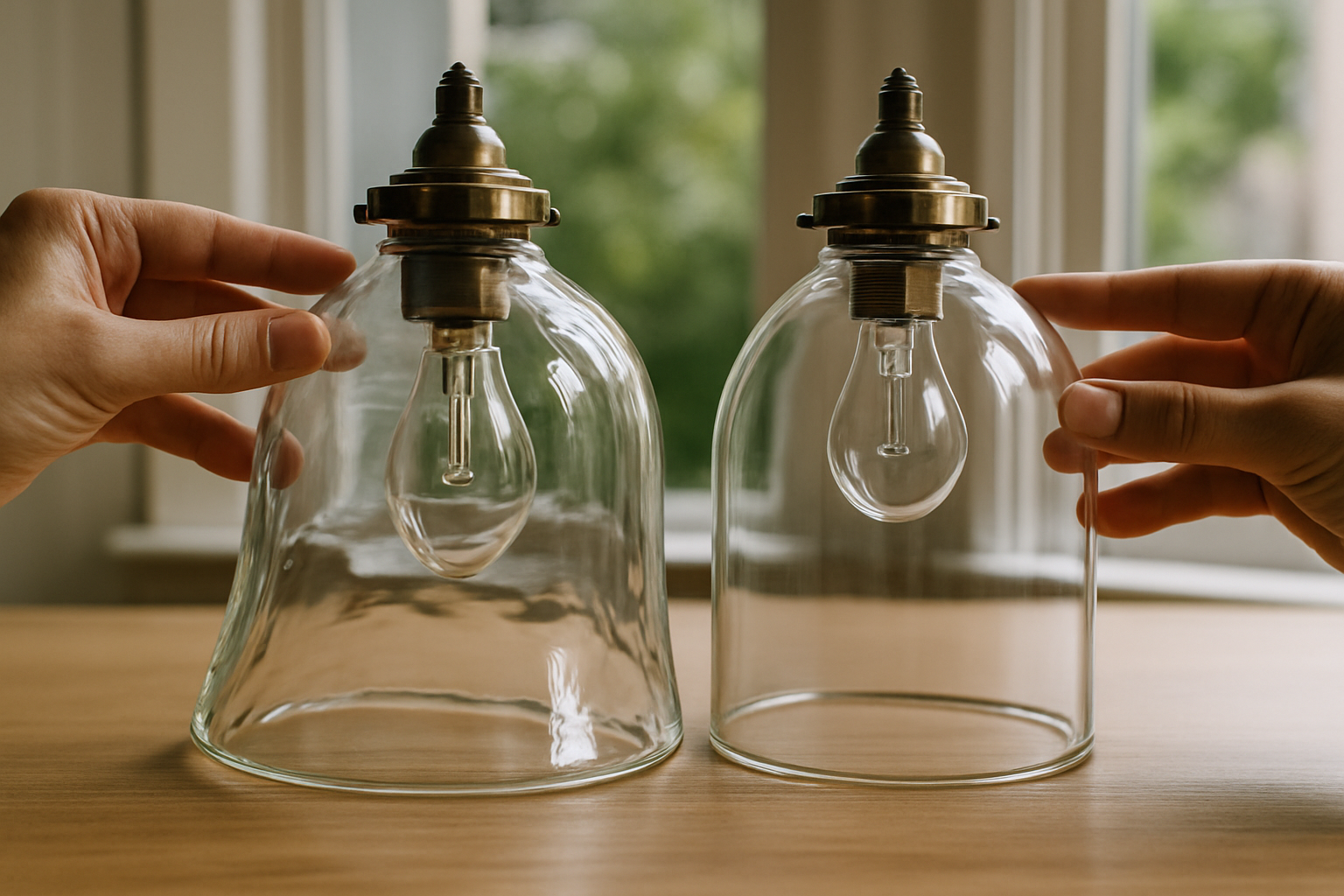
What to Ask Instead of Just Comparing Price Tags
Since the sticker no longer tells the whole story, the questions do. These are the ones that separate two fixtures sitting at a similar number:
- Where is it made? Origin drives the tariff load, and it hints at how the factory is set up
- Is the finish hand-applied or sprayed? Hand-applied finishes age unevenly in a good way; thin sprayed coatings chip and show it
- Is the glass handblown or molded? Handblown glass has slight variation and depth, molded glass is uniform and flat
- Are replacement parts stocked domestically? This decides whether a repair in year eight is a phone call or a trash can
- How long has the manufacturer supported this line? A line that has run for a decade usually keeps running
That last pair matters more than most shoppers expect. A fixture with no parts channel is a disposable item wearing a nice finish.
There is a useful companion read on 6 signs an inexpensive fixture is still built to last, because a modest price and poor construction are not the same thing.
Five Questions and What the Answers Actually Tell You
Bring this list to any showroom counter. The answers say more about value than the price does.
| Question | Why It Matters in 2026 | What a Good Answer Sounds Like |
|---|---|---|
| Where is the fixture made? | Tariff exposure varies widely by origin | A clear country, not a shrug |
| Hand-applied or sprayed finish? | Finish is the first thing to fail | Hand-applied, with a described process |
| Handblown or molded glass? | Explains part of a price gap | Handblown, with visible variation |
| Are parts stocked in the US? | Decides repairability years later | Yes, with a parts contact |
| How long has the line been made? | Predicts future parts support | Several years and still current |
Price Per Year of Use Is the Number That Counts
Here is a pattern that shows up in showroom calls over and over. People come back five, ten, even fifteen years after a purchase, and they are not shopping for a new fixture. They want one part.
A Carmel Valley homeowner called because an electrician had pulled down a dining room chandelier bought years earlier and needed a transformer with a dimmer before it could go back up safely. Another caller wanted a replacement remote for a ceiling fan. Someone else asked for a copy of a receipt on a fixture purchased back in 2019.
That long tail only exists when the manufacturer keeps parts in circulation. It changes the math completely.
A fixture that costs more up front but runs twenty years with one part swap is cheaper per year than a bargain fixture replaced twice. American-made lines like Arroyo Craftsman, Hubbardton Forge, and Schonbek sit squarely in that category, which carries extra weight while import pricing stays unsettled.
Two related reads worth your time: when an older fixture needs one part, not a whole new light and will this fixture still be fixable in ten years.
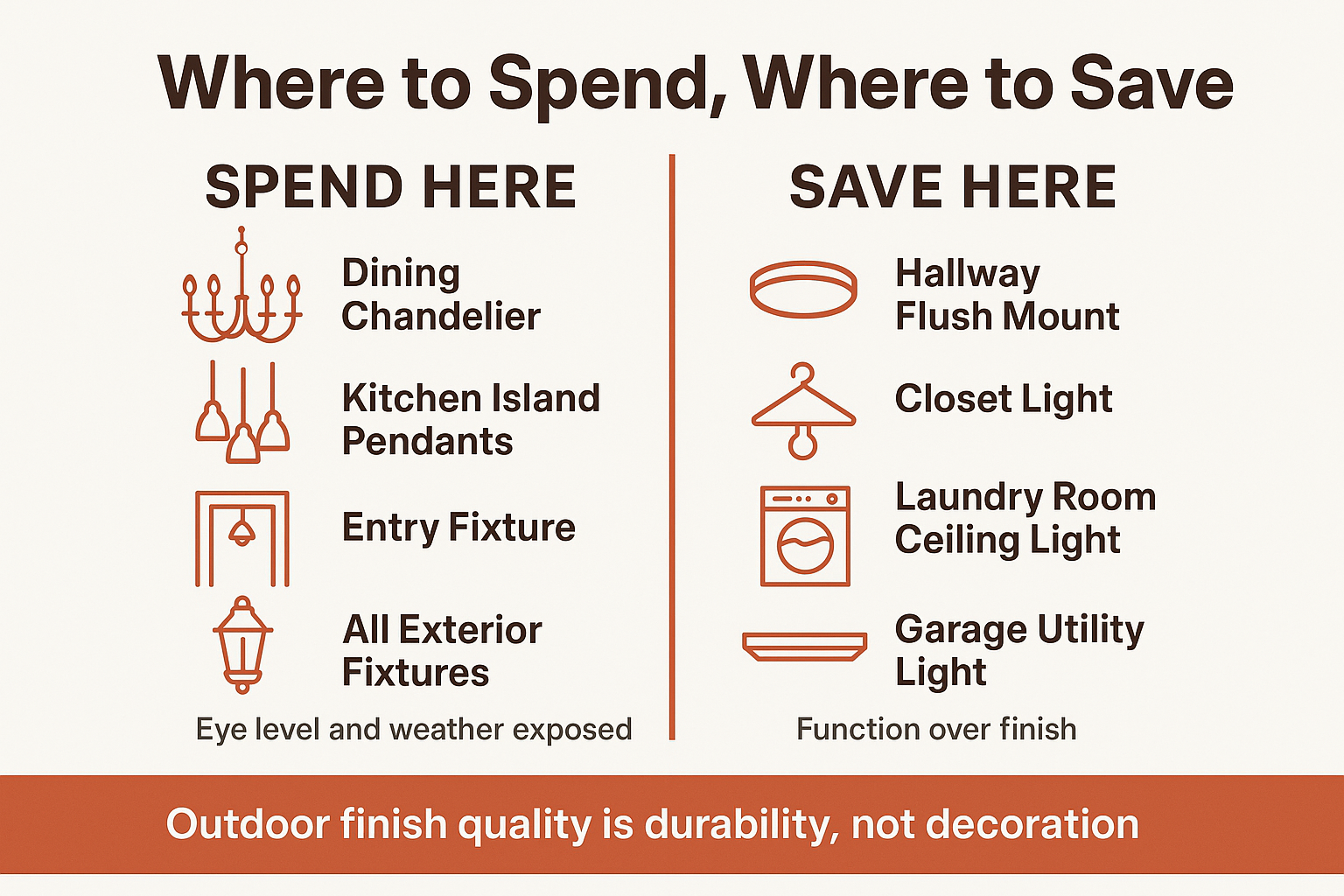
Where to Spend and Where to Hold Back in One Room
A simple way to split a single-room lighting budget when prices are moving.
Indoors You Can Be Choosy. Outdoors on the Coast, Less So.
Inside, quality reads at eye level. The dining chandelier, the island pendants, the entry fixture, those are the ones people look directly at and touch. A hallway flush mount can be modest and nobody will ever notice.
Outside is a different conversation on this peninsula. December here brings around 2.4 inches of rain across roughly ten rain days, inside a salt-laden fog belt that works on metal year round. Exterior finish quality and a correct wet rating are durability spending, not decorative spending.
Then there is the local rulebook. Carmel-by-the-Sea requires fully shielded exterior fixtures with a lighting plan filed alongside the permit, and caps residential exterior color temperature at 3000K. A bargain fixture that fails those requirements becomes the most expensive one you bought.
Verify current requirements with the City or a licensed contractor before anything gets ordered. Two useful background pieces: what salt air does to outdoor fixtures and wet rated or damp rated, which porch light belongs where in the fog.
Ask Whether the Price Is Held, and for How Long
This is a pricing question, not a construction schedule question. In a volatile trade year, manufacturer price lists update on their own calendar.
Three things worth asking before you commit:
- Is the quoted price held, and through what date
- If the line gets repriced, is a substitution available from a different manufacturing origin
- Are the pieces in stock now or coming from a factory run that has not shipped yet
None of this needs to feel rushed. It just means a quote has a shelf life, and knowing that shelf life keeps a small project from going sideways.
One more thing to keep straight: installation is a licensed electrician’s job. Wiring, mounting, dimmer compatibility checks, and any permit work belong with your own contractor, not with the people who sell you the fixture.
Frequently Asked Questions About Light Fixture Prices in 2026
Why did a fixture I priced last spring cost more a few months later?
Most likely the manufacturer issued a new price list. In a year with shifting tariff layers, those updates have come more than once annually, and imported product from higher-tariff origins moved most. Ask whether a current quote is held and for how long.
Does a higher price always mean better construction?
No. Part of what you are seeing in 2026 is tariff cost, not craftsmanship. That is why the origin, finish method, glass type, and parts support questions matter more than the number on the tag.
Is American-made worth it right now?
For fixtures you look at every day, often yes. Domestic lines sidestep the import tariff swings entirely, and they tend to keep replacement parts in circulation for years, which is where the real cost per year of use gets decided. For a closet or garage light, it is overkill.
Where have prices moved the most?
The low end. Imported LED bulbs and seasonal string lighting have seen the sharpest reported movement, which is also the category where a low sticker price hides a short lifespan.
Do Carmel’s exterior rules really change what I can buy?
They do. Fixtures need to be fully shielded, a lighting plan goes in with the permit, and residential exterior color temperature is capped at 3000K. Confirm the current language with the City or your licensed contractor, since ordinances get updated.
Want to Know What Separates Two Fixtures at the Same Price?
In a year when the price tag explains less than it used to, it helps to stand in front of both fixtures and have someone walk through the differences in construction and parts support. The Home Lighter has been on the Monterey Peninsula since 1969 and carries lines from more than 60 manufacturers, so Greg can make that comparison in person, which is not a conversation an anonymous product page can have. The showroom is at 2034 Sunset Drive in Pacific Grove, (831) 655-5500, walk-ins are welcome, and appointments are available for more involved projects.
