
The secret to perfect kitchen island lighting isn’t about picking one amazing fixture. It’s about creating a balanced recipe of light. You need to blend different sources to make the space both a useful workhorse and a beautiful centerpiece.
The best approach combines focused pendant lights or a linear fixture for direct task lighting. It also includes the broader glow of recessed lights for overall brightness. This layered strategy is what makes your island truly shine. It gets rid of annoying shadows and gives you flexibility for everything from meal prep to homework.
Your Guide to Perfect Kitchen Island Lighting
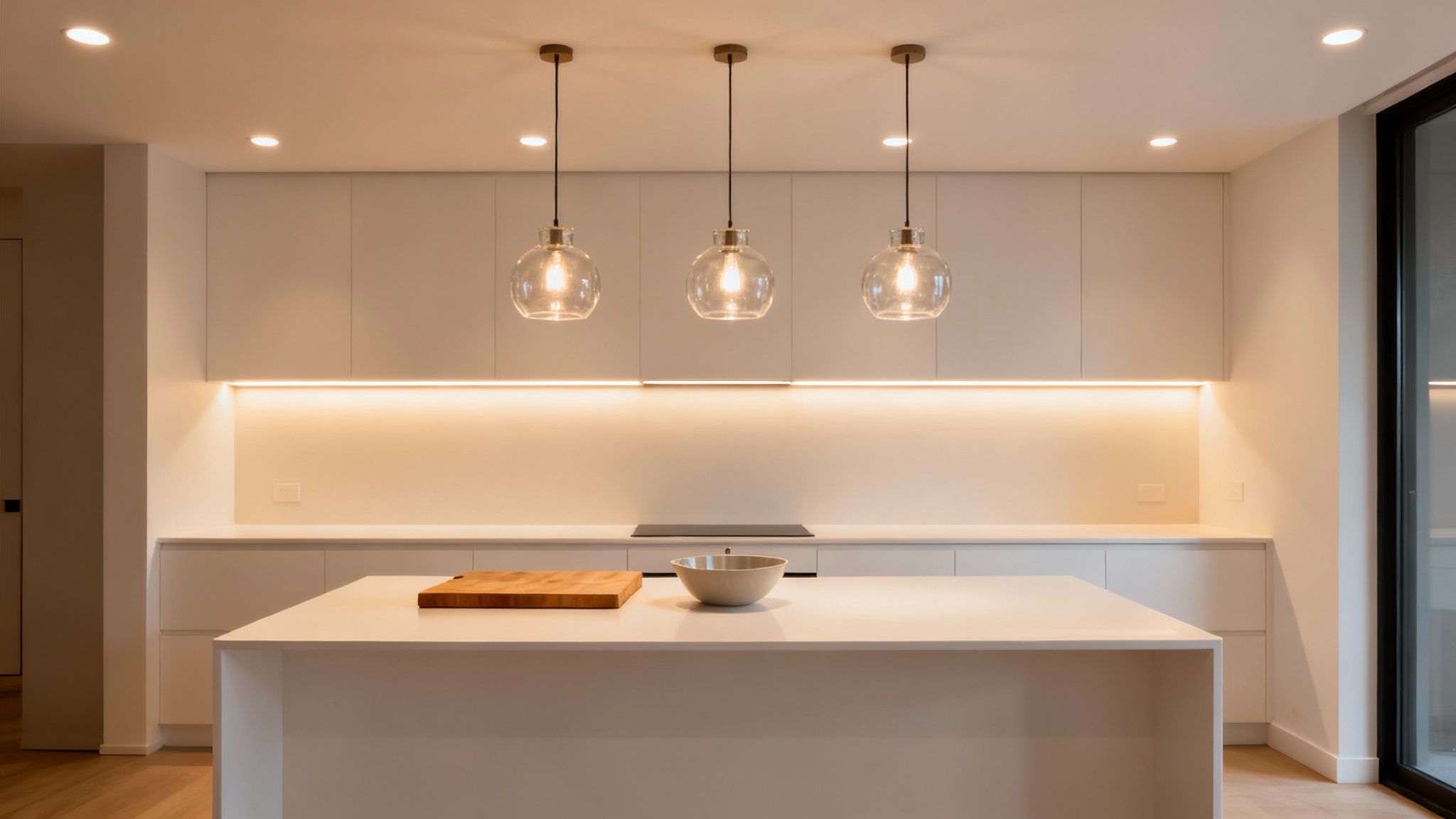
Planning kitchen lighting can be confusing. Do you need recessed lights? Pendants? Under-cabinet strips? It’s easy to get overwhelmed trying to “do it right.” People often throw around terms like “layered lighting” without explaining what it means.
The truth is, great kitchen lighting isn’t about a single fixture. It’s about getting several types of light to work together as a team. This simple strategy is key to how you'll use and enjoy your kitchen every single day.
The Foundation of Good Lighting
Good kitchen lighting is built on a layered approach. It combines three different types of light. Each one has a specific job, and when they work in harmony, they create a space that’s both practical and inviting.
Here are the three essential layers you need to know:
- Ambient Light: This is the room’s main, overall light. Think of it as the base layer that lets you move around safely. It's often provided by recessed lights or simple flush-mount fixtures.
- Task Lighting: This is your work light—focused right where you need it. Over a kitchen island, pendants or a long linear fixture are perfect examples. They light up the surface for chopping vegetables or reading a recipe.
- Accent Lighting: This is the fun, decorative layer. It's used to highlight details like the top of your cabinets or inside glass-front cupboards to make your glassware sparkle.
Many people make the mistake of relying on just one overhead light. They often skip task lighting and choose fixtures based only on style, not performance. The result? Kitchens that look good in photos, but leave you squinting or dealing with shadows while cooking. By thinking in layers, you can design a kitchen that truly works for you.
Why Island Lighting Is More Than Just a Light Fixture
The kitchen is no longer just a place for cooking. Today, it’s the true heart of the home. It’s where family gathers, kids do homework, and friends chat over coffee. This means your lighting needs to be as versatile as the life happening there.
Your kitchen island is right in the middle of it all. Its lighting is both a functional workhorse and the aesthetic centerpiece of the room. The right fixtures provide the focused task lighting you need for chopping vegetables, but they also set the mood and define your kitchen's style.
It's a Functional Centerpiece
Putting real thought into your island lighting is one of the smartest moves you can make in a kitchen remodel. It's an investment that pays off daily in how you use your home. According to 2024 trends, nearly every kitchen remodel includes lighting upgrades—with most people adding island pendants.
This isn't just a trend; it's a fundamental shift in design. The global market for kitchen lighting hit roughly USD 13.50 billion in 2023 and is expected to grow. Homeowners are realizing that great lighting isn't a luxury—it's a necessity. You can see more data on kitchen lighting trends to understand this movement.
Setting the Stage for Your Daily Life
Think of your island lighting as the main character in your kitchen’s story. It naturally draws the eye and sets the feel of the entire space. Whether you want a warm glow for dinner or crisp light for baking, the right fixtures make it possible.
A well-lit island transforms a simple countertop into a dynamic, multipurpose surface. It becomes the command center for daily activities, making every task easier and every gathering more enjoyable.
For those of us here on the Monterey Peninsula, island lighting is a perfect opportunity to blend practicality with personality. At The Home Lighter, we help you find fixtures that perform flawlessly and feel right for your Central Coast home. Our Pacific Grove showroom is the ideal place to start building a lighting plan that serves your family.
Choosing the Right Fixture for Your Island
Once you know the purpose of your island lighting, it's time for the fun part: choosing the hardware. The shape and size of your island are your best guides here. A long, skinny island for meal prep will have different needs than a big, square island for family gatherings.
For kitchen islands, you have three fantastic options: pendants, chandeliers, and linear fixtures. Each brings its own style and function to the table. Getting this choice right sets the entire design tone for the heart of your home.
Pendant Lights: The Versatile Spotlights
Pendants are like individual spotlights, designed to highlight your workspace. They are the most popular choice for kitchen islands for a good reason.
When you hang them in a series—usually two or three—they spread light evenly across a long island. This setup gets rid of dark spots, making tasks easier.
Pendants also come in endless styles, from modern farmhouse to coastal contemporary. For those of us on the Central Coast, pendants with natural materials like rattan or seeded glass reflect the relaxed vibe of Monterey and Santa Cruz. You can learn more in our guide on the best pendant lights for kitchens.
Chandeliers: The Bold Statement Piece
We usually think of chandeliers for dining rooms, but they can be a stunning choice over a kitchen island. This works especially well if your island is more square-shaped or acts as a social hub.
A single, dramatic chandelier becomes an instant focal point. It can anchor the entire room's design, adding elegance and personality.
Just be sure to choose a chandelier that directs light downward. Some ornate styles only create a soft, ambient glow, which won't be enough for kitchen tasks. Look for fixtures with bulbs or shades pointing down to get both style and function.
Linear Fixtures: The Sleek and Modern Solution
A linear fixture is a single, long light that stretches across your island. This style offers a clean, streamlined look that fits well in modern or minimalist kitchens.
Functionally, they are fantastic. A linear fixture provides uninterrupted light from one end of the island to the other, making it a great task lighting solution.
They’re also a good choice if you don’t want multiple pendants hanging from your ceiling. You get the same even light with a more cohesive design. You can use tools to see how different lighting fixtures will look in your kitchen before you decide.
Getting the Scale and Spacing Just Right
Picking a style you love is the fun part, but getting the measurements right is what makes your lighting work. Think of it like a recipe. The fixture is your star ingredient, but scale and spacing are the measurements that bring it all together.
These rules of thumb help you get that professional, designer look. They ensure your fixtures are the right size for your space. They also provide great task lighting without getting in your way.
Finding the Right Size Fixture
First, let's figure out the right size, or diameter, for your lights. There's a simple formula for this. Just measure the width of your island in inches and subtract 12. This leaves a 6-inch buffer on each side for a clean look.
For example, if your island is 36 inches wide, subtracting 12 leaves you with 24 inches to work with. You could hang two pendants that are 12 inches wide each, or a single linear fixture that’s about 24 inches wide. This quick math helps prevent a fixture from overpowering your island.
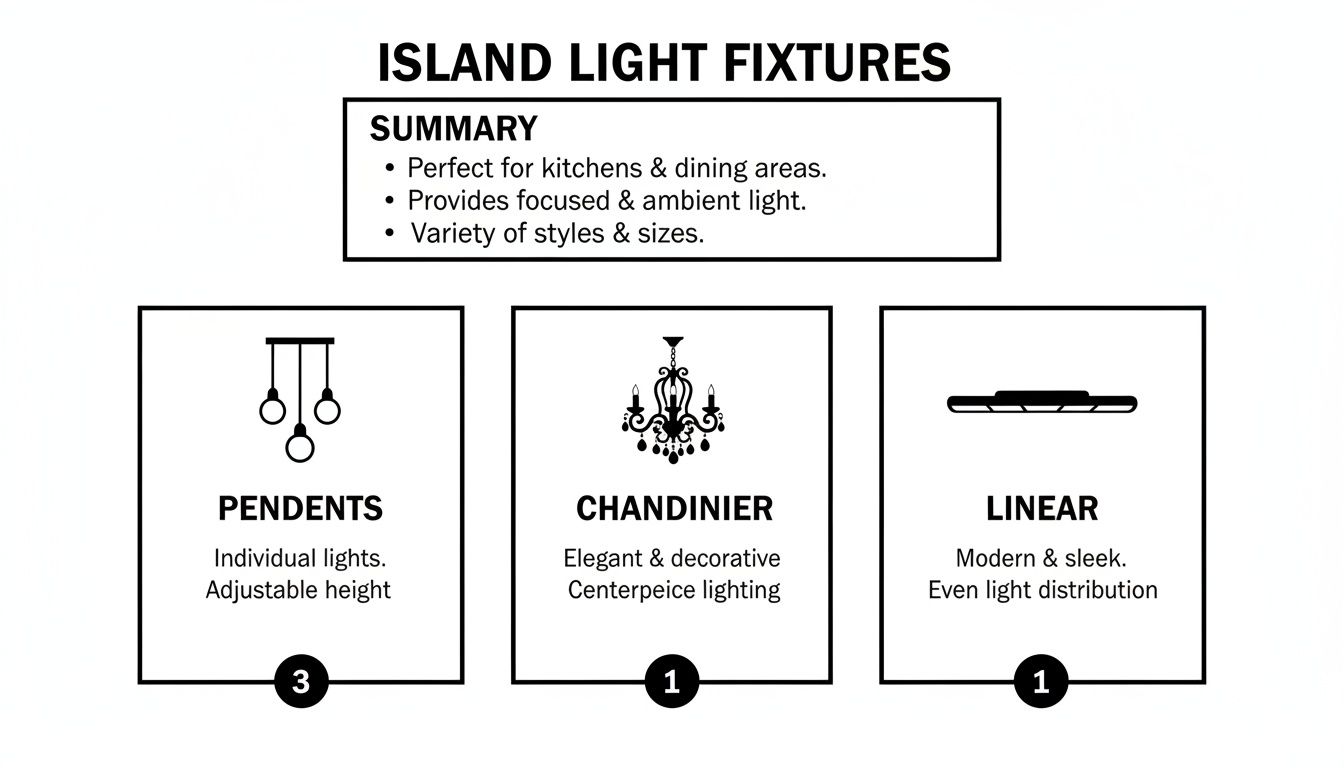
This infographic breaks down the most popular fixture types you'll see over a kitchen island.
 light fixtures: pendents, chandelier, and linear styles with descriptions.” />
Whether you choose pendants, a chandelier, or a linear fixture, the goal is the same. Match the scale of the light to the scale of your island.
Perfecting the Height and Spacing
Once you have the right size, the next step is getting the height and spacing right. These measurements make your lights functional for tasks and look balanced.
Here are a couple of go-to guidelines:
- Height Above Counter: The bottom of your light fixtures should hang between 30 to 36 inches above the countertop. This is low enough for useful light but high enough to see across the kitchen.
- Spacing Between Pendants: If you use multiple pendants, space them evenly. A good rule of thumb is to leave about 30 inches between the center points of each fixture. Make sure the outer pendants are at least 6 inches from the island's edge.
This table puts all the key numbers in one place for easy reference.
| Kitchen Island Lighting Measurement Rules |
| :— | :— | :— |
| Measurement Rule | Guideline | Why It Matters |
| Fixture Diameter | Island Width (in.) – 12 | Ensures the light fixture is proportional to the island and doesn't overwhelm the space. |
| Height Above Counter | 30 to 36 inches | Provides effective task lighting while keeping sightlines clear for conversation and movement. |
| Spacing Between Pendants | ~30 inches (center to center) | Creates visual balance and ensures even light distribution across the entire island surface. |
| Edge Clearance | 6+ inches from island edge | Prevents the layout from looking cramped and keeps fixtures centered over the workspace. |
Sticking to these measurements will give you a clean, polished result. For more tips, check out our foolproof pendant light size guide.
Getting the Light Just Right: Bulbs and Dimmers
Once you've picked your fixtures, the next decision is about the quality of light they cast. This is where light bulbs—and the magic of dimmers—come in. Getting these details right is just as important as the style of the fixture itself.
Think of the light bulb as the engine inside your fixture. You only need to know two key terms: lumens, which measures brightness, and Kelvin (K), which tells you the color of the light. More lumens mean brighter light, while Kelvin shows if the light feels warm and cozy or cool and sterile.
Finding the Perfect Glow for Your Kitchen
For a kitchen island, you need to find a balance. You need bright, clear light for tasks, but also a warm, inviting glow for relaxing.
We almost always recommend a color temperature of around 3000K. This is often called "warm white," and it's the perfect spot for kitchens.
Think of 3000K light like the gentle warmth of the morning sun—it’s clear and energizing without feeling harsh. Light above 4000K can start to feel more like a sterile office, which isn't the vibe most of us want at home.
The good news is that LED technology makes this easy and efficient. LEDs now dominate the kitchen market because they last a long time and save on energy bills. You can read more about the accelerated adoption of LED kitchen lighting to see how big this trend is.
Why Dimmers are a Must-Have
If there’s one non-negotiable feature for island lighting, it’s a dimmer switch. A dimmer gives you total control over the mood in your kitchen.
With a simple slide, you can go from bright light for meal prep to a soft glow for a quiet dinner. This flexibility turns your lighting from a simple utility into a powerful design tool. Our guide on how to choose the right light bulb can help you find the best dimmable options.
Matching Your Lighting to Your Home's Style
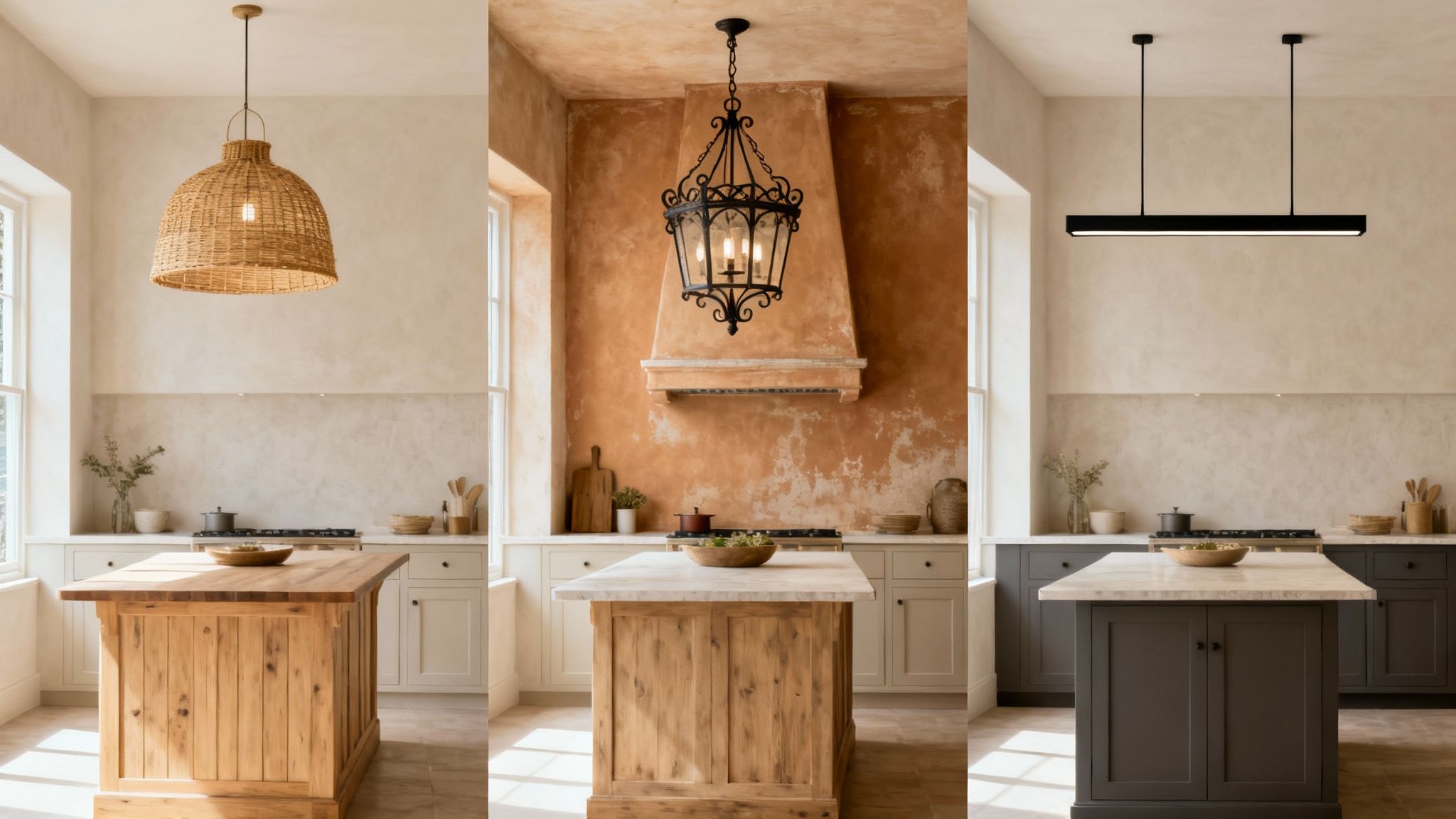
After you've handled the technical details, it's time for the fun part. Pick fixtures that look and feel like they belong in your home. The best lighting connects with a room's architectural style. This is especially true here on the Central Coast, where our homes have Spanish, coastal, and ranch influences.
Your island lighting is the perfect chance to lean into that style. If you have a Spanish revival home in Monterey, imagine pendants made from wrought iron. For a breezy coastal home in Santa Cruz, fixtures with natural materials like rattan or seeded glass can echo the seaside vibe.
Curating a Cohesive Look
Creating a cohesive design doesn't mean every fixture has to be a perfect match. The real goal is to create a coordinated feel. You can do this by linking elements like finish, material, or shape throughout the space. Think of your lighting as a team player that works with your other design choices.
As you plan, remember how lighting and other finishes play off each other. For some great practical advice on another key part, check out these tips on how to paint kitchen cabinets to pull your look together.
Upgrading your kitchen in Monterey, Santa Cruz, or Salinas? Visit our Pacific Grove showroom to explore fixture options and get help building a lighting plan that works for your space, not just the showroom.
Our consultants are experts at finding that sweet spot. We can help you pick island pendants that speak to your home's character while making sure the rest of your lighting plan feels connected. You can learn more in our article on lighting looks that work in Monterey Bay homes.
Making Your Kitchen Lighting Plan Simple
Let’s be honest, planning a kitchen renovation can feel overwhelming. You’re juggling decisions about cabinets, countertops, and appliances. When you finally get to the lighting, that feeling can turn from overwhelmed to completely lost.
The good news? You don’t have to become a lighting expert overnight. We are here to guide you, step-by-step, from confusion to confidence. It’s never just about selling you a fixture. It’s about helping you build a smart lighting plan you'll love for years.
Your Personal Lighting Partner
Think of us as your personal lighting consultants. When you walk into our Pacific Grove showroom, our first goal is to understand your vision and how you live in your kitchen. We’ll sit down together and map out a full lighting layout, handling the technical details so you can focus on the fun part.
Greg and Tammy at The Home Lighter help you plan your lighting layout step by step—no design degree needed. Whether it’s choosing the perfect pendants for your island or sorting out the right dimmable recessed lights, their expert guidance ensures a result that’s both beautiful and functional.
A great lighting plan isn't about following rigid rules; it's about creating a space that feels right for you. Our consultative approach ensures your kitchen lighting is perfectly tailored to your lifestyle, from bright task lighting for cooking to a warm glow for evening conversations.
By partnering with an expert, you can avoid common mistakes. You can create a kitchen that isn't just stunning, but a genuine joy to use every day. If you’re just starting, find more guidance in our post on the best lighting for a kitchen island.
FAQs: Your Kitchen Island Lighting Questions Answered
We get a lot of questions about kitchen island lighting in our Pacific Grove showroom. Here are answers to some of the most common ones.
How many pendants should I put over my kitchen island?
The "rule of three" is popular, but not required. For a standard 6-to-8-foot island, two or three pendants usually look best and provide even light. For a very long island, you might need four or more. For a small island, a single, larger pendant can make a beautiful statement.
Can I mix and match lighting styles in my kitchen?
Yes, absolutely! A well-designed kitchen often mixes different lighting types to create depth. The key is to make it look intentional. You can do this by using a common finish (like all brushed nickel) or similar shapes across your different fixtures, such as your pendants and ceiling lights.
What is the best color temperature for island lights?
We almost always recommend a warm white light, which is around 3000 Kelvin (K). This color temperature is bright enough for tasks like chopping vegetables, but still feels warm and inviting. It’s the perfect all-around choice for a space that is used for both work and relaxing.
Should my island pendants match other fixtures?
They don't have to be an exact match, but they should coordinate. Think of them as cousins, not twins. Sticking with the same finish (like matte black) for all your lights and hardware is an easy way to create a cohesive look. You can also choose fixtures that share a similar style or shape.
What's the most common mistake with kitchen island lighting?
The most common mistake is choosing fixtures that are the wrong size for the island—either too small or too large. Another big one is hanging them at the wrong height. Pendants hung too low can block views, while those hung too high won't provide good task lighting. Following basic measurement guidelines can help you avoid these problems.
Ready to map out a lighting plan that makes your kitchen both stunning and functional? The experts at The Home Lighter Inc. are here to help you get it right. Come see us in our Pacific Grove showroom or find out more about our design services.