
For contractors in Salinas, Title 24 is a critical part of a kitchen project. It helps you stay on schedule and on budget. California's energy code, known as Title 24, is mandatory and non-negotiable.
For kitchens, this means using high-efficacy fixtures and installing specific dimmer controls. You must also choose products with the right certifications. Simply screwing in an LED bulb is not enough. Getting this wrong can lead to failed inspections, expensive rework, and unhappy clients.
Why Title 24 Can Delay Projects for Salinas Contractors
On the Monterey Peninsula, a kitchen remodel is a complex process. Schedules are tight and budgets are even tighter. The last thing you need is for a final inspection to fail your lighting plan.
This is the hidden risk of Title 24. A failed inspection can force you to rip out beautiful fixtures you just installed. This turns a profitable project into a logistical and financial nightmare.
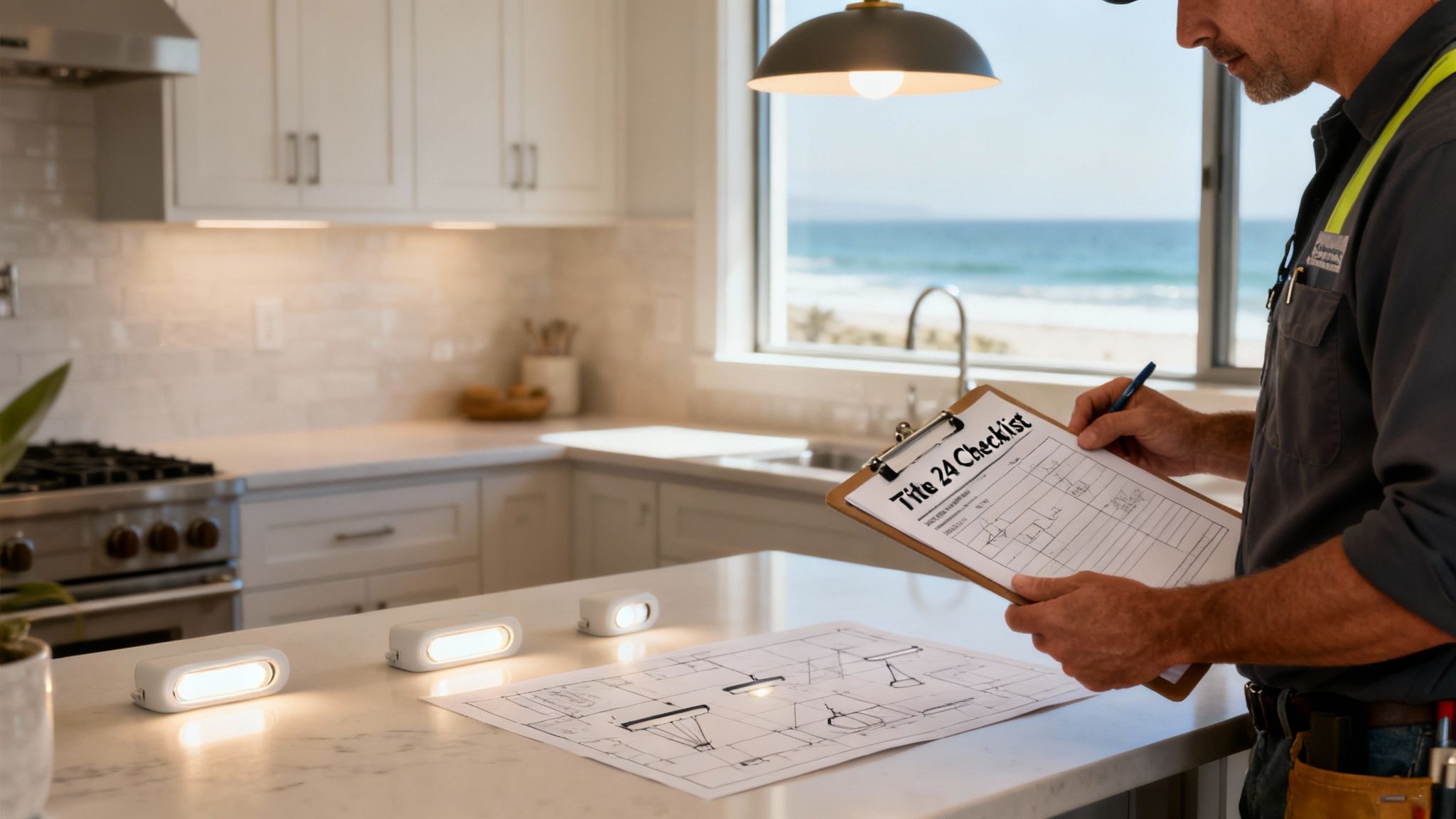
This rule directly impacts every job in Salinas, Santa Cruz, and Pacific Grove. Clients are becoming more aware, too. Local Google searches show growing interest in "energy-efficient kitchen lighting" and "LED under cabinet lights California code." They expect you to be the expert.
The Real Cost of Non-Compliance
If you don’t plan for Title 24 from the start, you risk major problems. These issues can include:
- Delayed Inspections: A failed inspection stops your project until all lighting issues are fixed.
- Forced Fixture Swaps: The designer pendant the client loves might have to be replaced. This often comes at your own expense.
- Budget Overruns: Last-minute changes mean surprise labor and material costs that reduce your profit.
- Client Frustration: Unexpected delays and costs can damage your relationship with a client and hurt your reputation.
The Local Solution for Peace of Mind
The good news is that compliance doesn’t have to be a guessing game. At The Home Lighter, we understand Title 24. We offer a curated selection of compliant kitchen lighting that blends function and style.
We help contractors and designers avoid guesswork with local guidance on code and controls. When planning a kitchen, knowing your LED lighting options is the first step. We provide guidance to help you pass inspection the first time.
Understanding The Core Rules of Title 24
Let's simplify California's Title 24 lighting requirements. For any kitchen project in Salinas, you must follow a few key rules to pass inspection.
First, all lighting must be "high-efficacy." This means fixtures must produce a lot of light (lumens) using very little energy (watts). For practical purposes, this means using integrated LED fixtures designed for efficiency.
Second, the code requires specific lighting controls. In kitchens, nearly every light source must be connected to a dimmer. This allows homeowners to adjust light levels, save energy, and set the mood. The only common exception is for lighting built into an appliance, like a range hood.
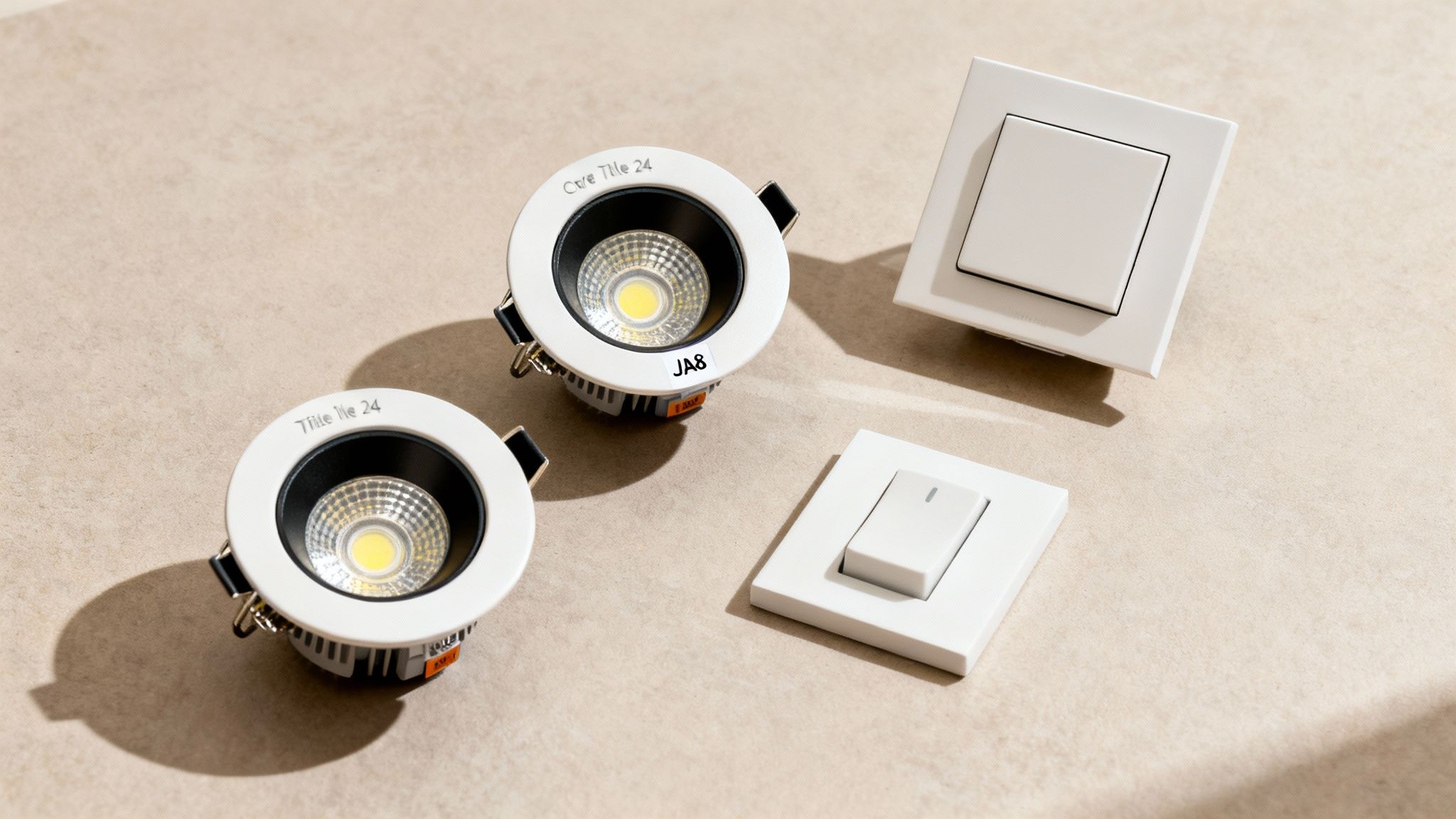
The Importance of JA8 Certification
A specific certification that often causes issues is JA8. Any fixture installed in a recessed housing, like a can light, must be JA8 certified. This is a critical detail for inspectors.
The JA8 mark is a performance guarantee. It proves the fixture has been tested for efficiency and reliability in high-heat environments. It also ensures high-quality color rendering, making the kitchen look its best.
Breaking Down The Three Pillars
To keep your Salinas kitchen projects on track, remember these three pillars of Title 24.
- High-Efficacy Fixtures: Every light must be efficient. This is the baseline for the entire kitchen.
- Mandatory Dimming Controls: Nearly every light needs a dimmer switch for energy control.
- JA8 Certification for Enclosed Lights: All recessed or enclosed fixtures must have this special rating.
Mastering these concepts will help you guide clients toward lighting that is beautiful, functional, and compliant. This expertise protects your schedule, your budget, and your reputation.
Mandatory Requirements for Every Salinas Kitchen Project
Let's get practical. For every kitchen project in Salinas, a clear set of standards applies. Meeting these standards is necessary to pass your final inspection.
This section is your on-the-ground checklist to ensure your lighting plan is solid.
High-Efficacy is a Rule, Not a Suggestion
The most important rule is that 100% of the lighting must be high-efficacy. You can no longer mix in a few inefficient decorative fixtures. Every pendant, sconce, and under-cabinet light must meet the state's lumens-per-watt requirements.
Next, inspectors look for the JA8 certification. Any light in a recessed or enclosed housing must be JA8 certified. This rating confirms the fixture performs reliably at the high temperatures found inside a ceiling.
Controls are Not Optional
You can't just use a simple on/off switch anymore. Almost every light in the kitchen must connect to a dimmer or a vacancy sensor. This is a mandatory part of the code.
The main exception is for lighting built directly into appliances. For example, the bulb inside a range hood does not fall under this rule. The performance gap between new and old technology, like the difference between LED lights vs halogen, is why LEDs are now the standard.
Title 24 Kitchen Lighting Compliance Checklist
Here is a quick-reference table for kitchen projects in the Salinas area. Keep these three points in mind during planning to avoid inspection issues.
| Requirement | What It Means | Where It Applies |
|---|---|---|
| 100% High-Efficacy | Every light fixture must meet Title 24's lumens-per-watt efficiency standards. | All installed lighting, including pendants, chandeliers, and under-cabinet lights. |
| JA8 Certification | Fixtures must have a specific certification proving they work well at high temperatures. | Recessed can lights and any other luminaires installed in an enclosed housing. |
| Dimmer/Vacancy Sensor | Nearly all lighting must be paired with a control device. | All high-efficacy luminaires, except for lights inside appliances. |
Building your lighting plan around these rules ensures a smooth project from start to finish. Our team can help you source beautiful and compliant energy-efficient lighting solutions for every part of your design.
The "10 Percent Rule" Changes Everything
Here is a major Title 24 update that many Salinas contractors miss. In the past, you could swap out up to 50% of a kitchen's lights without bringing the whole system up to code.
That rule is gone. Now, if you alter just 10% of the existing luminaires in a kitchen, the entire lighting system must meet current Title 24 standards. This change significantly impacts project scope and budget.
What This Means on the Job
Let's consider a real-world example. Imagine you are asked to replace two old can lights in a kitchen with twelve total fixtures. This simple swap just became a much bigger job.
Because you altered more than 10% of the lights, you must now bring all twelve fixtures into compliance. This means verifying every light is high-efficacy, recessed lights are JA8 compliant, and everything is on a compatible dimmer.
This decision tree helps simplify the compliance check.
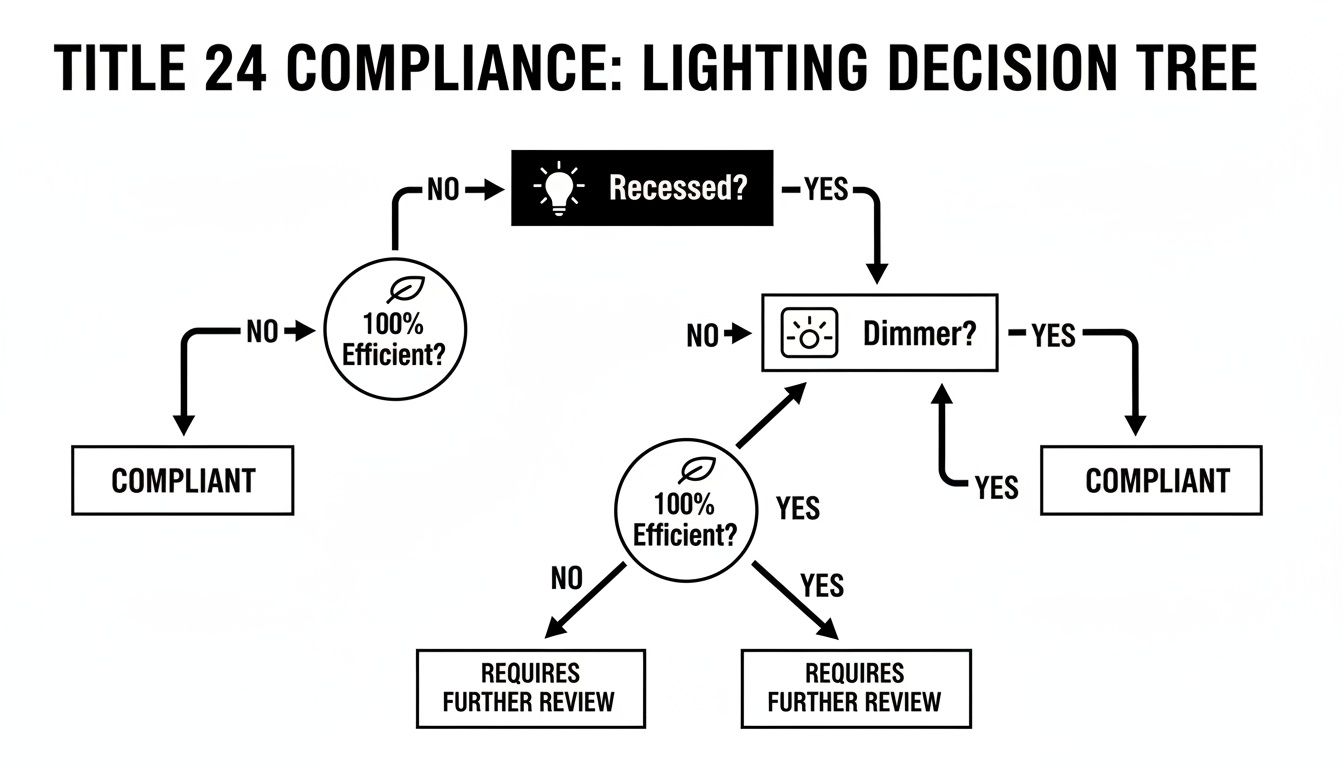
As the flowchart shows, one "no" can throw off compliance. That's why getting every detail right from the start is so important.
Turning a Challenge Into an Opportunity
You should discuss the "10 percent rule" with homeowners during the planning phase. This accomplishes two important things:
- It Manages Client Expectations: Explaining the code upfront prevents frustration later. It helps you avoid "while you're at it" requests that can derail a budget.
- It Positions You as an Expert: When you can clearly explain the code, you build trust. It shows you are a knowledgeable advisor looking out for your client.
Don't see this rule as a roadblock. Frame it as a chance to educate your client on the benefits of a fully compliant system. These benefits include better light quality, lower energy bills, and increased home value.
Avoiding Common Pitfalls to Pass Inspection
A passed inspection means a happy client and a profitable project. For Salinas contractors, avoiding common mistakes is key to passing a Title 24 inspection.
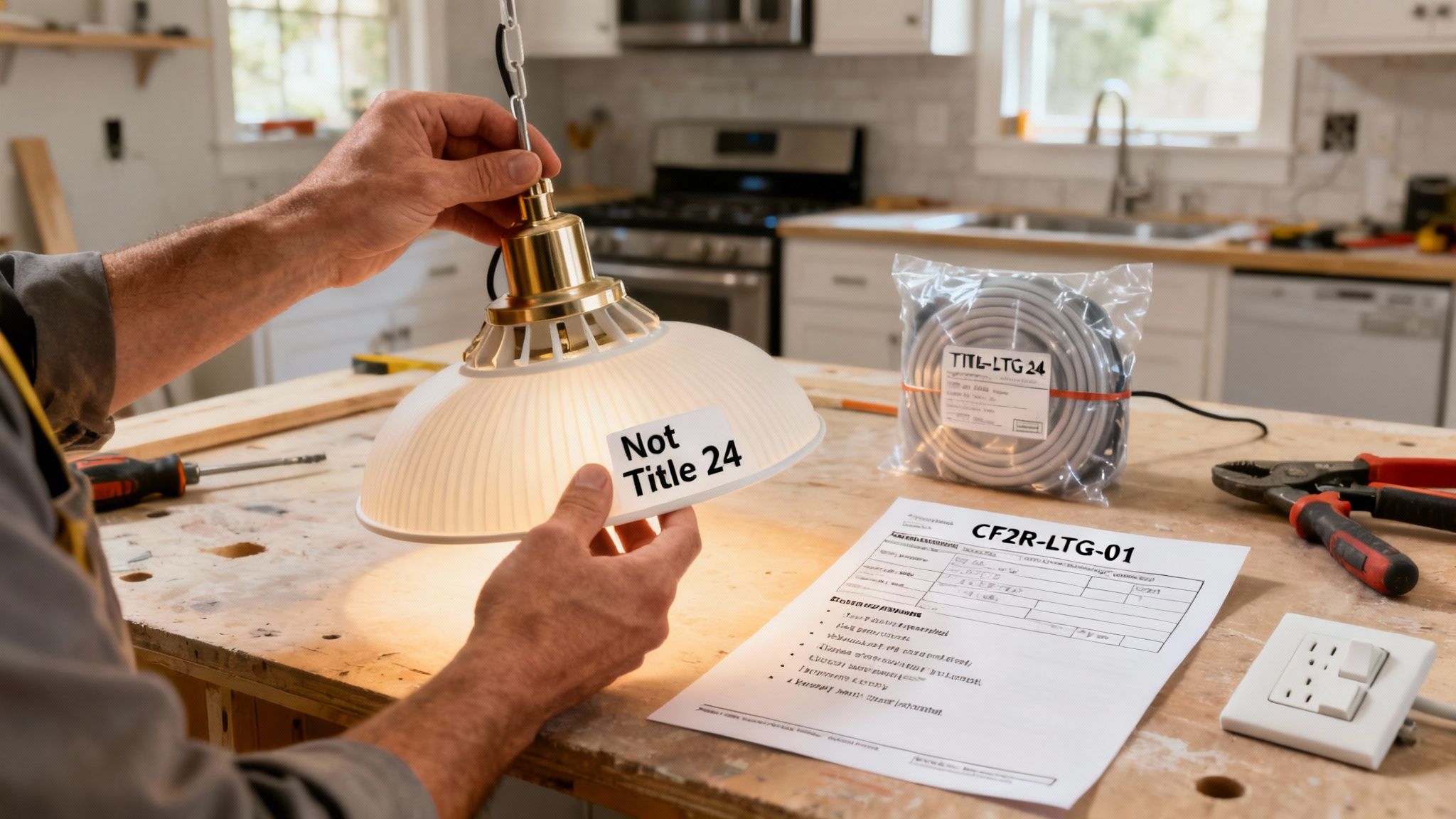
One common headache is a client choosing a beautiful fixture that isn't compliant. It's your job to guide them toward high-efficacy options early. Installing a non-compliant fixture is a guaranteed fail.
The Dimmer and Fixture Mismatch
Another classic mistake is pairing a compliant fixture with the wrong dimmer. This mismatch often causes flickering, buzzing, or lights that won't turn on. Not all dimmers work with the low-wattage loads of modern LEDs.
Before buying a dimmer, check the fixture manufacturer’s spec sheet. They usually list compatible dimmers. This simple check can save you hours of troubleshooting.
Mastering the Essential Paperwork
Good work isn't enough if you can't prove it on paper. The inspector needs documentation. Your main responsibility is the CF2R-LTG-01 installation form.
Be ready to provide this form along with a couple of other key documents:
- Manufacturer Spec Sheets: Keep copies for every fixture you install to prove they are high-efficacy.
- JA8 Certification Proof: The spec sheet must clearly state recessed lights are JA8 certified.
Having this paperwork ready shows you are a professional. This proactive approach protects your schedule, budget, and reputation.
Partner with a Local Expert for Guaranteed Compliance
Keeping up with Title 24 updates while managing projects can be difficult. A local partner can turn compliance from a headache into a seamless part of your workflow.
Think of The Home Lighter as your dedicated compliance team. We are a hands-on resource for Central Coast contractors. We understand the local challenges you face.
Stop Guessing and Start Building
Our mission is to save you time and eliminate guesswork. We offer a large selection of high-quality, Title 24–ready fixtures.
- Pre-Vetted Inventory: Every fixture we recommend is high-efficacy, and we stock many JA8-certified options.
- Control Compatibility: We help you match fixtures with the right dimmers and controls to avoid issues.
- Documentation Support: We provide the spec sheets you need to complete your forms and pass inspection.
When you work with us, you get a partner invested in your project’s success. We ensure the lighting you specify is guaranteed to pass inspection.
If you're a contractor or designer working in Santa Cruz, Salinas, or Pacific Grove, stop by The Home Lighter. Find Title 24–ready kitchen fixtures that pass inspection and impress clients.
Your Top Title 24 Kitchen Lighting Questions Answered
We hear many of the same questions about Title 24 from contractors. Let's clarify some of the most common issues you'll face on jobsites across Salinas.
Does Title 24 apply to under-cabinet lighting?
Yes, absolutely. Any permanently installed light in the kitchen must be high-efficacy. This includes under-cabinet strips and lights inside glass-front cabinets. They are all part of the kitchen's lighting system.
Can’t I just use any LED bulb to be compliant?
No, this is a common and costly mistake. Title 24 requires the entire fixture, or "luminaire," to be certified as high-efficacy. For recessed lights, you must use fixtures specifically marked as JA8 compliant.
What happens if my kitchen lighting fails inspection?
A failed lighting inspection stops your project. You will receive a correction notice, and you must fix all violations at your own expense. This often means replacing fixtures, which leads to delays and unhappy clients.
Is a vacancy sensor required in every kitchen?
Usually, no. The code does require vacancy sensors in other areas like bathrooms and garages. A good place to add one is in an attached walk-in pantry for convenience and compliance.
How do I prove my lighting is compliant?
Paperwork is your best friend during an inspection. You'll need the manufacturer's spec sheets to prove your fixtures are high-efficacy and JA8 certified. You must also complete the Certificate of Installation form (CF2R-LTG-01).
If you're a contractor or designer working in Santa Cruz, Salinas, or Pacific Grove, stop by The Home Lighter, Inc. for Title 24–ready kitchen fixtures that pass inspection and impress clients.