
Congratulations on your new home! Amid the sea of boxes and a long to-do list, lighting might not be your first thought. But good lighting can completely change how a home feels.
This guide isn't about a massive renovation. It's about smart, simple changes you can make right away to make your new house feel like your home.
Your First-Week Lighting Plan: Quick Wins for a New Home
When you first move in, the existing lighting is often an afterthought from the previous owners. It's no wonder that nearly one-third of homeowners update their lighting within the first year.
Think of your first week as a quick lighting audit. Walk through each room. Does the entryway feel dim? Are there dark corners in the kitchen where you'll be prepping food? Let's tackle these common issues first.
Spotting Immediate Lighting Problems
The lighting left by previous owners is rarely perfect. It might be outdated, inefficient, or just not bright enough for your daily life.
Here are a few common problems we see in new homes across the Monterey Peninsula:
- Gloomy Entryways: A poorly lit foyer can make the entire home feel dark and unwelcoming from the moment you step inside. First impressions matter.
- Bad Kitchen Task Lighting: Trying to cook on shadowy countertops is frustrating and unsafe. Good task lighting over counters is a must.
- Ancient Incandescent Bulbs: Old-school bulbs are energy hogs. According to the U.S. Department of Energy, modern LEDs use at least 75% less energy and last up to 25 times longer.
- The Single, Harsh Overhead Light: Many rooms suffer from one central fixture that creates glare and unflattering shadows. This creates flat, uninspired lighting.
Quick Swaps for Instant Improvement
Your goal for this first week is to make high-impact changes with low effort. The single most effective action is switching to LED bulbs in your most-used rooms. Focus on the kitchen, living room, bathrooms, and main hallways.
This one move makes these areas brighter and more pleasant. It also puts you on the fast track to significant energy savings.
Another easy fix is using plug-in solutions. A floor lamp can instantly brighten a dark living room corner. Peel-and-stick under-cabinet LED strips can transform your kitchen workspace in minutes. These additions create a layered, functional lighting design without needing an electrician.
Your New Home Lighting Priority Plan
This table helps you focus on what will make the biggest difference right away versus what can wait.
| Priority Level | Room/Area | Immediate Action | Long-Term Goal |
|---|---|---|---|
| High | Kitchen | Swap bulbs to bright LEDs. Add plug-in under-cabinet lights. | Install permanent under-cabinet lighting and a stylish island pendant. |
| High | Living Room / Family Room | Replace old bulbs. Add a floor or table lamp for a dark corner. | Create a layered plan with recessed lights, lamps, and a statement fixture. |
| Medium | Entryway / Hallways | Upgrade to brighter LED bulbs in existing fixtures. | Install a welcoming chandelier or flush-mount that fits the home's style. |
| Medium | Bathrooms | Change vanity bulbs for better color and brightness. | Upgrade vanity fixtures for shadow-free task lighting. Add a dimmer. |
| Low | Bedrooms | Add a bedside lamp for reading. Update ceiling fixture bulbs. | Install a central fixture on a dimmer and add wall sconces. |
By focusing on the "High" and "Medium" priorities first, you’ll get the most noticeable improvements without feeling overwhelmed.
By focusing on these initial upgrades, you turn an overwhelming task into a manageable plan. This approach allows you to immediately enjoy a more comfortable, welcoming, and efficient home while you plan bigger changes for the future.
This initial walkthrough is your first step toward a home that's lit just right. For a deeper dive, our home energy audit checklist can guide you through a more detailed evaluation of your home’s lighting and overall energy use. It’s the perfect tool to help you map out your next steps as you get settled.
Think in Layers Like a Lighting Designer
Relying on a single overhead light makes most rooms feel flat and impractical. The secret to beautiful and functional spaces is to think in layers—just like a professional designer.
This isn't complicated. It's about combining three types of light to make a room feel balanced and complete. By weaving together ambient, task, and accent lighting, you can truly transform a house into a home.
The infographic below breaks down a simple, three-step approach to get you started, moving from a broad look at what you have to making specific, high-impact changes.

This simple hierarchy—Audit, Prioritize, Swap—is the key to turning an overwhelming project into a totally manageable one.
The Foundation: Ambient Light
Think of ambient light as your base layer. It's the general, overall illumination that lets you move through a room safely and sets the mood.
Great ambient light often comes from a mix of sources working together:
- Recessed Lights: These provide even, widespread light across a bigger space.
- Chandeliers and Pendants: They offer general light and also serve as a decorative focal point.
- Wall Sconces: Pointing them upward bounces light off the ceiling, creating a soft, warm glow.
The goal is a comfortable, uniform foundation of light. For a deeper dive, check out our guide on how to create ambient lighting—it’s packed with tips for getting this crucial layer just right.
The Workhorse: Task Lighting
Next is task lighting. This is the focused, direct light you need for specific activities—like reading, chopping vegetables, or applying makeup.
The kitchen is a perfect example. You need dedicated light right over your countertops where the work happens.
Pro Tip: Under-cabinet lighting is one of the single most transformative upgrades for a kitchen. It eliminates shadows, making food prep safer, easier, and more pleasant.
Other key spots for task lighting include a focused desk lamp, good bedside lamps, pendants over a kitchen island, and vanity lights beside the bathroom mirror.
The Personality: Accent Lighting
Finally, add accent lighting. This layer adds drama, character, and personality to your space. Accent lights draw the eye to features you love, like artwork or a textured fireplace.
Here’s how you can create it:
- Track Lighting: Adjustable heads let you aim light exactly where you want it.
- Picture Lights: Mounted over a frame, they give art a gallery-style look.
- Uplights: Tucked behind a large plant, an uplight can create stunning shadows on the wall.
Layering these three types of light creates spaces that are practical and full of personality. This is how you design a room that feels just right.
Choosing Fixtures That Match Your Home and Style
Light fixtures are the jewelry of your home. They are where function meets your personal style. Picking the right fixtures brings your home’s character to life.
Whether you've moved into a classic Monterey Spanish-style home or a modern Santa Cruz coastal retreat, your fixtures should feel right. Let's break down some common dilemmas homeowners face.
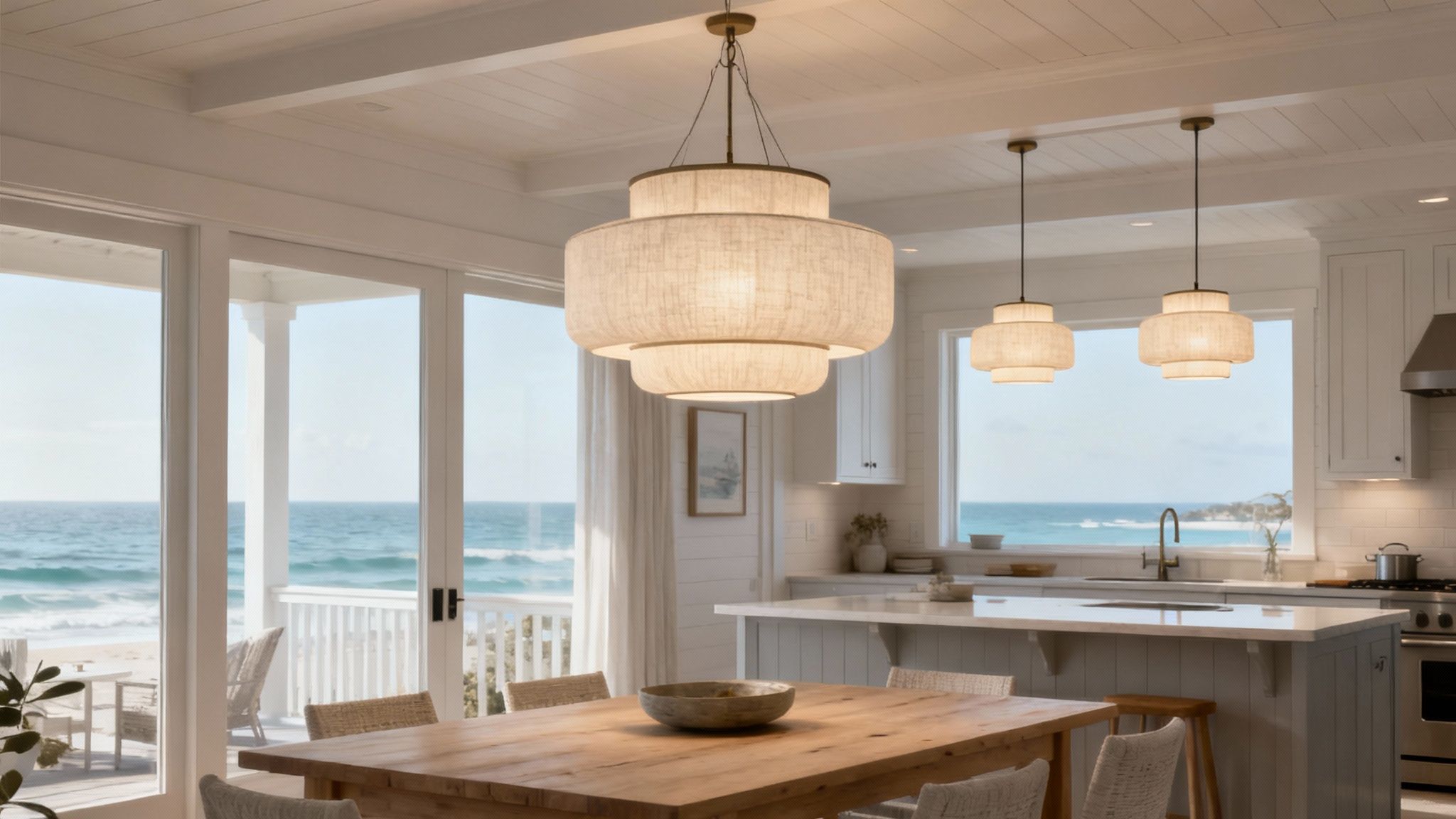
Sizing Your Fixtures Correctly
A common mistake is choosing a fixture that's the wrong scale for the room. A tiny chandelier gets lost in a large dining room, while an oversized pendant can overwhelm a small kitchen island.
Here are some easy guidelines:
- Dining Room Chandeliers: Add the length and width of your room in feet. That number, in inches, is a great diameter for your fixture. For a 12-foot by 14-foot room, a 26-inch diameter chandelier (12 + 14 = 26) is ideal.
- Kitchen Island Pendants: Leave about 30 inches between each pendant and at least 6 inches from the island's edge.
- Entryway Fixtures: Ensure at least 7 feet of clearance from the bottom of the fixture to the floor.
These simple rules take the guesswork out of shopping.
Matching Fixtures to Your Home's Architecture
Your home's style is a perfect starting point for selecting fixtures. Letting your home’s character guide your choices helps create a cohesive design.
A Carmel cottage, for example, is complemented by fixtures with natural textures or hand-forged metal. A sleek, modern home in Salinas might call for minimalist fixtures with clean lines.
Look at the existing elements in your home. Dark wood beams work well with bronze or black finishes. Light, coastal colors pair nicely with brushed nickel or natural woven materials. Understanding the best types of home lighting helps you match fixtures to your style and the room's function.
How High to Hang Your Lights
Placement is just as important as the fixture itself. Hanging a light at the wrong height can throw off a room's balance.
- Over a Dining Table: A chandelier's bottom should hang 30 to 36 inches above the table's surface.
- Over a Kitchen Island: Pendants should also hang about 30 to 36 inches above the countertop.
- Bathroom Vanity Lights: Mount sconces beside a mirror at eye level, about 60 to 65 inches from the floor.
Once you’ve picked out the perfect fixtures, you might feel ready to install them yourself. For a detailed walkthrough, you can find great resources on how to install new light fixtures. Just remember, proper installation is what makes your new lights both beautiful and safe.
Making Sense of Modern Bulbs and Smart Controls
The right light bulb is the secret to setting the perfect mood. Understanding modern lighting tech, especially LEDs, is key to making your new home shine beautifully and efficiently.
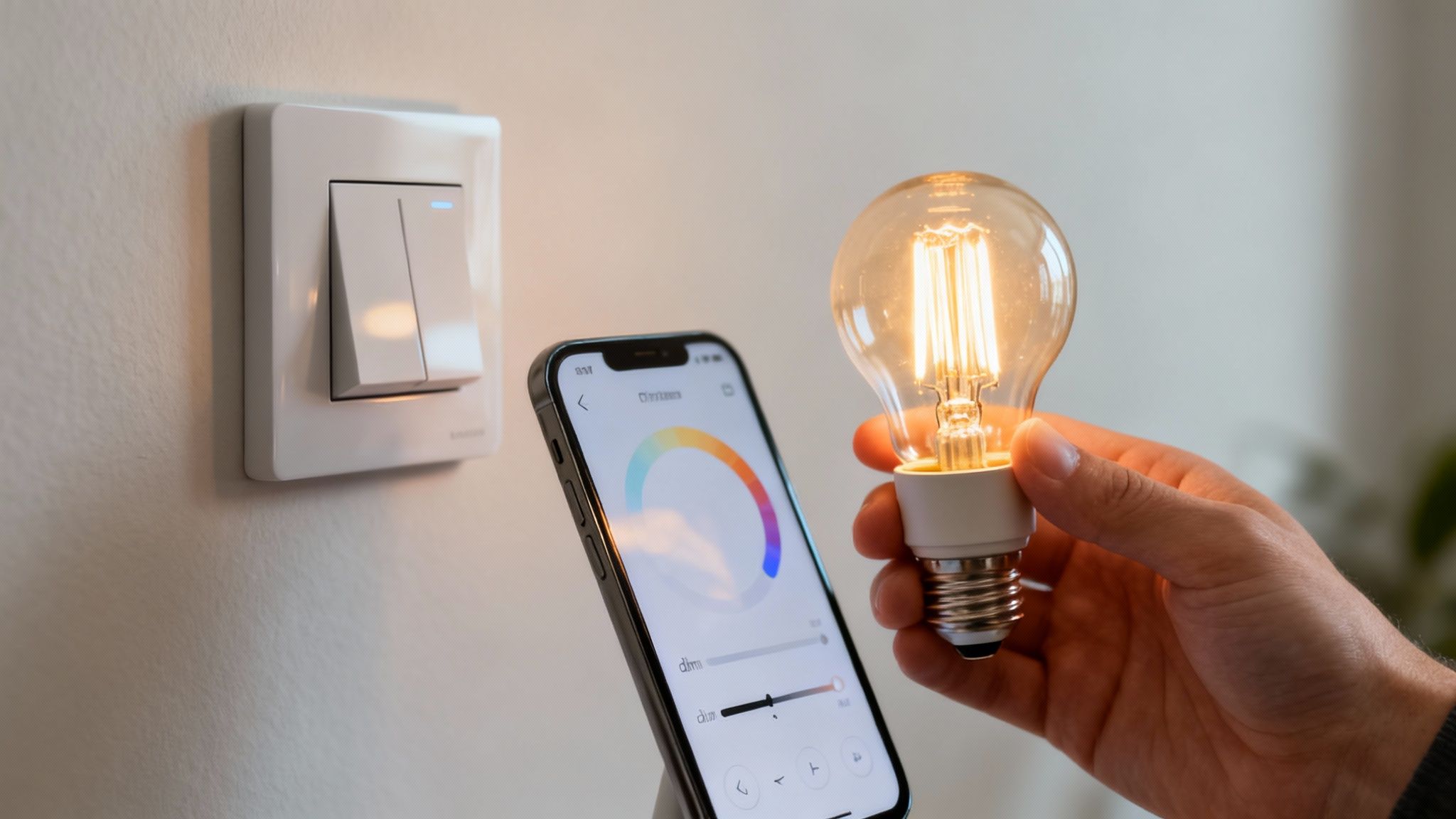 smart lighting in their modern living room.” />
Let's demystify a few key terms. We'll also explore how smart controls can change how you interact with your home's lighting. The goal is to help you make choices that look fantastic and save energy, making it easy to meet California's Title 24 standards.
Getting a Grip on Lumens and Kelvin
For years, we bought bulbs based on watts, which measure energy use. Today, the two words you need to know are lumens and Kelvin.
- Lumens (lm): This is the measure of a bulb's brightness. More lumens mean more light. A standard 60-watt incandescent bulb puts out about 800 lumens.
- Kelvin (K): This tells you the light's color temperature, from warm to cool. Think of it as the light's "mood."
Nailing these two is how you create the perfect atmosphere.
Choosing the Right Color Temperature
The color of your light has a massive impact on how a room feels. A small detail can have a huge effect.
Here’s a quick guide to get you started:
- 2700K – 3000K (Warm White): This is a warm, inviting glow perfect for living rooms and bedrooms. It's where you want to relax.
- 3500K – 4000K (Neutral White): This light is brighter and more neutral. It's great for kitchens, bathrooms, and home offices where you need clear light.
- 5000K+ (Daylight): This cool, bluish light mimics natural daylight. It’s best for task-heavy spaces like workshops or garages.
Local Tip: For the classic, warm aesthetic found in many Monterey Peninsula homes, stick with 2700K bulbs in your main living areas. It beautifully complements natural materials like wood and stone.
The Power of Smart Lighting and Controls
Smart lighting controls offer a new level of convenience and efficiency. These systems go beyond a simple on/off switch. This adaptability is why the LED lighting market is booming, with 62% of consumers seeking eco-friendly products.
The simplest starting point is dimmers. They let you adjust the brightness for any occasion.
For those ready to dive deeper, smart lighting control systems open up a world of possibilities.
- App & Voice Control: Change your lights from anywhere with your phone or a voice command.
- Scheduling: Program lights to turn on and off automatically for security and convenience.
- Scene Setting: Create preset "scenes" for different moods, like "Movie Night," with one tap.
These systems add modern convenience and help you save energy by ensuring lights are only on when needed.
When to Ask for Professional Lighting Advice
Changing a light bulb is easy. But designing a cohesive lighting plan for an entire home can get complicated fast.
Knowing when to bring in a professional can save you time, money, and headaches. It’s the difference between picking out fixtures and creating a thoughtful system that works for your life. At The Home Lighter, we offer a consultative service to help you choose thoughtfully, not hurriedly.
Navigating Local Codes and Complex Projects
Here in California, you also have to meet Title 24 energy standards. A professional ensures your design is compliant and safe. A consultant guides you on both the creative vision and these critical safety details.
Our consultative approach at The Home Lighter is all about helping you make informed decisions you’ll be happy with for years to come. We're here to translate your vision into a practical, beautiful, and efficient lighting plan that feels like home.
This is especially true as smart lighting becomes more common. Integrating these systems requires expertise to make sure everything works together seamlessly. An expert can help you figure out if smart lighting is a good fit and how to implement it correctly.
Common Lighting Questions from New Homeowners
Moving into a new home is exciting. Figuring out the lighting can feel overwhelming. Here are some of the most common questions we hear from homeowners on the Monterey Peninsula.
What is the first lighting change I should make?
Swap out old incandescent bulbs for energy-efficient LEDs in your most-used rooms. This includes the kitchen, living room, and main hallways. This simple move pays off immediately with a lower energy bill and better light quality.
How do I choose the right size chandelier for my dining room?
Add the length and width of the room in feet. Use that number as the ideal diameter for your chandelier in inches. For a 12' x 14' room, look for a fixture that’s about 26 inches in diameter (12+14=26).
Quick Tip: When you hang the chandelier, make sure the bottom is about 30-36 inches above the tabletop. This provides great light without blocking the view.
What does "color temperature" mean for light bulbs?
Color temperature is the mood of your light, measured in Kelvin (K). It tells you how warm (yellowish) or cool (bluish) the light will look.
- 2700K-3000K (Warm White): Best for creating a cozy, relaxing atmosphere in living rooms and bedrooms.
- 3500K-4000K (Neutral White): A crisp, bright light ideal for kitchens, bathrooms, and home offices.
- 5000K+ (Daylight): A very cool light best for garages or workshops where you need maximum visibility.
Do I really need a lighting designer?
It depends on your project. If you're just swapping out a few fixtures, you can likely do it yourself. But for a major remodel or a new build, a consultant is invaluable. We help you avoid costly mistakes, navigate California's Title 24 energy code, and create a design that is both beautiful and functional.
Are smart lights worth the investment?
For most homeowners, yes. The convenience is incredible. You can dim lights with your voice, set schedules, and create custom scenes for any activity. While the upfront cost is higher, they add modern functionality and value to your home. It's an investment in your daily comfort.
Ready to start your new chapter in the right light? The team at The Home Lighter Inc. is here to help you make every room shine beautifully and efficiently.