
Designing kitchen lighting can feel tricky. This is especially true when most online advice doesn't fit California living. A great lighting plan is more than just picking pretty fixtures. It's about how light works in your home, meets state energy codes, and fits our coastal lifestyle.
The goal is to create a space that is beautiful, efficient, and perfect for how you live.
Why Generic Lighting Advice Fails in California
Reading general lighting tips online can be frustrating for California homeowners. The idea of "layered lighting" is a good start, but it misses key details for the Central Coast. Our bright sun, unique homes, and strict energy laws need a more specific plan.
Most guides don't mention California's Title 24 energy code. This code is a must for any remodel or new home. Getting it wrong can cause expensive delays and failed inspections. Cookie-cutter advice also ignores the charm of local homes, from modern styles in Santa Cruz to historic ones in Monterey.
Beyond Cookie-Cutter Solutions
A smart approach to California kitchen lighting knows our kitchens are more than just for cooking. They are the center of family life where we entertain, do homework, and connect. The industry sees this, too. A huge 94% of kitchen renovators upgrade their lighting, and designers say kitchens are the top spot for statement fixtures.
This shows that people want lighting that works hard and looks amazing.
To achieve this, your lighting plan needs a few key things:
- Code Compliance: Using high-efficacy fixtures and smart controls is required. Learning about local energy-saving lighting options helps you stay ahead.
- Architectural Style: Your fixtures should match your home's style, whether it's a Spanish Colonial in Salinas or a modern home with an ocean view.
- Smart Technology: Connected, app-controlled lighting is very popular. Smart systems offer great convenience and save even more energy.
- Indoor-Outdoor Flow: Good lighting can connect your kitchen and patio. This enhances the indoor-outdoor lifestyle California is known for.
Thinking about these points helps create a solution that feels personal and works perfectly. For more ideas, exploring brilliant kitchen cabinet lighting ideas can show you how to blend beautiful form with function.
Mastering Layered Light for California Kitchens
A well-designed kitchen just feels right. It's balanced, inviting, and everything is in the perfect spot. That feeling often comes from one main idea: layered lighting. This means blending three types of light to create a space that works for every moment.
Here in California, the real skill is working with our amazing natural sunlight, not against it.
On the Central Coast, from the Monterey Peninsula to Santa Cruz, layered lighting is the best approach. A smart plan that combines ambient, task, and accent lighting makes a kitchen much more functional. It’s about making the space work smarter, not just look brighter.
This diagram shows how we go beyond basic advice to solve California's specific lighting challenges.
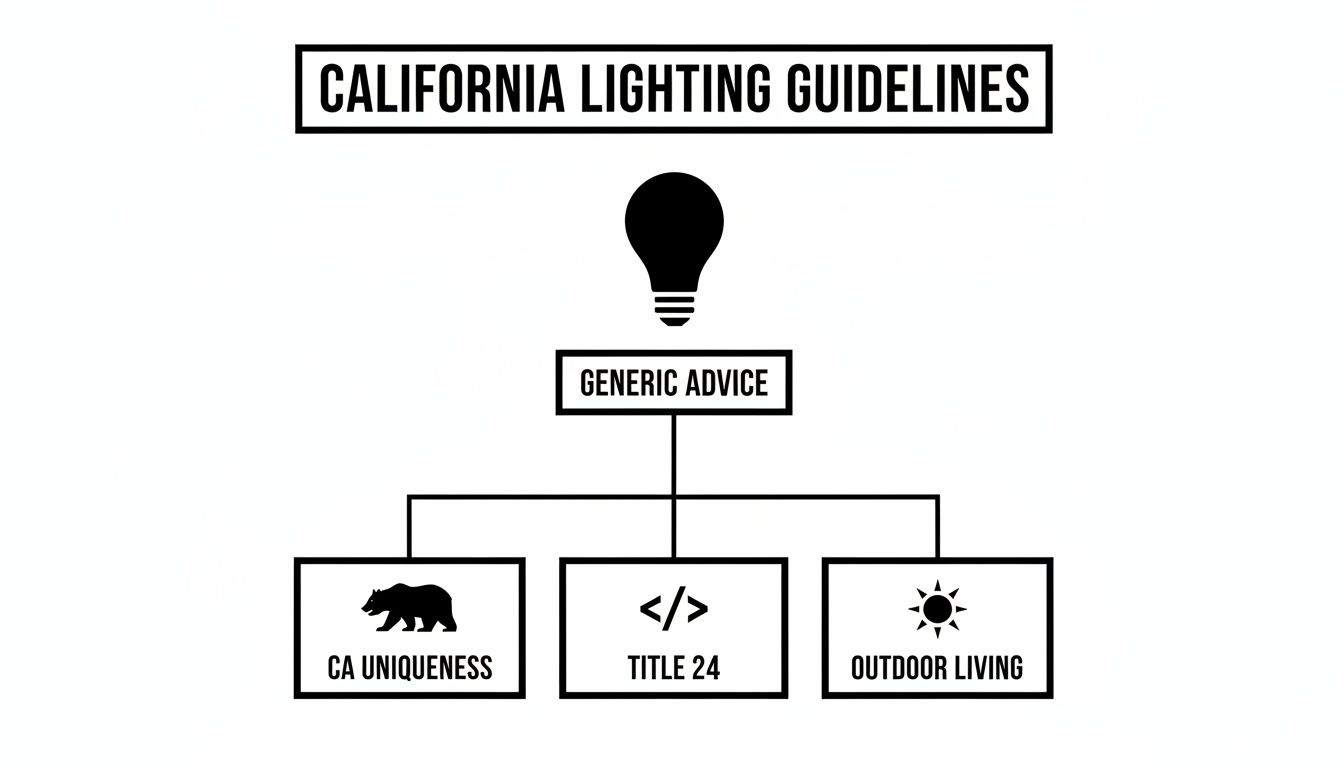
The basics are just the start. Real expertise comes from including Title 24 rules and our indoor-outdoor lifestyle.
The Foundation: Ambient Light
Think of ambient light as the general glow that fills the kitchen. It's the base layer that makes the room feel warm and welcoming. During the day, our big California windows and skylights often provide this light for us.
When the sun goes down, we use fixtures to create that same comfortable feeling. The goal is a soft, even light that prevents harsh shadows. You can learn more with our expert tips on how to create ambient lighting that fits your home.
Fixtures that provide great ambient light include:
- Recessed lights: These are set into the ceiling and provide broad light without cluttering the view.
- Flush mounts: These are perfect for lower ceilings where a hanging fixture might be too much.
- Large central fixtures: A chandelier or large pendant can provide ambient light and be a design centerpiece.
The Workhorse: Task Lighting
Next is task lighting. This is the focused, direct light you need to get things done safely. It is the workhorse of your kitchen, shining a bright beam where you need it most. This includes countertops, the sink, and the stove.
Imagine trying to chop an onion while your own shadow is on the cutting board. Proper task lighting is a must for a kitchen that is meant to be used.
By aligning lighting with your design, local climate, and energy laws, you get a kitchen that looks better, functions smarter, and avoids costly compliance issues. Good task lighting is key to that smart function.
The Artistic Touch: Accent Lighting
Finally, we have accent lighting. This is the fun part that makes your kitchen's personality shine. It's like a spotlight, drawing the eye to the features you love most. This layer turns a kitchen from just functional to a beautiful space.
Accent lighting creates depth and visual interest. Use it to highlight a tile backsplash, glassware in cabinets, or a favorite piece of art. This is the final touch that makes the space feel completely yours.
Navigating California Title 24 Without the Headaches
For many homeowners, the term "Title 24" sounds like confusing rules and project delays. But think of it differently. These state energy codes are a blueprint for a smarter, more efficient kitchen.
Let's look at what these rules mean for your lighting plan. Title 24 pushes for two simple things: high-efficacy lighting and smart controls. That's why you see a strong focus on LED fixtures and required dimmers or sensors in new projects.
What Title 24 Really Means for Your Kitchen
The code just makes sure that most lights in your kitchen are very efficient. This means they produce a lot of light (lumens) without using much energy (watts). Modern LED technology easily meets these requirements.
The rules also require your lighting to be controllable. This means every circuit needs a dimmer or a vacancy sensor. This simple rule lets you adjust light levels for different activities while saving energy. You can learn more in our guide on California Title 24 lighting regulations.
Turning Compliance into an Advantage
Following Title 24 is a long-term investment in your home. These rules are changing kitchens across the state. For example, on the Central Coast, LED fixtures are now used in about 85% of new kitchen remodels.
The benefits are clear. The UC Davis California Lighting Technology Center reports that modern LEDs use 75-80% less energy than old incandescent bulbs. This can cut your kitchen lighting costs from around $150 per year to less than $40. Plus, the bulbs last up to 25 times longer. See the details in the 2019 Residential Lighting Guide.
By embracing Title 24, you choose a kitchen that works better, costs less to run, and is better for the environment. It’s a win for your wallet and a win for California.
We've broken down the key rules into a simple table.
Title 24 Kitchen Lighting at a Glance
| Requirement | What It Means | Why It Matters |
|---|---|---|
| High-Efficacy Fixtures | Most lights must be certified as highly efficient. Quality LEDs are the easiest way to meet this rule. | Lowers your energy bills and reduces the need for frequent bulb changes. |
| Dimmers or Vacancy Sensors | Every light circuit must have a dimmer or a sensor that turns lights off when the room is empty. | Gives you control over your lighting's mood and saves energy. |
| Separate Under-Cabinet Control | Under-cabinet task lighting must be on its own switch, separate from the main overhead lights. | Allows for targeted, energy-saving light without lighting up the whole kitchen. |
A lighting consultant is the easiest way to handle these rules. At The Home Lighter, we help homeowners in Monterey, Salinas, and Santa Cruz choose beautiful, compliant fixtures. We make sure your design meets code and matches your personal style.
Choosing Fixtures That Fit Coastal Styles
Your lighting should feel like a natural part of your home's character. Here on the Monterey Peninsula, our homes have a story. From modern homes in Santa Cruz to historic Spanish styles in Salinas, choosing the right fixtures honors that story.
The goal is to pick lighting that feels connected to your home's spirit. A fixture that looks great in a catalog might feel wrong in a rustic Carmel cottage. An expert can help translate your home's style into a beautiful lighting plan.
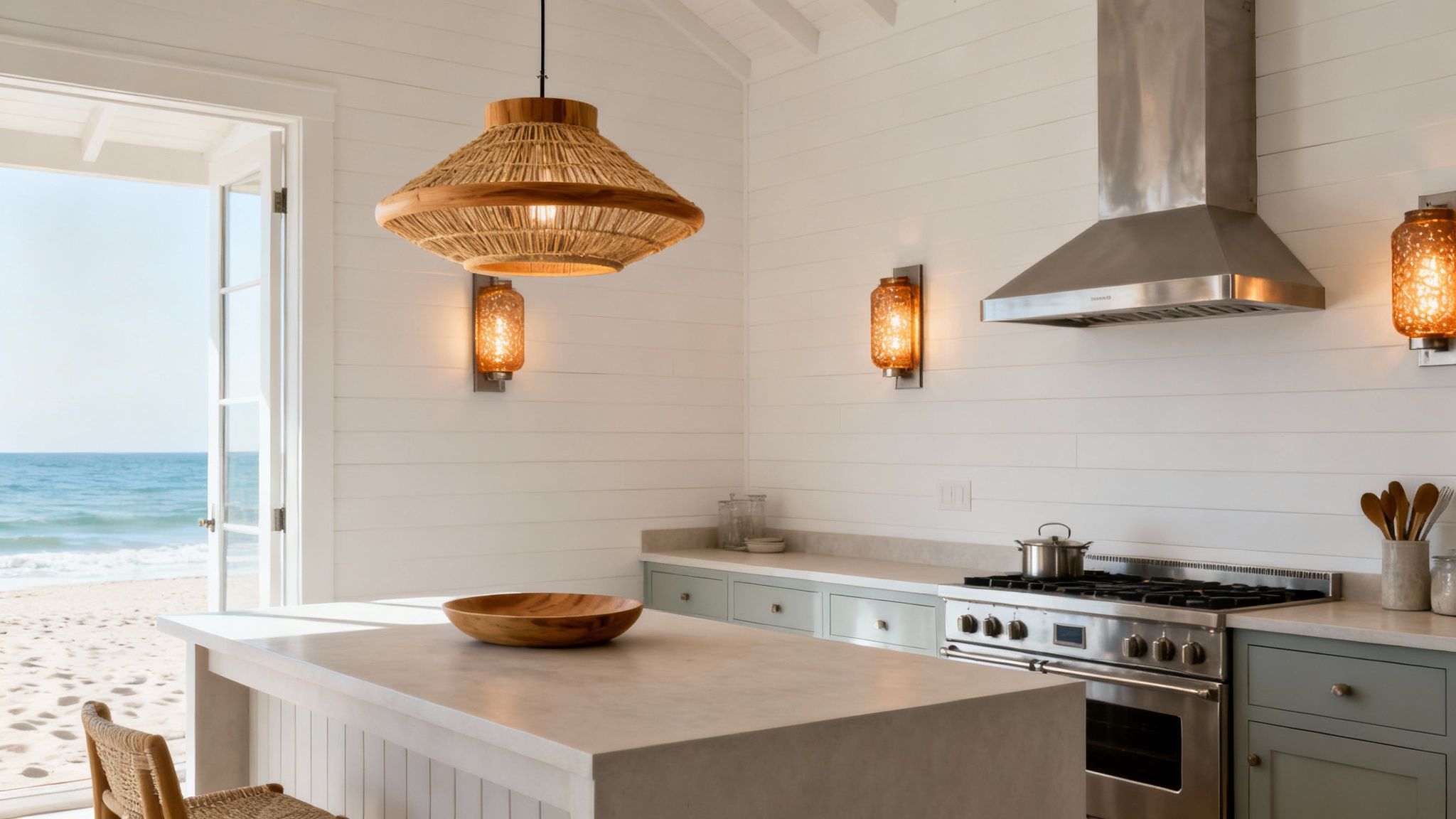
Lighting for Coastal Modern Homes
The Coastal Modern style uses clean lines, natural textures, and a seamless indoor-outdoor flow. The lighting for these kitchens needs to be simple yet effective.
Think about materials that reflect the natural landscape. Pendants made of woven rattan or bleached wood can add warmth. For a sleeker look, consider fixtures with matte black or brushed brass finishes for a nice contrast.
The key to Coastal Modern lighting is simplicity and texture. Fixtures should make the room feel light and airy, not crowded. Choose pieces that feel natural to complete the look.
Fixtures for Spanish Colonial Revival Homes
Spanish Colonial Revival homes are common in the Salinas Valley and Monterey. They are known for their warmth and rustic charm. The lighting here needs to feel authentic and solid.
Wrought iron is a classic choice for this style. Look for fixtures with amber or seeded glass to cast a warm, inviting glow. These materials add a sense of history and quality that fits the Spanish Colonial style.
Selecting Fixtures for Historic and Eclectic Homes
Homes in places like Pacific Grove often have a unique, eclectic character. Lighting in these spaces can celebrate that individuality. You can mix styles, but the choices should still feel planned.
In an eclectic kitchen, you might pair a vintage-style pendant with modern track lighting. The trick is to find a common element, like a shared finish or shape. For more ideas, see our guide to lighting ideas inspired by Monterey's natural beauty.
Materials That Handle the Salt Air
Living on the Central Coast means dealing with salty sea air. This can be harsh on fixtures. Choosing the right materials is about style and durability.
Look for fixtures made from coastal-grade materials:
- Solid Brass: Naturally resists corrosion and develops a nice patina over time.
- Powder-Coated Aluminum: A tough finish that protects the metal from salt and moisture.
- Marine-Grade Stainless Steel: Offers excellent resistance to rust and corrosion.
Choosing the right materials ensures your investment will last. At our appointment-only showroom, The Home Lighter has a selection of fixtures designed for our coastal climate.
Integrating Smart Controls for Modern California Living
In today's California home, lighting is more than just a switch. A smart kitchen lighting plan now includes smart controls. This adds convenience, ambiance, and energy efficiency.
Imagine walking into the kitchen and saying, "Good morning." Your under-cabinet lights brighten to a cool white, while overhead lights stay low. This is the kind of control that is becoming the new standard.
Beyond the Basic Dimmer
Dimmers are a great first step, but true smart lighting is a whole different world. It creates a system where all your lights work together. You can program "scenes" for different activities with a single touch or voice command.
We see this trend as more clients ask for app-controlled solutions. The demand for "smart kitchen lighting fixtures" is rising as homeowners want connected, easy-to-use lighting.
By pairing your lighting with smart technology, you get a kitchen that looks incredible, works better, and saves energy. It's about making your home work for you, effortlessly.
These systems connect your fixtures to a central hub. You can control them from your phone, a smart assistant, or modern keypads on the wall. This gives you the power to fine-tune your kitchen's atmosphere.
Practical Scenes for Everyday Life
What does this look like in a home on the Monterey Peninsula? It's about creating custom lighting "recipes" for what you're doing.
- "Cooking Prep" Scene: All your task lights go to 100% brightness at a clean, neutral color temperature (around 4000K). This gives you great visibility for cooking safely.
- "Dinner Party" Scene: The overhead lights dim to a warm glow (around 2700K). Your accent lights turn on to highlight your backsplash or art. The mood is relaxed and perfect for entertaining.
- "Late Night Snack" Scene: A single, low-level light under a cabinet turns on. You get just enough light to see without a harsh glare.
These are just a few ideas. You can create scenes for homework, cleaning, or anything else. To learn more about different systems, you can find guides on the best smart lighting systems available.
The Benefits of Smart Integration
Adding smart controls offers real benefits. Automated schedules can turn lights off when no one is around. Motion sensors can adjust lighting based on who is in the room. App control means you can check if the lights are off after you've left home.
For anyone on the Central Coast wanting a modern kitchen, exploring these technologies is a must. Our team specializes in designing smart lighting control systems that are powerful and easy to use. We can help you bring this convenience and style into your home.
FAQs: Your California Kitchen Lighting Questions Answered
Here are answers to some of the most common questions we hear from homeowners on the Monterey Peninsula.
What is the best color temperature for a kitchen?
There isn't one "best" temperature; it's about creating zones. For work areas over countertops, a neutral-to-cool white light (3000K to 4000K) is great for visibility. For dining areas or general ambient light, a warmer white (2700K to 3000K) creates a comfortable, inviting mood.
What are the three types of lighting for a kitchen?
The three types are Ambient, Task, and Accent lighting. Ambient light is the overall illumination. Task lighting is focused light for specific jobs like chopping. Accent lighting highlights decorative features like art or a backsplash. Using all three creates a layered, balanced design.
How does Title 24 affect my kitchen lighting choices?
Title 24 requires that kitchen lighting be highly energy-efficient. This means you must use high-efficacy lights, like LEDs. It also requires that all lights be on a dimmer or a vacancy sensor to save energy when the room is not in use.
Why is under-cabinet lighting so important?
Under-cabinet lighting is a form of task lighting. It shines directly on your countertops, eliminating shadows cast by your body or upper cabinets. This makes food prep safer and easier, and it is a key requirement for a functional kitchen design.
What is a "statement" light fixture?
A statement fixture is a decorative light that acts as a focal point in the room. This could be a large chandelier over an island or a unique pendant light. Designers say the kitchen is the top room for decorative statement lighting, as it adds personality and style.
Ready to create a kitchen that is beautiful, functional, and perfectly suited to your California home? The experts at The Home Lighter, Inc. are here to help you navigate every step, from design to fixture selection. If you’re remodeling a kitchen in the Monterey Peninsula, Salinas, or Santa Cruz, visit our appointment-only showroom. We’ll help you plan lighting that elevates your space—without the cookie-cutter approach. https://homelighterinc.com