
If you’re remodeling your kitchen, your contractor might mention “layered lighting.” What does that actually mean? It’s not just about adding more lights to the ceiling.
Layered lighting uses three types of light together. These are ambient, task, and accent light. This method creates a space that works well, looks beautiful, and fits any activity.
Why Layered Lighting Is the New Standard
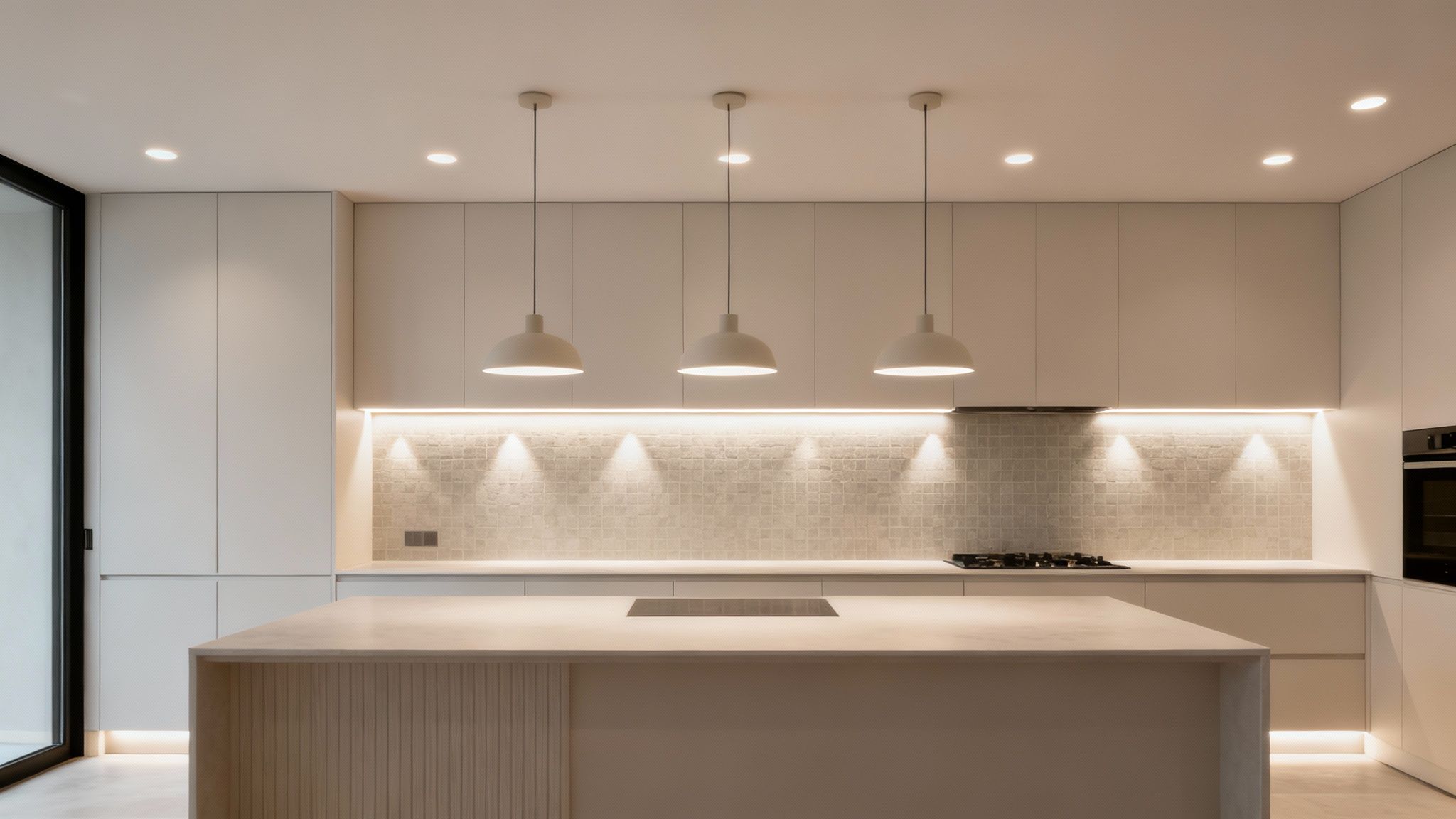
Have you ever asked, "Do I really need all these different lights?" Many homeowners worry about making their design too complex. But a layered lighting plan is now the standard, not a luxury.
Recent data shows this is true. About 94% of people who renovate their kitchen also upgrade the lighting. Also, 80% of designers agree the kitchen is the most important room for layered lighting. It's what clients expect today.
Why is this so important? A single overhead light is not enough. It creates harsh shadows where you need to see. This makes a room feel flat and uninviting.
A well-lit kitchen is about more than just brightness. Layered lighting gives you control. You can change the light from bright for cooking to a soft glow for a quiet dinner.
The Value of a Good Lighting Plan
A good lighting plan also adds value to your home. In some markets, good lighting can increase property value by 5-10%. You can learn more about this in the latest kitchen lighting market report.
Layered lighting makes your kitchen work for you. It puts the right light in the right place. The three layers that make this happen are:
- Ambient Lighting: This is your general, all-over light. Think of recessed ceiling lights or flush mounts. To learn more, learn more about how to create ambient lighting.
- Task Lighting: This is focused light for specific jobs. Under-cabinet strips or pendants over an island are good examples.
- Accent Lighting: This adds style and visual interest. It highlights things like art or a tile backsplash. You can explore what is accent lighting in our guide.
Here is a quick breakdown to help you see how these layers work together.
The Three Key Layers of Kitchen Lighting
| Lighting Layer | Main Purpose | Common Fixtures |
|---|---|---|
| Ambient | Provides general light for the whole room. | Recessed Cans, Flush Mounts, Chandeliers |
| Task | Gives focused light for work areas. | Under-Cabinet Strips, Pendants Over Islands |
| Accent | Highlights features to add visual interest. | Spotlights, Wall Washers, Toe-Kick Lights |
Using these three layers creates a great experience. It makes your kitchen more efficient and beautiful. Getting this mix right is a key part of a successful remodel.
Layer One: Ambient Light, Your Kitchen's Foundation
Let's start with ambient lighting. Think of it as the main light source for your kitchen. Its job is to create a comfortable, even glow across the whole space.
This light makes the room feel open and safe. It gets rid of dark corners. It's the light you need to walk in and move around easily.
When you want to know what layered lighting really means in a kitchen remodel, this is the starting point. Without a good ambient base, other lights will seem out of place. This layer is the foundation for your whole lighting design.
Choosing Your Ambient Fixtures
The best fixtures for ambient light depend on your kitchen's style and ceiling height. The goal is to get broad, even light.
Here are the most common options:
- Recessed Cans: These are very popular for modern ambient lighting. They sit flat with your ceiling for a clean look. A 4-inch or 6-inch can is standard.
- Flush or Semi-Flush Mounts: These are great for lower ceilings, like in classic bungalows around Pacific Grove. They sit close to the ceiling and spread light well.
- Chandeliers or Large Pendants: If you have high ceilings or a big island, a large fixture can work well. It adds decoration and a lot of ambient light.
The right placement is key to getting an even glow.
Expert Tip: A good rule for spacing recessed lights is to divide your ceiling height by two. For an 8-foot ceiling, space your lights about 4 feet apart. This prevents dark spots.
Getting the Brightness and Control Right
Next, think about brightness and control. Your ambient light should be bright enough for daily tasks. But you don't want it to feel harsh.
This is why dimmer switches are so important.
A dimmer gives your lighting flexibility. You can turn the light up high for cleaning. Then, you can dim it down for a quiet evening. It's the best tool for changing your kitchen's mood.
Layer Two: Task Lighting – The Workhorse of Your Kitchen
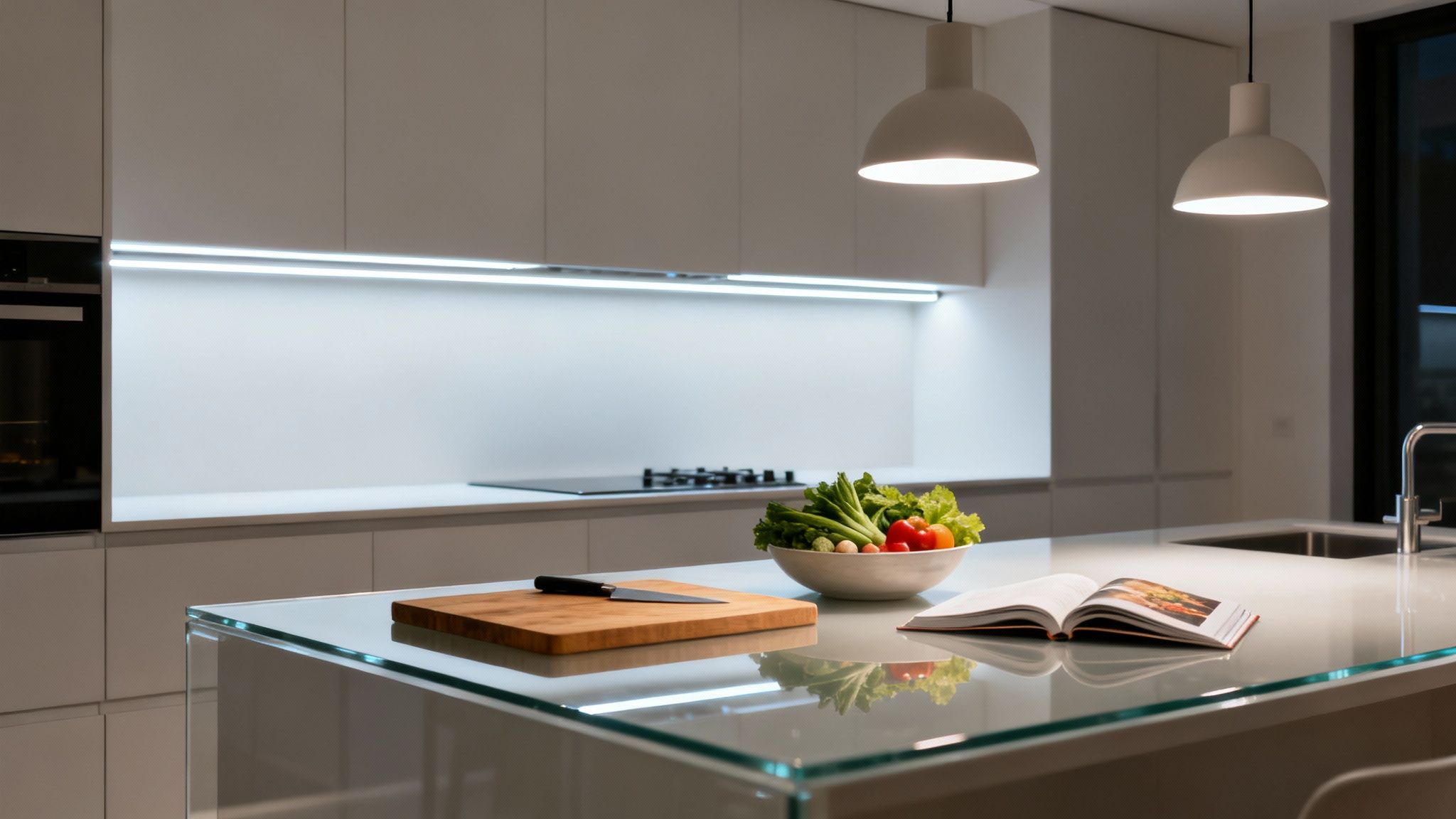
Ambient light is the foundation. Task lighting is the workhorse. This is the bright, focused light aimed at your work surfaces.
It shines on countertops so you can chop food safely. It lights up the sink for washing dishes. Without it, you would work in your own shadow. Good task lighting makes cooking easier and your kitchen safer.
Key Areas for Task Lighting
To understand what layered lighting means, find where the work happens. Your task lighting should focus on these three key areas.
- Under Your Cabinets: This is the most important spot. LED strips or puck lights under your upper cabinets light up your countertops. They get rid of annoying shadows.
- Over the Kitchen Island: An island is a hub for prep work and meals. Pendant lights provide light and add a strong decorative touch.
- Above the Sink: This busy area is often forgotten. A recessed light or a small pendant makes sure you can see clearly.
Lighting these areas well will change how you use your kitchen. It reduces eye strain and makes tasks safer.
A common mistake is using only overhead lights for task work. This creates shadows right where you need to see.
Choosing the Right Fixtures and Light Quality
Choosing the right fixture is very important. For under-cabinet lighting, modern LED strips are the best choice. They provide even light and are very energy-efficient. This is key for Title 24 compliance in California.
Pendants are a great choice for islands. They bring the light closer to your work area. Hang them 30-36 inches above the countertop. This gives you plenty of light without blocking your view.
Finally, think about color temperature. A neutral white light (around 3000K to 3500K) is great for task areas. This light shows the true colors of your food. It also keeps your eyes comfortable during detailed work.
Layer Three: Accent Lighting—The Jewelry Of Your Design
Ambient light sets the mood and task lighting helps with work. Accent lighting is the jewelry that completes your kitchen's look. This third layer is where you can be creative. Its purpose is to add personality and highlight special details.
Accent lighting uses focused beams to draw your eye to certain features. It can highlight a beautiful tile backsplash or a piece of art. It turns functional lighting into true design, adding depth to the room.
Creative Ways to Use Accent Lighting
This layer shows you what layered lighting really means in a kitchen remodel. It's about using light to create a specific feeling. Here are a few ways to use accent lighting:
- In-Cabinet Lighting: Small lights inside glass-front cabinets make your dishes look like a beautiful display. It adds a soft, stylish glow.
- Toe-Kick Lighting: An LED strip under your base cabinets creates a cool, modern look. This light makes your cabinets seem to float. It also works as a great nightlight.
- Wall Washing: Aiming lights at a textured wall can highlight its unique surface. This works well for brick or stone walls. It creates a strong focal point.
These small touches have a big impact. They change the feel of your kitchen, especially in the evening.
Accent lighting gives a kitchen its personality. It turns a work area into an inviting space for guests. It’s the layer that makes the design feel complete.
As you plan this layer, think about what you want to show off. By placing these focused lights well, you guide the eye around the room. This creates a richer visual experience. To learn more, check out our guide on what is accent lighting.
How to Create the Perfect Kitchen Lighting Plan
Bringing all three layers together is like creating a recipe. It's about mapping out your kitchen's layout and giving yourself control. Layered lighting is all about having options.
First, look at your space. Find your main work triangle (sink, stove, and refrigerator). These spots need the brightest task lighting. Also think about other areas, like a breakfast nook or prep island.
The Secret Ingredient: Separate Controls
Here is the most important advice: put each lighting layer on its own switch. Also, make sure every switch is a dimmer.
This simple step is what makes your lighting plan work so well. It lets you mix and match lights to create the perfect mood.
Imagine these scenes:
- Prep Mode: Time to cook. All three layers are on full power. Ambient light fills the room, task lights make chopping easy, and accent lights add style.
- Dinner Party: The cooking is done. You can dim the overhead lights to 50%. You can keep the island lights low, and let your accent lights create a warm glow.
- Late-Night Snack: No need for bright lights. Turn off the main overheads. Soft under-cabinet and toe-kick lights are all you need for a relaxed mood.
This is what we mean by control. It turns a good kitchen into a great one. You can create the perfect setting for any moment.
Visualizing the "Wow" Factor
Accent lighting is where your kitchen's personality shines. It’s the layer that adds character and depth. It helps create that "wow" moment when someone walks in.
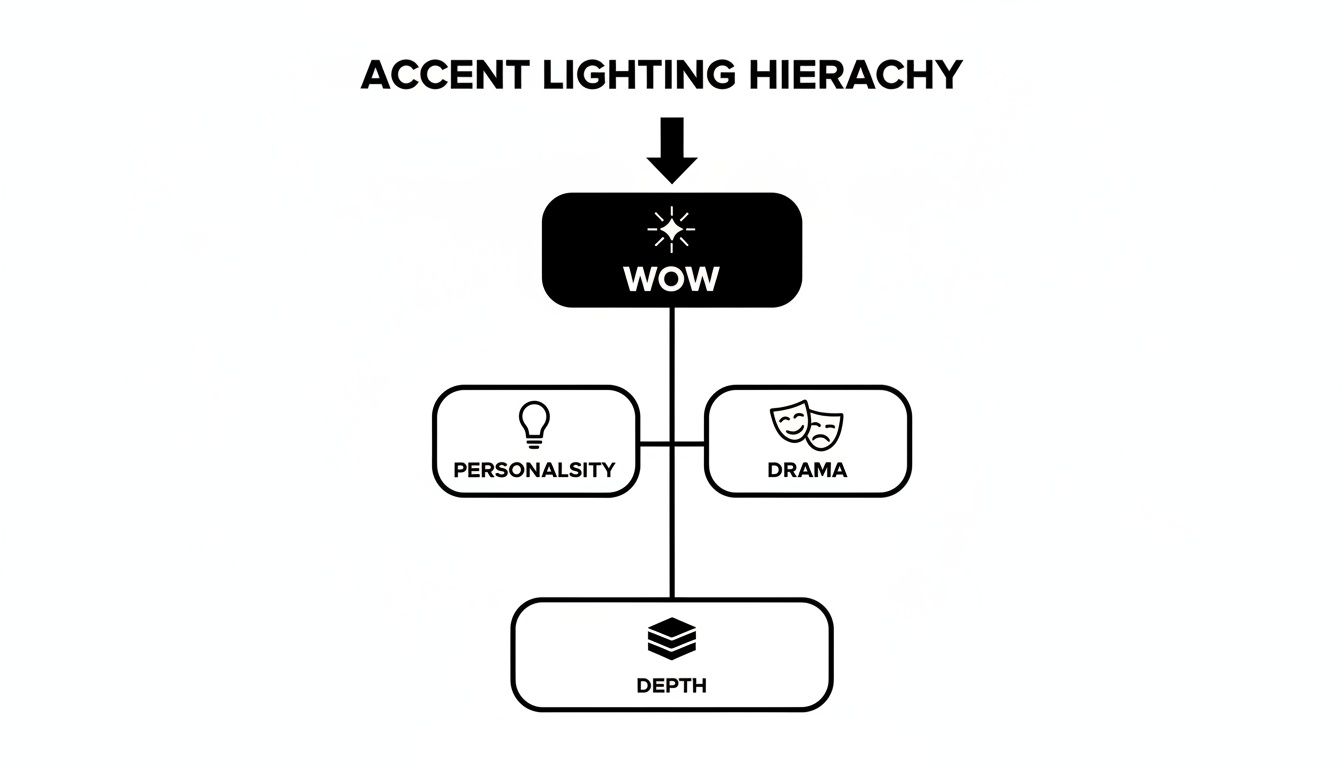
As you can see, accent lighting starts by adding depth. That depth creates drama and shows your personality. This all leads to the final "wow" moment.
Homeowners want these smart, layered systems. The global kitchen lighting market is growing. A big reason for this growth is the use of layered designs and smart home tech.
A good layout is the foundation for all of this. For help with placement, see our guide on creating a recessed lighting layout. You can also explore our interior lighting fixtures guide to get ideas for other rooms. Or find more inspiration with these modern kitchen lighting ideas.
Get Expert Help with Your Kitchen Lighting Plan
Do you feel inspired but also a little overwhelmed? We understand. Turning a vision into a real plan is what we do. Our Monterey-based team helps homeowners design beautiful and practical lighting plans. We make sure they meet California's strict Title 24 energy codes.
We take the guesswork out of the process. We help you choose the perfect fixtures in our Pacific Grove showroom. We make sure you get a great result. You can browse options from top brands like Tech Lighting, a trusted supplier near you.
Professional guidance pays off. You can read the full research on kitchen lighting market trends to see the data. Good kitchen remodeling services always include a detailed lighting plan.
Let us help you create a kitchen that is stunning and functional. Want help planning layered lighting for a kitchen remodel in Monterey, Pacific Grove, or Salinas? Contact The Home Lighter for expert layout advice and product pairing—all aligned with Title 24.
Frequently Asked Questions About Layered Lighting
Here are answers to common questions we hear from homeowners.
Do I need all three layers in a small kitchen?
Yes, absolutely. Even a small kitchen benefits from layers. You just use fewer fixtures to get the same great result.
For example, one modern flush mount can provide ambient light. An LED strip under the cabinets works for task lighting. And a single stylish pendant over the sink can be your accent.
What is the best color temperature for a kitchen?
A mix is often the best approach. You'll want a neutral to cool white (3000K-4000K) for your main task areas. This helps you see the true colors of your food.
For ambient and accent lights, a warmer white (2700K-3000K) creates a comfortable glow. Using dimmers on everything gives you the flexibility to set the perfect mood.
How do I make sure my lighting is energy efficient?
The easiest way is to choose LED fixtures for every layer. LEDs use much less energy and last much longer than old bulbs. This saves you money over time.
To meet California's Title 24 standards, you'll need to pair these lights with controls like dimmers. Working with an expert helps ensure your plan is compliant and efficient.
Can my decorative chandelier count as a layer?
Yes, it can. A beautiful chandelier can be a decorative focal point. It can also provide general (ambient) light for the room.
The key is to remember that it can't do all the work alone. You'll still want to support it with separate task and accent lighting in other key areas.
What are the three basic lights for a kitchen remodel?
Start every kitchen lighting plan with these three basics.
- Ambient: Use ceiling cans or flush-mounts for general light.
- Task: Use under-cabinet or pendant lighting over counters and islands.
- Accent: Use toe-kick lights, wall washers, or directional ceiling lights for style.
Ready to plan the layered lighting for your kitchen remodel? Contact The Home Lighter, Inc. for expert layout advice and product pairing that gets it right—all fully aligned with Title 24.