
You're not alone. Many homeowners switch to LEDs for energy savings, then find their kitchen suddenly feels like a hospital. That bluish, harsh glow is a common issue, and it's totally fixable.
The secret is choosing bulbs with the right specifications. Focus on a Color Temperature between 2700K and 3000K for a cozy glow and a Color Rendering Index (CRI) of 90+ to make colors look natural. Paired with LED-compatible dimmers, these details transform a sterile kitchen into a warm, welcoming space.
Why Your New Kitchen LEDs Feel Cold and Clinical
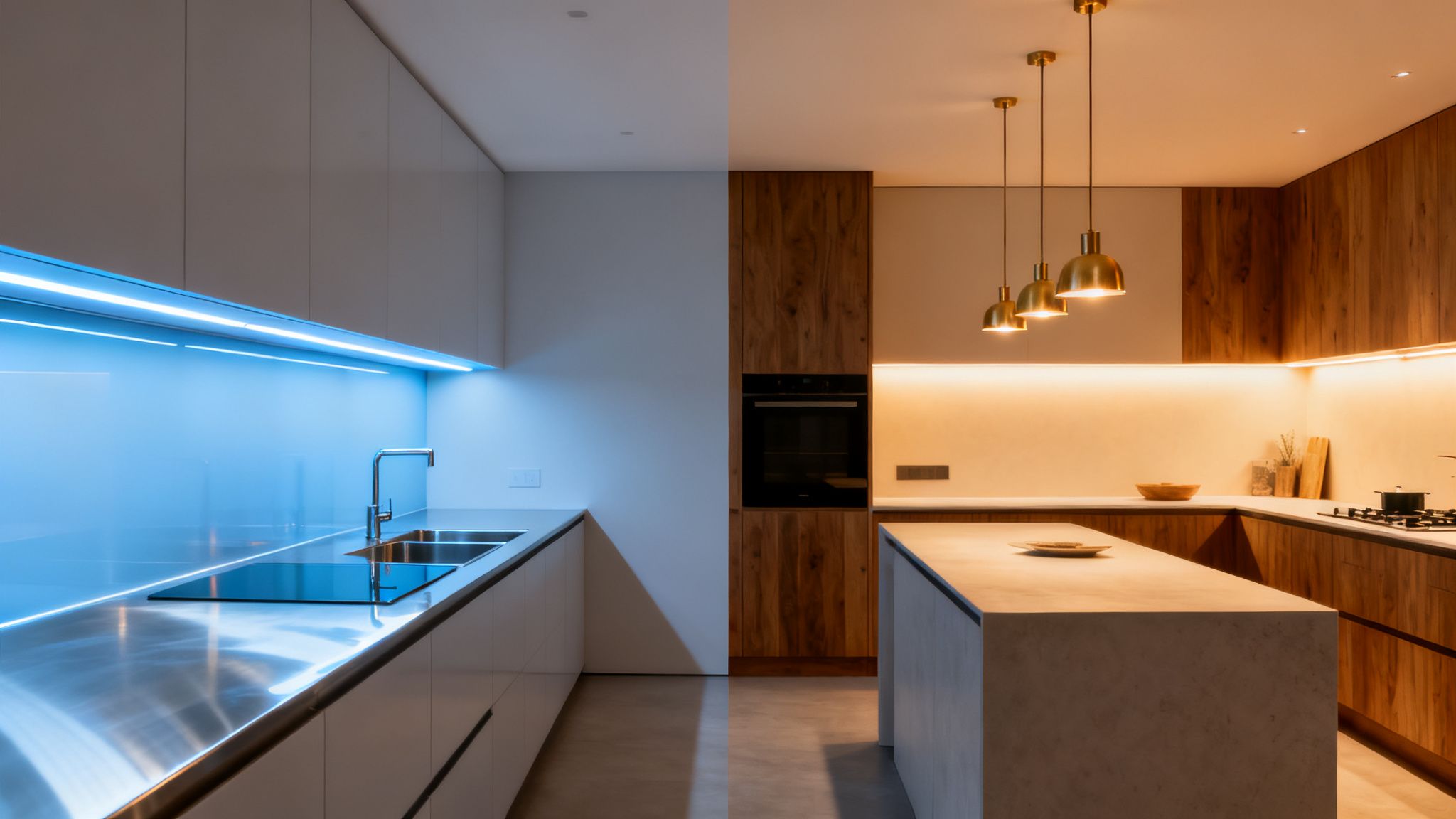
If you recently upgraded to energy-efficient LEDs, you might be wondering why your kitchen suddenly feels cold. It’s a frequent concern we hear from homeowners across the Monterey Peninsula. The good news is that the solution is simple.
The problem isn't LED technology itself. It’s the specific type of light the bulb produces. That sterile, bluish feeling comes from choosing LEDs with a high color temperature, which casts a cool, blue-white light.
Common Misconceptions About LED Lighting
Many people assume all LEDs are the same or that brighter is always better. Another common myth is that integrated LED fixtures can’t be adjusted or dimmed. These beliefs often lead to poor lighting choices that ruin the feel of a room.
Light quality depends on metrics rarely explained at big box stores. The two most important details are Color Temperature, measured in Kelvin (K), and Color Rendering Index (CRI). These determine if your kitchen feels cozy or clinical. To learn more, learn more about color temperature in lighting and how it affects your home.
The Simple Path to Warmer Kitchen Light
Achieving a warm and inviting kitchen glow is straightforward once you know what to look for. You don’t need a full remodel to make a significant, immediate change. Even just replacing the bulbs in your existing fixtures can make a huge difference.
Here’s a quick look at common lighting issues and how to fix them for a cozier kitchen.
From Cold and Clinical to Warm and Cozy
| The Common Problem | The Warm Solution | Why It Works |
|---|---|---|
| Harsh, blue-toned light | Choose bulbs between 2700K and 3000K | This range mimics the classic, warm glow of old-school incandescent bulbs. |
| Colors look "off" or washed out | Select bulbs with a CRI of 90 or higher | A high CRI ensures your cabinets, countertops, and food look vibrant and natural. |
| Light is too intense for relaxing | Install LED-compatible dimmers | This gives you total control to adjust the mood from bright task lighting to a soft dinner glow. |
Making these simple switches can solve most of the "cold kitchen" problems we see.
At The Home Lighter showroom in Pacific Grove, we help Monterey, Salinas, and Santa Cruz homeowners see these differences firsthand. This takes the guesswork out of creating a kitchen that truly feels like home.
Understanding Light Bulb Specifications
Walking down the lighting aisle can be overwhelming. With terms like Kelvin, Lumens, and CRI on every box, it’s easy to grab the first bulb that fits. But understanding these details is the secret to getting the warm kitchen light you want.
Think of it as a simple recipe with two key ingredients. Get the Color Temperature (Kelvin) and Color Rendering Index (CRI) right, and you’ll completely transform your kitchen.
Finding Your Perfect Warmth with Kelvin (K)
The most important number for making LED lights look warmer is the Color Temperature, measured in Kelvin (K). The lower the Kelvin number, the warmer and more golden the light.
Here’s a simple breakdown:
- 2700K: This is the classic, cozy glow of an old incandescent bulb. It's warm and inviting, perfect for creating a relaxed atmosphere.
- 3000K: Often labeled "warm white," this is the most popular choice for kitchens. It’s warm but offers a bit more clarity than 2700K, making it great for both ambiance and tasks.
- 4000K & Above: This is a cool, bluish-white light that feels more like an office. This range often makes a kitchen feel sterile.
For most homes on the Central Coast, from historic Victorians to modern builds, a CCT between 2700K and 3000K is the sweet spot. For more help, see our guide on how to choose the right light bulb.
Making Colors Pop with a High CRI
Have you ever noticed how food or countertops can look dull under cheap lighting? That’s where the Color Rendering Index (CRI) comes in. CRI is a scale from 0 to 100 that measures how accurately a light source shows the true colors of objects.
A high CRI is non-negotiable for a kitchen. It's the difference between a ripe tomato looking vibrant red or a sickly orange.
We always recommend choosing bulbs with a CRI of 90 or higher. This ensures colors appear true-to-life. In fact, research shows that 89% of professional designers recommend a CRI of 90+ to ensure food looks fresh and appealing. Another report has more about the key metrics for evaluating kitchen lighting.
Creating the Perfect Mood with Dimmers
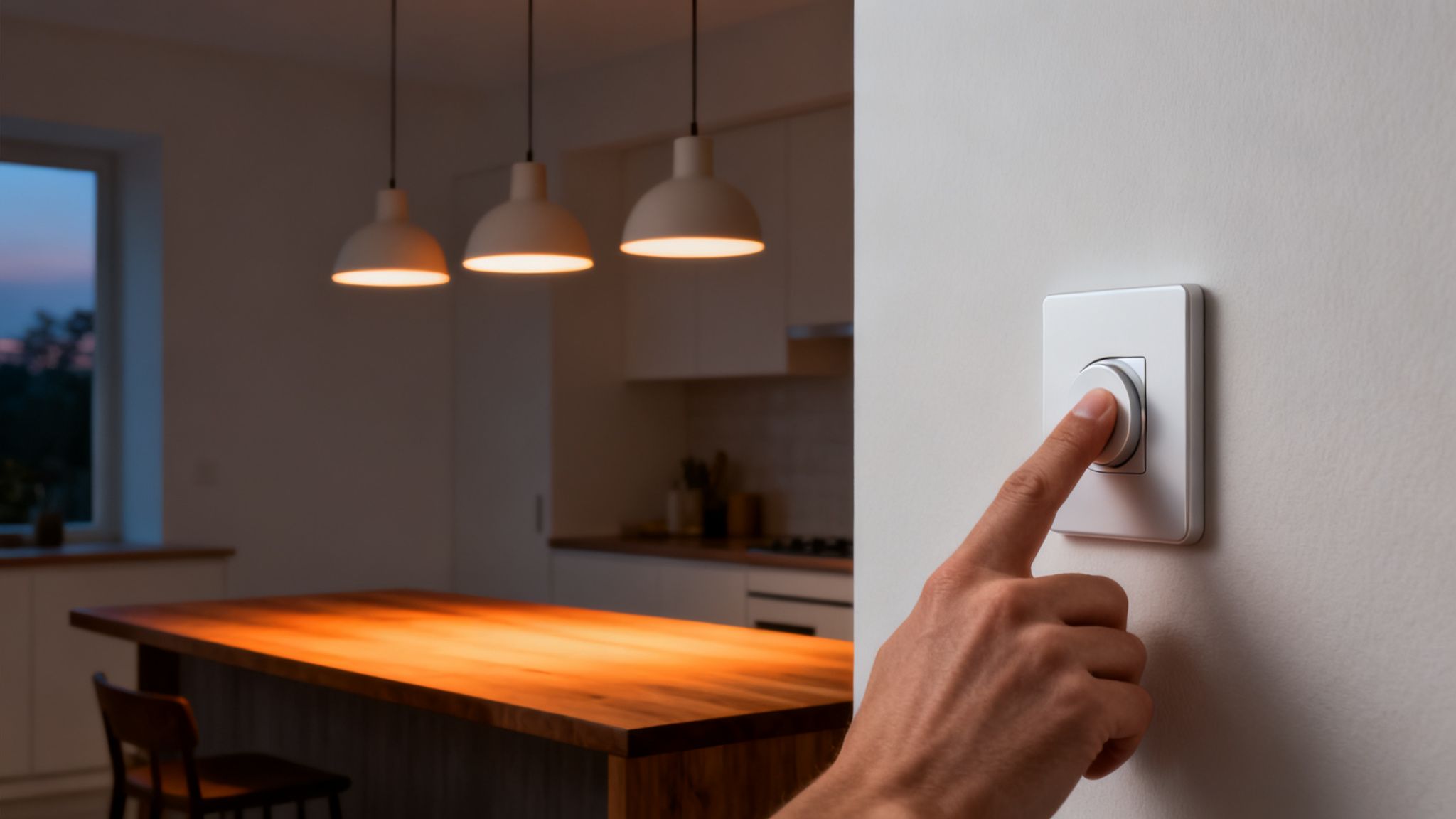
Choosing the right bulb is a great start, but the magic happens when you can control its intensity. A dimmer switch can transform a kitchen from a bright workspace to a soft, intimate setting for dinner.
One common issue is pairing new LED bulbs with an old dimmer. Older switches were built for incandescent bulbs. This mismatch can cause flickering, buzzing, or lights that won't dim smoothly.
Upgrading to LED-Compatible Dimmers
Modern, LED-compatible dimmers are designed for today's bulbs, giving you smooth, flicker-free control. Investing in the right dimmer is just as important as choosing the right bulb. If you're thinking about tackling the swap yourself, our guide on how to install dimmer switches can help.
Today's technology offers even more control over the warmth and feel of your lighting.
- Warm-Dim LEDs: This is a game-changer for creating a cozy atmosphere. As you dim the light, the color temperature automatically gets warmer, shifting from a soft white (around 3000K) to a rich, amber glow (as low as 1800K).
- Tunable White LEDs: This offers the ultimate flexibility. Tunable systems let you adjust brightness and color temperature separately. You can have a crisp 4000K light for your morning coffee, then shift to a gentle 2700K to wind down in the evening.
This level of control is fairly new. When LEDs first appeared in the early 2000s, they were mostly available in cool, bluish tones of 5000K and up. Today, 73% of new kitchen lighting installations feature adjustable systems.
For us on the Central Coast, this flexibility is a dream. You can match your indoor lighting to a warm Monterey sunset or brighten things up on a foggy Pacific Grove morning. At The Home Lighter, we can show you how these systems work in our showroom.
Thinking Beyond the Bulb to Warm Your Space
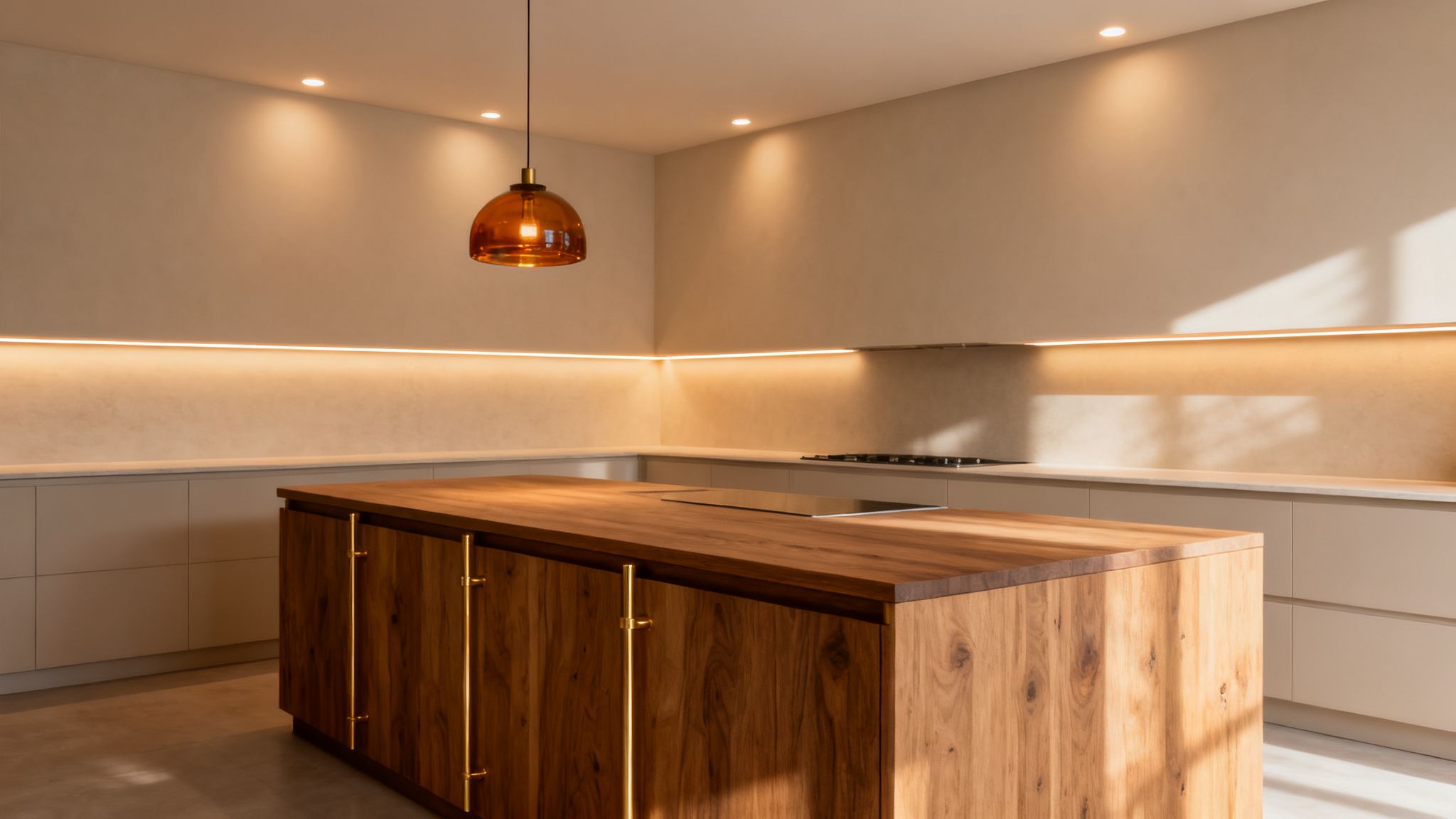
Choosing the right warm-toned, high-CRI bulb is a huge step. But the fixtures you use and your overall lighting strategy also matter. A truly inviting atmosphere comes from how different types of light work together.
The most effective approach is layered lighting. Instead of one bright overhead fixture, this method blends multiple light sources to build depth and soften shadows. A well-layered kitchen doesn't just feel warmer; it functions better, too.
The Three Layers of Kitchen Lighting
A professionally designed kitchen uses three distinct layers of light. Each has a specific job to create a balanced and comfortable environment.
- Ambient Lighting: This is your room’s foundation—the general, overall light. It usually comes from recessed cans or a central ceiling fixture. Starting with warm 2700K–3000K LEDs sets a welcoming tone.
- Task Lighting: This is brighter, focused light for your work zones. Under-cabinet lighting is a classic example, perfect for lighting countertops for chopping vegetables without harsh glare.
- Accent Lighting: This is the "jewelry" of your kitchen. It highlights features like a tile backsplash or glassware in a cabinet. A stunning pendant over the island is a perfect example.
Recent data shows that 34% of kitchen LED upgrades now use layered strategies. Under-cabinet lighting is especially popular, with 56% of California kitchen renovations including it for task lighting.
How Fixtures Add Warmth
The style and material of your light fixtures can also make your kitchen feel warmer. A pendant with a brass or wood finish adds a warm, reflective quality. A fixture with an amber or frosted glass shade will soften the light for a cozier glow.
Here at The Home Lighter, we can show you the best under-cabinet lighting options for a layered design. You can also learn how to make your home cozy by incorporating other elements like warm paint colors.
Finding Your Perfect Light in Pacific Grove
Are you tired of guessing which light bulb will look right in your home? Reading numbers on a box can only tell you so much. The best way to understand how to make your LEDs feel warmer is to see the difference in person.
Our Pacific Grove showroom is a hands-on lighting lab. Whether you’re coming from Monterey, Salinas, or Santa Cruz, you can experience what different lighting choices feel like in a real-world setting.
See the Difference Before You Buy
In our showroom, concepts like color temperature become crystal clear. You can compare a 2700K bulb and a 3000K bulb to see how each one changes the look of a countertop or cabinet finish. Greg and Tammy are here to take the guesswork out of the equation.
You’ll see how a high-CRI light brings out the rich, true colors in your materials. It’s an experience a website or hardware store can't replicate. Seeing the light in person is the only way to be confident in your decision.
A Curated Selection for Central Coast Homes
We know Monterey Peninsula homeowners value quality and lasting style. That's why we’ve curated a selection of only the best LED fixtures and bulbs.
Everything in our showroom is:
- Warm-Toned: We specialize in the cozy 2700K to 3000K range.
- Color-Accurate: Every product has a high CRI of 90+ to ensure your design looks its best.
- Fully Dimmable: Our fixtures are compatible with modern dimmers for complete mood control.
By pre-selecting for quality, we help you avoid common mistakes. You can learn more about our commitment to quality as an expert-approved Tech Lighting supplier near you. If you're remodeling or just replacing bulbs, visit our showroom to see what warm, energy-efficient lighting really looks like.
Frequently Asked Questions About Warm Kitchen LEDs
Here are answers to some of the most common questions we hear from homeowners across the Monterey Peninsula.
Can I just put a warmer bulb in my existing fixtures?
Yes, absolutely! This is the easiest and most impactful place to start. Swapping your bulbs for LEDs in the 2700K–3000K range can transform a room in minutes. Just make sure the new bulb is the right base and shape for your fixture and is labeled "dimmable" if you have a dimmer.
Will 2700K light make my white cabinets look yellow?
No, not with quality lighting. A high-CRI bulb (90+) at 2700K will give white cabinets a pleasant, creamy warmth, like soft morning sunlight. It won’t look artificially yellow because a high CRI rating guarantees it renders colors accurately.
What's the difference between Warm-Dim and Tunable White?
These two technologies do different things. Warm-dim mimics an incandescent bulb; as you dim it, the light gets warmer in color. Tunable white lets you control brightness and color temperature separately, usually with a remote or app, so you can change from warm to cool light anytime.
This simple decision tree can help you choose what's right for you.
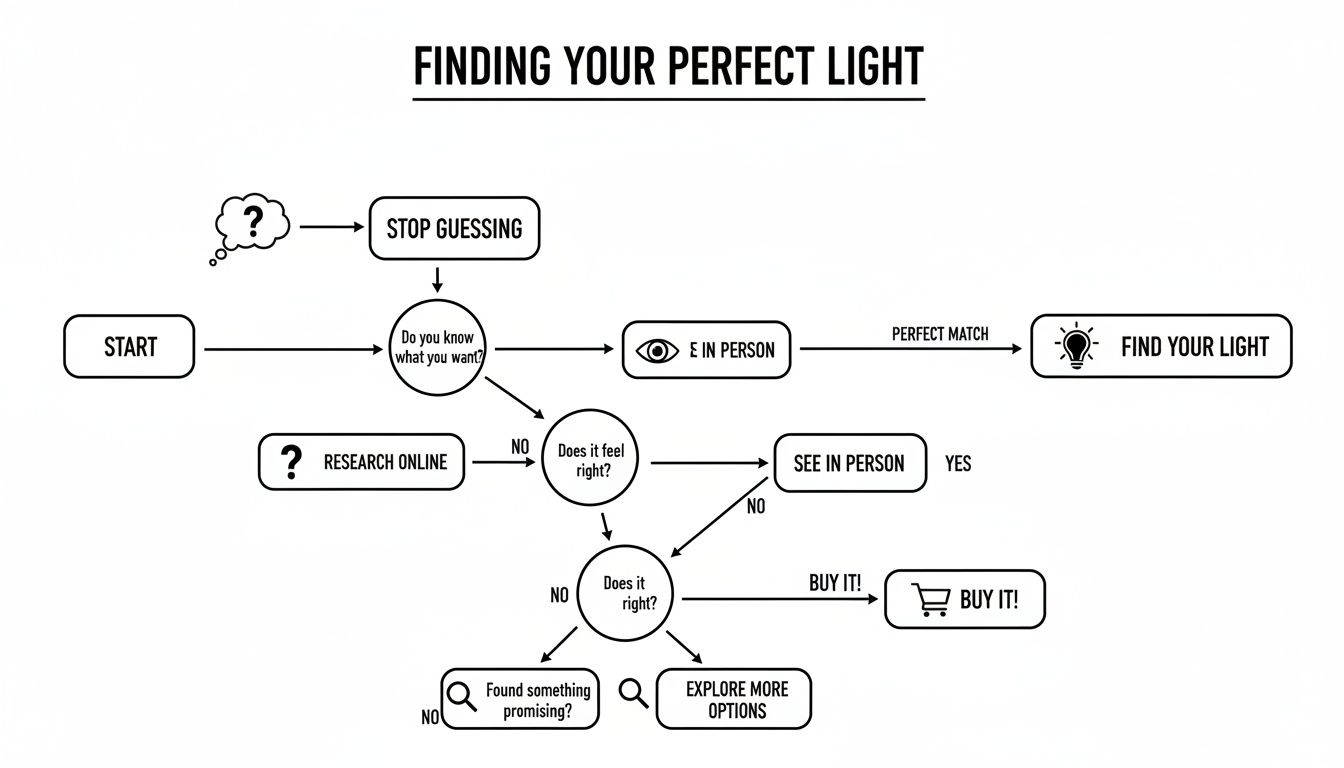
The best way to know you'll love the result is to see the options in person before you commit.
Why are my new dimmable LEDs flickering?
Flickering is almost always caused by an incompatible dimmer switch. Older dimmers can't regulate the low energy draw of modern LEDs. The fix is to upgrade your switch to a modern, LED-compatible dimmer.
Is 2700K or 3000K better for a kitchen?
This comes down to personal preference. A 2700K light provides a very cozy, traditional glow. A 3000K light is still warm but slightly crisper and whiter, which some prefer for task areas. The best way to decide is to see them side-by-side at our Pacific Grove showroom.
Choosing the right lighting shouldn't be a guessing game. At The Home Lighter Inc., we help you experience the best warm lighting solutions in person. Stop by our Pacific Grove showroom or explore our services online to get started.