
Direct Answer: Choose a chandelier roughly one half to two thirds the width of your dining table. Then add the room’s length and width in feet; that number in inches is a solid diameter guide.
The table is extended, the chairs are borrowed, and the one thing you keep looking at is the fixture hanging over all of it. It has bothered you for years, and now there are people coming in a few weeks.
One Peninsula homeowner shopping for a hanging fixture described the problem in five words: the current fixture is “old and outdated.” That is most of this market right now. Not a remodel, just one fixture that never looked right.
This article answers one question: how wide the chandelier should be. Height above the table is a separate decision, and it is covered in other guides on this site. Bring a tape measure and you can settle width in a single sitting.
The Two Numbers That Set Dining Room Chandelier Size
There are two rules, and good fixtures usually satisfy both.
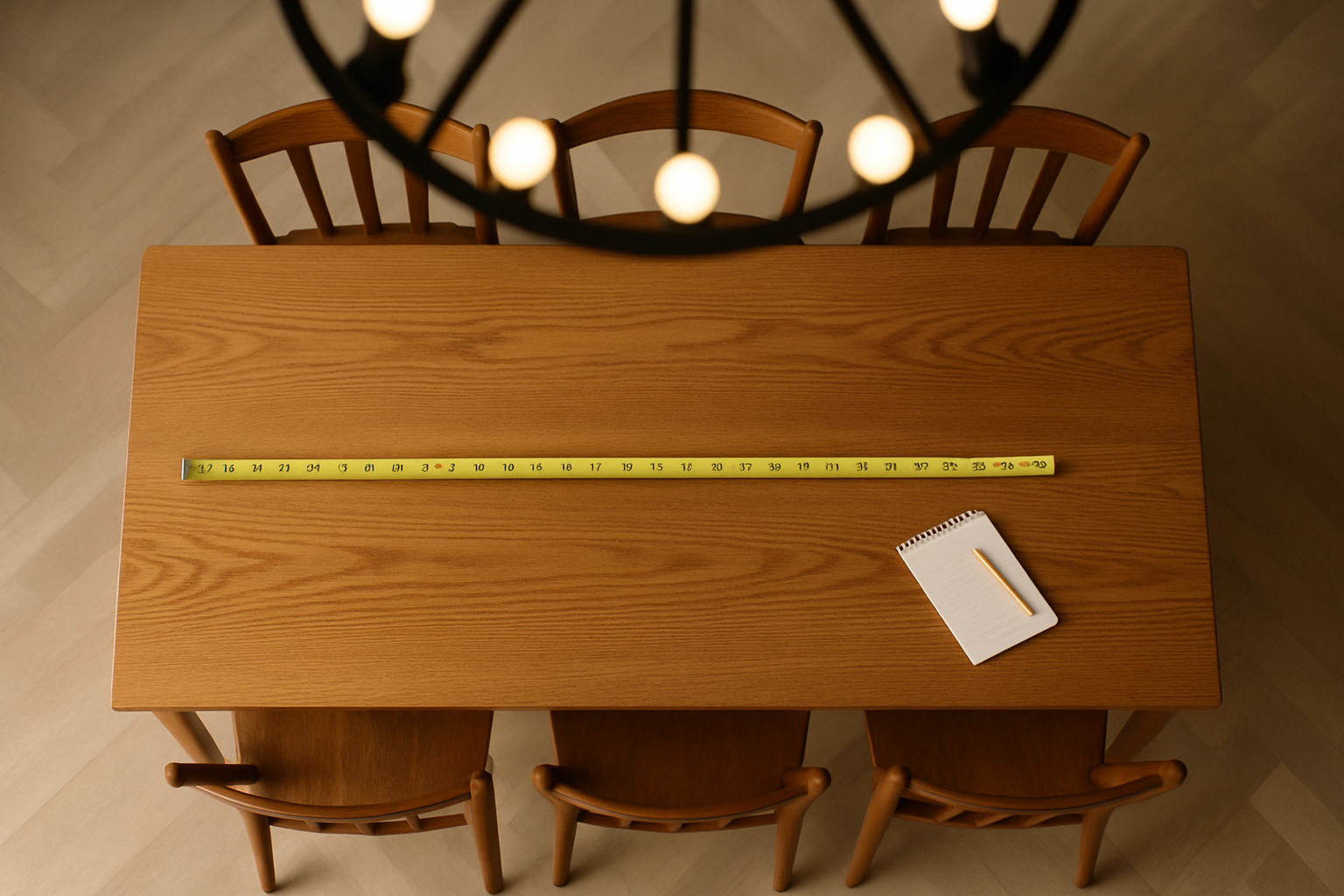
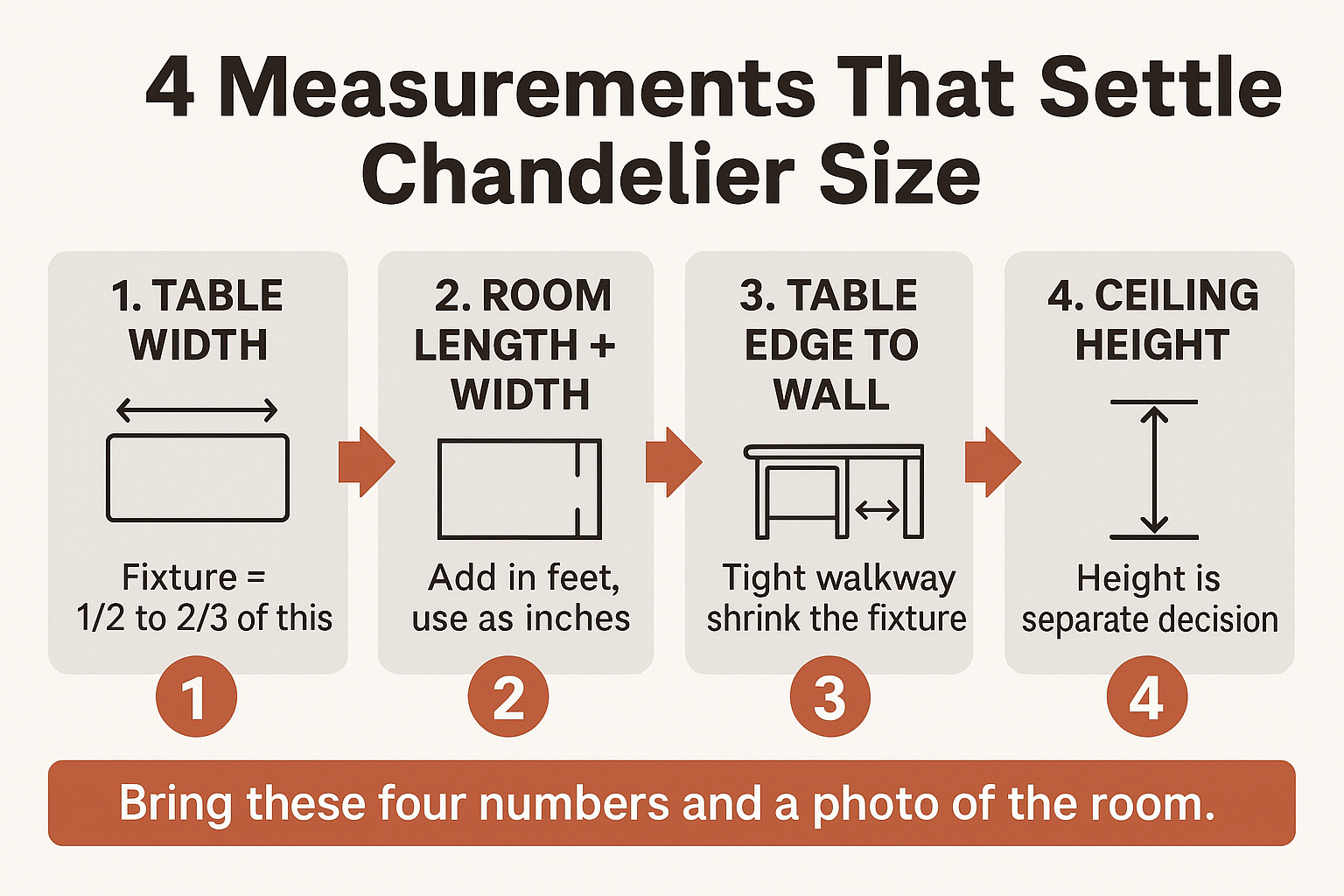
Rule one: the table. Your chandelier should be about one half to two thirds the width of the dining table. On a standard 42 inch wide table, that puts you between roughly 21 and 28 inches of fixture diameter.
Rule two: the room. Add the room’s length and width in feet, then use that total as a diameter in inches. A 12 by 14 foot dining room gives you 26, so a 26 inch fixture sits in a comfortable range.
When the two numbers disagree, split the difference and lean toward the smaller one if the table is narrow. A fixture that overhangs the table edge is the mistake people notice from across the room.
A few quick checks before you commit:
- Measure the table width, not the length. Length only matters if you are considering two fixtures or a linear piece.
- Leave at least 6 inches of table on each side of the fixture’s outer edge.
- Measure from the table edge to the nearest wall or sideboard, since a tight walkway makes a wide fixture feel bigger than it is.
- For a long table over 72 inches, two smaller chandeliers or a linear fixture often reads better than one oversized piece.
The Room Changes the Answer, Not Just the Table
Peninsula homes swing hard between two extremes, and the same table can call for two different fixtures depending on the walls around it.
The older cottage. A 1920s Pacific Grove dining room might be 10 by 11 feet with an 8 foot ceiling and a 38 inch table. The room math gives you 21 inches, the table math gives you 19 to 25, so something in the low 20s is right. Go to 30 inches and the room starts to feel like it is wearing a hat.
The open great room. In Carmel Valley and Pebble Beach, the dining table often shares one large space with a living area. Do not add the whole floor plan together. Measure the seating zone, meaning the area the table and chairs actually occupy, and run the math on that.
The vaulted ceiling. Taller rooms can carry more fixture, usually by adding visual height rather than width. That is its own conversation, and it is worth reading up on separately before you shop.
A good habit before any of this: read the room first and note where the windows, sightlines and furniture fall. In a shared space, a dining chandelier also has to live next to whatever lights the sofa, which is why restaurants layer their rooms instead of relying on one fixture.
Chandelier Diameter Guide by Room and Table Size
Use this as a starting range, then adjust for how heavy or open the fixture looks. Both columns should roughly agree before you buy.
| Room size (feet) | Room math (L + W in inches) | Common table width | Workable diameter range |
|---|---|---|---|
| 10 x 11 | 21 in | 36 to 38 in | 20 to 24 in |
| 11 x 13 | 24 in | 40 in | 22 to 27 in |
| 12 x 14 | 26 in | 42 in | 24 to 29 in |
| 13 x 16 | 29 in | 44 to 48 in | 26 to 32 in |
| Open seating zone 14 x 18 | 32 in | 48 in+ | 30 to 36 in, or two fixtures |
The Four Measurements That Settle It
Four numbers, taken in about ten minutes, are enough to narrow a wall of chandeliers down to a handful.
Two 30 Inch Chandeliers Can Look Nothing Alike
This is the part the math cannot do for you. Visual weight is how much space a fixture appears to take up, and it has very little to do with its listed diameter.
A dense crystal piece or a solid drum shade at 30 inches reads like a wall in a small room. An open metal frame with slim arms and exposed bulbs at the same 30 inches barely interrupts the sightline to the window.
What to look at when you compare two fixtures of the same size:
- Open versus solid form. Can you see through it? If yes, it can run toward the larger end of your range.
- Shade material. Clear glass and linen behave very differently. Fabric and opaque metal add weight; seeded or clear glass subtracts it.
- Arm spread. Wide, thin arms cover ground without filling it. A tight cluster of shades concentrates the mass in the middle.
- Finish value. Matte black and dark bronze look heavier than brass, nickel or white at identical dimensions.
Product photos flatten all of this, because the fixture is shot against a plain background with no room around it. Seeing three fixtures of the same diameter hanging at the same height in a lit showroom answers the question in about a minute. If you are shopping online, it helps to know how to tell whether a fixture will actually fit your room before the box arrives.
Fixture prices across this category range widely depending on brand, materials and whether the piece is stock or sourced, so it is worth confirming current pricing in person rather than assuming from a listing.
What to Bring So You Decide in One Visit
Homeowners who settle this quickly all show up with the same handful of things. People who come back three times usually arrive with none of them.
Bring:
- Table width and length in inches
- Room length and width in feet
- Ceiling height
- Distance from the table edge to the nearest wall or piece of furniture
- A photo of the room with the existing fixture in it, taken from the doorway
That last one matters more than people expect. A photo shows the trim color, the floor, the window placement and the scale of what is already hanging there.
One more note if your dining room is part of a permitted remodel. California’s Building Energy Efficiency Standards set requirements for lighting controls and efficiency, and the rules change on a set update cycle. Your licensed electrician or contractor handles that side and should confirm current requirements before the fixture goes up.
If the chandelier is meant to be the thing people notice, it also helps to think about when a fixture is the point of the room rather than just a light source.
Frequently Asked Questions About Dining Room Chandelier Size
What size chandelier goes over a 42 inch round table?
For a round table, the same rule applies to the diameter. A 42 inch round table works with a fixture around 21 to 28 inches. Round tables tend to look better with round or drum fixtures rather than linear ones.
Can a chandelier be too small?
Yes, and it happens more often than oversizing. An undersized fixture floats over the table and makes the ceiling look higher than it is in a way that reads as an accident. If you are torn between two sizes in your calculated range, the larger one is usually the safer pick as long as it has an open form.
Should I use one chandelier or two over a long table?
Once a table passes about 72 inches long, two matching fixtures or one linear piece usually balance better than a single round chandelier. Space two fixtures evenly, leaving roughly equal gaps at each end and in the middle.
Does the chandelier have to match the table shape?
It does not have to match, but it should not fight. Round over round and linear over rectangular are the easy wins. A round fixture over a long rectangular table works fine when it is sized to the table width and the room has other things going on.
How high should the chandelier hang above the table?
That is a separate question from width, and it has its own answer. Width depends on your table and room dimensions; hanging height depends on ceiling height and table surface. Settle the diameter first, then handle height.
Want a Second Opinion on the Number Before You Buy?
Scale is the part of a chandelier purchase that a curated showroom floor settles faster than any catalog, because three fixtures of the same diameter hanging side by side make the right one obvious. Greg at The Home Lighter can take a room’s measurements and narrow the field to a handful worth considering. The Pacific Grove showroom at 2034 Sunset Drive has been doing this for Monterey County homeowners since 1969, and walk-ins are welcome, with appointments available for more involved projects. The number is (831) 655-5500.
