
Choosing the right chandelier is more than just picking a pretty fixture. It’s about finding the perfect balance between sizing, style, and placement to truly elevate your space. This guide helps you think like a designer and select a chandelier that becomes a true style statement in your home.
Why Your Chandelier Is the Ultimate Style Statement
A chandelier is the ultimate focal point. It can be the single most impactful piece in a room. A chandelier doesn't just provide light; it sets the mood and defines the style of the space.
The right fixture can make a grand foyer feel welcoming or a dining room feel intimate. That’s why homeowners and designers put so much thought into the decision. In fact, the global chandelier market was valued at about USD 8.2 billion in 2024 and is expected to keep growing.
Beyond Generic Formulas
You've probably seen simple online formulas for chandelier sizing. A common one is: add the room's length and width in feet to get the ideal diameter in inches. While this is a decent start, it often falls short.
This formula doesn't account for the unique character of a home. This is especially true for the diverse architectural styles we see in Monterey, Carmel, and Pacific Grove.
A generic rule can't address key details:
- Ceiling Height: A vaulted ceiling in a Salinas home needs a different scale than a standard 8-foot ceiling in a coastal cottage.
- Visual Weight: An airy, minimalist fixture has a different presence than a dense, traditional crystal one, even if their dimensions are the same.
- Room Layout: In open-concept floor plans, a chandelier needs to anchor a specific zone, like a dining area, without overwhelming the entire space.
To master chandelier selection, you have to think about sizing, style, and placement. Remember that chandeliers are part of a broader family of lighting. Explore various ceiling light fixtures to see the range of options available.
Let's walk through each element, so you can choose a piece that perfectly suits your Central Coast home.
How to Master Chandelier Sizing and Scale
When choosing a chandelier, designers often use a simple rule of thumb as a starting point. It’s a reliable way to make sure your fixture is proportional to the room. This helps avoid common mistakes.
The go-to formula is this: the diameter of a chandelier (in inches) should be about the same as the room’s length plus its width (in feet). For a room that’s 12 by 10 feet, you’d start looking for a chandelier around 22 inches in diameter.
But a well-designed space considers more than just a basic formula. Mastering scale means looking at the room's height and the fixture's overall presence.
This infographic shows how sizing, style, and placement work together.
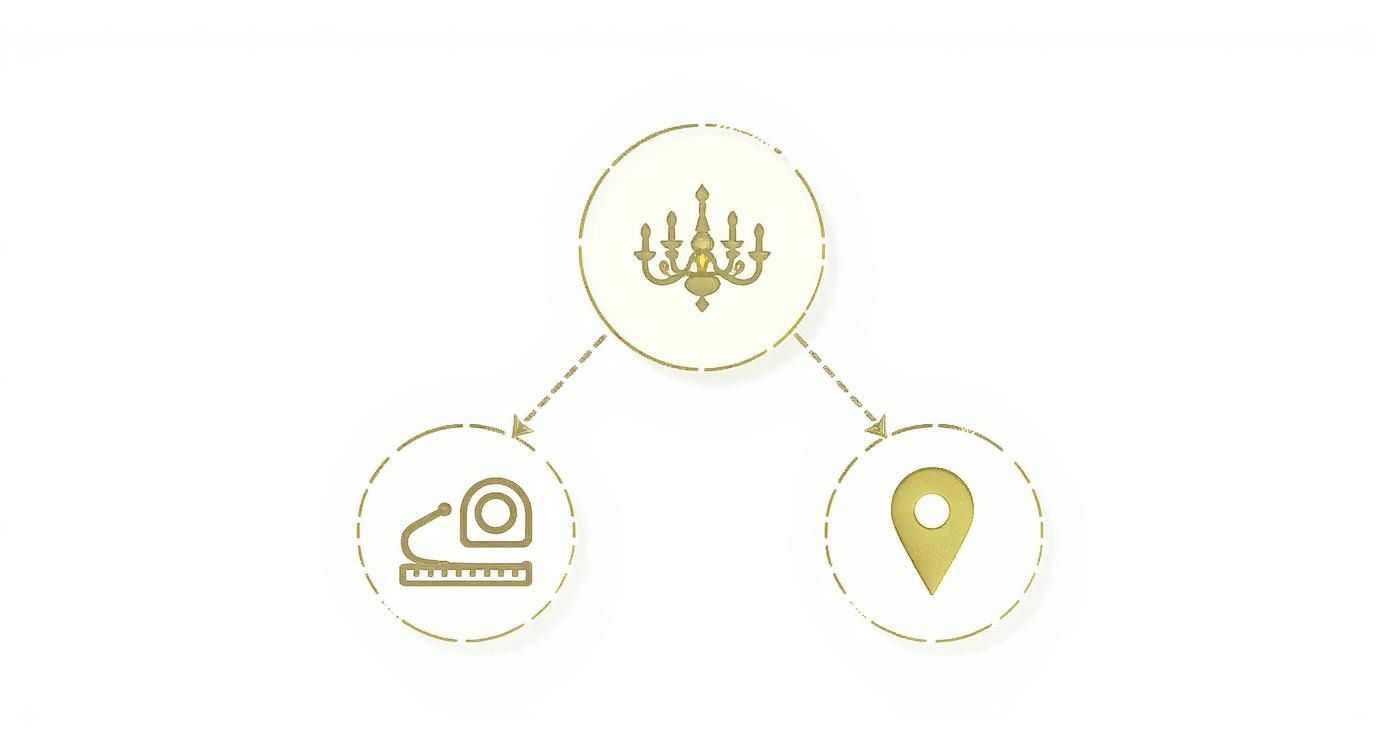
As you can see, these three elements are completely intertwined. If one is off, the balance of the room can feel wrong.
Factoring in Ceiling Height
Ceiling height is a huge deal. Our homes on the Monterey Peninsula range from historic cottages to modern builds with soaring ceilings. A simple formula doesn't account for all that vertical space.
Here's a good guideline: allow 2.5 to 3 inches of chandelier height for every foot of ceiling height. An 8-foot ceiling calls for a fixture that's 20 to 24 inches tall. For a grand 12-foot ceiling, you’ll want a chandelier that’s 30 to 36 inches tall.
Understanding Visual Weight
Beyond measurements, you have to consider visual weight—how heavy or light a fixture feels in a room. Two chandeliers with the same dimensions can create completely different effects. This is where you match the fixture to your room's personality.
Think about these two extremes:
- Light and Airy: An open-frame chandelier made of thin metal feels light. It's perfect for smaller rooms or minimalist interiors.
- Heavy and Substantial: A traditional fixture with dense crystals has serious visual weight. These chandeliers are best for large, formal spaces.
A chandelier’s visual weight should complement the room's furnishings. A delicate fixture might get lost among heavy furniture, while a massive chandelier could overpower modern decor.
Sizing for Specific Rooms and Scenarios
Once you understand these principles, you can choose a chandelier with confidence. The unique homes in our area often present challenges that a simple formula can't address.
Here's a quick cheat sheet for sizing and placement in common areas of your home.
Quick Guide to Chandelier Sizing and Placement
| Room Type | Sizing Formula for Diameter | Placement Rule for Height |
|---|---|---|
| Dining Room | 1/2 to 2/3 the width of the table | 30-36 inches above the tabletop |
| Living Room | Length (ft) + Width (ft) = Diameter (in) | 7 feet minimum clearance from the floor |
| Two-Story Foyer | Length (ft) + Width (ft) = Diameter (in) | Bottom of fixture at least level with the 2nd floor |
| Bedroom | Length (ft) + Width (ft) = Diameter (in) | 7 feet minimum clearance; center of the room or over bed |
This table is a solid starting point, but always trust your eye and consider your space's unique characteristics.
Grand Foyers and Entryways
In a two-story foyer, the chandelier needs to make an impact. The basic sizing formula is a great start, but the height must be right. Make sure the bottom of the fixture hangs at least 7 feet above the floor.
Dining Rooms
For a dining room, the chandelier should be scaled to the table, not the room. The perfect size is a fixture that is one-half to two-thirds the width of your dining table. This lights up the table without making guests feel crowded.
Living Areas with Vaulted Ceilings
Those beautiful vaulted ceilings in Pacific Grove homes demand a larger, taller fixture. The standard formula works for the diameter, but look for a multi-tiered design. Learn more in our guide on pendant light sizing.
Finding a Chandelier Style That Complements Your Home
Sizing is a science, but choosing a style is an art. A great chandelier should feel like it was always part of your home’s story. The goal is a piece that harmonizes with your home's spirit.
For homes across the Monterey Peninsula, this means finding a style that fits. In fact, more than 60% of luxury lighting buyers value design impact over cost. Getting the style right truly matters.
Matching Styles to Local Architecture
Every home has its own voice, and the right chandelier helps it speak clearly. Whether you're in a Carmel cottage or a Salinas ranch, there's a style that will feel at home.
-
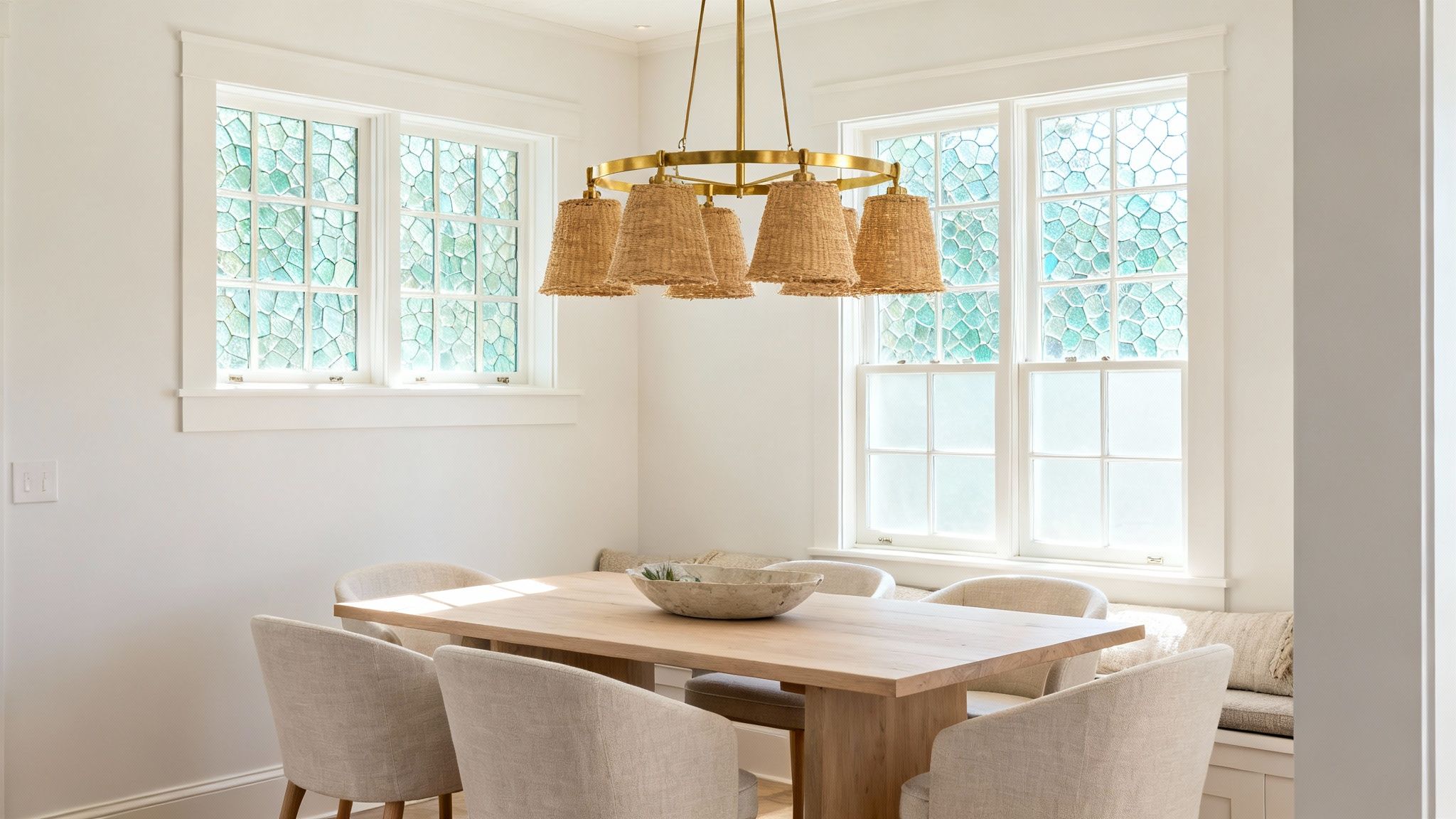
Coastal Contemporary: Think open, airy designs with materials like woven rattan or weathered wood. Finishes in brushed nickel or matte white keep the look light and fresh.
-
Traditional and Transitional: For homes with classic bones, a traditional chandelier offers timeless grace. Transitional styles blend classic shapes with modern finishes like matte black. Explore options like this bronze and crystal chandelier.
-
Modern and Minimalist: Clean lines and geometric shapes define modern chandeliers. They make a statement through elegant simplicity.
-
Rustic and Farmhouse: Inspired by the charm of the Salinas Valley, these chandeliers mix rugged materials like dark iron or reclaimed wood. They add warmth and character.
The Power of Material and Finish
A chandelier's materials and finishes tie it into your space. These details create a conversation with other elements in the room.
A chandelier’s finish doesn’t need to perfectly match every other metal in the room. Mixing metals is a sophisticated choice when done right.
Think about the mood different materials create:
- Warm Metals: Brass, gold, and bronze add a touch of luxury and warmth.
- Cool Metals: Chrome, nickel, and polished silver offer a crisp, modern feel.
- Matte Black: This is a true design chameleon that can feel industrial, modern, or rustic.
- Natural Elements: Wood and woven fibers introduce texture and an organic feel.
Choosing the right style comes down to trusting your gut. The perfect chandelier won't just light up your room—it will feel like it was always meant to be there.
Placing Your Chandelier for Maximum Impact
Choosing the perfect chandelier is only half the battle. Where you hang it truly determines its impact. Proper placement ensures your fixture looks beautiful and functions well.
The right placement rules create balance, harmony, and perfect light. A well-placed chandelier can define a dining area or add drama to an entryway.
Dining Room Chandelier Placement
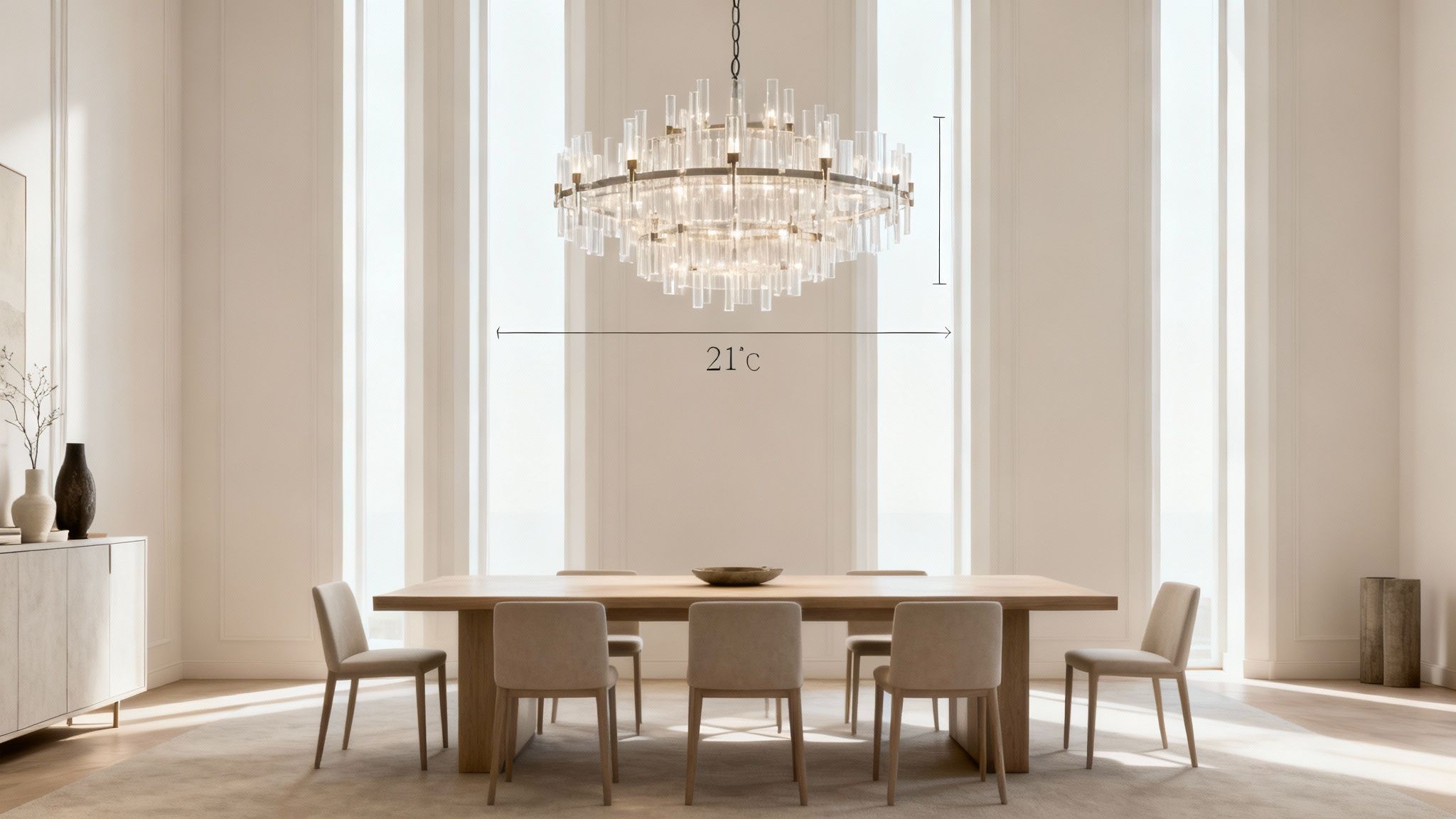
In a dining room, a chandelier should create an intimate atmosphere. The secret is to relate its position to the dining table, not the room itself.
The standard rule is simple: the bottom of the chandelier should hang between 30 to 34 inches above your tabletop. This is based on a standard 8-foot ceiling. For every extra foot of ceiling height, add about 3 inches of hanging height.
Foyer and Entryway Placement
A foyer chandelier sets the tone for your home. It has to be a showstopper without getting in the way.
- Minimum Clearance: The lowest the fixture can hang is 7 feet from the floor. This guarantees plenty of headroom.
- Two-Story Foyers: The bottom of the chandelier should hang roughly level with the second floor.
- Framing the View: If you have a window above your front door, center the chandelier in it. This creates a gorgeous welcome from the outside.
Tackling Tricky Placement Scenarios
Not every room is a perfect square. Homes in Carmel and Santa Cruz are full of unique architectural details that demand a creative approach.
An off-center chandelier isn't a mistake; it's a design statement. It can anchor a cozy seating area or highlight an architectural feature.
Here’s how we handle common challenges:
Sloped or Vaulted Ceilings
Chain-hung chandeliers work best here because they hang straight naturally. If you choose a fixture with a fixed rod, you’ll need a sloped ceiling adapter to make sure it hangs vertically.
Open-Concept Living Areas
In an open floor plan, a chandelier acts as a visual anchor to define a zone. Use one to designate the dining area or a central seating arrangement. Check out some game-changing living room layout ideas to nail this.
Off-Center Placement
Sometimes, breaking the rules is the best thing to do. Think about hanging a chandelier over a specific furniture grouping, like a coffee table. This can make your lighting plan more interesting.
Integrating Your Chandelier With Layered Lighting
A chandelier is the star of the room, but even stars need a supporting cast. Relying on one central fixture can create harsh shadows. Pairing your chandelier with other light sources brings balance and dimension.
The Three Essential Layers Of Light
A truly inviting space needs three lighting layers working together:
- Ambient Lighting: Your chandelier provides the main source of general light.
- Task Lighting: This is focused light for specific jobs, like a reading lamp.
- Accent Lighting: This adds drama by highlighting artwork or architectural details.
Layering your lighting creates a rich atmosphere. For more tips, check out our guide on how to create ambient lighting.
Going Beyond The Bulbs With Modern Technology
Once the layers are in place, technology takes your lighting plan to the next level. Modern controls and smart fixtures give you precision at your fingertips.
The Power of the Dimmer Switch
Installing a dimmer is the most effective upgrade a designer will recommend. It transforms your chandelier from bright task light to a soft, enveloping glow.
A dimmer lets you shape the room’s energy. It’s the difference between feeling merely lit and genuinely alive.
Choosing the Right LED Color Temperature
LEDs are energy-saving and stylish. The chandelier market is set to grow at a CAGR of 5.23% from 2025 to 2032 as homeowners seek both design and sustainability. Discover more insights about these chandelier market trends from industry analysis.
When picking bulbs, watch the color temperature (Kelvins):
- Warm White (2700K – 3000K): Cozy and inviting, perfect for living spaces.
- Cool White (3500K – 4100K): Clear and neutral, ideal for kitchens and offices.
Embracing Smart Lighting Controls
Smart systems from brands like Lutron let you program lighting scenes. You can change your entire lighting plan with a tap on your phone or a voice command.
Bringing Your Vision to Light with Expert Guidance
Design rules offer a great start, but nothing replaces personalized, expert advice. A formula can't grasp the unique character of a historic Carmel cottage or a modern Salinas home. This is where professional guidance makes all the difference.
Seeing a chandelier in person allows you to appreciate its actual scale and the quality of light it casts. In our Pacific Grove showroom, you can see how different materials and designs play with light. This helps you make sure your final choice feels right.
From Inspiration to Installation
Navigating the world of lighting can feel overwhelming, but you don't have to go it alone. Our team at The Home Lighter lives and breathes lighting design. We are passionate about helping our Central Coast neighbors find fixtures that are beautiful and perfectly suited to their homes.
We specialize in turning your vision into a practical, stunning reality. By understanding your home’s architecture and your personal style, we can suggest options that go beyond basic measurements.
Choosing a chandelier is an investment in your home's atmosphere. A lighting consultant ensures that investment is a brilliant one.
Whether you're starting a new build or refreshing a single room, we’re here to help. See why The Home Lighter is the best choice for custom lighting on the Central Coast.
Ready to find the perfect chandelier? Visit our showroom or schedule a design consultation today. We’ll help you select a piece that brings your vision to light.
FAQs: Your Chandelier Questions Answered
Picking the perfect chandelier can still feel tricky. We hear these questions all the time from homeowners on the Central Coast, so we’ve put together some straightforward answers.
Can I put a chandelier on a sloped ceiling?
Yes, absolutely. For chain-hung chandeliers, the fixture will hang straight down naturally. If you choose a fixture that uses a fixed rod or stem, you will need a special sloped ceiling adapter to ensure it hangs vertically.
How do I choose a chandelier for a small room or low ceiling?
For smaller spaces or ceilings under 8 feet, you want to add elegance without crowding the room. Look for flush-mount or semi-flush-mount chandeliers. Airy designs with slender arms or clear glass also work well. Always ensure there is at least 7 feet of clearance from the bottom of the fixture to the floor.
Should my chandelier finish match other metals in the room?
Not at all. Mixing metals can add depth and character to a room. The key is to make it look intentional. Choose one dominant metal finish and then introduce one or two others as accents. For example, a matte black chandelier can look stunning with brushed brass cabinet pulls.
What are lumens and how many do I need for my chandelier?
Lumens are a measure of brightness. The right amount depends on the room's purpose. For a dining room, aim for 30-40 lumens per square foot. However, the most important tool for controlling brightness is a dimmer switch. Always pair your chandelier with a dimmer to adjust the light from bright to a soft, ambient glow.
How can I make sure my chandelier feels modern and not dated?
To keep your chandelier choice feeling current, consider clean lines and simple shapes. Materials like matte black, aged brass, and natural fibers are popular. Integrated LED fixtures offer a sleek, minimalist look. Also, focus on layering your chandelier with other light sources like sconces and lamps for a balanced, modern feel.
Not sure which chandelier is right for your home? Visit The Home Lighter, Inc. in Pacific Grove or schedule a design consultation to see curated options in person. We’ll help you choose a piece that reflects your style—and your space—beautifully. Find out more at https://homelighterinc.com/.