
Direct Answer: Starting January 1, 2027, AB 1621 strengthens housing-permit deadlines and limits repeated plan checks, while SB 1014 requires local jurisdictions to disclose required improvements within 30 days of a complete permit application.
You picked the fixtures months ago. Then the plans went back for a second plan check, then a third, and now the chandelier you chose is discontinued and the finish you matched everything to is gone.
That cycle is common on the Monterey Peninsula, where small lots, coastal rules, and busy building departments stretch timelines. Two new state laws that take effect January 1, 2027 are aimed squarely at that problem.
This article covers what AB 1621 and SB 1014 actually do, who they cover, and how a steadier permit calendar changes when you should be locking in lighting decisions.
What the California new housing permit laws change on January 1, 2027
Governor Newsom signed a package of housing bills on and around September 29 to 30, 2026. The measures take effect January 1, 2027.
Two of them matter most for permit timing:
- AB 1621 strengthens housing-permit deadlines and limits repeated plan checks.
- SB 1014, by Sen. Tim Grayson of Concord, requires local jurisdictions to disclose all infrastructure fees and requirements to home builders within 30 days of their permit application.
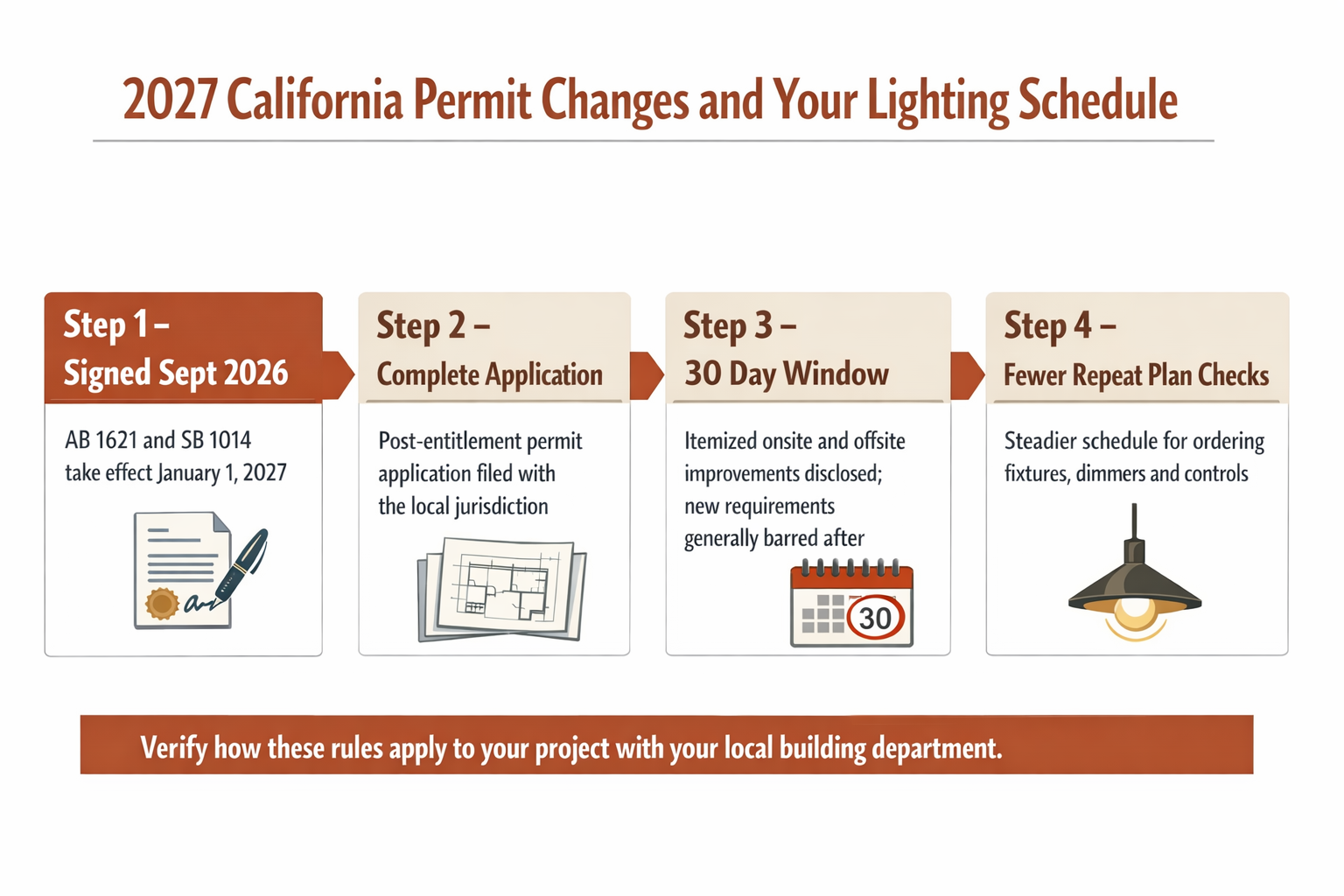
Under SB 1014, a local jurisdiction has to give builders an itemized list of required onsite and offsite improvements within 30 days of a complete post-entitlement permit application, and is generally barred from adding new requirements after that window closes. California YIMBY summed up the intent in a line worth repeating: home builders deserve to know up front what their projects will cost.
The other half, reported by The Press Democrat, is the plan check piece. Fewer rounds of re-review means fewer months where a project sits still and nobody can order anything with confidence.
One caution before you rebuild your schedule around this. These are housing bills, written around housing permits and post-entitlement applications, not a blanket rule for every bathroom remodel in Monterey County. Whether your specific project qualifies is a question for your local building department, your architect, or your licensed contractor.
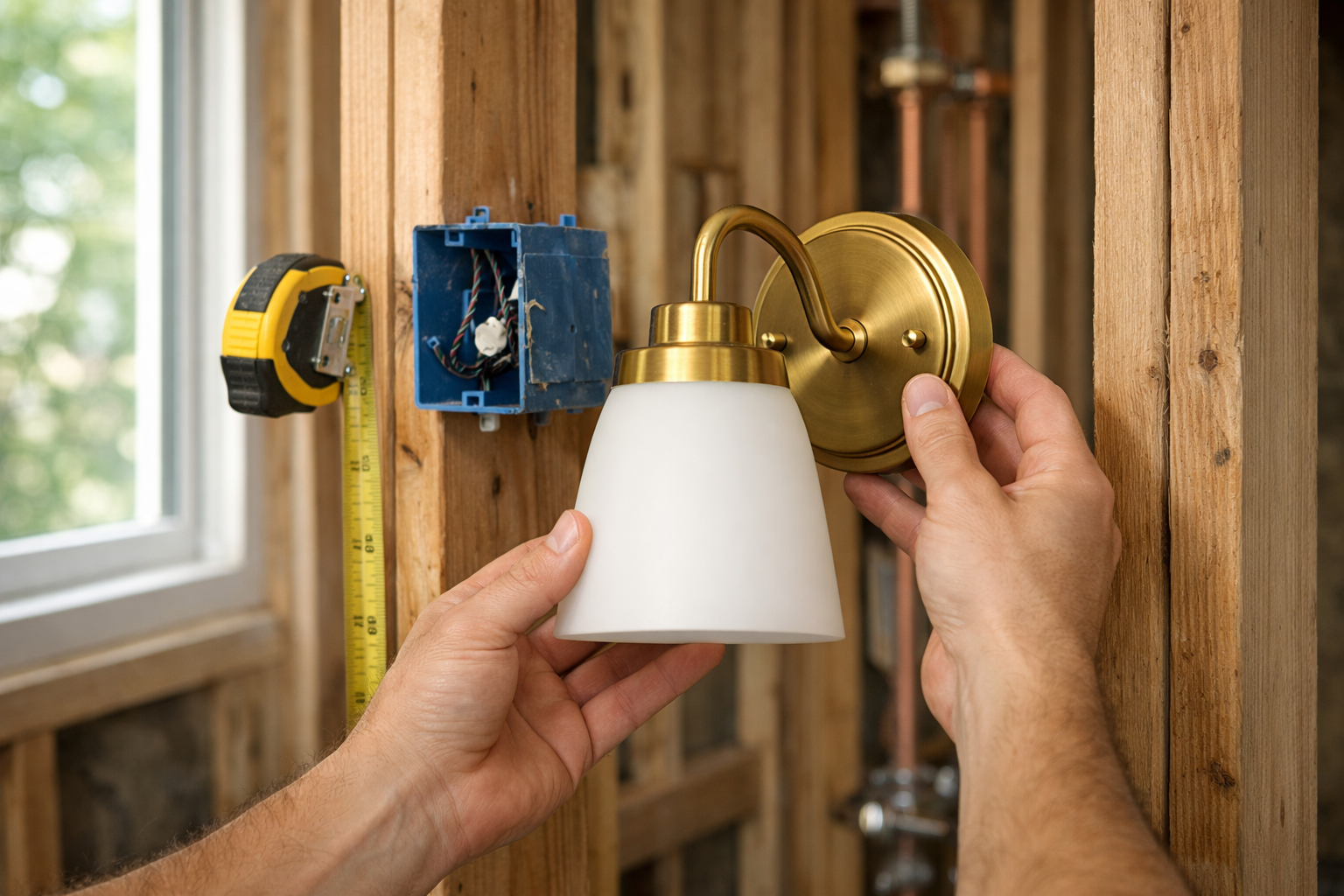
Why plan check delays hit lighting orders harder than most trades
Lighting sits at an awkward spot in a remodel. The rough electrical has to happen early, but the fixtures themselves show up at the very end, which means a long gap between the decision and the delivery.
When a project stalls in repeat plan checks, that gap stretches. Here is what tends to go wrong during the wait:
- Finishes get discontinued. A manufacturer drops a bronze or a brushed brass, and the matching sconces you planned for the hallway no longer exist.
- Lead times move. Handcrafted and semi-custom lines commonly run several weeks to several months, and those windows shift with demand and supply costs.
- Pricing moves with them. Fixture pricing has been a moving target lately, and what tariffs did to fixture prices is still worth reading before you quote a client a number from last spring.
- Control specs drift. Dimmers, drivers, and LED compatibility get chosen early. If the fixture changes late, the dimmer may not play nice with it.
That last one shows up constantly. One Monterey County homeowner described a flickering dimmable LED that was driving them crazy, and the fix was not a bulb swap, it was a mismatch between the dimmer and the driver.
A permit timeline you can actually predict is what lets a designer or contractor place fixture orders at the right moment instead of guessing.
When to Lock Lighting Decisions Against Your Permit Timeline
Timelines vary by project and jurisdiction, so treat this as a planning framework rather than a fixed schedule. Confirm the specifics with your contractor.
| Project Milestone | Lighting Decision to Lock In | Why the Timing Matters |
|---|---|---|
| Plan check submittal | Title 24 control specs, exterior fixture color temperature | Wrong specs are a common reason plans come back for another round |
| Within 30 days of a complete post-entitlement application | Budget allowance for itemized onsite and offsite improvements | SB 1014 is the window when those requirements should be disclosed |
| Before drywall | Junction box locations, sconce heights, dimmer types | Moving a box after drywall means patch, texture, and repaint |
| Roughly 2-4 months before trim-out | Special orders on custom and semi-custom fixtures | Handcrafted lines often carry the longest lead times |
| 2 weeks before trim-out | Final finish confirmation across every room | Finish mismatches are obvious once everything is hung |
The 2027 Permit Timeline at a Glance
A simple view of how the new disclosure window and plan check limits line up with fixture ordering.
The local rules that are not going anywhere
Faster state-level permitting does not loosen local lighting requirements. On the Peninsula, two sets of rules still shape fixture selection.
Carmel-by-the-Sea exterior lighting. The city caps residential exterior fixture color temperature at 3000K and restricts lumen output. That rules out a lot of catalog exterior fixtures and most off-the-shelf bulbs sold as daylight white.
California Title 24. The state’s energy standards, with the current update effective January 1, 2026, govern lighting controls and efficiency for remodels and new construction. You can read the standards directly from the California Energy Commission.
Both are frequent sources of correction letters, which is exactly what AB 1621 is trying to reduce. Getting the color temperature and the control specs right the first time keeps the plans moving.
Verify current requirements with your local building department or a licensed contractor before you order anything. Ordinances get amended, and Pacific Grove, Monterey, and Carmel do not all read the same.
One more local note for anyone eyeing solar yard fixtures as a workaround: the rules on that changed too, and plug-in solar becoming legal in California is a separate 2027 change worth understanding on its own terms.
What to do differently in 2027
If your project qualifies, the practical gain is a schedule you can plan purchases around. A few moves make that useful instead of theoretical.
- Treat the 30-day disclosure window as a budget checkpoint. Once the itemized improvements land, you know what is left for interior finishes and fixtures.
- Walk the lighting plan before drywall. Sconce heights, box placement, and switching all get cheap to change now and expensive to change later. There is a full breakdown in what to tell your electrician before the drywall goes up.
- Bring measurements and photos when you shop. Homeowners who arrive with room dimensions, ceiling heights, and finish names get to a decision in one visit instead of three.
- Ask about special orders early. If something is not on the floor, it can usually be ordered. The sooner that conversation happens, the less a long lead time hurts.
And if an existing fixture is the holdup, a replacement is not always the answer. Sometimes an older fixture needs one part, not a whole new light, which can keep a period home consistent instead of mixing eras.
Greg at The Home Lighter works through this sequencing with homeowners, designers, and contractors regularly, including finish matching across a whole house. As one Pacific Grove customer put it in a review, the staff’s “in-depth knowledge of so many brands and the technical aspects of each light fixture” is what makes the selections hold up. Installation always goes to your licensed electrician or contractor.
Frequently Asked Questions About California’s 2027 Permit Changes
Does AB 1621 apply to my kitchen or bathroom remodel?
Not necessarily. These are housing bills, built around housing permits and post-entitlement applications, and a standard owner-occupied remodel may fall outside them. Ask your local building department or your contractor how the rules apply to your specific permit.
What exactly does the 30-day rule under SB 1014 cover?
Local jurisdictions have to give builders an itemized list of required onsite and offsite improvements within 30 days of a complete post-entitlement permit application, and are generally barred from adding new requirements after that window. The key word is complete. An incomplete application does not start the clock.
Will this make my project cheaper?
It is more about predictability than price. Costs vary widely by project, but fewer surprise re-reviews and fewer late add-on requirements should mean fewer schedule overruns, and schedule overruns are where remodel budgets usually leak.
Can I still use 4000K exterior fixtures in Carmel after 2027?
No. The city’s residential exterior color temperature cap of 3000K and its lumen limits are local rules, and the state housing bills do not change them. Confirm the current ordinance language with the city before you buy.
How far ahead should I order fixtures?
It depends on the line. In-stock items can move quickly, while custom and semi-custom pieces often take considerably longer, sometimes a few months. If a fixture is not on the showroom floor, it can usually be ordered, so ask about the timeline before you commit the rest of the schedule to it.
Planning a 2027 Project on the Monterey Peninsula?
If a remodel or build is heading into plan check next year, the lighting decisions are easier to make with the fixtures in front of you and the timeline on the table. The showroom at 2034 Sunset Drive in Pacific Grove is open to homeowners, designers, and contractors across Monterey County, and walk-ins are welcome, with appointments available for more involved projects. Questions can also go to (831) 655-5500.
