
You upgraded to energy-efficient LED lights, but now your home feels more like a hospital waiting room than a cozy retreat. If you’ve asked, “Why does it feel so cold in here?” you're not alone. The answer usually comes down to two simple things: color temperature and fixture type.
Many early or cheaper LEDs produced a harsh, blue-ish light that feels sterile and clinical. This is the exact opposite of the warm, inviting atmosphere we all want in our living spaces.
Your Quick Guide to Warmer Home Lighting
Switching to LED lighting is a smart move. LEDs use up to 90% less energy and can last an incredible 25 times longer than old incandescent bulbs, according to the U.S. Department of Energy.
The problem is, many people buy the brightest or cheapest option without checking key specs. This leads to rooms feeling cold and unwelcoming. The good news? The solution is to understand color temperature (Kelvin) and color accuracy (CRI).
Here's what you need to know:
- Color Temperature (Kelvin): This is the #1 reason your lights feel cold. A high Kelvin number (4000K or more) gives off a cool, blue-white light. For a warm, inviting glow, look for a lower number, between 2700K and 3000K. Learn more in our detailed guide.
- Color Accuracy (CRI): If your paint, furniture, or skin tones seem dull, you have a low CRI. A high CRI of 90+ ensures everything looks vibrant and true to life, just as it would in natural daylight.
This simple decision tree can help you pinpoint what's wrong and how to fix it.
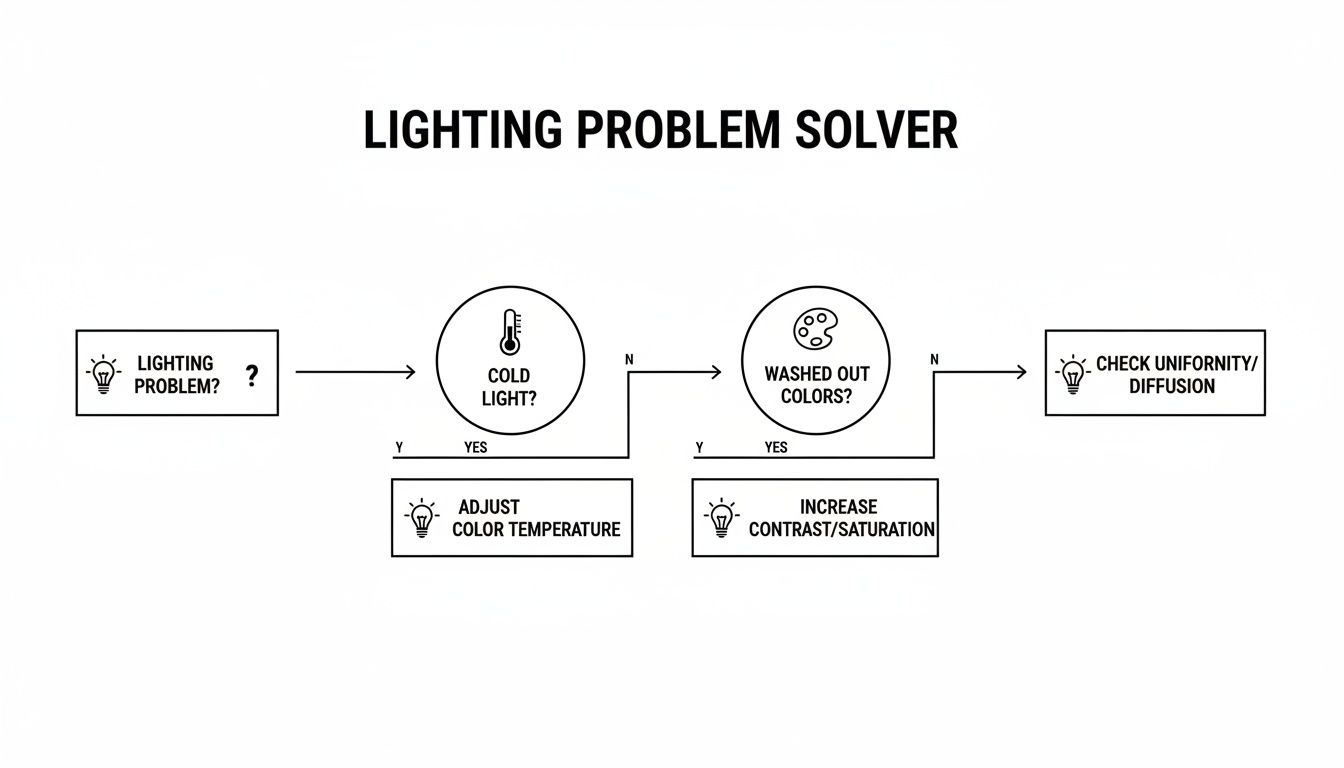
Common LED Lighting Problems and Simple Fixes
Seeing the issue laid out makes it easier to diagnose. This table breaks down common complaints and connects them to a straightforward fix.
| The Problem You Are Seeing | The Technical Reason Why | The Simple Solution |
|---|---|---|
| "My room feels sterile, like an office or a clinic." | The Color Temperature (Kelvin) is too high (4000K+). | Look for bulbs labeled "Warm White" or check the box for a Kelvin rating between 2700K and 3000K. |
| "The colors of my walls and furniture look dull and flat." | The Color Rendering Index (CRI) is too low (often below 80). | Choose high-CRI bulbs (90+) to make colors appear vibrant and accurate. |
| "The light is harsh and creates ugly, sharp shadows." | The bulb is an exposed, direct light source with no diffusion. | Select fixtures with frosted glass, fabric shades, or use bulbs with a built-in frosted coating to soften the light. |
| "It’s way too bright, almost like a stadium." | The lumens (brightness) are too high for the space. | Install dimmer switches to control the intensity, or choose bulbs with a lower lumen output suitable for the room. |
By paying attention to these details, you can troubleshoot your lighting and make targeted changes.
Getting both color temperature and color rendering right is fundamental to creating a comfortable atmosphere. To bring natural-feeling light into dark corners, you might even explore advanced options like solar powered LED skylights, which mimic the pleasant quality of daylight.
Focusing on these key details will help you get the warm, beautiful, and energy-efficient lighting you've always wanted.
Understanding The Secret Language of Light Bulbs
Have you ever glanced at the numbers on a light bulb box and felt confused? If you’re battling a cold, sterile feeling in your home, one of those numbers is the key: color temperature, measured in Kelvin (K).
Think of the Kelvin scale like the color of a flame. A low number is like the warm, orange-red glow of a candle. A high number is more like the piercing blue-white intensity of a blowtorch.
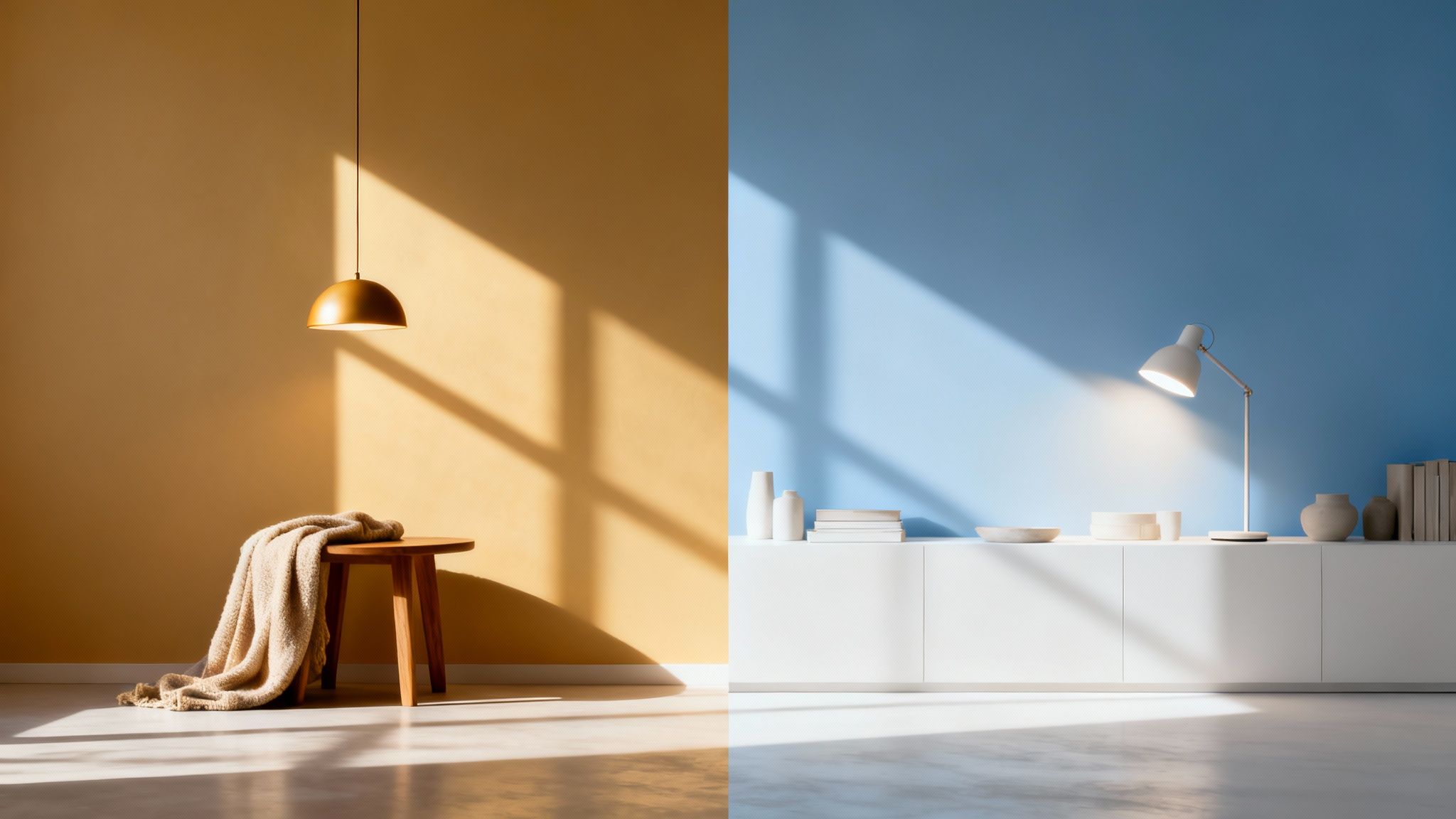
Why Early LEDs Gave Themselves a Bad Rap
When LED technology first hit the market, most bulbs had very high color temperatures, often 5000K or more. This is why so many people still think of LEDs as harsh and clinical. It was a big change from the incandescent bulbs we grew up with, which naturally burn around 2700K and give off a familiar amber warmth.
Between 2015 and 2020, LED use in American homes shot up from a mere 4% to 47%. Millions of homeowners swapped their warm incandescents for these cool LEDs. The result was a widespread feeling that their homes had suddenly become cold and institutional.
This history is why it’s so important to check the box before you buy. The Kelvin number is your ticket to getting the atmosphere you want.
How to Choose the Right Kelvin for Your Home
Today’s LEDs come in a huge range of color temperatures, giving you total control. For most living spaces, the sweet spot for a warm, comfortable feeling is between 2700K and 3000K.
Our Pro Tip: Stick to 2700K for a traditional, cozy glow that mimics an old-fashioned incandescent bulb. If you want something a bit crisper but still warm, 3000K is a fantastic, modern choice.
Here’s a quick guide to help you choose:
- 2700K (Warm White): This is your go-to for living rooms, dens, and bedrooms. It creates a relaxing, intimate, and comfortable atmosphere.
- 3000K (Soft White): A great choice for kitchens and bathrooms. It provides a clean, bright light that’s excellent for tasks without feeling sterile.
By understanding this one simple metric, you can shop with confidence. For a more detailed walkthrough, check out our guide on how to choose the right light bulb for every room.
Bringing Colors Back to Life with High CRI Lighting
Color temperature is only half of the story. Have you ever painted a room, loved the color, and then found it looks dull under your new lights? This isn't about warmth; it's about color accuracy.

This common issue is why we need to talk about the Color Rendering Index (CRI). Think of CRI as a 0 to 100 scale that measures how accurately a light source reveals the true colors of objects compared to natural sunlight.
Why CRI 90+ Is the New Standard for Homes
Low-CRI LEDs, often with a rating of 80 or less, can make rich colors appear muted or distorted. A deep red sofa might look brownish, and wood floors can lose their depth.
For a home to feel vibrant and authentic, we always recommend LEDs with a CRI of 90 or higher. This is the secret to ensuring that:
- Your decor looks its best: Your paint, artwork, and furniture will appear exactly as intended.
- Food looks appetizing: In the kitchen, a high CRI makes fresh fruits and vegetables look vibrant.
- You look your best: High-CRI light in bathrooms renders skin tones naturally, which makes applying makeup or matching outfits easier. Our guide to the best lighting for walk-in closets highlights how crucial this is.
By selecting bulbs with a CRI of 90 or above, you're investing in light that honors the true colors of your home. It’s the key to fixing not just the 'cold' feeling but also the dull, lifeless look that poor-quality lighting creates.
Don't Let Poor Light Undermine Your Design
Imagine spending weeks choosing the perfect paint for your Monterey home, only to have it look wrong because of your lighting. It’s a common problem, and it’s why we take CRI so seriously at The Home Lighter.
We vet every fixture to ensure it provides a warm glow and brings out the true beauty of your space. The best solution is combining a warm color temperature (2700K-3000K) with a high CRI (90+). That’s how you get lighting that feels as good as it looks.
Creating the Perfect Mood with Dimmers and Brightness
Sometimes, the issue isn't color, but overwhelming intensity. Homeowners often reach for the brightest LEDs they can find. They end up with an over-lit space that feels more like a stadium than a sanctuary.
This is where dimmers come in. A dimmer switch does more than just reduce brightness. As you dim a compatible LED, the light often appears warmer, creating a more intimate atmosphere.
The Importance of LED-Compatible Dimmers
A common mistake is pairing new LEDs with old dimmer switches. Older models were designed for high-wattage incandescent bulbs and can't handle the low load of modern LEDs. This mismatch causes that annoying flickering, buzzing, or humming.
Installing a modern, LED-compatible dimmer is a small change that delivers huge results. It gives you seamless control, letting you go from bright task light to a soft, ambient glow with the same fixture.
From Full Brightness to Soft Glow
Think about the moods you want to create. A dinner party in your Salinas home might start with bright lighting, but you'll want to lower the lights as the evening winds down. A dimmer makes this possible.
The ability to adjust brightness is fundamental to a functional lighting plan. It turns a static room into a dynamic environment that adapts to your needs.
Dimmers help you avoid that "always on" clinical feeling that makes a space feel cold. For more guidance, our guide on how to install dimmer switches offers practical advice.
Controlling brightness is just as crucial as choosing the right color temperature for a home that feels warm and inviting.
How Light Fixtures Soften and Shape Your Space
A bare LED bulb can feel like an interrogation lamp. The fixture itself is just as important as the bulb. The right fixture transforms a harsh glare into a welcoming glow.
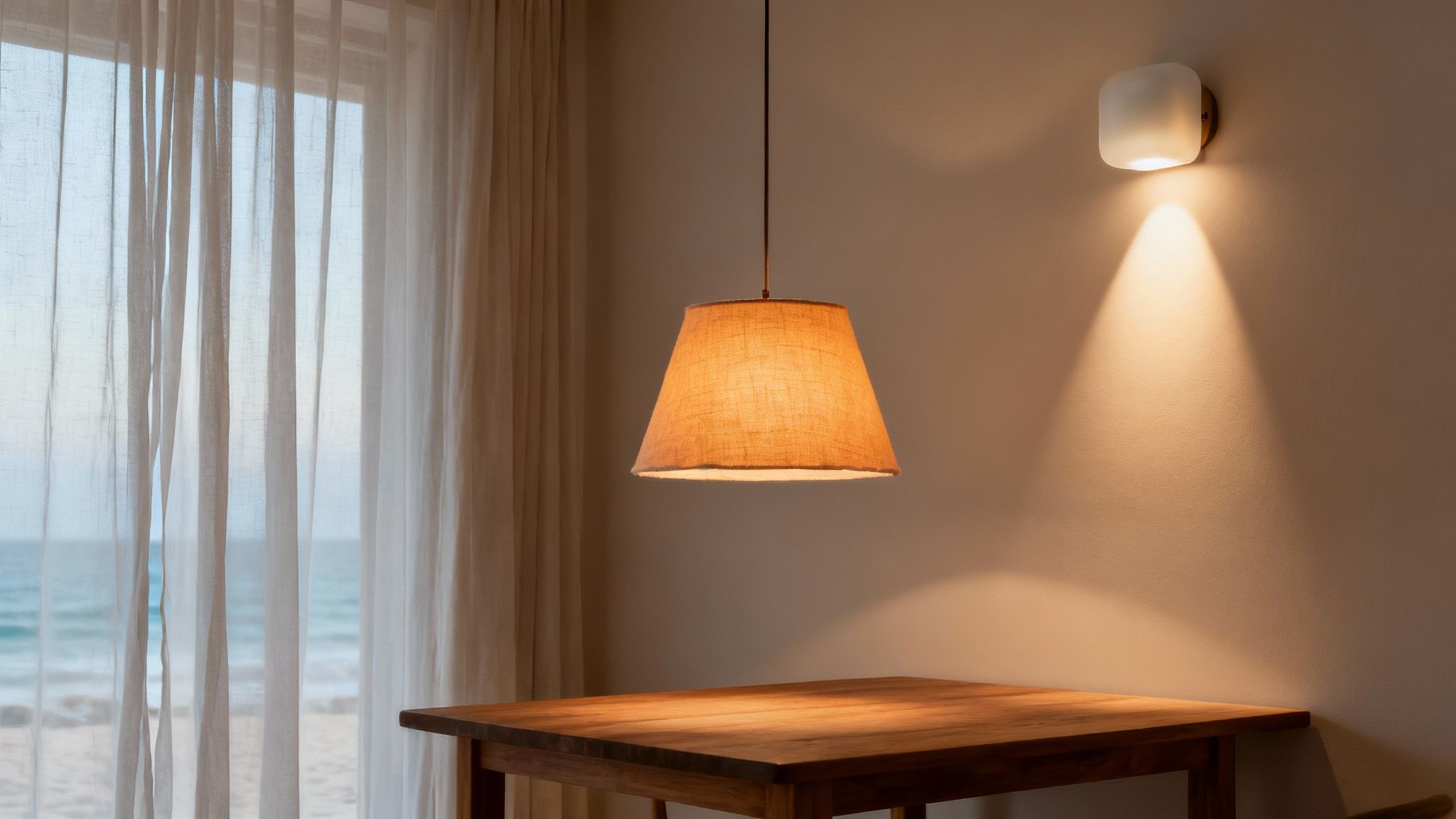
Think about the difference between a sharp, open bulb and the gentle ambiance from a fixture with a fabric shade or frosted glass. That shade acts as a diffuser, scattering light to smooth out harsh shadows. This simple element is often the key missing piece.
Using Fixtures to Add Warmth and Dimension
Different fixture types also play a huge role in how a space feels. A well-designed space uses layers of light from different sources to add depth and character.
Consider how these styles change a room's atmosphere:
- Wall Sconces: These wash light up and down a wall, making a room feel larger and more inviting.
- Pendants: A pendant over a dining table creates a focused pool of warmth and defines the space.
- Recessed Lights with Deep Baffles: Modern recessed lighting directs light where you need it without blinding you.
For homeowners on the Monterey Peninsula, diffused and layered lighting is a perfect strategy. It reduces glare that reflects off windows at night and enhances the relaxed, coastal feel of your home.
Choosing the Right Fixture for Your Home
The fixture is your chance to control the quality of light. By choosing fixtures that soften, direct, and shape light, you can finally solve that "cold and clinical" problem. It’s about moving beyond simply illuminating a room to truly designing its atmosphere.
Finding the Right Warm Lighting in Monterey Bay
If you live around Monterey, Salinas, or Santa Cruz, you may have upgraded to LEDs only to find your home's cozy charm swapped for a sterile glare. It’s a common problem, and it's one we solve every day at The Home Lighter.
We take the guesswork out of choosing beautiful lighting. We personally curate our collection, hand-picking only warm-toned, high-CRI fixtures from brands we trust. We vet every product to make sure it steers clear of that dreaded "cold and clinical" look.
Don’t Be Afraid of Integrated LEDs
One of the biggest anxieties we hear is a fear of integrated LEDs—fixtures where the light source is built-in. The worry is, "What happens if the light burns out?"
Reputable brands design their integrated LEDs to last 15-20 years or longer and back them with solid warranties. This lifespan means you get a stunning, maintenance-free fixture with an innovative design. We can show you which designs are stylish, safe, and future-proof.
You can read about Kelvin and CRI all day, but nothing beats seeing it in person. The best way to understand the difference between cold, flat light and a warm, high-CRI glow is to experience it yourself.
If you’re ready to transform your home’s atmosphere, we invite you to our Pacific Grove showroom. A one-on-one consultation lets you see and feel how the right light can bring out the best in your home.
For ideas, explore our guide on coastal glow lighting ideas. Then, let us help you find the perfect fixtures to make your house feel like home again.
FAQs About Warm LED Lighting
Here are answers to some of the most common questions we hear from homeowners switching to LED.
Is warm white always the best choice for a home?
For relaxing spaces like bedrooms and living rooms, "warm white" (2700K–3000K) is perfect. It creates a cozy atmosphere. However, for task areas like a home office or garage, a "neutral white" (3500K–4000K) can improve focus and visibility.
What is an integrated LED and should I avoid it?
An integrated LED has the light source built into the fixture. You should not avoid them! High-quality fixtures from good brands are engineered to last 15 to 20 years and often allow for sleeker, more imaginative designs. We only stock trusted brands that stand behind their products.
Can I use my old dimmer switch with new LED bulbs?
We strongly recommend against it. Old dimmers were built for high-wattage incandescent bulbs. Using one with low-wattage LEDs can cause flickering, buzzing, or premature burnout. Install a new dimmer specifically rated for LEDs for smooth, reliable performance.
Why do my room colors look off with a warm white LED?
This is a classic Color Rendering Index (CRI) problem. A bulb can be warm (2700K) but still show colors poorly if it has a low CRI score (below 80). This makes paint, furniture, and even skin tones look dull or "off." Always choose LEDs with a CRI of 90 or higher for true, vibrant colors.
How many lumens do I need for a room?
Lumens measure brightness, and the right amount depends on the room's size and use. A living room might need 10–20 lumens per square foot, while a kitchen needs 70–80 lumens per square foot in task areas. The best strategy is to install enough light for any task and then put everything on dimmers for total control.
Still unsure about which lighting is right for your home on the Monterey Peninsula? The team at The Home Lighter Inc. is here to help. Visit our Pacific Grove showroom for a personalized consultation and experience the difference warm, high-quality lighting can make. https://homelighterinc.com