
Congrats on your new home! Before you unpack every box, think about the lighting. Upgrading your lights is one of the fastest ways to make a new house feel like your home. Look around for builder-grade fixtures or dim corners that don't match your style.
Your First Week: The Lighting Audit
Moving in is exciting, but it's easy to just live with the lights that are already there. On the Monterey Peninsula, many homes have basic fixtures that do the job but lack personality.
Taking time for a lighting audit is a key first step. This isn't about big changes right away. It's about looking and learning. Watch how the coastal sun moves through your rooms. Notice where shadows fall at night. This simple walkthrough helps you make a smart plan.
How to Assess Your Current Lighting
Grab a notebook and walk through each room. Don't just look at the fixtures. Think about how the light feels and works for you. A good lighting plan starts with understanding these small details.
Ask yourself a few key questions:
- Function: Is there enough light on the kitchen counters? Is the living room light too harsh for relaxing?
- Style: Do the fixtures look like they belong to you? A dated brass chandelier can take over a room.
- Control: Are switches in good spots? Do you wish you had dimmers in the bedroom or family room?
This first look gives you a clear roadmap. The process is simple: assess what you have, identify problems, and then plan how to fix them.
This helps you decide which rooms need help first. It ensures your time and money make the biggest impact.
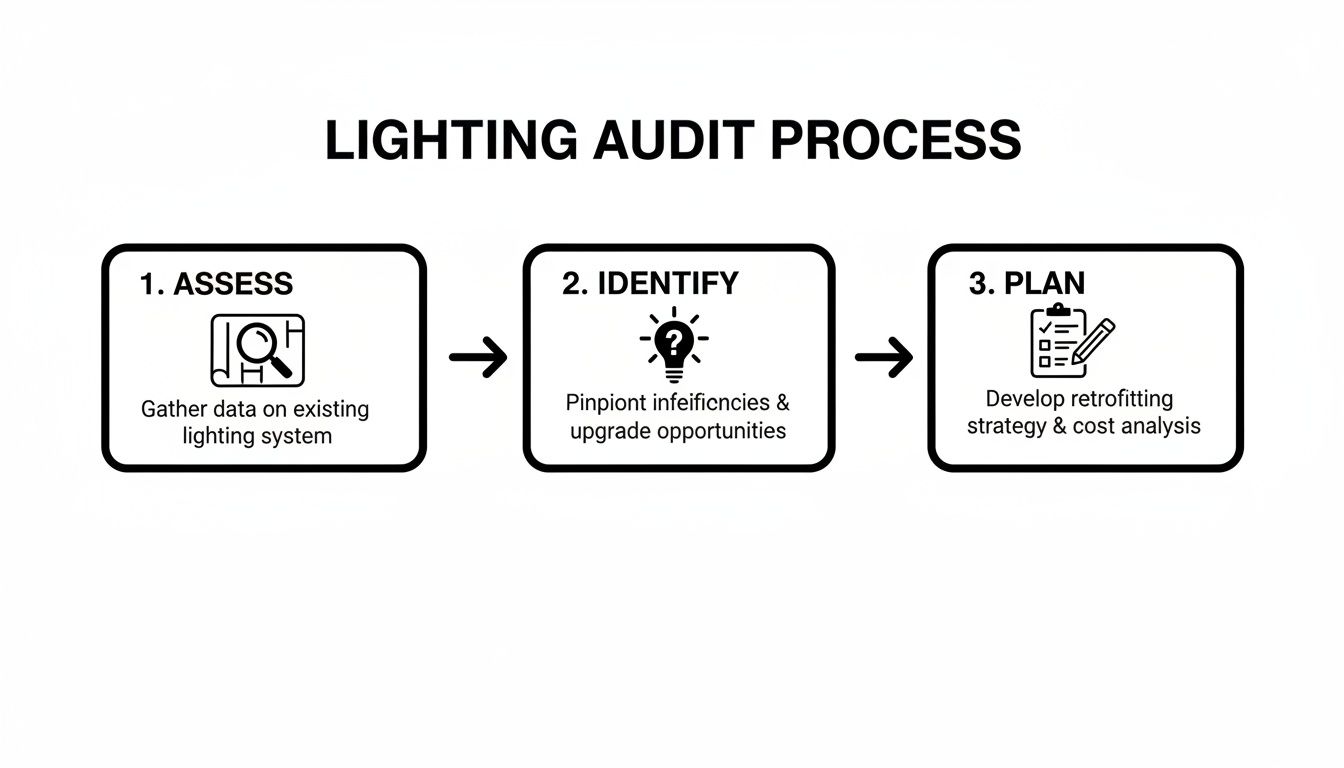
This process shows how a thoughtful audit guides you from looking around to creating a solid plan for your lighting project.
Takeaway: A lighting audit is more than just spotting ugly fixtures. It's about understanding how light affects how you live in each room of your new home.
Using a checklist makes this process easier. It helps you check each space so you don't miss any chances to improve your lighting.
Room-by-Room Lighting Audit Checklist
Use this checklist to check the lighting needs of each room in your new house. It will help you prioritize your upgrades.
| Room | Current Lighting Type (e.g., single flush mount, track) | Key Activities (e.g., cooking, reading, relaxing) | Identified Problem (e.g., too dim, harsh glare, outdated style) | Upgrade Priority (High/Medium/Low) |
|---|---|---|---|---|
| Kitchen | Single fluorescent box, one pendant over sink | Cooking, prep work, socializing, homework | Main area is dim, harsh shadows on counters | High |
| Living Room | Ceiling fan with light, one floor lamp | Watching TV, reading, entertaining guests | Too dark for reading, fan light is unflattering | High |
| Primary Bedroom | One flush mount ceiling fixture | Relaxing, getting dressed, reading in bed | Light is too bright and central, no bedside options | Medium |
| Home Office | No overhead lighting, just a desk lamp | Computer work, video calls, focused tasks | Room feels like a cave, causes eye strain | High |
| Guest Bathroom | Vanity bar light above mirror | Guest grooming, general use | Creates shadows on the face, very dated fixture | Low |
Once you fill this out, you'll know where to start.
For a more detailed guide, see our home energy audit checklist. It will help you check your lighting's efficiency and find the best places to upgrade lighting after moving in.
Prioritizing Upgrades for Maximum Impact
After your audit, your to-do list might seem long. The big question is: where do you start? The key is to focus on changes that give you the biggest return and improve your daily life.
Think about the rooms you use most. High-traffic areas like the kitchen and living room are great places to begin. One good change in these spaces can make your new house feel more inviting and truly yours.
Start With High-Traffic Hubs
Your kitchen is the heart of your home. If your audit showed shadowed countertops, add under-cabinet LED strips. This simple fix makes the space safer and more useful for cooking.
The living room is for relaxing and hosting friends. Swap a generic ceiling fan for a beautiful chandelier or a stylish semi-flush mount fixture. This one change can redefine the room's character and set the tone for your home. To see more fixture ideas, explore the best types of home lighting.
A new dining room chandelier doesn't just add light—it adds personality and value. That's what makes these upgrades a smart first investment.
Balance Function and Style
Prioritizing is about finding the sweet spot between looks and function. It's how a room works for you and your family.
- Function First: Start by fixing real problems. Can you see well in your home office? Does the bathroom vanity light cast bad shadows? Fixing these practical issues should be at the top of your list.
- Aesthetics Next: Once functional needs are met, have fun with style. A dramatic floor lamp can bring life to an empty corner. New pendant lights over an island can modernize a whole kitchen.
Upgrading fixtures can improve ambiance and save energy. It’s smart that ceiling fixtures make up 60.5% of the market. With energy-efficient LEDs used in 90% of new projects, homeowners save up to 75% on lighting costs.
These modern fixtures can last up to 50,000 hours. They often pay for themselves in just a year or two. You can learn more about lighting fixture market trends to see how your plans align with smart choices.
Layering Light Like a Design Pro
Choosing new light fixtures is about more than just style. It’s about creating an atmosphere that is balanced and works for your life. Designers use a concept called layered lighting to get this right.
This approach combines three types of light instead of relying on one overhead fixture. When they work together, a room feels complete and inviting. This gives a flat space depth and character. When you upgrade lighting after moving in, thinking in layers is a powerful strategy.
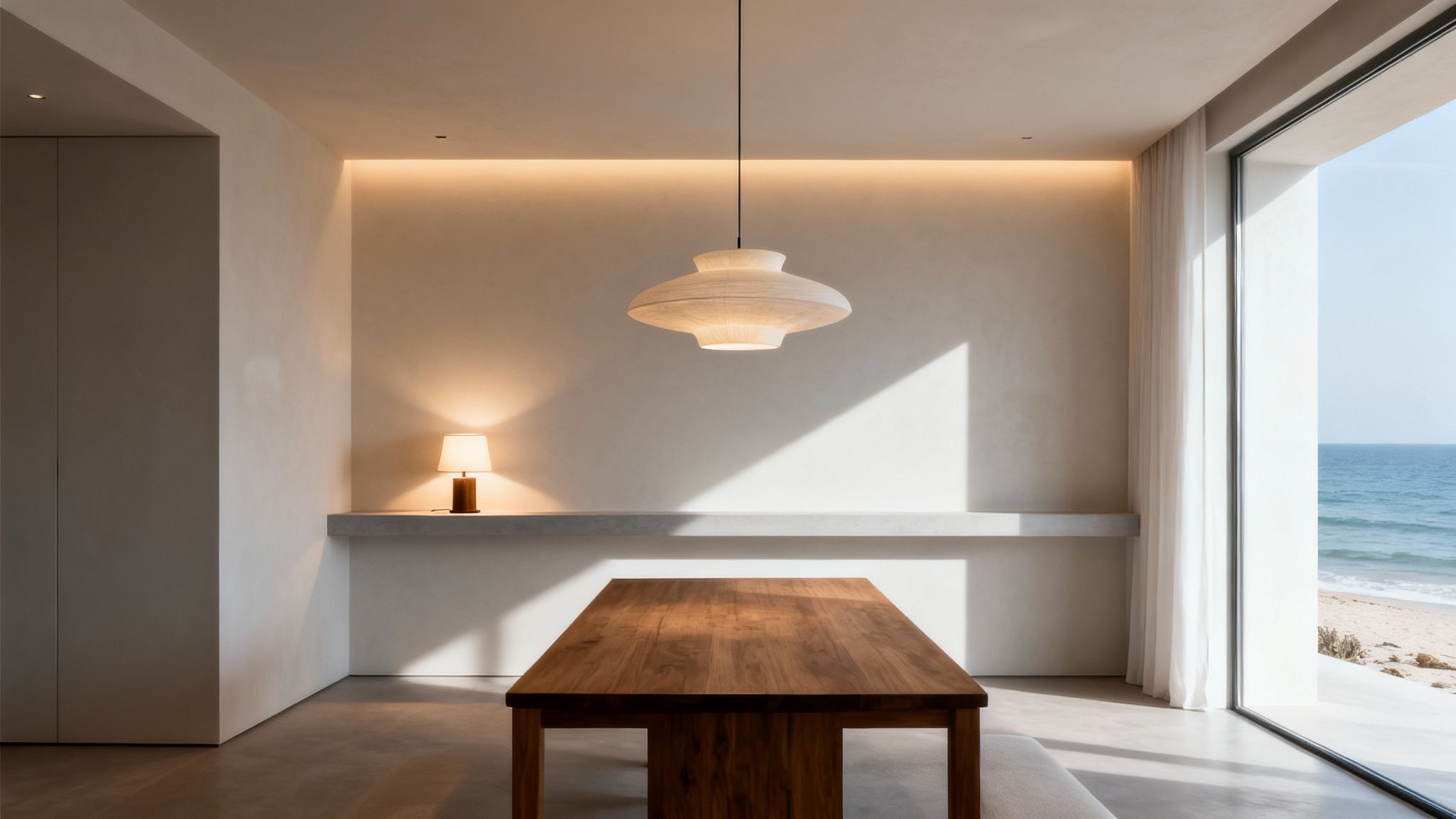
The Three Essential Layers of Light
Each layer of light has a specific job. Understanding their roles will make your choices more effective.
-
Ambient Lighting: This is your foundation. It's the general light that lets you move through a room safely. Think of it as a stand-in for daylight after sunset. Common sources are recessed lights or a central chandelier. Our guide on how to create ambient lighting has more ideas.
-
Task Lighting: This is focused, brighter light for a specific activity. It prevents eye strain when you're chopping vegetables or reading. Under-cabinet strips in the kitchen or a lamp by your favorite chair are great examples.
-
Accent Lighting: This is the fun part. Accent lighting creates drama and highlights things you love. Use it to feature art or a stone fireplace. Picture lights and track lighting are common accent lights.
A well-lit room has balanced and thoughtfully placed light. Layering ensures every corner has a purpose and the mood is just right.
Bringing Layered Lighting to Central Coast Homes
How you apply these layers depends on your home's style. Along the Monterey coast, durability is very important. For outdoor lighting, we suggest marine-grade fixtures that can handle salty air and fog.
Inside, a classic Carmel cottage with low ceilings may not fit a large chandelier. Instead, elegant wall sconces can provide beautiful ambient light. A modern home in Santa Cruz with high ceilings is perfect for a dramatic pendant and track lighting.
The goal is always the same. Blend all three layers to create a space that feels like yours.
Making the Smart Switch to LED Lighting
Upgrading to LED lighting is one of the fastest and most satisfying projects for a new home. This move pays you back with lower energy bills and a better atmosphere.
This is about more than saving energy. It’s about getting better light. Modern LEDs give you incredible control over the mood of every room. Old incandescent bulbs could never do that.
Two Words to Know: Lumens and Kelvins
When you shop for LEDs, you will see two terms: lumens and kelvins. Understanding them is the secret to getting your lighting right.
- Lumens (lm): This measures brightness. Forget about watts—lumens tell you how much light a bulb produces. More lumens mean more light.
- Kelvins (K): This tells you the light's color temperature. It's the mood of the light, from a warm, yellow glow to a cool, bluish-white light.
Getting the right mix transforms a space. A cozy living room feels best with a lower Kelvin rating. A kitchen needs bright, clear light with plenty of lumens for cooking.
Choosing the right LED is like picking the perfect paint color. A warm, 2700K bulb creates a relaxing glow for a Monterey coastal evening. A crisp 4000K bulb makes a home office feel sharp and productive.
Why Upgrading to LED is a No-Brainer
Energy efficiency is key. Swapping old bulbs for LEDs is a smart investment. The global indoor LED lighting market is set to hit USD 66.83 billion in 2025, driven by homeowners like you. Find out more about the growing LED market on Mordor Intelligence.
Think about this: a 10-watt LED produces the same light as a classic 60-watt incandescent bulb. This means LEDs can cut your lighting-related electricity use by up to 90%.
That efficiency means lower utility bills. LEDs also last up to 25 times longer than old-school bulbs. You won't be changing burnt-out bulbs for years.
For a deeper look at making the switch, read our guide on LED retrofit light fixtures. It’s a great resource for understanding how simple it is to replace old lighting.
Integrating Smart Lighting for Modern Convenience
Imagine dimming the lights for movie night with a voice command. Or turning on the porch light from your phone as you pull in. This is the reality of smart lighting, and it's one of the best upgrades you can make after moving in.
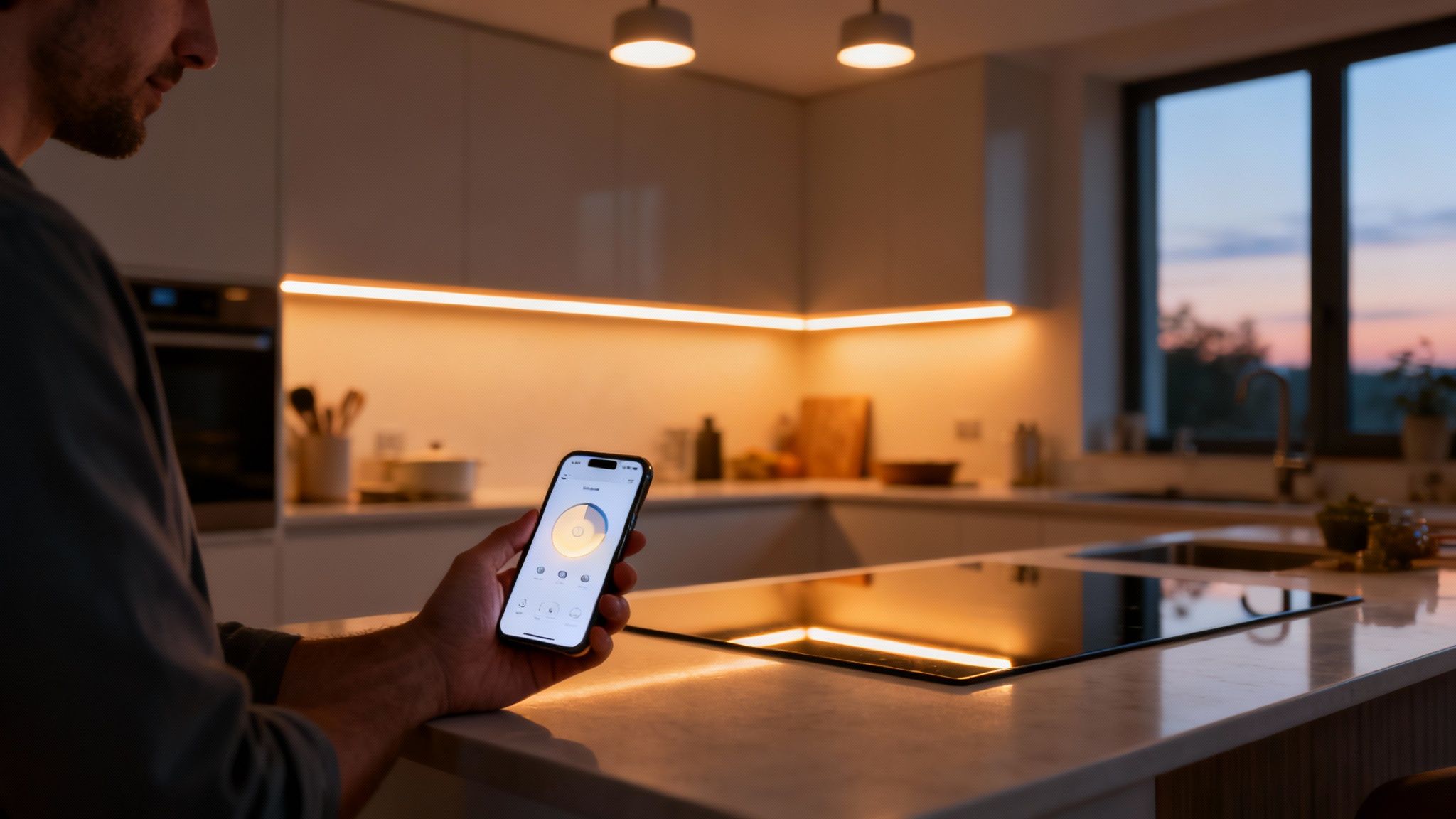
Smart lighting gives you total control over your home's mood from anywhere. You can schedule lights to turn on at sunset or create custom "scenes" for different activities. It's a layer of comfort you'll soon love.
Getting Started With Smart Systems
The best time to think about smart lighting is right after you move in. The great news is you don't have to rewire your house. Smart tech can be as simple as changing a few bulbs.
Here are a few ways to start:
- Smart Bulbs: This is the easiest entry point. Screw them into your existing lamps, connect them to Wi-Fi with an app, and you're done.
- Smart Switches and Dimmers: This is a great choice for built-in fixtures. A smart switch can control all the lights in a circuit, like the recessed lights in your kitchen.
- Fully Integrated Systems: These systems connect all your smart lights to a central hub or voice assistant like Alexa or Google Home.
The smart lighting market was valued at USD 22.45 billion and is expected to grow to USD 165.89 billion by 2034. That shows how many homeowners see the benefits. Smart systems can also help you save 20-40% on energy by turning off lights when rooms are not in use.
The beauty of smart lighting is you don't have to do it all at once. Start with one room and expand as your budget allows. It's a modern convenience that adapts to your life.
Practical Benefits for Your New Home
Smart lighting offers real advantages beyond being cool. "Vacation mode" can turn lights on and off to make it look like someone's home. This can deter intruders.
You can also program custom scenes. A "dinner" setting could dim the chandelier and turn on accent lights. A "good morning" scene could gently brighten your bedroom lights to help you wake up.
To see how these features fit a bigger picture, explore smart apartment technology. At The Home Lighter, we help homeowners on the Central Coast find the perfect fit. Visit our showroom to explore our smart lighting control systems.
Knowing When to DIY and When to Call an Expert
Upgrading your lighting after you move in is rewarding. But it's important to know your limits. Some projects are great for DIY, while others need a professional for safety and quality.
Simple tasks like changing a lightbulb or replacing a lightweight fixture are often easy for a homeowner. If you are doing a direct replacement without changing the wiring, it can be a simple update.
Anything more complex needs a closer look.
When to Call an Electrician
Your safety and your home's safety should always come first. Call a licensed electrician if your project involves any of the following:
- Moving or Adding New Wiring: Installing a fixture where there wasn't one before is a job for a professional.
- Working with Old or Faulty Wiring: Older homes, like those in historic Pacific Grove, may have outdated electrical systems. This requires an expert.
- Installing Heavy Fixtures: A large chandelier needs more than a standard electrical box. It requires special mounting and support to be installed safely.
Bad installation is a serious fire hazard. For these jobs, a professional light fixture installation ensures the work is done safely and correctly.
A lighting consultant doesn't just sell fixtures. We help you create a cohesive plan that balances style, function, and budget, saving you from costly mistakes.
At The Home Lighter, we offer design consultations to help you find high-quality fixtures. We help build a plan that turns your new house into a home.
Visit our Pacific Grove showroom by appointment to get started.
FAQs: Your Top Questions About Lighting Upgrades
Here are answers to common questions we hear from new homeowners.
How much should I budget for new lighting?
It varies. You could spend about a hundred dollars swapping old bulbs for new LEDs. This makes an immediate difference. For replacing key fixtures, a more realistic budget might be between $500 and $2,000. We suggest starting with the rooms you use most, like the kitchen and living room.
What is the difference between warm and cool light?
The color of light, measured in Kelvins (K), changes a room's mood. Warm white (2700K-3000K) has a cozy, yellow glow perfect for living rooms and bedrooms. Cool white (4000K-5000K) is crisper and closer to daylight, great for kitchens, offices, and bathrooms.
Can I put a dimmer on any light fixture?
No. To use a dimmer, both the light fixture and the light bulbs must be marked as "dimmable." Using a dimmer with non-dimmable bulbs can cause flickering, buzzing, or shorten the bulb's life. Always check the packaging first.
When should I hire an electrician?
If you are just swapping one fixture for another in the same spot, you can often do it yourself. But always turn off the power at the breaker first! For anything more complex, like moving wiring or cutting a new hole for a light, hire a licensed electrician. It's not worth the risk, especially in an older home.
Why is a lighting audit important?
A lighting audit is the first step to creating a plan. It helps you understand how your current lighting works (or doesn't work) in each room. This ensures your upgrades fix real problems and match your lifestyle, preventing you from wasting time and money on changes that don't make a big impact.
Ready to turn your new house into a beautifully lit home? The team at The Home Lighter, Inc. can guide you. Visit our Pacific Grove showroom by appointment to explore curated fixtures and get expert advice for your Central Coast home.