
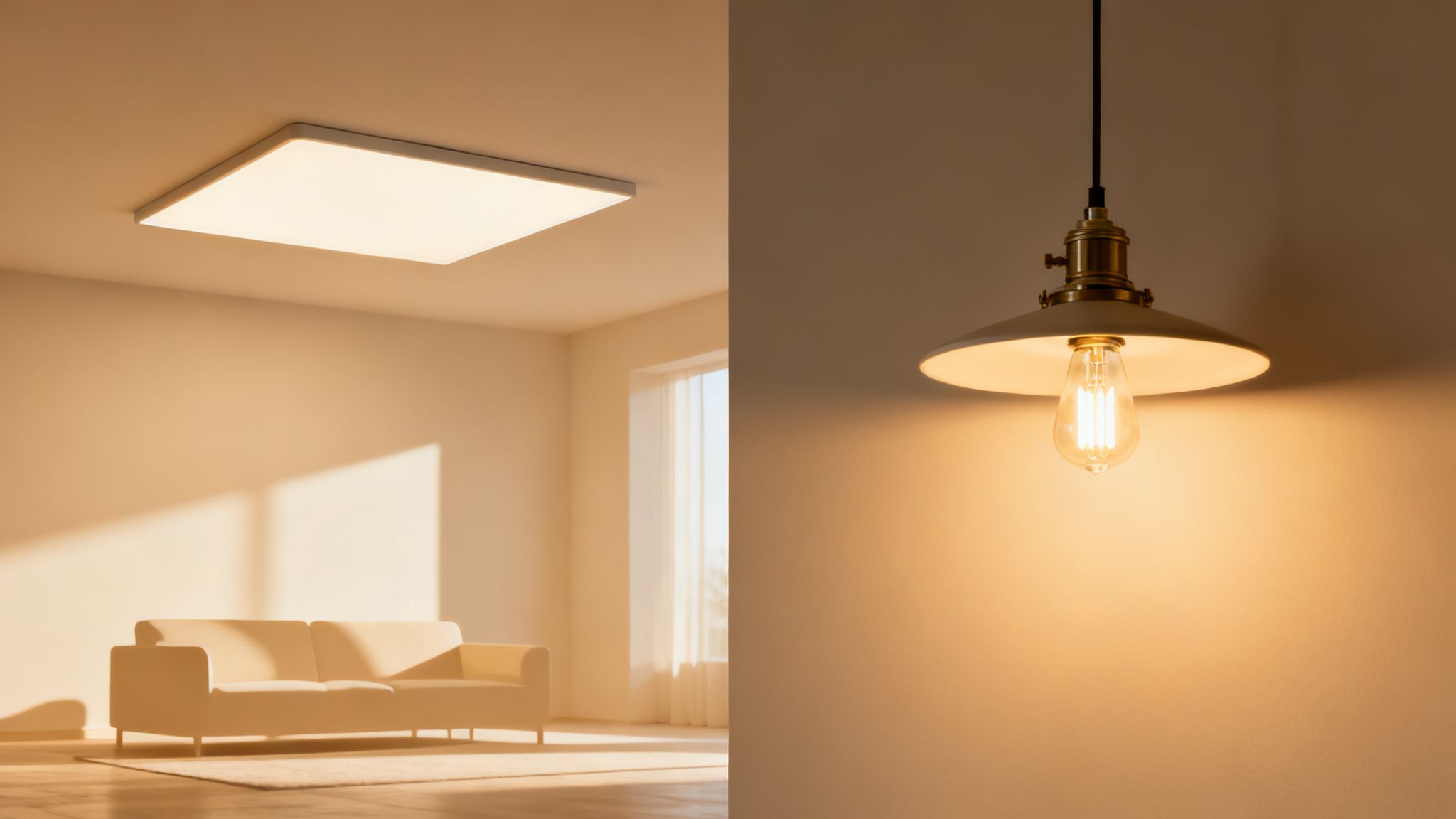
When you're picking out new lighting, you'll face a key choice: integrated LED fixtures versus those that use regular light bulbs. An integrated LED fixture is an all-in-one unit where the light source is built right in. A traditional fixture has a socket, letting you screw in and swap out bulbs as you wish.
This brings up a common concern. With so many fixtures now built with integrated LEDs, it’s easy to wonder: “If the light burns out, do I have to replace the entire thing?” That sounds expensive and inconvenient—so is this really the best option for your home?
Integrated LED vs. Regular Bulbs: A Quick Comparison
The short answer is yes, you would replace the whole unit, but it's not the problem you might think. Unlike old-school bulbs, quality integrated LED fixtures are designed to last 15 to 20 years. Most people never need to replace a quality integrated fixture during its lifetime.
Fixtures with replaceable bulbs offer flexibility. You can easily pop in a new bulb to change the brightness or color. This makes them a great choice if you enjoy updating your home’s look.
Key Differences at a Glance
To help you decide what’s best for your home, here’s a quick summary. This table breaks down the main features of both lighting types.
| Feature | Integrated LED Fixtures | Fixtures with Regular Bulbs |
|---|---|---|
| Lifespan | 15–20 years (up to 50,000 hours) | Varies by bulb (LED bulbs last 10+ years) |
| Maintenance | Virtually none; install and forget | Requires replacing bulbs as they burn out |
| Design | Slim, modern, and innovative shapes | Classic and traditional styles, limited by bulb size |
| Flexibility | Limited; light is fixed | High; easily change bulb brightness & color |
| Upfront Cost | Generally higher | Typically lower |
| Long-Term Value | Excellent due to long life and efficiency | Good, but includes cost of replacement bulbs |
Your choice depends on what you value more. Do you want the set-it-and-forget-it reliability of integrated LEDs, or the flexible nature of traditional fixtures?
Comparing Lifespan and Long-Term Reliability
When weighing integrated LED vs. regular light bulbs, lifespan is a huge point for integrated fixtures. A traditional incandescent bulb might last a year or two. A quality integrated LED fixture is built to last 15 to 20 years with no fuss.
Think of it less like a light bulb and more like a long-term appliance you install and forget about. The fact that you don't replace the "bulb" isn't a drawback. It's a feature that promises convenience and durability.
Why Longevity Matters in Your Home
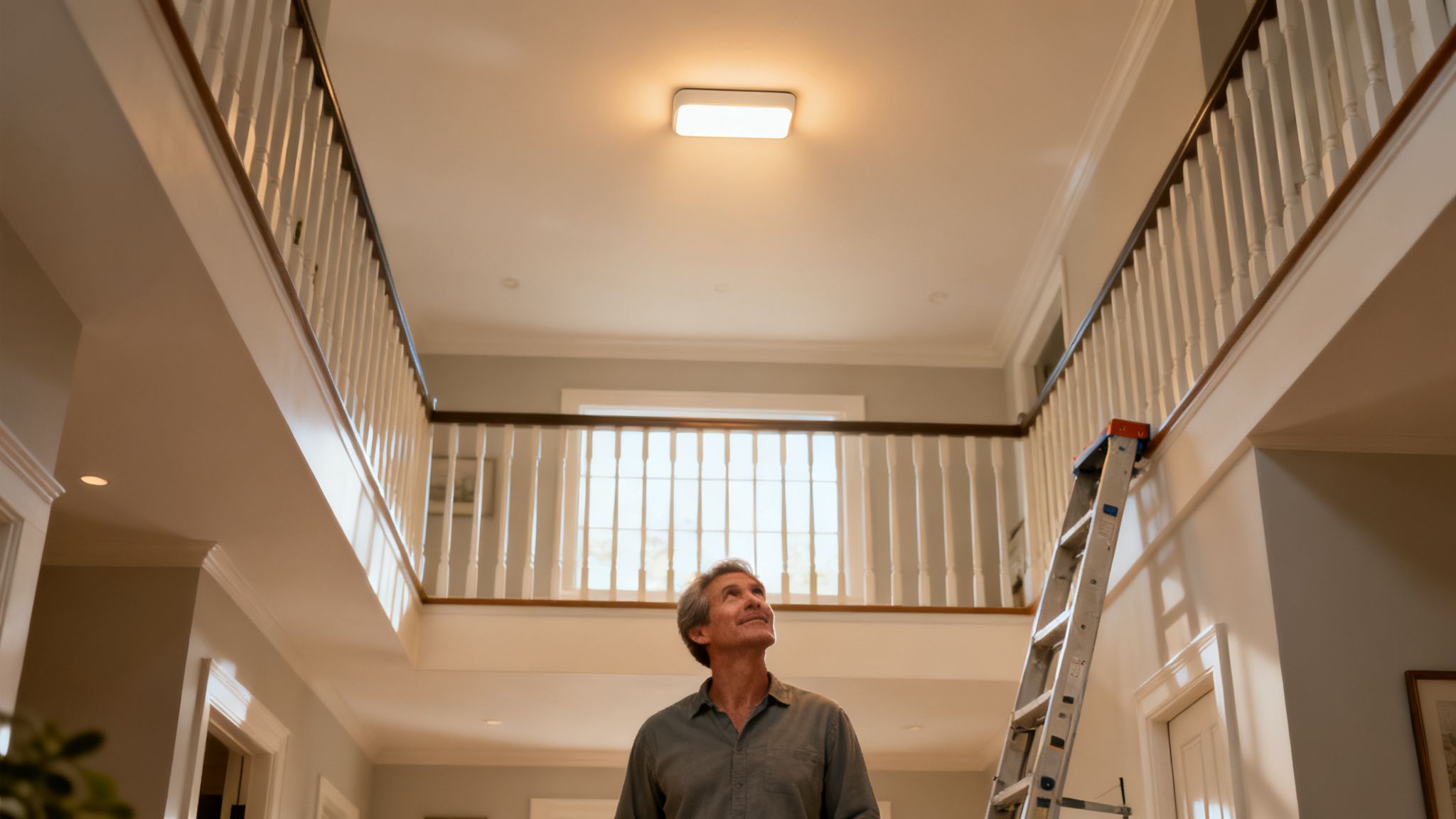
Long-term reliability is a game-changer in certain spots. For homes on the Monterey Peninsula with high ceilings, changing a bulb is a major chore. You have to drag out tall ladders, all for one little light.
An integrated LED fixture completely eliminates this headache. You get years of perfect, maintenance-free light, which is a huge benefit for any hard-to-reach area.
The numbers are impressive. A high-quality LED can run for up to 50,000 hours. That's about 25 times longer than a typical incandescent bulb. This endurance has changed how we light our homes.
The Financial Side of a Long Lifespan
This long life also means real savings. When you buy a standard fixture, you're also signing up to buy replacement bulbs for years. To see how that adds up, explore our breakdown of how older technologies like CFLs and incandescents stack up.
With an integrated fixture, the initial price is the only cost. No more surprise expenses for bulbs. Over the fixture’s life, this can lead to serious savings, making it a smart financial move.
Analyzing Energy Efficiency and Cost Savings
When you compare lighting options, efficiency is a clear deciding factor. Modern LEDs are simply better at turning electricity into light, not wasted heat. This is true whether the LED is built-in or a screw-in bulb.
This difference is what drives cost savings. An old incandescent bulb wastes up to 90% of its energy as heat. According to the U.S. Department of Energy, modern LEDs use up to 90% less energy and last 25 times longer.

Translating Efficiency Into Dollar Savings
This efficiency means real money back in your pocket. Lower energy use leads directly to lower utility bills. For most homeowners, this return makes the investment in quality LED lighting an easy decision.
The real value of LED technology is its ability to deliver better light while shrinking your home's energy footprint. It’s an upgrade that benefits both your wallet and the environment.
Meeting Local Central Coast Standards
For homeowners here in Monterey, Salinas, and Santa Cruz, energy efficiency is often a requirement. California’s Title 24 energy standards are some of the strictest in the nation. Lighting plays a huge part in meeting these rules for new homes and big remodels.
Choosing high-efficiency LED fixtures is one of the easiest ways to meet these standards. It ensures your project is up to code and set up for long-term savings. You can learn more about LED lighting and its energy-saving benefits to see how it fits into a modern home.
Understanding broader appliance energy efficiency ratings can also help you maximize your home's savings. It's a practical approach that aligns with the values of our Central Coast community.
Exploring Design Flexibility and Aesthetics
Lighting does more than brighten a room; it helps define its personality. The choice between integrated LED and regular bulbs comes down to your design goals. One isn’t better—it just depends on the look you want.
Integrated LED technology has been a game-changer for designers. By building the light source into the fixture, they can create stunning, sculptural forms. This allows for thin light strips and artistic pendants that act as centerpieces.
The magic of integrated fixtures is their ability to make light a seamless part of the design. The focus shifts from the bulb to the beautiful effect the light creates.
The Beauty of Built-In vs. The Freedom of Choice
This has opened up new possibilities for minimalist and contemporary homes. You can explore examples of how high-end design meets high efficiency in our showroom.
On the other hand, fixtures for regular bulbs offer a different kind of flexibility. Their charm is in their classic forms and the power they give you to fine-tune your light.
With a simple bulb swap, you can change a room's feel:
- Adjust Color: Switch from a cool white light for tasks to a warm, inviting 2700K–3000K glow for relaxing.
- Control Brightness: Need more light? Use a bulb with a higher lumen output.
- Add Smart Tech: Any lamp can become "smart" by screwing in a smart bulb.
This makes traditional fixtures great for rooms where your needs might change. They offer timeless design while letting you personalize the light itself.
How to Choose the Right Option for Your Home
So, which should you choose? There’s no single right answer. It depends on your space and how you use it.
Want maximum lifespan and a clean, modern look? Go with an integrated fixture. If you prefer flexibility or DIY-friendly options, stick with standard fixtures that use LED bulbs you can swap out.
Finding the Right Fit for Your Space
Think about a two-story foyer, common in many Carmel homes. Changing a bulb way up there is a huge hassle. In that spot, an integrated LED fixture is the perfect solution with its 15- to 20-year lifespan.
Now, consider a bedside lamp. Here, flexibility is key. A fixture that takes a replaceable smart bulb gives you total control over brightness and color.
This decision tree can help you think through your choice.
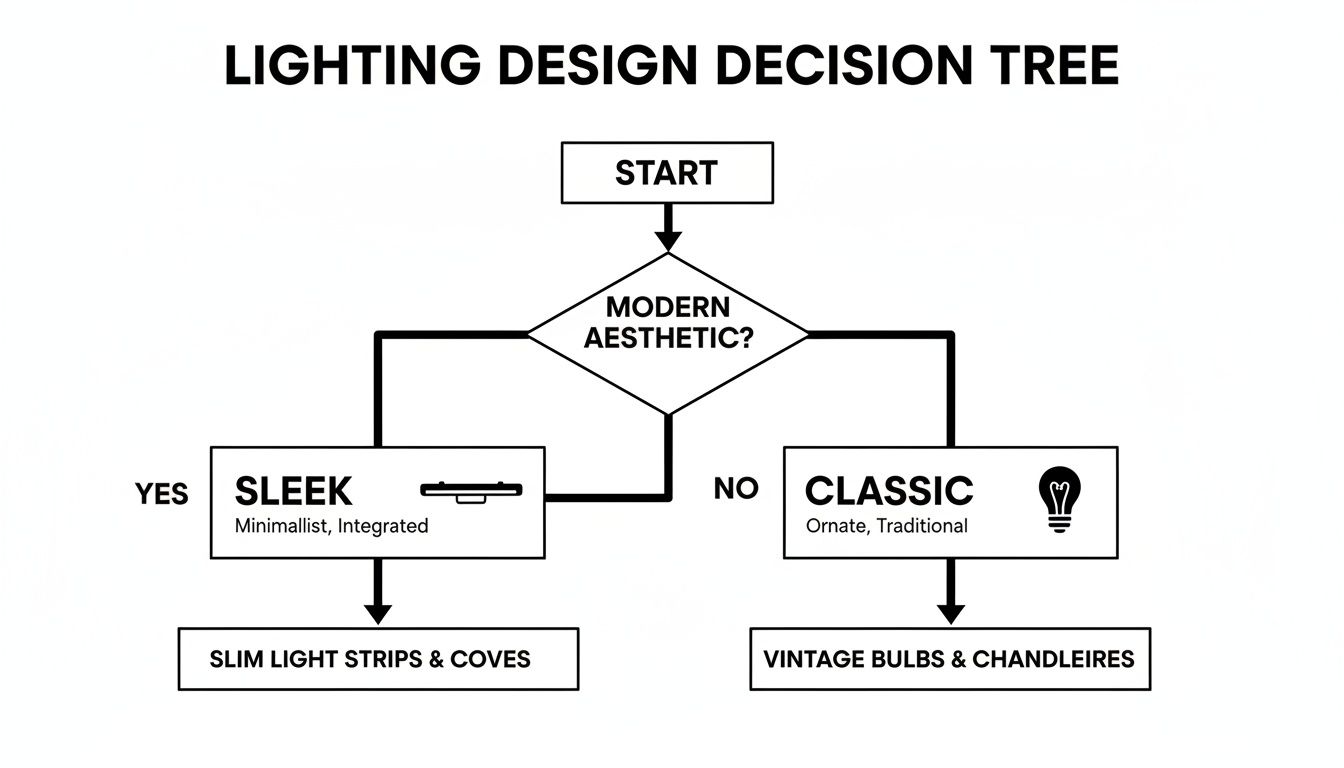
As the graphic shows, your design goals are just as important as the room's practical needs.
A Framework for Your Decision
To feel confident in your choice, ask yourself a few questions for each room:
- How hard is the fixture to reach? For high ceilings or stairwells, integrated LEDs offer peace of mind.
- How much flexibility do you want? If you like to redecorate or use smart home tech, a traditional fixture is your best friend.
- What is your design goal? Integrated LEDs are key to many slim, modern designs.
- What is your comfort level with maintenance? If you're still on the fence, our guide can help you choose the right light bulb for any fixture.
Either way, choose LEDs in the 2700K–3000K range for warm, cozy light. And always make sure your dimmer switch is LED-compatible.
Get Expert Guidance on Your Lighting Project
Knowing the difference between these options is a great first step. At The Home Lighter, Greg and Tammy walk you through both options. We can help you understand the trade-offs and choose what’s best for your space.
Myths about LEDs being harsh or cold are a thing of the past. Our Pacific Grove showroom is the perfect place to experience the warm glow of modern LEDs for yourself. See how they look, from cozy 2700K tones to smooth, flicker-free dimming.
See the Difference for Yourself
Still unsure? Stop by our Pacific Grove showroom to see the difference between integrated and socket-based LED fixtures. We help Monterey, Santa Cruz, and Salinas homeowners make confident lighting choices—without the tech confusion.
Let our team show you how the right lighting can transform your home. You can learn more about how we work with expert-approved lighting suppliers to bring your vision to life. We’ll handle the technical details so you can focus on your vision.
Frequently Asked Questions
You might still have a few questions about integrated LEDs versus regular bulbs. Here are some common concerns we hear from homeowners in our Pacific Grove showroom.
What happens if an integrated LED fixture fails?
It's a fair question, but failure is rare for high-quality fixtures within their 15- to 20-year lifespan. Reputable manufacturers offer long-term warranties, often for 5 years or more. If a fixture fails under warranty, they typically send a new replacement unit.
Can I get warm, cozy light from an integrated LED?
Absolutely! The myth of cold, sterile LED light is outdated. To get that warm, inviting glow of an old incandescent bulb, look for a color temperature between 2700K and 3000K. Most residential fixtures we recommend fall right into this comfortable range.
Are integrated LED fixtures dimmable?
Yes, most modern integrated LED fixtures are dimmable. The key is to pair them with a compatible LED-rated dimmer switch. Using an old dimmer designed for incandescents will likely cause flickering or buzzing.
Which option is better for outdoor lighting?
For coastal climates like the Monterey Peninsula, integrated LED fixtures usually have an advantage. They are sealed units, offering better protection against moisture and salt air. This makes them a more durable, low-maintenance solution for the outdoors.
Is integrated LED the same as a regular LED bulb?
No. An integrated LED is a complete fixture where the light source is built-in and not replaceable. A regular LED bulb is a self-contained light source designed to screw into a traditional socket, and it can be easily replaced.
Are integrated LED lights being phased out?
No, quite the opposite. Integrated LED technology is becoming more popular because of its long lifespan, energy efficiency, and design flexibility. It allows for sleek, modern fixture designs that aren't possible with traditional bulbs. For more on compliance, see the ASHRAE 90.1 Electrical Lighting Compliance standards.
Ready to see these lighting options in person? The team at The Home Lighter Inc. can walk you through our curated collection and help you find the perfect fit for your home. Visit our Pacific Grove showroom today!