
Direct Answer: The right fixture type is determined by your ceiling height, the room’s main job, and your existing constraints, not by aesthetics. Read those three things first, then shop.
Most people pick a light fixture the same way they pick a paint color, they find something they love, then try to make it work. The problem is that the wrong fixture type for a room’s ceiling height and function doesn’t just look off. It can feel oppressive, waste money, and sometimes require a conversation with an electrician you didn’t plan for.
On the Monterey Peninsula, where homes range from low-ceilinged Pacific Grove cottages to double-height great rooms in Pebble Beach, this mismatch is one of the most common issues that comes through the showroom at The Home Lighter. The fixture looks perfect in a photo. It arrives. And then the room decides it doesn’t agree.
This article is about reading the room before you fall in love with a style. Specifically, the two variables that do most of the filtering, ceiling height and primary task, and how your existing constraints (the ones most shoppers ignore) actually make the decision easier once you know how to use them.
The Two Variables That Narrow the Field Before Aesthetics Even Matter
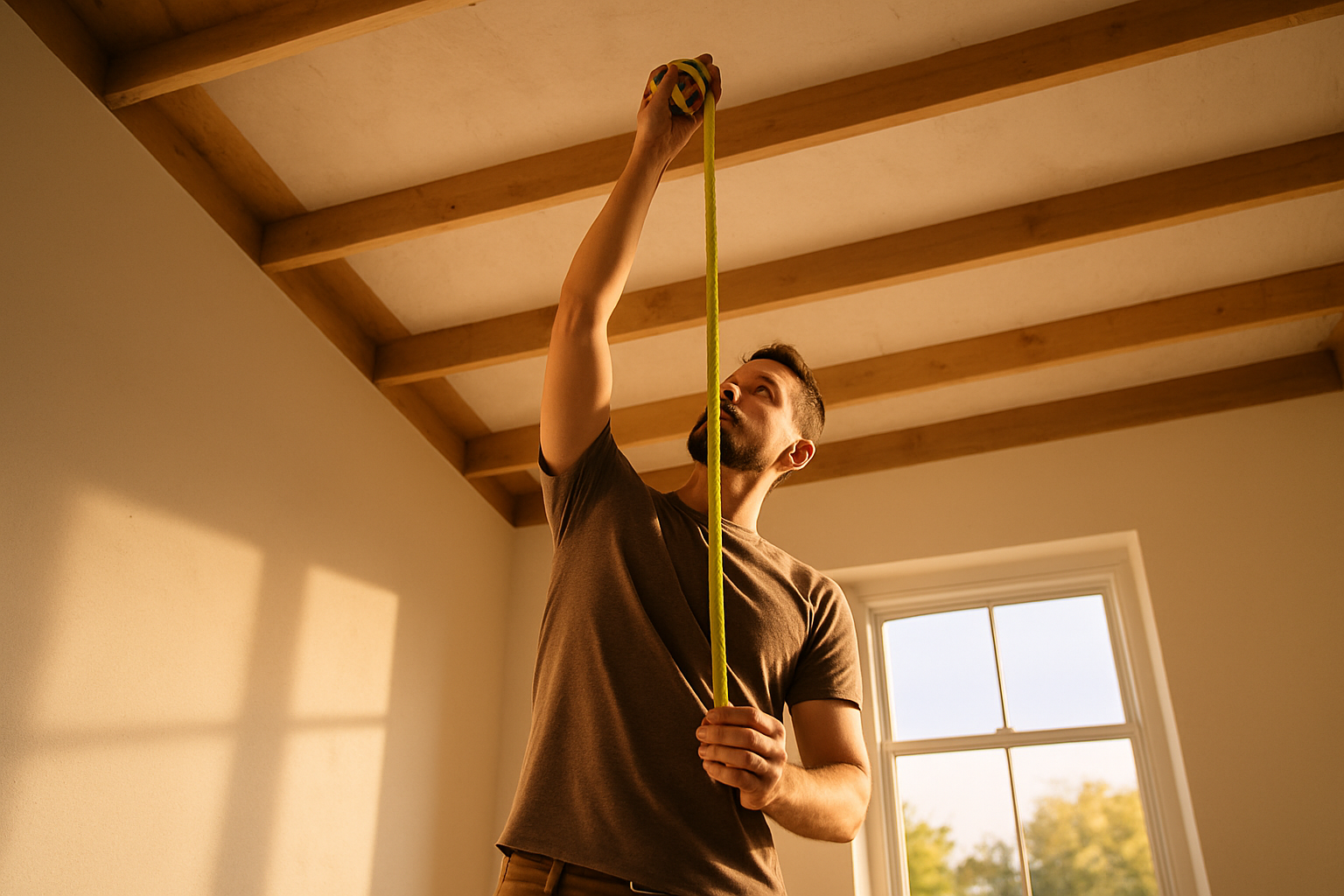
Before you look at a single fixture photo, measure two things: your ceiling height and what you actually need the light to do in that room.
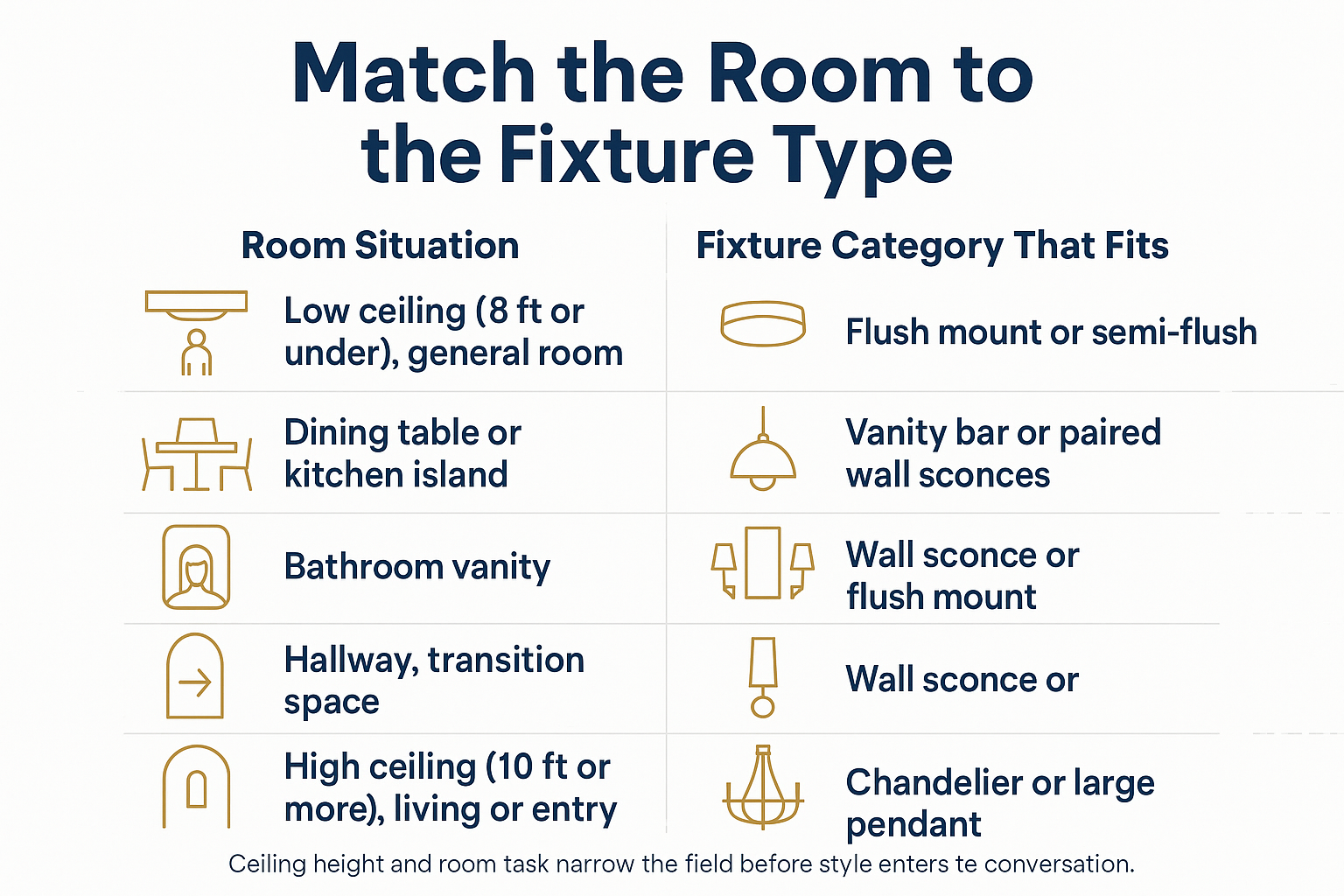
Ceiling height is the most concrete filter. The general rule used in the industry is that a hanging fixture, a pendant or chandelier, needs at least 7 feet of clearance below the bottom of the fixture to the floor in a living space. In a dining room, the standard drops to around 30 to 36 inches between the bottom of the fixture and the table surface. An 8-foot ceiling doesn’t leave room for most pendants, even ones that photograph beautifully. A flush mount or semi-flush is often the honest answer in those rooms, not a compromise.
The room’s primary task is the second filter. A hallway has one job: move people safely from one space to another. A kitchen has several jobs at once. A bathroom vanity has a specific, demanding job, illuminating a face evenly for grooming. Each of those tasks maps to a different category of fixture type:
- Hallways and low-ceiling rooms: flush mounts, semi-flush mounts, or well-placed sconces
- Dining rooms and kitchen islands: pendants and chandeliers hung at the right drop height
- General living spaces: layered combinations of ambient, task, and accent sources
- Bathrooms: vanity bars or sconces flanking a mirror, not a single overhead source
- Home offices: direct task lighting plus ambient fill to reduce eye strain
These two filters alone eliminate most of the wrong choices before style enters the conversation. For a deeper look at how each category is defined, Every Type of Light Fixture, Explained Without the Jargon covers the full breakdown.
<h2 id="real-projects-start-with-constraints-not-aesthetics”>Real Projects Start With Constraints, Not Aesthetics
One pattern that comes up repeatedly in customer conversations is this: people arrive with very specific situations, not blank-slate rooms. One homeowner described an 8-by-8 office with can lights already positioned over the desk area and a pre-wired spot in the ceiling they hadn’t originally planned for. Another was shopping for a pendant to update a hallway, but had a bronze-finish floor lamp with a mosaic top already in the room and wanted the new fixture to connect to it somehow.
These aren’t abstract shoppers. They have real constraints. And constraints are actually useful, because they eliminate options instead of multiplying them.
If a room already has recessed can lights providing ambient light, the ceiling fixture doesn’t need to carry the full lighting load. A low-profile flush mount that reads as a quiet visual anchor is often the right call, not a statement piece competing with the recessed fixtures already doing the work. That’s a very different situation from a room starting from scratch, where the ceiling fixture may need to serve as the primary ambient source.
Existing finish metals are another real constraint. A bronze floor lamp already in the room doesn’t mean every fixture has to match exactly, mixed metals are widely accepted in current design, but it does set a warm-toned direction. Brass, oil-rubbed bronze, and aged copper all read warmer. Chrome and brushed nickel read cooler. Knowing which direction the room is already pulling helps narrow the metal options quickly.
For rooms where layered lighting is the goal rather than a single ceiling source, the fixture category question becomes about which layer is missing, not which fixture is prettiest.
Fixture Type at a Glance: Room Job Mapped to Category
This overview maps the most common room situations to the fixture categories that typically fit them, based on ceiling height and primary task.
What Fixture Category Means for Your Electrician Conversation
Here is something most online fixture listings skip entirely: the fixture type you choose determines what conversation you need to have with your electrician before you buy.
A semi-flush mount in a standard room with a modern junction box is a straightforward swap. A heavy chandelier in a room with an older plaster ceiling, or a double pendant over an island where no wiring currently exists, is a different conversation entirely. Junction boxes have weight ratings. Older homes, and there are plenty of them in Pacific Grove and Carmel-by-the-Sea, may have boxes rated for 35 or 50 pounds that won’t support a large chandelier without an upgrade.
The practical rule: if the fixture you’re considering weighs more than 35 pounds, or if you’re adding a pendant where there’s currently no wiring, a quick pre-purchase check with your licensed electrician is worth doing before you fall in love with a specific piece. It takes a few minutes and can save a return shipment.
The article Is Your Ceiling Ready for a Chandelier? Here’s How to Tell covers this in more detail, including what an electrician will actually look for.
The National Electrical Manufacturers Association publishes guidelines on fixture mounting standards and junction box ratings, the kind of technical baseline your electrician is working from when they assess your ceiling.
Fixture Weight, Ceiling Type, and What It Means Before You Buy
Fixture category and ceiling condition together determine whether your current junction box is ready for the fixture you want. Use this as a starting reference before purchasing.
| Fixture Category | Typical Weight Range | Pre-Purchase Check Needed? |
|---|---|---|
| Flush mount | Under 10 lbs | Rarely, standard box usually fine |
| Semi-flush mount | 10-20 lbs | Usually fine; confirm if ceiling is older plaster |
| Small pendant (single) | 5-15 lbs | Standard box typically fine |
| Large pendant or cluster | 15-40 lbs | Yes, confirm box weight rating with electrician |
| Small chandelier | 15-30 lbs | Confirm box rating; fan-rated box if unsure |
| Large chandelier | 30 lbs and up | Yes, likely needs brace kit or structural upgrade |
Why Finish and Glass Type Look Different Once a Fixture Is Lit
This is a detail that online shopping almost never communicates, and it’s worth understanding before you order.
Fixture finishes and glass choices don’t look the same under light as they do in a product photo. Brushed brass reads warmer and richer under a 2700K bulb than under a 3000K one. The cooler the light source, the more a warm metal finish flattens out and loses its depth. A white glass diffuser softens shadows and spreads light gently across a room, useful in a bedroom or bathroom where harsh contrast isn’t welcome. A clear glass shade lets the bulb shape and filament do visual work, which suits a pendant over a kitchen island where a little drama is fine, but can feel harsh in a vanity situation.
This is also where fixture category and light quality intersect. A drum pendant with a linen shade will produce a fundamentally different ambient effect than the same-sized pendant with an open metal frame and a visible Edison bulb. Same room. Same ceiling height. Very different result.
For more on how color temperature and dimming interact with fixture type, The Difference Between Dim and Warm (And Why It Matters) is a good next read. And if you’re thinking through lighting controls as part of a remodel, fixture type affects which dimmer options are compatible, another reason the category decision happens before the style decision.
Frequently Asked Questions About Choosing the Right Fixture Type
How do I know if my ceiling is too low for a pendant light?
The standard clearance guideline is at least 7 feet between the bottom of the fixture and the floor in a living space. In an 8-foot room, even a short pendant may feel too close. A flush mount or semi-flush is often the better functional choice, and many of them are genuinely attractive fixtures, not just fallbacks.
I already have recessed lights in the room. Do I still need a ceiling fixture?
Not always. If your recessed lights are providing adequate ambient coverage, the ceiling fixture becomes a design decision, not a functional one. In that case, a low-profile flush mount that reads as a quiet visual anchor is often the right call, something that adds presence without competing with the can lights doing the actual work. A room like a compact home office with existing recessed fixtures over the desk is a classic example: what’s needed there is modest fill light with some visual interest, not another workhorse fixture.
Can I mix metal finishes across different fixtures in the same room?
Yes, and it’s widely done. Mixed metals work when there’s an intentional logic to them, usually a dominant finish (60-70% of the room) and a secondary one used as an accent. If a bronze floor lamp is already anchoring the room, a pendant with brass accents can work because both are warm-toned. What tends to look unintentional is mixing warm and cool metals without a reason.
Does fixture type affect which dimmer I need?
It can. LED fixtures in particular require LED-compatible dimmers, and some fixture categories, especially those with integrated LED drivers, are sensitive to the type of dimmer used. A chandelier with a built-in transformer is a different electrical situation than a simple pendant with a standard bulb socket. Before purchasing a dimmer separately, confirm compatibility with the specific fixture and bulb combination.
What should I check before buying a heavy chandelier for an older home?
Two things: the junction box weight rating and the ceiling structure above it. Standard junction boxes in older homes are often rated for 35 to 50 pounds, and many older Pacific Grove and Carmel homes have plaster ceilings that require specific anchoring approaches. A licensed electrician can assess the box and ceiling condition in a few minutes. It’s worth doing before purchase, not after. The article Is Your Ceiling Ready for a Chandelier? walks through exactly what to look for.
Ready to Match the Right Fixture Type to Your Actual Room?
Greg and Tammy at The Home Lighter have been helping Monterey Peninsula homeowners work through exactly these questions since 1969, ceiling heights, existing constraints, finish directions, and all. The showroom at 2034 Sunset Drive in Pacific Grove is open to walk-ins, and appointments are available for more involved projects. If you’d rather talk it through first, give them a call at (831) 655-5500.